
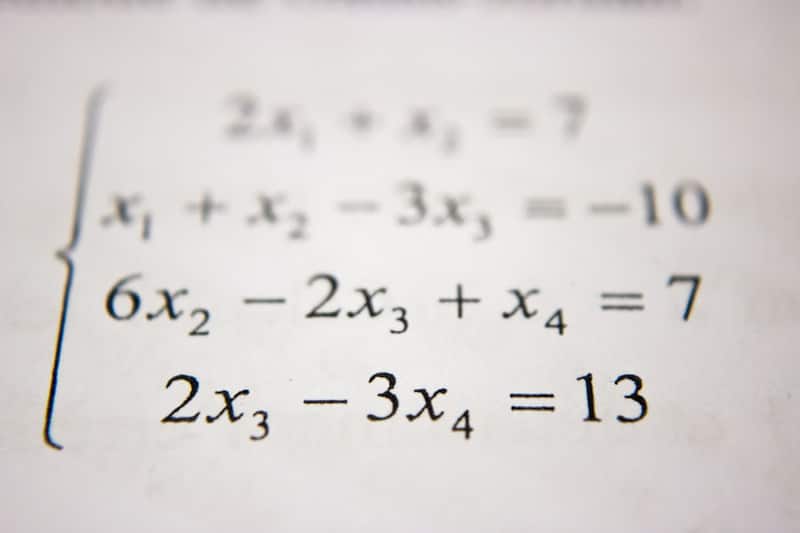
The AP Calculus AB syllabus for 2026 is structured by the College Board into 8 clearly defined units, each building upon the previous one to develop a comprehensive understanding of single-variable calculus. This course is equivalent to a first-semester college calculus course (Calculus I) and covers limits, derivatives, integrals, and the Fundamental Theorem of Calculus. Understanding the exact syllabus structure and exam weightings is the first step toward a targeted, efficient preparation strategy.
Each unit carries a specific weight on the AP exam, meaning some topics are tested far more heavily than others. Smart students use this weighting to prioritize their study time. This guide provides a complete unit-by-unit breakdown of every topic you need to master, the approximate exam weight of each unit, and the key skills the College Board expects you to demonstrate. Whether you're self-studying or enrolled in an AP class, this syllabus roadmap will keep your preparation focused and on track.
AP Calculus AB 2026: Unit-by-Unit Study Timeline
Unit 1 — Limits & Continuity (10–12% of Exam)
The Gateway to Calculus
- Define and evaluate limits using numerical, graphical, and algebraic approaches.
- Apply the Squeeze Theorem and understand limits involving infinity and asymptotic behavior.
- Determine continuity at a point and over intervals; apply the Intermediate Value Theorem (IVT).
Units 2-3 — Differentiation: Definition & Rules (10–18% of Exam)
Mastering the Mechanics of Derivatives
- Understand the derivative as the limit of the difference quotient and as an instantaneous rate of change.
- Apply differentiation rules: power, product, quotient, and chain rule for all function types.
- Differentiate trigonometric, exponential, logarithmic, and inverse functions fluently.
Units 4-5 — Contextual & Analytical Applications (25–35% of Exam)
Where Derivatives Meet Real Problems
- Solve related rates problems by connecting multiple rates of change through implicit differentiation.
- Use derivatives for optimization (finding absolute/relative extrema) and apply the Extreme Value Theorem.
- Analyze function behavior using first and second derivative tests, concavity, and inflection points.
Units 6-8 — Integration, FTC & Differential Equations (30–40% of Exam)
The Second Half of Calculus
- Approximate integrals using Riemann sums (left, right, midpoint, trapezoidal) and understand accumulation.
- Apply both parts of the Fundamental Theorem of Calculus (FTC) to evaluate definite integrals and derivatives of integral functions.
- Calculate areas between curves, volumes of solids of revolution (disc/washer), and solve separable differential equations.
Need Help Navigating the AP Calculus AB Syllabus?
EduQuest mentors create customized study plans based on the official College Board syllabus, targeting your weakest units first.
Key Topics Within Each Syllabus Unit
Fast-Track Your College & Career Strategy
Get immediate, personalized AI insights tailored to your grade, strengths, and dream universities — 100% free with instant reports.
Know Your Personality Type for Free
Take our 18-question AI psychometric test to uncover your cognitive archetype, hidden learning superpowers, and ideal university courses.
Personalized Career & University EduPath
Build a step-by-step Grade 8–12 admissions blueprint with AI-matched target universities, exam schedules, and extracurricular profiles.
Unit 1: Limits & Continuity
Topics include: defining limits, estimating limits from graphs/tables, algebraic limit properties, Squeeze Theorem, continuity over intervals, removing discontinuities, connecting infinite limits to vertical asymptotes, and the Intermediate Value Theorem.
Units 2-3: Differentiation Definition, Rules & Composite Functions
Topics include: average vs. instantaneous rate of change, derivative as a function, power/product/quotient rules, derivatives of trig, exponential, logarithmic, and inverse functions, implicit differentiation, and differentiating inverse functions.
Units 4-5: Contextual & Analytical Applications of Differentiation
Topics include: interpreting derivatives in context, straight-line motion, related rates, linearization (L'Hôpital's Rule is NOT in AB), Mean Value Theorem, Extreme Value Theorem, first and second derivative tests, concavity, and optimization problems.
Unit 6: Integration & Accumulation of Change
Topics include: Riemann sums (left, right, midpoint, trapezoidal), definite integrals as limits of Riemann sums, properties of definite integrals, the Fundamental Theorem of Calculus (both parts), antiderivatives, and u-substitution.
Units 7-8: Differential Equations & Applications of Integration
Topics include: modeling with differential equations, slope fields, separation of variables, exponential growth/decay models, finding areas between curves, volumes with disc/washer method, and cross-sectional volume problems.
Common Syllabus Misconceptions Students Have
- Thinking L'Hôpital's Rule Is on the AB Exam L'Hôpital's Rule is a BC-only topic. AB students must evaluate indeterminate limits using algebraic manipulation, factoring, rationalization, or the Squeeze Theorem only.
- Skipping Unit 1 Because It Seems 'Easy' Limits and continuity are the conceptual foundation of calculus. Weak understanding here leads to errors in derivative definitions, the FTC, and improper integral reasoning.
- Ignoring the Exam Weightings Spending equal time on every unit is inefficient. Units 4-5 (applications of derivatives) and Units 6-8 (integration) collectively make up 55-75% of the exam—prioritize accordingly.
- Not Practicing FRQs for Every Unit Each of the 6 free-response questions on the exam typically maps to specific units. Students who only practice MCQs miss the structured, multi-step problem solving that FRQs demand.
- Confusing AB and BC Syllabi AP Calculus AB does NOT include series, parametric/polar equations, or integration by parts. Students who study BC-only topics waste precious preparation time.
AP Calculus AB 2026: Official Exam Weightings by Unit
| Unit | Topic | Exam Weight (MCQ) | Key Concepts |
|---|---|---|---|
| Unit 1 | Limits & Continuity | 10–12% | Limit definition, Squeeze Theorem, IVT, Asymptotes |
| Unit 2 | Differentiation: Definition & Fundamental Properties | 10–12% | Derivative definition, Basic rules, Rates of change |
| Unit 3 | Differentiation: Composite, Implicit & Inverse Functions | 9–13% | Chain rule, Implicit diff, Inverse function derivatives |
| Unit 4 | Contextual Applications of Differentiation | 10–15% | Related rates, Linearization, Motion problems |
| Unit 5 | Analytical Applications of Differentiation | 15–18% | MVT, EVT, First/Second derivative test, Optimization |
| Unit 6 | Integration & Accumulation of Change | 17–20% | Riemann sums, FTC, Antiderivatives, U-substitution |
| Unit 7 | Differential Equations | 6–12% | Slope fields, Separation of variables, Modeling |
| Unit 8 | Applications of Integration | 10–15% | Area between curves, Volume (disc/washer), Cross-sections |
Essential Resources for Syllabus Coverage
The College Board provides official course resources through AP Classroom, including unit-specific progress checks, practice FRQs, and personal progress dashboards. Supplementing these with interactive graphing tools and video explanations ensures complete syllabus coverage.
Accelerate Your Admissions Profile with EduQuest AI Engines
AP Classroom (College Board)
Desmos Graphing Calculator
EduQuest Unit-Wise Simulator
EduQuest AP Calculus AB
“The most effective way to cover the entire syllabus is to combine AP Classroom's official practice sets with interactive visualization tools. Understanding a concept visually—seeing how a function and its derivative relate on a graph—builds the intuition that the exam rewards.”
How EduQuest Covers the Full AP Calculus AB Syllabus
Unit-Aligned Curriculum
Our coaching program follows the exact College Board unit structure, ensuring every topic is covered in the correct sequence with appropriate depth.
Weighted Practice Distribution
We allocate practice problems proportional to exam weightings—more time on Units 5 and 6, which carry the highest weights.
Unit-End Assessments
After each unit, students take targeted assessments mirroring AP Classroom progress checks to identify gaps before moving on.
FRQ Mapping to Units
We train students on which FRQ types correspond to which units, so they can identify and attack each free-response question systematically.
Concept Bridging Sessions
Dedicated sessions that connect concepts across units—for example, how the derivative definition (Unit 2) connects to the FTC (Unit 6)—building holistic understanding.
Reality Check: What the Syllabus Really Demands
The AP Calculus AB syllabus looks deceptively short—just 8 units. But each unit contains layers of depth that the exam exploits ruthlessly. For example, Unit 5 alone requires you to connect the Mean Value Theorem, the Extreme Value Theorem, first and second derivative tests, concavity analysis, and optimization—all in a single FRQ. Surface-level understanding of the syllabus will not earn you a 5.
— Senior AP Curriculum Advisor, EduQuest
The College Board's Course and Exam Description (CED) document outlines not just what topics to cover, but the specific Mathematical Practices (MPs) students must demonstrate: implementing procedures, connecting representations, justifying reasoning, and communicating with correct notation. These skills are embedded throughout the syllabus and are explicitly tested on FRQs.
Students who treat the syllabus as a checklist of formulas to memorize consistently underperform. Those who use it as a framework for deep, connected understanding of how calculus concepts build upon each other are the ones who score 5s. The syllabus is not just a list—it's an architecture.
Free AP Calculus AB Syllabus Study Planner
Get the EduQuest AP Calculus AB Syllabus Planner—a week-by-week breakdown of all 8 units mapped to the official College Board curriculum with practice problem sets for each topic.
Final Thoughts
The AP Calculus AB syllabus is your roadmap to a score of 5. Every unit is there for a reason, and every topic connects to the bigger picture of calculus. Study the syllabus strategically, prioritize the high-weight units, and practice until every concept feels second nature.
FAQs: AP Calculus AB Syllabus 2026
Has the AP Calculus AB syllabus changed for 2026?
The College Board periodically updates the Course and Exam Description (CED), but the core 8-unit structure of AP Calculus AB has remained consistent. The 2026 syllabus continues to cover: Limits & Continuity, Differentiation (definition, rules, composite/implicit/inverse), Contextual & Analytical Applications of Differentiation, Integration & Accumulation, Differential Equations, and Applications of Integration.
What topics are in AP Calculus AB but NOT in BC?
This is a common confusion—it's actually the reverse. AP Calculus BC includes everything in AB plus additional topics. AB does NOT cover: Taylor/Maclaurin series, parametric equations, polar coordinates, integration by parts, partial fractions, improper integrals, or the logistics growth model. These are all BC-exclusive topics.
Which unit has the highest exam weight?
Unit 6 (Integration & Accumulation of Change) carries the highest individual unit weight at 17–20% of the MCQ section. However, when considering combined application topics, Units 4-5 (Applications of Differentiation) collectively carry 25–33%, making derivative applications the most heavily tested area overall.
Is the syllabus the same for the MCQ and FRQ sections?
Yes, the same 8 units are tested across both sections. However, FRQs tend to be more integrative—a single FRQ might require concepts from 2-3 different units. For example, an FRQ might combine a related rates setup (Unit 4) with integration to find accumulated change (Unit 6).
Can I skip any units and still score a 5?
Technically, no unit should be skipped since every unit appears on the exam. However, Unit 7 (Differential Equations) has the lowest weight (6–12%), so if time is critically short, it should be your last priority—not your first. Focus on Units 5 and 6 first, as they carry the highest weights.
How does the AP Calculus AB syllabus compare to CBSE/ISC Class 12 Math?
There is significant overlap. CBSE Class 12 covers limits, derivatives, integrals, and differential equations—all of which appear in AP Calculus AB. However, AP Calculus AB places much heavier emphasis on conceptual understanding, graphical interpretation, and free-response justification skills that Indian boards typically do not test as rigorously.
Master the Full AP Calculus AB Syllabus with EduQuest
Don't leave any unit uncovered. Join EduQuest's structured AP Calculus coaching program and cover the complete 2026 syllabus with expert guidance.
Accelerate Your College Prep
Evaluate Your Profile
AI Profile Evaluator
Submit your academic scores, AP results, and extracurriculars to get instant feedback on your chances for top universities.
Evaluate ProfileDiscover Your True Potential
Narrative Intelligence Scan
Personality Tester
Uncover your hidden strengths and cognitive profile with our scientifically backed assessment.
Take the TestFind Your Path
Career Cluster AI
Explore the best career pathways perfectly aligned with your unique personality and goals.
Check Profile