Here is a truth that surprises many students: you can score a 5 on AP Chemistry without ever stepping foot in a laboratory. The exam does not test whether you can physically perform a titration. It tests whether you understand WHY a titration works, HOW to interpret the data, and WHAT errors would affect the results. Lab skills on the AP exam are intellectual, not physical.
The 6 Key Lab Skills
The College Board identifies 6 science practices that encompass all lab skills. Three of these directly involve experimental and laboratory reasoning. Understanding them is essential because lab-related questions appear on both the MCQ and FRQ sections every single year.
Experimental Design
Planning a Valid Experiment
- Identify the independent variable (what you change), dependent variable (what you measure), and controlled variables (what stays constant).
- Explain why a control group is necessary to establish a baseline for comparison.
- Describe how to repeat trials to ensure reproducibility and reduce random error.
Data Analysis & Interpretation
Making Sense of Results
- Read and interpret data tables with proper attention to units and significant figures.
- Create and analyze graphs: identify trends, slopes, intercepts, and outliers.
- Use Beer's Law (A = εbc) to analyze spectrophotometry data — this appears frequently.
Essential Lab Techniques
Titration
Understand the mechanics: a buret delivers the titrant into a flask containing the analyte and an indicator. Know when to use phenolphthalein vs. methyl orange. The equivalence point is where moles of acid = moles of base.
Spectrophotometry (Beer's Law)
A = εbc connects absorbance (A) to concentration (c). You must be able to create a calibration curve, plot absorbance vs. concentration, and use the line of best fit to determine an unknown concentration.
Gravimetric Analysis
This involves precipitating a substance, filtering it, drying it, and weighing it. The mass of the precipitate lets you calculate the amount of a specific ion in solution. Watch for questions about percent composition.
Fast-Track Your College & Career Strategy
Get immediate, personalized AI insights tailored to your grade, strengths, and dream universities — 100% free with instant reports.
Know Your Personality Type for Free
Take our 18-question AI psychometric test to uncover your cognitive archetype, hidden learning superpowers, and ideal university courses.
Personalized Career & University EduPath
Build a step-by-step Grade 8–12 admissions blueprint with AI-matched target universities, exam schedules, and extracurricular profiles.
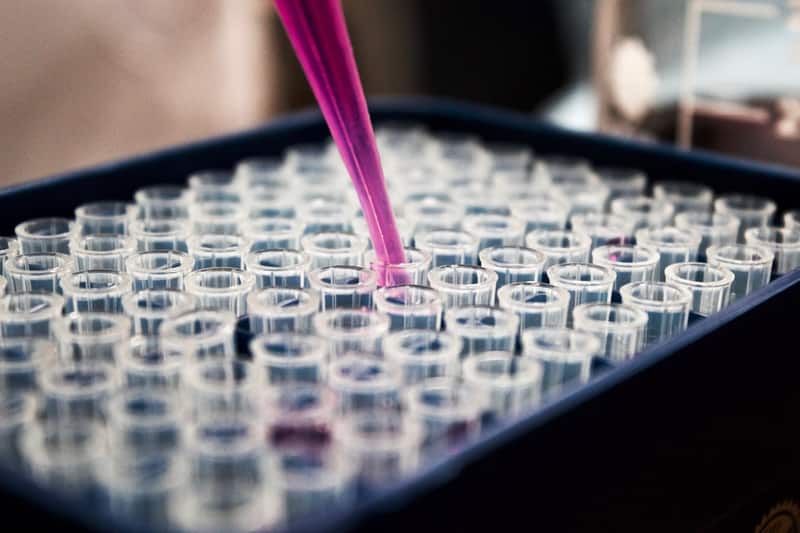
The exam tests lab skills through two main avenues: MCQs that present experimental data or procedures for interpretation, and FRQs that ask you to design experiments or analyze results. In 2026, expect at least 1 short FRQ and 2–3 MCQs dedicated purely to lab skills.
Common Lab Errors and How to Discuss Them
- Systematic Error (Too High/Low): If a student overshoots the equivalence point in a titration (adds too much NaOH), the calculated concentration of the acid will be too HIGH. Always trace the error through the entire calculation to determine its effect.
- Random Error (Imprecision): Random errors (reading a buret slightly differently each time) affect precision but not accuracy. The fix is more trials and averaging. The AP exam wants you to distinguish between systematic and random errors.
- Contamination: If a beaker is not properly rinsed and contains trace amounts of a previous solution, it introduces systematic error. The exam may ask: 'Would this error make the calculated value too high, too low, or have no effect?'
Error analysis is one of the most frequently tested lab skills on the AP Chemistry exam. The College Board loves asking: 'A student forgot to rinse the buret with NaOH solution before titrating. Would this cause the calculated molarity to be too high, too low, or unchanged? Justify your answer.' Practice tracing errors through calculations.
In AP Chemistry, the lab is not about following a recipe. It is about understanding why each step matters and what happens when things go wrong.
— EduQuest Lab Skills Instructor
Must-Know Lab Procedures
| Lab Procedure | What It Tests | Key Concept |
|---|---|---|
| Titration | Concentration of an unknown acid/base | Moles of acid = Moles of base at equivalence |
| Spectrophotometry | Concentration using light absorption | Beer's Law: A = εbc |
| Calorimetry | Heat of reaction (enthalpy change) | q = mcΔT; heat lost = heat gained |
| Gravimetric Analysis | Mass of a precipitated product | Stoichiometry + filtration + massing |
| Chromatography | Separation of a mixture | Rf = distance of spot / distance of solvent front |
| Rate Determination | Rate law of a reaction | Initial rates method: compare trials to find orders |
Of these, titration, spectrophotometry, and calorimetry are the 'Big Three' lab techniques. At least one of them appears on the AP exam every year. Chromatography and gravimetric analysis appear less frequently but are still fair game.
Need Lab Skills Help?
Our tutors walk you through virtual lab simulations and error analysis practice until you can ace any lab question without ever touching a beaker.
How to Study Lab Skills Without a Lab
You do not need physical lab access to master AP Chemistry lab skills. Watch procedure videos on YouTube, practice interpreting data sets from released exams, and focus on error analysis. The exam tests your understanding of experiments, not your lab technique.
- Watch at least 5 titration videos to understand the procedure, even if you never physically do one.
- Practice Beer's Law calculations with calibration curve data from released exams.
- For every lab question, practice writing your answer as: 'This would cause the result to be too [high/low] because [specific reason tracing through the calculation].'
Particulate Diagrams in Lab Context
The 2026 exam increasingly combines lab skills with particulate diagrams. You might be asked to draw what happens at the molecular level when a precipitate forms, when a buffer resists pH change, or when an indicator changes color. Practice connecting macroscopic lab observations to particulate-level representations.
Final Thoughts
The best chemists are not the ones with the steadiest hands. They are the ones who can look at data and tell you a story about what happened and why.
FAQs: AP Chemistry Lab Skills
Do I need to do actual labs to get a 5?
No. The exam tests your understanding of lab principles, not your physical lab experience. Many students who self-study score 5s by mastering data analysis and error identification through practice problems.
What is the most commonly tested lab technique?
Titration, followed closely by spectrophotometry (Beer's Law). These two techniques appear on the exam nearly every year in both MCQ and FRQ formats.
How do I practice error analysis?
Take any released FRQ and ask: 'What if the student made this mistake?' Then trace the error through the entire calculation to determine whether the final answer would be too high, too low, or unchanged.
Ace the Lab Questions
Join EduQuest's AP Chemistry lab skills bootcamp. We turn experimental reasoning into a scoring weapon.
Accelerate Your College Prep
Evaluate Your Profile
AI Profile Evaluator
Submit your academic scores, AP results, and extracurriculars to get instant feedback on your chances for top universities.
Evaluate ProfileDiscover Your True Potential
Narrative Intelligence Scan
Personality Tester
Uncover your hidden strengths and cognitive profile with our scientifically backed assessment.
Take the TestFind Your Path
Career Cluster AI
Explore the best career pathways perfectly aligned with your unique personality and goals.
Check ProfileTake an AP Mock Test
Download the Official AP Exam Mastery & 5-Score Strategy Blueprint
Get immediate access to EduQuest’s 8-page comprehensive candidate toolkit with diagnostic benchmarks, step-by-step frameworks, error telemetry logs, and structured preparation timelines.