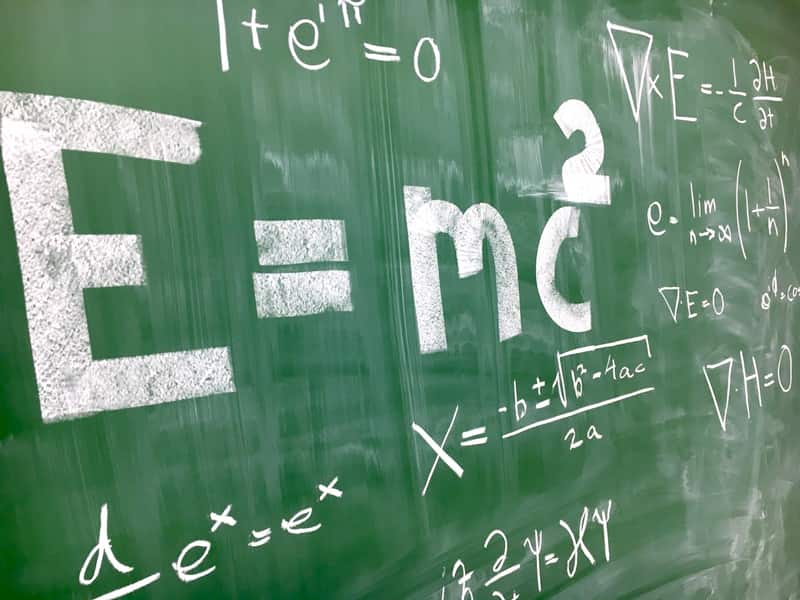
Widely regarded across higher education as the most mathematically sophisticated and challenging Advanced Placement examination offered by the College Board, AP Physics C: Electricity and Magnetism (E&M) is the ultimate litmus test for aspiring electrical engineers, computer hardware architects, physicists, and aerospace engineers.
Equivalent to a rigorous second-semester university calculus-based physics course, AP Physics C: E&M demands that students master multivariable vector calculus concepts—such as surface integrals, line integrals, differential equations, and dot/cross products—to understand electric fields, Gauss's Law, electric potential, capacitance, complex DC/RC/RL/LC circuits, Ampère's Law, Faraday's Law of Induction, and Maxwell's equations. In this comprehensive guide, we explore the updated 2026 marking scheme, the 5 core units, Indian test centers, and how EduQuest coaching helps you master electromagnetic vector calculus.
AP Physics C E&M Marking Scheme & Engineering Credit
AP Physics C: E&M is evaluated on a 1 to 5 scale. Because second-semester university calculus physics is a formidable hurdle for first-year engineering students, securing a top score on this exam provides tremendous academic distinction and college tuition savings:
| AP Scaled Score | College Board Qualification | Approx. Pass Rate (2025/2026) | University Credit & Placement Impact |
|---|---|---|---|
| 5 | Extremely Well Qualified | ~36% – 38% of Test Takers | Grants full 2nd-semester engineering physics credit (equivalent to Physics 102); essential for electrical & computer engineering at MIT, Caltech, Stanford & Berkeley |
| 4 | Well Qualified | ~23% of Test Takers | Accepted for college credit across Top 30–50 US universities and major Canadian engineering schools (Waterloo, Toronto, UBC) |
| 3 | Qualified | ~14% of Test Takers | Minimum qualifying pass; earns elective or general science credit at state universities but generally not accepted for electrical engineering major credit at elite schools |
| 2 | Possibly Qualified | ~15% of Test Takers | No college credit awarded; indicates need for foundational reinforcement in calculus-based E&M |
| 1 | No Recommendation | ~12% of Test Takers | No credit awarded; does not strengthen undergraduate university application transcripts if withheld |
Essential AP Physics C E&M Coaching Tools
Explore E&M Coaching
AP Physics C E&M Programme
Master Gauss's Law surface integrals, Ampère's Law, RC/RL circuit differential equations, and Faraday's Law with EduQuest's IIT faculty.
Visit Site — View MoreTake Diagnostic Test
AP Physics C E&M Mocks
Practice full-length timed calculus-based E&M mock exams featuring College Board FRQ derivation grading rubrics.
Start Free DiagnosticAcademic Mentoring
Electrical Engineering Advisory
Plan your elite STEM subject mix (AP Physics C E&M + AP Physics C Mechanics + AP Calculus BC) for hardware & tech degrees.
Book CounselingFast-Track Your College & Career Strategy
Get immediate, personalized AI insights tailored to your grade, strengths, and dream universities — 100% free with instant reports.
Know Your Personality Type for Free
Take our 18-question AI psychometric test to uncover your cognitive archetype, hidden learning superpowers, and ideal university courses.
Personalized Career & University EduPath
Build a step-by-step Grade 8–12 admissions blueprint with AI-matched target universities, exam schedules, and extracurricular profiles.
Syllabus Breakdown & Unit-Wise Exam Weightage
The College Board divides the AP Physics C: E&M curriculum into five mathematically intensive units. Understanding the weightage allows students to focus on high-yield calculus derivations:
| Unit Number & Title | Core Calculus-Based E&M Concepts Covered | Exam Weightage (%) |
|---|---|---|
| Unit 1: Electrostatics | Coulomb's Law vector calculations, electric field (E) continuous charge integration (E = ∫ k dq / r²), electric potential (V) and potential energy, Gauss's Law surface integrals (∮ E·dA = Q_enc / ε₀) for spheres, cylinders, and planes | 26% – 34% |
| Unit 2: Conductors, Capacitors & Dielectrics | Electrostatics with conductors, electric fields inside/outside conductors, capacitance derivation (C = Q/V), parallel-plate/cylindrical/spherical capacitors, dielectrics and polarization, energy stored in capacitors | 14% – 17% |
| Unit 3: Electric Circuits | Ohm's Law, Kirchhoff's current and voltage rules in multi-loop networks, RC circuits (solving differential equations for exponential charging q(t) = Q_max(1 - e^(-t/RC)) and discharging), steady-state circuit analysis | 17% – 23% |
| Unit 4: Magnetic Fields | Magnetic force on moving charges and current-carrying wires, Biot-Savart Law continuous integration (dB = (μ₀I / 4π) (dl × r̂) / r²), Ampère's Law line integrals (∮ B·dl = μ₀ I_enc) for wires, solenoids, and toroids | 17% – 23% |
| Unit 5: Electromagnetism | Electromagnetic induction, magnetic flux (Φ_B = ∫ B·dA), Faraday's Law of Induction (E = -dΦ_B/dt), Lenz's Law, inductance (L), LR circuits (exponential current growth/decay), LC oscillating circuits, Maxwell's equations overview | 14% – 20% |
Number of Questions & Exam Format (3 Hours - NEW 2025/2026 Format!)
CRITICAL ALERT: Just like Mechanics, starting in the 2024–2025 testing cycle, AP Physics C: Electricity & Magnetism was expanded from a 90-minute test into a full 3-hour examination! A scientific or graphing calculator and the official Physics C Equation Sheet are permitted throughout both sections.
| Exam Section | Question Structure & Content Focus | Number of Questions | Time Allotted | Section Weightage |
|---|---|---|---|---|
| Section I: Multiple Choice (MCQ) | Single-select questions testing calculus-based E&M, vector fields, circuit differential equations, and graphical analysis (Calculator Permitted) | 40 Questions (Expanded from 35) | 80 Minutes (Expanded from 45m) | 50% of Total Score |
| Section II: Free Response (FRQ) | FRQ 1: Mathematical Routines (calculus derivations of electric/magnetic fields and Gauss/Ampère laws) | 1 Question | 25 Minutes (approx.) | 12.5% of Total Score |
| Section II: Free Response (FRQ) | FRQ 2: Translation Between Representations (connecting E&M graphs, circuit equations, and field diagrams) | 1 Question | 25 Minutes (approx.) | 12.5% of Total Score |
| Section II: Free Response (FRQ) | FRQ 3: Experimental Design & Analysis (designing an E&M or circuit lab experiment and graphing data) | 1 Question | 25 Minutes (approx.) | 12.5% of Total Score |
| Section II: Free Response (FRQ) | FRQ 4: Qualitative/Quantitative Translation (QQT) & Paragraph-Length Argument | 1 Question | 25 Minutes (approx.) | 12.5% of Total Score |
AP Exam Centers in India & Registration Guide (2026)
AP Physics C: E&M is administered globally in May across authorized College Board test schools in India. It is normally scheduled on the exact same afternoon as AP Physics C: Mechanics.
Authorized AP Physics C Test Centers in India
Prominent centers offering Physics C include American Embassy School (Delhi), Pathways World School (Gurgaon), Oberoi & Dhirubhai Ambani Schools (Mumbai), Canadian & Oakridge Schools (Bangalore/Hyderabad), and Woodstock School (Mussoorie).
October to November Registration Cutoffs
Registration for the May exam administration strictly closes between mid-October and mid-November of the previous year. Students must apply online via their chosen test school's portal.
Indian Fee Structure & Payment Gateway
The exam fee in India ranges between INR 14,000 and INR 18,000 per subject. Payment is processed securely online via debit/credit card, net banking, or UPI through the testing center's portal.
Mandatory Original Passport Identification Rule
In strict accordance with College Board international security protocols in India, students must present an original, physical, unexpired passport on test day. Neither Aadhaar cards nor school IDs are accepted.
How EduQuest Coaching Helps You Ace AP Physics C E&M
Why is AP Physics C: E&M considered the toughest AP course? Because students cannot visualize 3D electromagnetic vector fields or Gauss's Law Gaussian surfaces without expert guidance! Here is how EduQuest makes E&M vector calculus intuitive for Indian students:
Gauss's Law & Ampère's Law Symmetry Workshops
We teach students the secret to Gauss's Law (∮ E·dA = Q_enc / ε₀) and Ampère's Law (∮ B·dl = μ₀ I_enc): exploiting spherical, cylindrical, and planar symmetry! We drill students until they can set up and evaluate these integrals in under 3 minutes.
Circuit Differential Equation Automation (RC, RL, LC)
We teach students how to set up and solve first-order differential equations for RC and RL circuits, as well as second-order differential equations for LC oscillating circuits, ensuring flawless performance on circuit FRQs.
3D Vector Cross-Product & Biot-Savart Rigor
We provide intensive training on 3D right-hand rules and vector cross-products (F = qv × B and dB = (μ₀I / 4π) (dl × r̂) / r²), eliminating sign errors and direction confusion.
1-on-1 Mentorship by Electrical Engineering Faculty
Our E&M faculty comprises experienced electrical engineers and IIT alumni who conduct timed mock exams under the new 3-hour format, providing personalized line-by-line answer sheet evaluations.
Common Mistakes Students Make in AP Physics C E&M
- 1. Confusing Electric Potential (V) with Electric Field (E) Electric Field (E) is a VECTOR quantity (measured in V/m or N/C) that requires vector addition and components! Electric Potential (V) is a SCALAR quantity (measured in Volts or J/C) that can be added algebraically without angles! Confusing vectors with scalars when integrating continuous charge distributions leads to zero points.
- 2. Incorrect Gaussian Surface Selection in Gauss's Law To use Gauss's Law (∮ E·dA = Q_enc / ε₀), the electric field E must be constant in magnitude and perpendicular (or parallel) across the entire Gaussian surface! Choosing a non-symmetric surface (like a cube around a point charge) makes the integral mathematically impossible to evaluate.
- 3. Forgetting the Induced EMF Sign in Faraday's Law In Faraday's Law of Induction (E = -dΦ_B/dt), the negative sign represents Lenz's Law (the induced EMF opposes the change in magnetic flux)! When asked for the magnitude, drop the negative sign; when asked for the direction of induced current, you must explicitly apply Lenz's Law right-hand rule.
- 4. Misinterpreting Inductor Behavior in LR Circuits In an LR circuit (resistor and inductor), an inductor opposes changes in current! At t = 0 (when the switch is just closed), an inductor acts like an OPEN circuit (infinite resistance, zero current). At steady-state (t = ∞), an inductor acts like a SHORT circuit (zero resistance, maximum current E/R)! This is the exact OPPOSITE of a capacitor.
AP Physics C: E&M is the pinnacle of high school physics. When Ivy League engineering programs see a 5 in E&M on an Indian student's transcript, they know you have mastered the mathematics of modern technology.
— EduQuest Electrical Engineering Lead
Frequently Asked Questions About AP Physics C E&M
Must I take AP Physics C: Mechanics before taking E&M?
While both exams can be taken in the same year, Mechanics is foundational! You must understand Newtonian forces, work, energy, and calculus integration from Mechanics before attempting E&M electrostatic and magnetic integrals.
What is the math prerequisite for AP Physics C: E&M?
You MUST be proficient in differential and integral calculus (AP Calculus AB/BC or CBSE Class 12 Calculus). Knowledge of basic differential equations and vector dot/cross products is essential.
Why is the pass rate for a score of 5 so high (~36% to 38%)?
The high percentage of 5s occurs because E&M attracts only the most elite, mathematically gifted engineering and JEE aspirants globally. The exam itself is extraordinarily rigorous.
How many months of coaching are required for AP Physics C E&M?
Because of the complex vector calculus derivations across 5 units, EduQuest recommends a structured 5 to 6 month preparation timeline starting in November or December for the May examination.
Master Gauss's Law & Maxwell's Equations with EduQuest
Enroll in India's premier AP Physics C: E&M coaching program. Master electromagnetic vector calculus, circuit differential equations, and conquer the new 3-hour exam format with expert IIT faculty.
Download the Official AP Exam Mastery & 5-Score Strategy Blueprint
Get immediate access to EduQuest’s 8-page comprehensive candidate toolkit with diagnostic benchmarks, step-by-step frameworks, error telemetry logs, and structured preparation timelines.