

If AP Physics C: Mechanics is about the physics you can see, Electricity & Magnetism (E&M) is about the physics you can't. It requires immense imagination, spatial reasoning, and a strong grip on multi-variable calculus concepts. Welcome to the pinnacle of high school physics.
Course Structure Overview
The course is divided into five main units. Unlike Mechanics, where topics can sometimes stand alone, E&M builds relentlessly. If you don't understand Unit 1, you have zero chance of understanding Unit 5.
Electrostatics
Charges at Rest
- Calculating electric fields using integrals.
- Applying Gauss's Law to symmetrical charge distributions.
- Electric potential and potential energy.
Conductors, Capacitors, Dielectrics
Storing Charge
- Behavior of charges in and on conductors.
- Calculating capacitance for various geometries.
- How dielectrics affect electric fields and energy.
Electric Circuits
Moving Charges
- Ohm's Law and Kirchhoff's Rules.
- Charging and discharging capacitors (calculus-heavy).
- Power dissipation in complex networks.
The Magnetic Half of the Year
Unit 4: Magnetic Fields
You will learn how moving charges create magnetic fields, calculate fields using Biot-Savart and Ampère's Law, and find magnetic forces on current-carrying wires.
Unit 5: Electromagnetism
The climax of the course. Faraday's Law and Lenz's Law explain how changing magnetic flux induces electric currents. This unit introduces Inductors (LC and LR circuits).
Maxwell's Equations
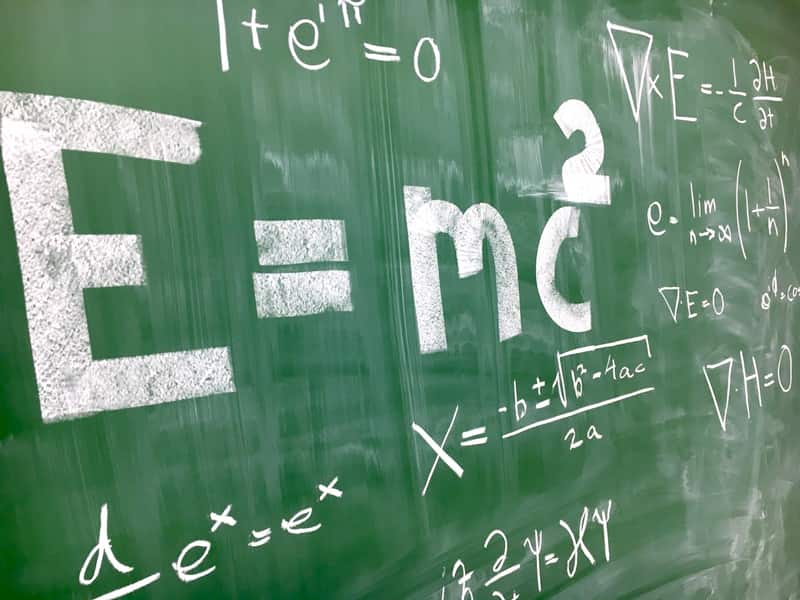
By the end of the year, you will understand the four equations (Gauss for E, Gauss for B, Faraday, and Ampère-Maxwell) that govern all of classical electromagnetism.
Fast-Track Your College & Career Strategy
Get immediate, personalized AI insights tailored to your grade, strengths, and dream universities — 100% free with instant reports.
Know Your Personality Type for Free
Take our 18-question AI psychometric test to uncover your cognitive archetype, hidden learning superpowers, and ideal university courses.
Personalized Career & University EduPath
Build a step-by-step Grade 8–12 admissions blueprint with AI-matched target universities, exam schedules, and extracurricular profiles.
The exam format is identical to Mechanics: 35 MCQs in 45 minutes, and 3 FRQs in 45 minutes. The difference is the sheer density of the problems. You will rarely have time to check your work.
Why E&M is So Hard
- Calculus in 3D: You aren't just integrating along the x-axis anymore. You are integrating over surfaces (Gauss's Law) and around closed loops (Ampère's Law).
- Cross Products: Magnetic force requires the cross product (F = qv × B). Using the right-hand rule under time pressure causes many students to get the sign wrong.
- Abstract Geometries: You will be asked to find the electric field inside a non-conducting cylinder with a charge density that varies with the radius (ρ = ar). This requires intense integration setups.
Despite the difficulty, E&M is one of the most rewarding courses you can take. It explains how generators, motors, antennas, and all of modern electronics actually work.
E&M is where you graduate from calculating how long it takes a ball to hit the ground, to understanding the fundamental forces that hold the atoms of the ball together.
— EduQuest Senior Physics Faculty
Do You Need AP Calculus BC?
| Math Skill | Where it's used | Taught in AB or BC? |
|---|---|---|
| Basic Integration | Electric potential, Work | AB |
| Differential Equations | RC and RL Circuits | AB |
| Surface Integrals | Gauss's Law | Neither (You learn it in E&M) |
| Line Integrals | Ampère's Law, Faraday's Law | Neither (You learn it in E&M) |
As you can see, even Calculus BC doesn't officially teach the vector calculus needed for E&M (that's Calculus 3/Multivariable). Your physics teacher will teach you 'hacks' to do surface and line integrals by relying on high degrees of symmetry (spheres and cylinders).
Overwhelmed by Gauss's Law?
Our specialized E&M tutors can help you visualize these 3D integrals and make the math click.
How to Survive the Course
You cannot cram for E&M. The concepts require weeks to properly incubate in your brain. If you fall behind during Electrostatics (Unit 1), you must get a tutor or spend the weekend catching up, because everything that follows depends on it.
- Draw massive diagrams. The bigger your drawing, the easier it is to see the geometry of the electric or magnetic field.
- Memorize the results for standard shapes (e.g., E-field of a point charge, line of charge, and infinite sheet).
- Practice the right-hand rule until it becomes muscle memory.
Final Thoughts
Taking AP Physics C E&M is like running a mental marathon. It is exhausting, but crossing the finish line proves you have what it takes to excel in top-tier engineering programs.
FAQs: Physics C E&M
Can I take E&M without taking Mechanics?
Technically yes, but practically no. E&M frequently uses Mechanics concepts like torque, centripetal force, and conservation of energy.
Is the curve generous?
Yes. E&M has one of the most generous curves of any AP exam. Getting roughly 55-60% of the points often results in a 5.
How long should I study for it?
Plan for 1-2 hours of intense homework/study every single night. This is not a class where you can skate by on natural intelligence.
Master Electromagnetism
Join EduQuest's elite AP Physics C prep program. We break down the complex calculus into manageable steps.
Accelerate Your College Prep
Evaluate Your Profile
AI Profile Evaluator
Submit your academic scores, AP results, and extracurriculars to get instant feedback on your chances for top universities.
Evaluate ProfileDiscover Your True Potential
Narrative Intelligence Scan
Personality Tester
Uncover your hidden strengths and cognitive profile with our scientifically backed assessment.
Take the TestFind Your Path
Career Cluster AI
Explore the best career pathways perfectly aligned with your unique personality and goals.
Check ProfileRemember, the key to success in E&M is persistence. Everyone gets confused when learning about magnetic flux and induced EMFs for the first time. The students who get 5s are the ones who don't give up.
Start your preparation early, lean heavily on practice FRQs from previous years, and don't hesitate to seek out expert mentorship when you hit a wall with the calculus.
Take an AP Mock Test
Download the Official AP Exam Mastery & 5-Score Strategy Blueprint
Get immediate access to EduQuest’s 8-page comprehensive candidate toolkit with diagnostic benchmarks, step-by-step frameworks, error telemetry logs, and structured preparation timelines.