
Canada Undergraduate Admissions Strategic Portals for Indian Students (2027 Entry)
Admissions Advisory
1-on-1 U15 Mentorship
Get your CBSE/ISC marks evaluated for U of T, UBC, McGill & Waterloo. Calibrate dream, target, and safe university lists with former admissions assessors.
Explore Canada MentorshipStandardized Test Prep
Digital SAT & IELTS Prep
Maximize entrance scholarship chances and satisfy English language requirements with structured high-yield diagnostic prep.
Explore Prep PortalsOfficial Dossier
Download Free 2027 Guide
Get the complete CBSE/ISC percentage matrix, 10-step document checklist, and IRCC study permit financial calculator in a printable PDF.
1. Executive Overview: Navigating Canada Undergraduate Admission Requirements in 2027
Canada has cemented its position as one of the world's premier destinations for Indian students completing Class 12. Renowned globally for top-ranked research universities, safe multicultural campuses, high standard of living, and welcoming post-study work regulations, Canada hosts over 100 public universities. Prestigious institutions including the University of Toronto, University of British Columbia (UBC), McGill University, University of Waterloo, McMaster University, and University of Alberta routinely rank among the top 100 universities worldwide.
However, navigating Canada undergraduate admission requirements requires understanding a system that blends British academic specialization with American campus flexibility. Indian families often mistakenly assume Canadian admissions operate on cutthroat entrance tests like JEE or NEET, or conversely, that they mirror the US holistic model where sports and hobbies overshadow marks. In reality, Canadian university admissions are anchored in rigorous academic evaluation, specific subject prerequisites, and verified Class 11 and Class 12 performance.
For 2027 applicants, Canadian higher education has also adapted to regulatory updates from Immigration, Refugees and Citizenship Canada (IRCC), including the Provincial Attestation Letter (PAL) mandate and raised proof-of-funds thresholds. Understanding eligibility for Canadian universities after 12th and the precise percentage required for Canada after CBSE is paramount to structuring a successful, stress-free admissions campaign.
2. The Canadian University Structure: 4-Year Bachelor's Degrees vs. 3-Year General Degrees
Fast-Track Your College & Career Strategy
Get immediate, personalized AI insights tailored to your grade, strengths, and dream universities — 100% free with instant reports.
Know Your Personality Type for Free
Take our 18-question AI psychometric test to uncover your cognitive archetype, hidden learning superpowers, and ideal university courses.
Personalized Career & University EduPath
Build a step-by-step Grade 8–12 admissions blueprint with AI-matched target universities, exam schedules, and extracurricular profiles.
Undergraduate degrees in Canada fall into two principal categories: Four-Year Honours Bachelor Degrees (120 credits) and Three-Year Bachelor Degrees (90 credits). For international students, enrolling in a four-year Honours program (such as Bachelor of Science Honours, Bachelor of Applied Science, or Bachelor of Commerce) is vital. A 4-year Honours degree provides the necessary academic depth required for postgraduate study (Master's or Ph.D.) and guarantees maximum eligibility under the Post-Graduation Work Permit (PGWP) program.
Unlike the United Kingdom where students study only one subject from day one, Canadian universities offer flexible academic pathways. Students enter broad faculties (such as Faculty of Arts & Science, Faculty of Applied Science & Engineering, or Sauder School of Business) and declare their specialist major or minor at the end of their first year. This flexibility allows Indian students to explore multiple disciplines before finalizing their focus.
3. The "U15" Group: Canada's Premier Research-Intensive Universities
Similar to the Ivy League in the United States or the Russell Group in the United Kingdom, Canada's premier higher education consortium is known as the U15 Group of Canadian Research Universities. The U15 institutions conduct 80% of all competitive university research in Canada and educate the vast majority of doctoral candidates and technological leaders.
- Ontario: University of Toronto, University of Waterloo, McMaster University, Queen's University, Western University, University of Ottawa.
- Quebec: McGill University, Université de Montréal, Université Laval.
- British Columbia: University of British Columbia (UBC).
- Alberta: University of Alberta, University of Calgary.
- Manitoba & Saskatchewan: University of Manitoba, University of Saskatchewan.
- Atlantic Canada: Dalhousie University (Nova Scotia).
4. Core Academic Eligibility for Indian Students: CBSE, CISCE, and State Boards
To be considered for undergraduate admission at an accredited Canadian university, an Indian applicant must have completed secondary school education equivalent to a Canadian High School Diploma (Grade 12). Canadian admissions faculties accept the following Indian school credentials:
- Central Board of Secondary Education (CBSE): All India Senior School Certificate Examination (AISSCE) awarded at the completion of Class 12.
- Council for the Indian School Certificate Examinations (CISCE): Indian School Certificate (ISC) awarded at the end of Class 12.
- State Higher Secondary Boards (HSC): Intermediate / Higher Secondary Examination certificates from recognized state education boards (e.g., Maharashtra, Karnataka, Tamil Nadu, Telangana, West Bengal).
- International Baccalaureate (IB) Diploma: Full diploma with minimum 28–38+ points depending on the competitive tier of the program.
- Cambridge GCE A-Levels: Minimum 3 full A-Levels with grades ranging from BBB to A*AA.
5. Percentage Required for Canada After CBSE: Institutional Tier Benchmarks
One of the most frequently asked questions by Indian parents is the minimum percentage required for Canada after CBSE. Unlike generic college programs that accept 60%–65%, competitive Canadian universities enforce strict cutoffs based on the overall percentage calculated across your top 5 academic subjects (excluding vocational courses like physical education or fine arts):
| University Tier | CBSE / ISC Overall Range | Competitive STEM Cutoff | Premier Institutions |
|---|---|---|---|
| Tier 1: Global Elite Research | 88% – 96% overall | 92% – 97% in Maths/Sciences | University of Toronto (St. George), UBC Vancouver, McGill, Waterloo |
| Tier 2: Premier Comprehensive | 82% – 88% overall | 86% – 92% in key subjects | McMaster, Queen's, Western, Alberta, Simon Fraser, Montreal |
| Tier 3: Solid Mid-Tier Research | 75% – 82% overall | 80% – 85% in core subjects | University of Ottawa, Calgary, Dalhousie, Victoria, York, Carleton |
| Tier 4: Regional & Applied Universities | 68% – 75% overall | 72% – 78% in required subjects | Concordia, Windsor, Guelph, Ryerson (TMU), Memorial, Manitoba |
6. The Hidden Filter: Why Class 11 Marks and Class 12 Mid-Terms Dictate Offers
A critical trap that ensnares thousands of Indian students is the "Class 12 board cramming" mindset. In India, students often take Class 11 lightly to prepare for competitive coaching exams, resulting in scores dropping from 92% in Class 10 down to 65% in Class 11. In Canadian university admissions, this is a catastrophic mistake.
Canadian university application deadlines close between December and February of your Class 12 academic year—months before your final CBSE board exams are conducted in March and results published in May. Therefore, Canadian admissions committees evaluate your application using your Class 10 Board Marksheet, Class 11 Final Transcript, and Class 12 Mid-Term / Pre-Board Predicted Marks. If an applicant has a severe dip in Class 11, admissions committees will delay evaluating the file or issue a rejection.
7. The Mathematics Requirement: Standard Mathematics vs. Applied Mathematics in CBSE
Mathematics is the single most scrutinized prerequisite in Canadian admissions. For programs in Computer Science, Engineering, Mathematics, Data Science, and Commerce/Business, universities require the equivalent of Ontario Grade 12 Advanced Functions (MHF4U) and Calculus & Vectors (MCV4U).
In the CBSE system, students must take Standard Mathematics (Subject Code 041) covering calculus, vectors, algebra, and 3D geometry. While some humanities and social science faculties accept CBSE Applied Mathematics (Subject Code 241), top engineering and computing faculties (notably Waterloo Engineering and U of T Computer Science) explicitly mandate Standard Mathematics with rigorous calculus training.
8. Subject Prerequisites: Physics, Chemistry, and Biology Requirements
Canadian faculties enforce rigid course prerequisites depending on the intended field of study:
- Engineering (BASc / BEng): Class 12 Physics, Class 12 Chemistry, Class 12 Standard Mathematics, and English. Both theory and practical laboratory marks must be verified.
- Computer Science (BSc / BCS): Class 12 Standard Mathematics is mandatory. Physics is highly recommended; Chemistry is optional for pure CS at most universities except Waterloo and McGill.
- Life Sciences / Health Sciences: Class 12 Biology, Class 12 Chemistry, and Class 12 Mathematics. Physics is required at McGill and recommended at U of T.
- Commerce / Business Administration: Class 12 Mathematics (Calculus preferred) and Class 12 English Core. Economics or Business Studies is helpful but not formally mandatory.
9. Essential Documents for Canadian University Admission: The 10-Point Dossier
Preparing your application dossier early prevents frantic last-minute rush during application deadlines. Below is the exhaustive checklist of documents for Canadian university admission:
- Class 10 Board Marksheet & Certificate: Official scanned copy verified by the examination board (CBSE, CISCE, State Board).
- Class 11 Official School Report Card: Sealed school transcript bearing the school seal, grading key, and principal signature.
- Class 12 Mid-Term / Pre-Board Marksheet: Showing first-term examinations and practical marks.
- Official Class 12 Predicted Grades Letter: Issued on official school letterhead by the counselor or principal, indicating expected board results in each subject.
- Valid Passport Copy: Photo page and address page with at least 18 months of validity remaining.
- English Language Proficiency Score Report: Official electronic transmission of IELTS Academic, TOEFL iBT, PTE Academic, or Duolingo English Test scores.
- Supplemental Application Essays / Statements of Intent: Required for UBC Personal Profile, Waterloo AIF, Rotman Commerce, McMaster Health Sciences, and Queen's Commerce.
- Letters of Academic Recommendation: 1 counselor reference and 1–2 teacher recommendations (for universities requesting references).
- Standardized Test Scores (Optional / Supplementary): Digital SAT or AP scores (strongly beneficial for scholarships and out-of-province applicants).
- Financial Documentation & Proof of Funds: Bank statements, GIC confirmation, and income tax returns (ITR) for post-admission visa processing.
10. English Language Proficiency: IELTS, TOEFL, PTE, and Duolingo Benchmarks
Because English is the language of instruction at the majority of Canadian universities, international applicants whose primary language is not English must demonstrate proficiency. Minimum institutional cutoffs for 2027 entry include:
| Standardized Test | General Minimum Requirement | Competitive STEM / Business Target | Sectional Minimums |
|---|---|---|---|
| IELTS Academic | 6.5 overall band | 7.0 overall band | No individual band below 6.0 |
| TOEFL iBT | 86 – 90 overall | 100+ overall | Minimum 20–22 in Reading, Listening, Writing, Speaking |
| PTE Academic | 60 – 65 overall | 68 – 72 overall | Minimum 60 in communicative skills |
| Duolingo English Test (DET) | 115 – 120 overall | 125 – 135 overall | Minimum 105 in individual subscores |
11. How to Secure an English Language Test Waiver in Canada
Many Canadian universities offer an English proficiency waiver if you satisfy specific criteria. You may be exempt from submitting an IELTS or TOEFL score if:
- You have completed a minimum of 3 to 4 consecutive years of full-time secondary schooling where the primary medium of instruction and examination was 100% English.
- You achieved 75% to 85%+ in English Core / English Elective in your Class 10 and Class 12 CBSE or ISC board examinations.
- Your high school principal or college counselor issues an official Medium of Instruction (MOI) Certificate certifying English medium education.
- You completed the International Baccalaureate (IB) Diploma with English A Literature / Language & Literature HL or SL score of 5+.
12. Demystifying Conditional Offers: Maintaining Your Academic Standing
Canadian university admission offers sent to Indian students between February and May are almost universally conditional offers of admission. The offer letter specifies the conditions you must satisfy upon receiving your final Class 12 board marks in May/June. Typical conditions require maintaining an overall average within 3%–5% of your predicted marks and passing all prerequisite subjects with a specified minimum (e.g., minimum 80% in Mathematics).
13. Applying Through OUAC: The Centralized Gateway to Ontario Universities
For all universities in the province of Ontario (including Toronto, Waterloo, McMaster, Western, Queen's, Ottawa, and York), applications are processed via the Ontario Universities' Application Centre (OUAC). International applicants use the Undergraduate Application portal (formerly known as the OUAC 105 portal). The basic application fee covers three university program choices, with additional fees for extra selections. Once submitted, each university contacts the applicant with login credentials for their internal document upload portals.
14. Non-Ontario Provincial Portals: ApplyBC, ApplyAlberta, and Direct Submissions
Outside Ontario, Canadian university application portals vary by province:
- British Columbia: Most universities (such as Simon Fraser, UVic) use the centralized EducationPlannerBC portal, whereas UBC uses its dedicated online undergraduate application system.
- Alberta: Applications to University of Alberta and University of Calgary run through ApplyAlberta.
- Quebec: McGill University and Concordia University process applications directly through their institutional admissions websites.
- Nova Scotia & Atlantic Provinces: Dalhousie and Memorial University accept direct institutional applications.
15. University of Toronto Specific Requirements: Rotman, Engineering, and Arts & Science
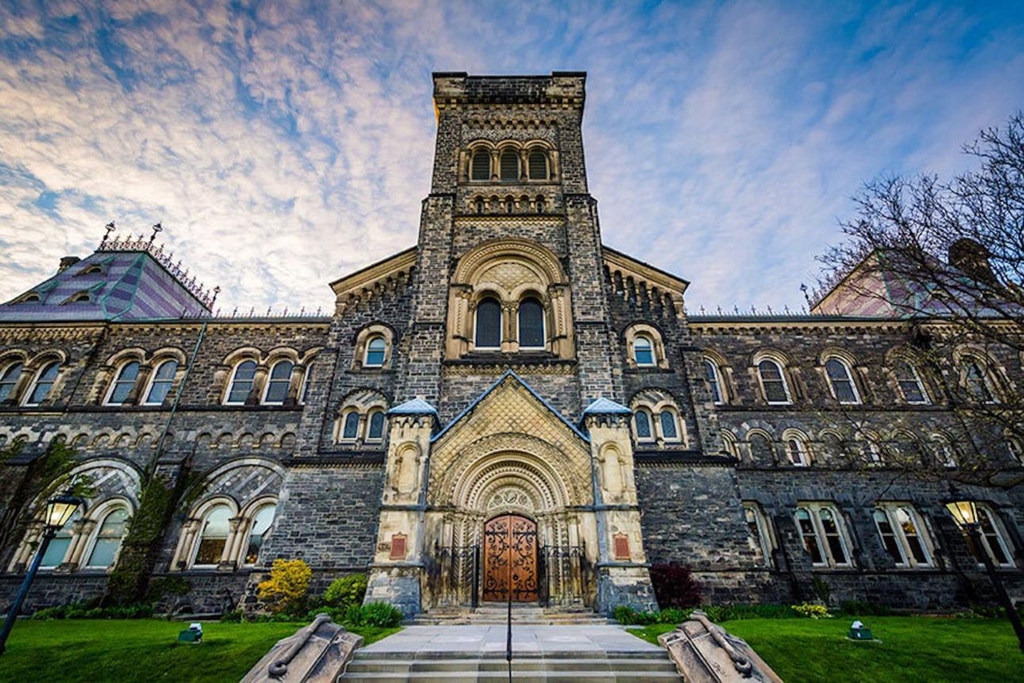
The University of Toronto (U of T) evaluates applicants across three distinct campuses: St. George (Downtown), Mississauga (UTM), and Scarborough (UTSC). For the flagship St. George campus, requirements for Indian applicants are exceptionally competitive:
- Computer Science: Mid-90s (94%–97% CBSE average). Calculus/Standard Mathematics 95%+. Mandatory supplemental application consisting of four short written response questions.
- Engineering (TrackOne, ECE, Mech): High-80s to mid-90s (92%–96%+). Class 12 Physics, Chemistry, and Mathematics 90%+. Mandatory Engineering Online Student Profile with video interviews and timed writing via Kira Talent.
- Rotman Commerce: High-80s to low-90s (88%–93%+). Class 12 Standard Mathematics 85%+. Mandatory supplemental video responses and essay evaluating leadership, analytical thinking, and business ethics.
- Humanities & Social Sciences: Mid-80s (84%–88%+). Class 12 English 80%+.
16. University of British Columbia (UBC) Requirements: The Personal Profile Rubric
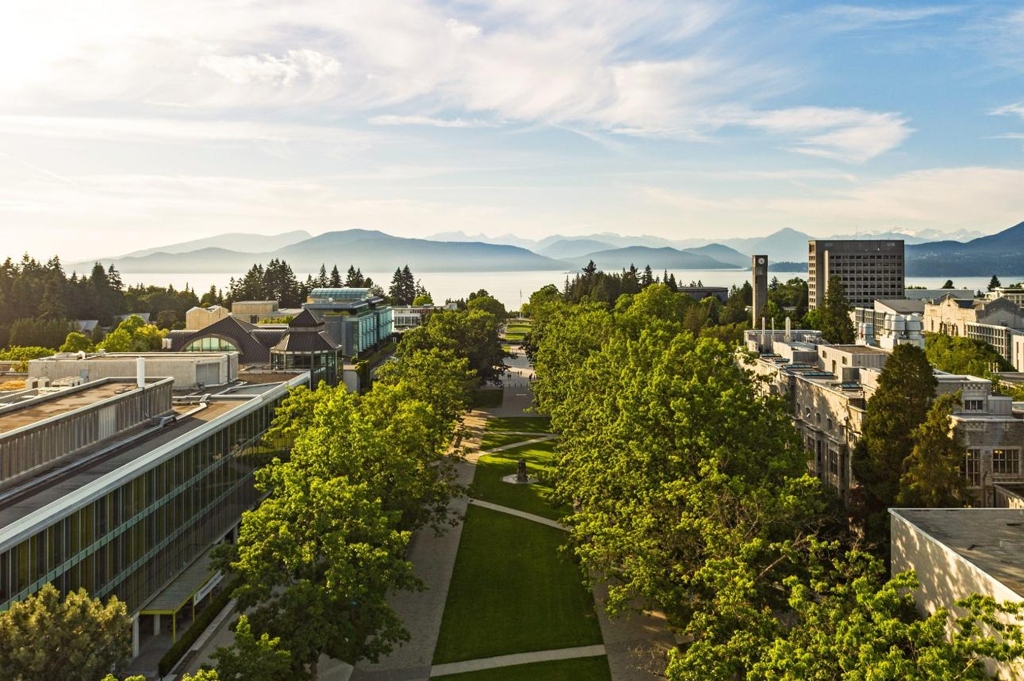
UBC (Vancouver and Okanagan campuses) employs a comprehensive broad-based admissions review. While a strong academic average (86%–93%+) across Grade 11 and Grade 12 is essential, UBC allocates 50% of the admissions decision weight to the Personal Profile. The Personal Profile features structured reflective prompts exploring challenges overcome, community leadership, team collaboration, and personal voice. UBC explicitly states that a candidate with 95% and a mediocre profile may be rejected in favor of an applicant with 88% and an outstanding personal profile.
17. University of Waterloo Requirements: The AIF and Euclid Math Contest
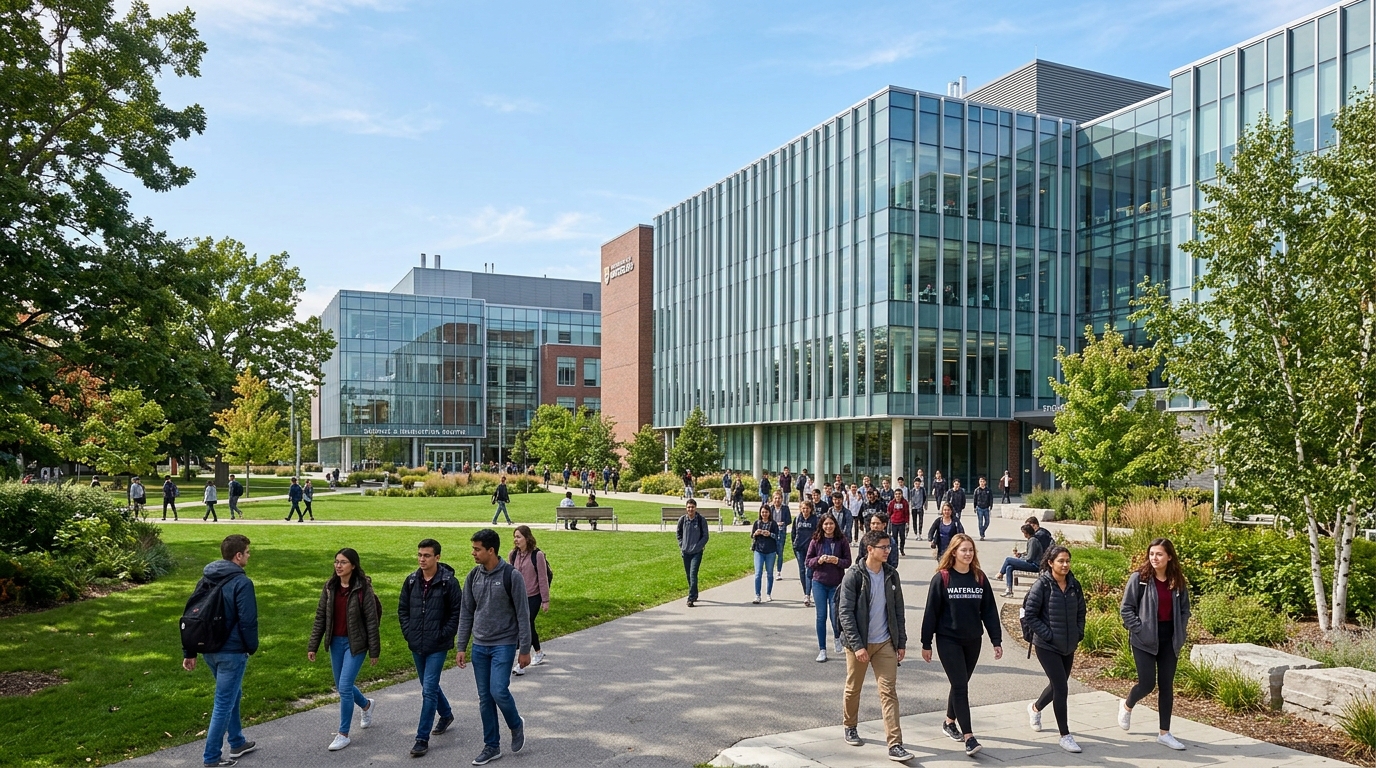
The University of Waterloo is Canada's premier powerhouse for Computer Science, Software Engineering, and Math Co-op. Admission requirements include:
- Overall Academic Cutoff: Minimum 90%–96%+ in CBSE/ISC with 92%+ in Standard Mathematics.
- Admission Information Form (AIF): Mandatory detailed questionnaire documenting programming experience, extracurricular leadership, independent projects, and reason for choosing Waterloo.
- CEMC Euclid Mathematics Contest: Taking the 2.5-hour Euclid contest organized by the Centre for Education in Mathematics and Computing (CEMC) in April is strongly recommended. Scoring in the top quartile provides a decisive admissions edge for Software Engineering and CS applicants.
18. McGill University Requirements: Pure Academic Rigor Without Supplemental Essays
Located in Montreal, McGill University is historically unique among Canada's top tier: most undergraduate faculties do not require or read supplemental essays, letters of recommendation, or activity lists. Admission decisions for the Faculty of Science, Faculty of Engineering, and Desautels Faculty of Management are based almost entirely on your academic transcripts. For CBSE/ISC students, cutoff thresholds are rigidly high: 90%–95%+ overall, with minimum 88%–92% in each individual prerequisite course (Mathematics, Physics, Chemistry).
19. McMaster University Requirements: The Legendary Health Sciences and Engineering 1
McMaster University in Hamilton, Ontario is internationally renowned for health sciences and nuclear engineering. The Bachelor of Health Sciences (BHSc) program receives over 6,000 applications for approximately 240 seats. The minimum grade cutoff is 90% in CBSE/ISC, after which admissions decisions rest entirely on a rigorous supplementary application testing empathy, analytical reasoning, and ethics. McMaster Engineering 1 requires 88%–93%+ and a mandatory Kira Talent video and written assessment.
20. Financial Planning: Tuition Fees, Living Expenses, and Ancillary Costs
Planning your educational investment requires a realistic assessment of Canadian university costs. Total annual expenditure for international students comprises three main components:
| Expense Category | Annual Range (CAD) | Annual Range (INR Equivalent) | Key Considerations |
|---|---|---|---|
| Undergraduate Tuition (STEM/CS) | $45,000 – $68,000 CAD | ₹28,00,000 – ₹42,00,000 | U of T, Waterloo & UBC sit at top tier; Alberta & Dalhousie lower |
| Undergraduate Tuition (Arts/Bus) | $35,000 – $58,000 CAD | ₹22,00,000 – ₹36,00,000 | Arts degrees significantly less expensive than Engineering |
| On-Campus Housing & Meal Plan | $14,000 – $20,000 CAD | ₹8,50,000 – ₹12,50,000 | Guaranteed for first-year students who apply by priority dates |
| Off-Campus Rent & Groceries | $12,000 – $18,000 CAD | ₹7,50,000 – ₹11,00,000 | Toronto and Vancouver carry the highest metropolitan living costs |
| University Health Insurance (UHIP) | $800 – $1,200 CAD | ₹50,000 – ₹75,000 | Mandatory provincial health coverage for international students |
| Books, Transit, Supplies | $2,000 – $3,500 CAD | ₹1,25,000 – ₹2,20,000 | Public transit passes frequently subsidized via university student union |
21. Prestigious Scholarships: Lester B. Pearson, UBC IMES, and Major Entrances
While full-ride scholarships at Canadian universities are fiercely competitive, exceptional Indian students can secure substantial merit-based awards:
- Lester B. Pearson International Scholarship (U of T): Covers 100% of tuition, books, incidental fees, and 4 years of full on-campus residence. High schools must nominate their top candidate by November 30.
- Karen McKellin International Leader of Tomorrow Award (UBC): Need-and-merit award offering full financial support up to the complete cost of tuition and living expenses.
- UBC International Major Entrance Scholarship (IMES): Non-need-based merit award offering $15,000–$25,000 CAD per year renewable across 4 years (totaling $60,000–$100,000 CAD).
- Waterloo President's Scholarships of Distinction: Automatic merit awards ranging from $2,000 to $10,000 CAD for students entering with 95%+ averages.
22. The Co-op Advantage: Earning CAD $40,000–$60,000 During Your Degree
Canada's cooperative education (Co-op) model is one of the most powerful return-on-investment mechanisms in global higher education. In a Co-op program (such as Waterloo Co-op or U of T PEY Co-op), students alternate 4-month academic terms with 4-month full-time paid professional work terms with top employers (e.g., Google, Amazon, Microsoft, RBC, Shopify, Bombardier).
Undergraduate Co-op students earn an average of CAD $8,000 to $15,000 per 4-month work term. Across 4 to 6 work terms, students typically earn CAD $40,000 to $70,000+ total, significantly offsetting university tuition while graduating with up to two full years of verified North American work experience on their resume.
23. IRCC Proof of Funds: Meeting the Updated Living Expense Guarantee
To secure a Canadian Study Permit, applicants must demonstrate sufficient financial resources to the Canadian government. Under updated IRCC regulations, the required minimum cost-of-living financial benchmark is CAD $20,635 for a single applicant (outside Quebec), in addition to first-year tuition fees.
Indian applicants can satisfy this requirement most smoothly by purchasing a Guaranteed Investment Certificate (GIC) of CAD $20,635 from a participating Canadian financial institution (such as Scotiabank, CIBC, RBC, or ICICI Bank Canada) and paying their first-year university tuition in full.
24. The Provincial Attestation Letter (PAL): What Every Indian Student Must Know
In response to international student caps, IRCC requires every undergraduate study permit applicant to submit a Provincial Attestation Letter (PAL) alongside their official Letter of Acceptance (LOA). PAL allocations are distributed by provincial governments (such as Ontario, British Columbia, and Quebec) directly to designated learning institutions (DLIs).
When you accept an offer of admission from an accredited Canadian university and pay your tuition deposit, the university will request a PAL on your behalf from the provincial government and issue it electronically. You cannot submit your visa application without an official PAL.
25. Canadian Study Permit Timeline: Biometrics, Medicals, and Processing Times
Processing a Canadian Study Permit from India typically takes 4 to 8 weeks during peak summer months. Key milestones include:
- April – May: Finalize university selection, pay admission deposit, and obtain Letter of Acceptance (LOA) + Provincial Attestation Letter (PAL).
- May – June: Complete Upfront Medical Exam at an IRCC-approved panel physician in India.
- June: Submit online Study Permit application via the IRCC portal with GIC certificate, tuition receipt, and Statement of Purpose (SOP).
- June – July: Attend biometrics appointment at a local VFS Global visa application centre (New Delhi, Mumbai, Bengaluru, Chandigarh, Hyderabad, Chennai, etc.).
- July – August: Receive Passport Request (PPR), submit passport for visa stamping, and book flights for late August orientation.
26. Post-Graduation Work Permit (PGWP): 3-Year Open Work Visa Eligibility
One of Canada's greatest competitive advantages is the Post-Graduation Work Permit (PGWP). Graduates of a 4-year undergraduate degree from a recognized Canadian university are eligible for a 3-year open work permit. During these three years, graduates can work for any employer in Canada without requiring employer sponsorship or a Labour Market Impact Assessment (LMIA).
27. Permanent Residency Trajectory: Express Entry, CEC, and Provincial Nominees
International graduates who complete a bachelor's degree in Canada and accumulate 1 to 2 years of skilled Canadian work experience (NOC TEER 0, 1, 2, or 3) are ideally positioned for Canadian Permanent Residency (PR). The primary pathways include the Canadian Experience Class (CEC) within the federal Express Entry system and specialized Provincial Nominee Programs (PNP) in Ontario, British Columbia, Alberta, and Saskatchewan.
28. Top 5 Costly Mistakes Indian Applicants Make in Canadian Admissions
- Neglecting Class 11 Marks: Relying on high Class 10 marks and promising high Class 12 marks while submitting a 65% Class 11 transcript.
- Missing Supplemental Deadlines: Assuming submitting the OUAC application is sufficient, while missing internal university portal deadlines for AIF, Kira video interviews, or documents.
- Ignoring Math Prerequisites: Taking CBSE Applied Mathematics instead of Standard Mathematics when applying for Computer Science or Engineering.
- Generic Essay Writing: Writing overly philosophical, generic essays for UBC or Waterloo instead of concrete, metrics-driven descriptions of real projects and problem-solving.
- Late Study Permit Filing: Delaying tuition deposit payments until July, resulting in visa processing delays that force students to defer their intake.
29. Grade-by-Grade Roadmap: How to Prepare from Class 9 to Class 12
- Class 9 & 10: Build robust mathematical and scientific fundamentals. Target 90%+ in Class 10 board exams. Explore coding, robotics, public speaking, and community initiatives.
- Class 11: Select correct CBSE stream with Standard Mathematics. Maintain high scores (88%+) across all school terms. Participate in international math contests (Fermat, Hypatia) and prepare for IELTS Academic.
- Class 12 (Summer / Fall): Finalize college shortlist. Take IELTS/TOEFL by September. Draft supplemental essays (UBC, Waterloo, U of T Rotman) and request predicted grade transcripts.
- Class 12 (Winter / Spring): Submit OUAC and university portals by December–January. Complete Kira Talent video interviews. Receive conditional offers and maintain board exam preparation.
30. Frequently Asked Questions: Canada Undergraduate Admissions
Can I get admission to top Canadian universities with 80% in CBSE Class 12?
An 80% CBSE average is competitive for solid comprehensive and regional universities like Concordia, Windsor, Guelph, Memorial, or York. However, for elite Tier 1 programs such as Waterloo Computer Science, U of T Engineering, or McGill Science, competitive cutoffs generally require 90%–95%+.
Is SAT or ACT required for Canadian university admissions?
No, Canadian universities do not require SAT or ACT scores from students following the Indian CBSE, ISC, or State Board curricula. Admissions decisions are based on board marks, predicted grades, and program-specific supplements. However, submitting a 1500+ Digital SAT score can serve as strong academic reinforcement for scholarships.
Can Indian students work off-campus while studying in Canada?
Yes, international students holding a valid Canadian Study Permit are authorized to work off-campus up to 24 hours per week during regular academic terms and full-time (up to 40 hours per week) during scheduled breaks such as winter and summer vacations.
Is a gap year accepted by Canadian universities?
Yes, Canadian universities accept applicants who have taken a gap year between Class 12 and university entry, provided the gap is transparently explained in the application with evidence of productive engagement such as internships, research, certifications, or community service.
What is the difference between colleges and universities in Canada?
In Canada, "Colleges" (such as Seneca, Humber, George Brown) focus primarily on 1- to 3-year vocational diplomas, certificates, and applied technical training. "Universities" (such as Toronto, UBC, Waterloo, McGill) are academic degree-granting research institutions offering 4-year undergraduate bachelor degrees, master degrees, and doctorates.
Download the Official Canada Undergraduate Admission Guide (2027 Entry)
Get immediate access to the comprehensive 4-Year CBSE/ISC Percentage Matrix, 10-Point Document Checklist, and IRCC Study Permit Financial Calculator.
32. Strategic Next Steps: Initiating Your Canadian Admissions Campaign
Gaining admission to Canada's top universities is a journey that rewards rigorous preparation, accurate timeline management, and authentic profile articulation. At EduQuest, our senior admissions mentors have guided hundreds of Indian students into premier faculties across the University of Toronto, UBC, University of Waterloo, and McGill.
Build Your Winning Canadian University Application with EduQuest
Schedule a personalized diagnostic consultation with our former Canadian university admissions officers and international profile architects.