
Choosing an academic and vocational direction in the 21st century can feel like navigating an uncharted labyrinth. With rapid advancements in artificial intelligence, the creation of entirely new interdisciplinary industries, and the emergence of thousands of novel job titles, high school and college students often feel intense decision paralysis. Trying to pick a single lifelong profession based on subjective advice or superficial online quizzes leads to costly mistakes, academic burnout, and missed potential. This is why structured career exploration for students is an essential foundation for long-term success.
Effective career exploration for students is not about randomly browsing job boards or memorizing lists of degrees. It is an active, scientific process of self-discovery, market research, hands-on prototyping, and strategic roadmapping. By evaluating your intrinsic cognitive strengths through psychometric testing, comparing broad occupational clusters (like STEM & Deep Tech, Quantitative Finance, Precision Medicine, or Cyber Law), and testing your interests through real-world capstone projects, you transform vague ambitions into an actionable plan. Powered by EduQuest Career Clusters and EduPath, this comprehensive guide provides students and parents with a proven, step-by-step framework to navigate career exploration for students with confidence and clarity.

Begin Your Career Exploration Journey with EduQuest AI
Free Cluster Diagnostic
AI Career Cluster Engine
Take our 10-minute assessment to explore 16 economic clusters and 79 career pathways matched to your cognitive vectors.
Launch Career Cluster ScanFree Cognitive Diagnostic
Narrative Intelligence Scan
Decode your 16 MBTI archetype, learning preferences, and Class 11 stream fit with our proprietary 18-question AI scan.
Take Free Cognitive ScanPersonalized Student Roadmap
EduQuest EduPath Platform
Generate your bespoke academic and career roadmap connecting high school streams, test prep milestones, and top global colleges.
Launch EduPath Roadmap1. What Is Career Exploration for Students? The 4 Core Stages
**Career exploration for students** is the systematic, iterative practice of investigating occupational domains, understanding personal cognitive aptitudes, testing authentic interests through experiential learning, and establishing concrete educational milestones.
Fast-Track Your College & Career Strategy
Get immediate, personalized AI insights tailored to your grade, strengths, and dream universities — 100% free with instant reports.
Know Your Personality Type for Free
Take our 18-question AI psychometric test to uncover your cognitive archetype, hidden learning superpowers, and ideal university courses.
Personalized Career & University EduPath
Build a step-by-step Grade 8–12 admissions blueprint with AI-matched target universities, exam schedules, and extracurricular profiles.
A scientific student career exploration journey encompasses four sequential stages:
- 1. Cognitive Psychometric Profiling: Objectively evaluating your innate problem-solving vectors (quantitative logic, creative divergence, empathetic resonance, and strategic governance) to discover where your natural flow state resides.
- 2. Broad Career Cluster Mapping: Grouping thousands of specialized jobs into 16 manageable Career Clusters and 79 Career Pathways, keeping options versatile rather than prematurely pigeonholing.
- 3. Hands-On Experiential Prototyping: Validating your curiosity through mini-research papers, code repositories, essay competitions, and micro-internships before committing to a multi-year degree.
- 4. Academic & Admissions Roadmapping: Aligning Class 11 stream choices, standardized test prep (Digital SAT, UCAT, TMUA), and global university shortlists with target high-growth industries.
2. 5 Practical Methods for Students to Explore Careers (The Scientific Toolkit)
Move beyond passive internet searches by using these five proven, high-impact career exploration techniques:

Take Validated AI Psychometric Diagnostics
Begin by taking the 10-minute EduQuest Narrative Intelligence Scan and Career Cluster Assessment. Objective data eliminates subjective biases and reveals your true problem-solving strengths.
Author Super-Curricular Research Papers
Pick a question in a field you are curious about (e.g., AI ethics, renewable materials, or behavioral economics) and write a 1,500-word research paper. The writing process immediately reveals whether you enjoy deep domain inquiry.
Enter Prestigious Competitions & Hackathons
Test your competitive stamina and problem-solving skills in international challenges like the John Locke Essay Prize, Conrad Challenge, Regeneron ISEF, or Kaggle data competitions.
Conduct Informational Interviews with Mentors
Reach out to university alumni, professionals, and senior researchers on LinkedIn. Ask them about their daily cognitive tasks, industry challenges, and what they wish they knew in high school.
Enroll in Targeted University Micro-Courses
Audit introductory undergraduate courses on Coursera, edX, or MIT OpenCourseWare (e.g., CS50 for Computer Science or Justice by Michael Sandel for Pre-Law) to experience college-level rigor.
3. The 16 Career Clusters Exploration Matrix: Finding Your Academic Domain
To streamline **career exploration for students**, use this comprehensive matrix linking thinking styles, career clusters, recommended streams, and global earning potential:
| Career Cluster | Dominant Cognitive Vector | Key High School Stream | Target University Majors | Required Entrance Exams | Median Global Salary |
|---|---|---|---|---|---|
| STEM & Deep Tech | Empirical Scientific (INTJ/INTP) | Science (PCM/PCMB) | Robotics, Aerospace, Pure Physics | Digital SAT, TMUA, AP Calc BC | $135K – $260K+ |
| Information Technology & AI | Quantitative Deductive (INTP/ENTP) | Science (PCM + CS) | Computer Science, AI & Machine Learning | Digital SAT, AP CS A, TMUA | $145K – $280K+ |
| Finance & Quant Economics | Strategic Commercial (ENTJ/ESTJ) | Commerce with Math / PCM | Quant Finance, Economics, Applied Math | Digital SAT, TMUA, AP Micro/Macro | $150K – $350K+ |
| Health Science & Medicine | Empathetic Analytical (ISTJ/INFJ) | Science (PCB / Pre-Med) | Medicine (MBBS/MD), Neuroscience | UCAT, MMI Interview Prep | $160K – $340K+ |
| Law, Public Policy & Diplomacy | Persuasive Articulation (ENFP/ENTP) | Humanities / Pre-Law | Law (LLB/JD), Public Policy, Geopolitics | LNAT, AP Comparative Gov | $125K – $260K+ |
| Arts, A/V Tech & Design | Creative Divergent (ISFP/INFP) | Design / Humanities | Interactive Design, UX Architecture | Design Portfolio, Digital SAT | $105K – $210K+ |
| Business & Enterprise Strategy | Decisive Governance (ESTJ/ENTJ) | Commerce / Business Studies | Business Admin, Operations Strategy | Digital SAT, ACT | $130K – $270K+ |
| Human Services & Psychology | Interpersonal Resonance (ENFJ/INFJ) | Humanities with Psychology | Clinical Psychology, Cognitive Science | Digital SAT, AP Psychology | $95K – $190K+ |
4. The 4-Year High School Career Exploration Roadmap (Class 9 to 12)
Here is how students should structure their **career exploration** across each grade level in high school:

Broad Discovery & Cognitive Vector Mapping
Identify Innate Aptitudes & Behavioral Vectors
- Complete the 10-minute EduQuest Narrative Intelligence Scan.
- Shortlist 3–4 broad career clusters matching your quantitative, verbal, and creative vectors.
Cluster Narrowing & Class 11 Stream Optimization
Preserve Prerequisite Versatility
- Choose Class 11 stream subjects that keep multiple high-growth pathways open.
- Ensure Mathematics is retained if exploring STEM, Economics, Architecture, or Finance.
Super-Curricular Spikes & Standardized Testing
Author Research Papers & Prepare for SAT/UCAT
- Publish original academic research in peer-reviewed international journals.
- Begin structured coaching for target entrance exams ([Digital SAT](/sat), [ACT](/act), [UCAT](/ucat), [TMUA](/tmua)).
Global University Shortlisting & Essay Strategy
Common App, UCAS & Scholarship Applications
- Shortlist 12–15 global universities across Dream, Target, and Safety tiers in USA, UK, Canada, and Singapore.
- Craft narrative personal statements highlighting your deep intellectual exploration spike.
5. 5 Golden Rules of Effective Career Exploration
Prototype Early Through Hands-On Creation
Do not just read about a field. Build a software tool, write a policy brief, or conduct a laboratory experiment to see if you enjoy the daily work.
Preserve Prerequisite Flexibility in Class 11
Retaining Mathematics in Class 11 keeps multiple high-growth career paths open across STEM, Economics, Architecture, Data Science, and Finance.
Distinguish Between Admiration and Daily Work Reality
Admiring a surgeon on TV is different from standing 10 hours in an operating theatre. Understand the lifestyle and cognitive demands of each career.
Build an "Angular" Profile Spike for Admissions
Ivy League and Oxbridge admissions officers reward candidates with deep exploration in a specific cluster over generic well-rounded applicants.
Base Decisions on Scientifically Validated Scans
Rely on data-backed psychometric tools (like EduQuest Narrative Intelligence) rather than informal opinions or transient social media trends.

6. Common Pitfalls in Student Career Exploration
- Passive "Googling" Without Real Project Testing: Reading Wikipedia articles or job descriptions does not provide the visceral feedback of building a project or writing a research paper.
- Confining Exploration to Only 2–3 Traditional Jobs: Believing that success only exists in Medicine, Civil Engineering, or Corporate Law ignores lucrative emerging fields in AI, Quant Finance, and Bioethics.
- Assuming Exploration Means Changing Goals Every Month: Exploration should follow a structured progression: broad in Class 9, focused in Class 10, deep research spike in Class 11.
- Relying on Commission-Driven Agency Counselors: Be wary of agencies that push specific partner colleges rather than shortlisting institutions based on your genuine exploration findings.
7. How EduQuest Powers Your Career Exploration Journey
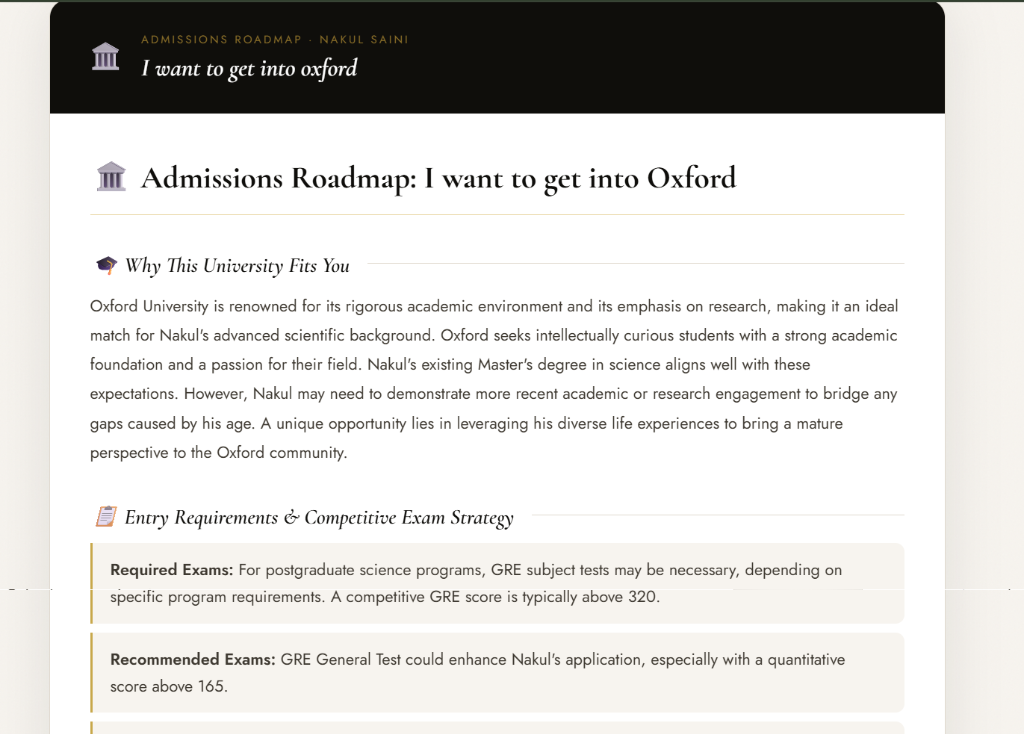
At EduQuest, discovering and executing your **career exploration for students** plan is powered by our complete global admissions advisory ecosystem:
- 1. Stream & Subject Strategy: Selecting optimal Class 11 subject combinations across CBSE, ISC, Cambridge, and IB curricula.
- 2. Super-Curricular Research Papers: Mentoring students to publish original research and enter international competitions (Regeneron ISEF, John Locke Essay Prize).
- 3. Elite Test Prep & Profile Strategy: Expert coaching for Digital SAT, ACT, UCAT, LNAT, and TMUA, combined with comprehensive Study Abroad Counseling.
8. Frequently Asked Questions (FAQ) About Career Exploration
What is career exploration for students and why is it important?
Career exploration for students is the process of discovering personal cognitive strengths, researching career clusters, testing interests through projects, and planning high school and college roadmaps.
When should a student start career exploration?
The optimal time to begin is in Class 8 or 9. Early exploration provides 3–4 years of runway to author research papers, optimize stream selection, and master standardized admissions tests.
What if a student’s interests change during high school?
Career exploration is designed to be dynamic. By maintaining versatile foundational subjects like Mathematics, lateral transitions between related disciplines in high school and college are seamless.
How do career clusters make exploration easier for high schoolers?
Instead of forcing students to choose among 10,000+ single job titles, career clusters group occupations into 16 broad domains with shared academic prerequisites, keeping multiple doors open.
Is the EduQuest Career Cluster diagnostic free for students?
Yes! The online AI diagnostic is 100% free and provides an instant 20+ page intelligence report covering cluster matches, subject recommendations, and university degree tracks.
Download the 2026 Student Career Exploration Guide
Get instant access to EduQuest’s 28-page whitepaper featuring 16 career cluster breakdowns, stream selection matrices, SAT/UCAT prep guides, and Ivy League essay strategies.
Explore Your Ideal Career Pathway Today
Join 10,000+ ambitious students who have transformed their academic and career trajectory with EduQuest AI. Take the free 10-minute scan now.