
In the hyper-competitive world of global university admissions and elite career recruitment, having top marks and a list of extracurricular activities is no longer enough. Thousands of students apply to Harvard, Stanford, Oxford, and Cambridge with perfect 4.0 GPAs and 1550+ SAT scores—yet over 90% are rejected. The missing element is almost always a coherent, compelling personal narrative. This is where a career path narrator revolutionizes the admissions journey.
A career path narrator is an AI-powered strategic framework that synthesizes your cognitive psychometric traits, formative life experiences, super-curricular research, and long-term ambitions into an authentic, unforgettable intellectual identity. Powered by the EduQuest Narrative Intelligence Scan and EduPath, a career path narrator helps high school and university students discover their authentic "spike" and articulate it powerfully in Common App personal statements, UCAS essays, and scholarship interviews. In this complete guide, we explore how narrative intelligence transforms student profiles.
Unlock Your Admissions Story with EduQuest AI
Free Narrative Intelligence Scan
Cognitive Vector Scan
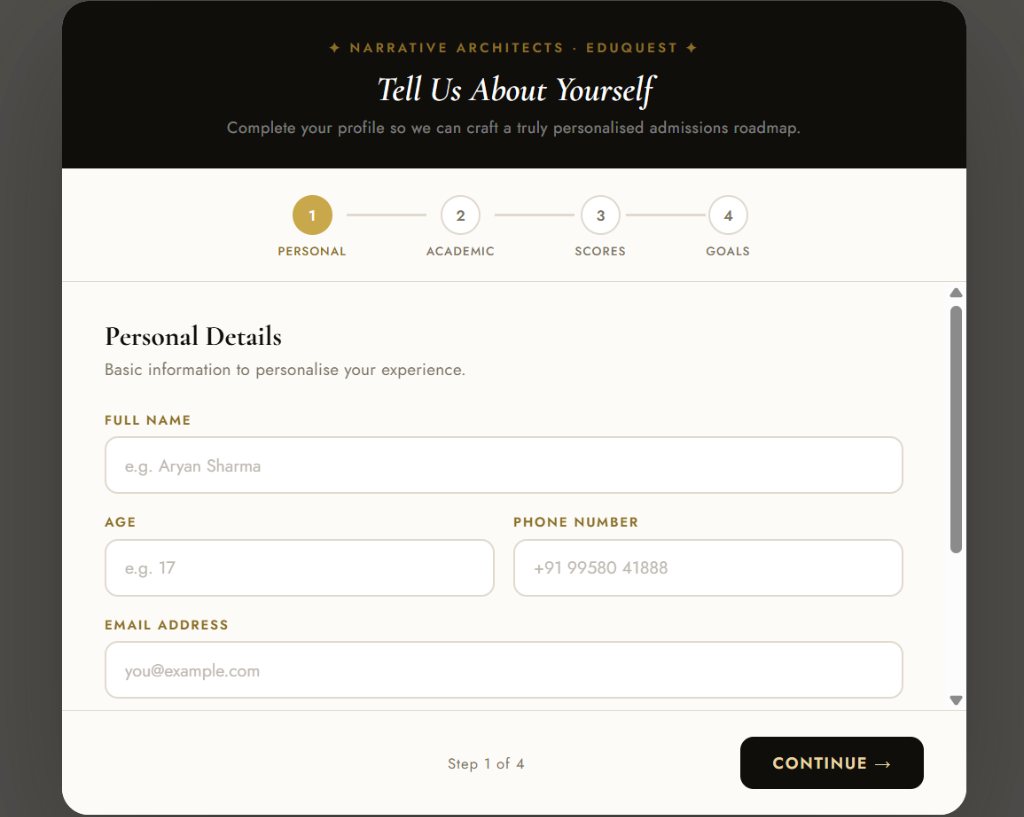
Take our proprietary 18-question AI scan to discover your 16 MBTI archetype, cognitive problem-solving style, and narrative spike.
Launch Free Narrative ScanPersonalized Admissions Roadmap
EduPath Platform
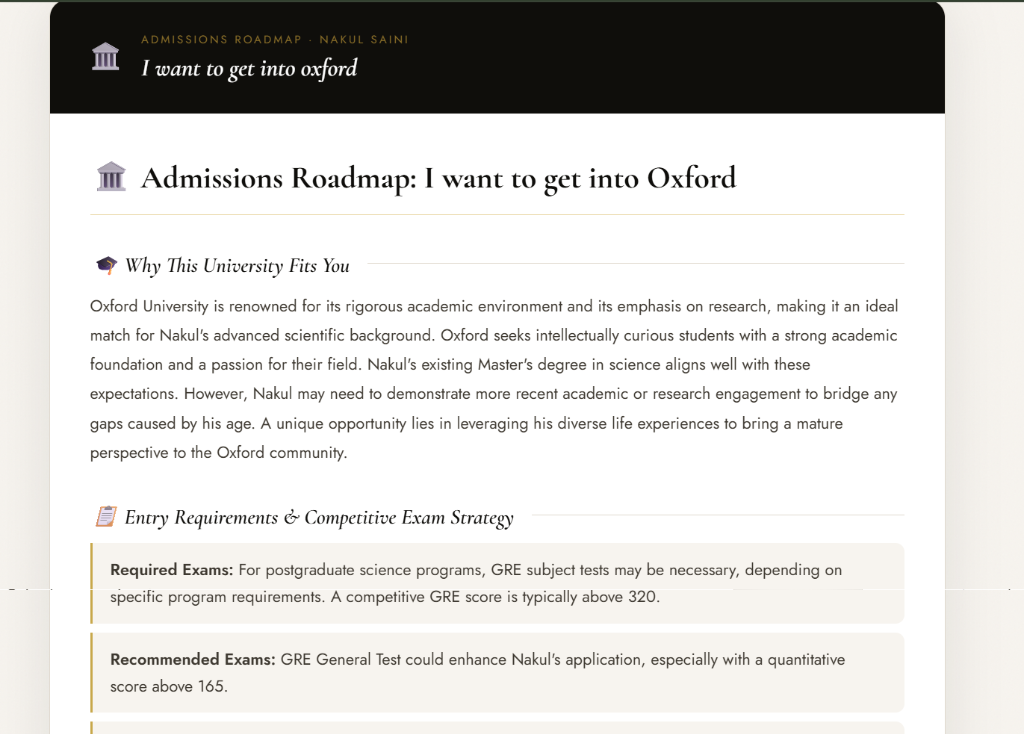
Translate your narrative archetype into a multi-year roadmap connecting Class 11 streams, SAT/UCAT prep, and global college targets.
Launch EduPath Tool1-on-1 Essay & Story Mentorship
Ivy League Admissions Advisory
Work with former Ivy League and Oxbridge admissions readers to craft unforgettable personal statements and narrative essays.
Book Strategy Session1. What Is a Career Path Narrator? The Science of Narrative Intelligence
A **career path narrator** is a diagnostic and storytelling methodology that translates a student's raw psychological traits and academic milestones into a structured, cohesive intellectual story.
Fast-Track Your College & Career Strategy
Get immediate, personalized AI insights tailored to your grade, strengths, and dream universities — 100% free with instant reports.
Know Your Personality Type for Free
Take our 18-question AI psychometric test to uncover your cognitive archetype, hidden learning superpowers, and ideal university courses.
Personalized Career & University EduPath
Build a step-by-step Grade 8–12 admissions blueprint with AI-matched target universities, exam schedules, and extracurricular profiles.
The career path narrator framework operates across three key psychological dimensions:
- 1. The Origin Vector (Why You Think the Way You Do): Decoding your cognitive strengths (e.g., quantitative deduction, creative divergence, or systemic empathy) through validated psychometric testing.
- 2. The Intellectual Thread (What You Create): Connecting high school coursework, published research papers, and capstone projects around a single central inquiry.
- 3. The Vision Horizon (Where You Are Going): Articulating how target university programs ([Digital SAT](/sat-coaching-classes), [UCAT](/ucat), [TMUA](/tmua)) and 2030+ career clusters fulfill your life mission.
2. The 4-Stage Narrative Storybuilding Process
Here is how students use the **career path narrator** methodology to build an unshakeable profile:

Cognitive Archetype Discovery
Identify Core Cognitive Drivers
- Take the 10-minute EduQuest Narrative Intelligence Scan.
- Discover your 16 MBTI archetype and 6 cognitive vectors.
Thematic Research & Super-Curricular Spike
Build Tangible Intellectual Evidence
- Publish original academic research in peer-reviewed international journals.
- Compete in prestigious essay competitions (John Locke, Conrad Challenge).
Admissions Narrative Synthesis
Common App, UCAS & Supplemental Essays
- Synthesize research, test scores ([Digital SAT](/sat), [UCAT](/ucat)), and personal milestones into cohesive essays.
- Eliminate generic cliches and highlight authentic self-awareness.
Career Narrative & Industry Positioning
Quant Finance, AI Leadership & Global Careers
- Leverage your narrative identity in high-stakes internship and fellowship interviews.
- Step confidently into high-growth 2030+ industry leadership.
3. Resume Checklist Approach vs Career Path Narrator Approach
Here is why top universities reject checklist applicants while admitting students with a cohesive narrative identity:
| Profile Element | Traditional "Checklist" Applicant | Career Path Narrator Applicant |
|---|---|---|
| Extracurricular Activities | Random assortment of clubs (MUN, debate, robotics, tennis) | Focused super-curricular spike exploring one central intellectual theme |
| Research Projects | No research or generic school science fair posters | Published original research papers in peer-reviewed academic journals |
| Admissions Essays | Generic "I worked hard and overcame challenges" stories | Profound philosophical and scientific inquiry linking identity to global impact |
| Test Prep Alignment | Scattered exam attempts without strategic purpose | Synchronized high percentiles ([SAT](/sat), [UCAT](/ucat), [TMUA](/tmua)) supporting narrative spike |
| Admissions Committee Verdict | Rejected as "generic well-rounded applicant" | Admitted to Ivy League / Oxbridge with merit scholarships |
4. 5 Essential Rules to Craft Your Career Path Narrative
Anchor in Authentic Cognitive Traits
Do not invent a fake persona. Use your validated psychometric scan (like EduQuest Narrative Intelligence) to highlight your genuine problem-solving style.
Show, Don't Just Tell with Evidence
Back up your passion with tangible artifacts—published research papers, GitHub repositories, or competitive awards (Regeneron ISEF, John Locke).
Connect the Dots Chronologically
Show how early childhood curiosity led to high school subject choices, which inspired specific research projects, leading to your university goals.
Embrace Intellectual Vulnerability
Top admissions readers love students who reflect honestly on failed experiments, shifting hypotheses, and personal growth.
Align with Future 2030+ Industry Impact
Demonstrate how your chosen university major connects to solving urgent 21st-century challenges (ethical AI, climate tech, quantitative modeling).

5. Common Storytelling Mistakes in College Applications
- Writing the "Trite Sports Injury" or "Volunteer Trip" Essay: Admissions officers read thousands of identical essays about sprained ankles or 3-day volunteering camps. Focus on intellectual curiosity instead.
- Listing Resume Achievements in Essay Form: Your essay should not be a rewritten CV. It should explore your inner cognitive world and how you process ideas.
- Trying to Sound Like an Academic Thesaurus: Using overly convoluted language obscures your authentic voice. Clear, precise, and passionate writing wins admits.
- Ignoring the University's Specific Culture: Submitting generic copy-paste essays without tailoring your narrative to why a specific university is the sole environment for your growth.
6. How EduQuest Empowers Your Narrative Storytelling
At EduQuest, our **career path narrator** methodology is powered by our complete global admissions advisory ecosystem:
- 1. Stream & Subject Strategy: Selecting optimal Class 11 subject combinations across CBSE, ISC, Cambridge, and IB curricula.
- 2. Super-Curricular Research Papers: Mentoring students to publish original research and enter international competitions (Regeneron ISEF, John Locke Essay Prize).
- 3. Elite Test Prep & Profile Strategy: Expert coaching for Digital SAT, ACT, UCAT, LNAT, and TMUA, combined with comprehensive Study Abroad Counseling.
7. Frequently Asked Questions (FAQ) About Career Path Narrators
What is a career path narrator and how does it help students?
A career path narrator is an AI-powered diagnostic and storytelling system that translates a student's cognitive strengths and academic achievements into a compelling narrative for top university admissions.
How is narrative intelligence used in college applications?
It helps students identify their authentic "intellectual spike," enabling them to write standout Common App personal statements and UCAS essays that beat out generic applicants.
Is the EduQuest Narrative Intelligence Scan free?
Yes! The online scan is 100% free, delivering an instant 20+ page intelligence report covering cognitive vectors, stream recommendations, and essay narrative themes.
How does narrative storytelling help with career interviews?
It teaches candidates to articulate their unique problem-solving value proposition, making them memorable in competitive internship and job interviews.
When should a student start crafting their narrative story?
The ideal time is in Class 9 or 10, allowing 2–3 years to build tangible evidence (published research papers, capstone projects) supporting their central narrative.
Download the 2026 Admissions Narrative & Storytelling Blueprint
Get instant access to EduQuest’s 28-page whitepaper featuring 16 archetype essay themes, Ivy League personal statement breakdowns, and SAT/UCAT prep guides.
Discover Your Authentic Admissions Narrative Today
Join 10,000+ ambitious students who have transformed their academic and career trajectory with EduQuest AI. Launch your free scan now.