
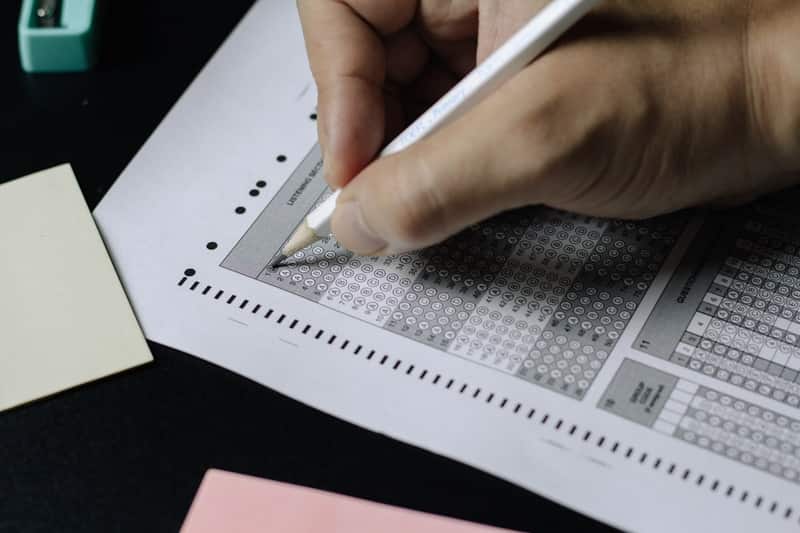
The Digital SAT represents a massive shift in how college readiness is measured. No longer a marathon paper-and-pencil test, the Digital SAT is a streamlined, adaptive experience taken on a digital device. For students aiming for top-tier universities in 2026, understanding the nuances of the digital format, its adaptive nature, and the integrated testing tools is crucial to achieving a perfect score.
The Digital SAT Format: What's New?
The most significant change is the introduction of Multistage Adaptive Testing (MST). The exam adapts to your performance in real-time, delivering a second module of questions tailored to your skill level based on how you performed in the first module. This allows the test to be shorter—just 2 hours and 14 minutes—while still accurately measuring your abilities.
Reading and Writing (RW)
64 Minutes · 54 Questions
- Module 1: 32 minutes, 27 questions (Mix of easy, medium, and hard questions).
- Module 2: 32 minutes, 27 questions (Adaptive: either easier or harder based on Module 1).
- Features shorter passages, with one question per passage.
- Focuses on Information and Ideas, Craft and Structure, Expression of Ideas, and Standard English Conventions.
Math
70 Minutes · 44 Questions
- Module 1: 35 minutes, 22 questions (Mix of difficulty levels).
- Module 2: 35 minutes, 22 questions (Adaptive: easier or harder based on Module 1).
- Calculators are allowed on all math questions. A built-in Desmos graphing calculator is provided.
- Focuses on Algebra, Advanced Math, Problem-Solving and Data Analysis, and Geometry/Trigonometry.
Understanding the Scoring System
The 1600 Point Scale Remains
Despite the format changes, the SAT is still scored on a 400–1600 scale. The Reading & Writing section is scored from 200–800, and the Math section is scored from 200–800.
Item Response Theory (IRT)
Because the test is adaptive, questions are weighted differently. A harder question might be worth more than an easier question. Therefore, you cannot simply calculate your score by counting the number of correct answers.
No Penalty for Guessing
There is no negative marking on the Digital SAT. You should never leave a question blank; always make your best guess if you are running out of time.
Fast-Track Your College & Career Strategy
Get immediate, personalized AI insights tailored to your grade, strengths, and dream universities — 100% free with instant reports.
Know Your Personality Type for Free
Take our 18-question AI psychometric test to uncover your cognitive archetype, hidden learning superpowers, and ideal university courses.
Personalized Career & University EduPath
Build a step-by-step Grade 8–12 admissions blueprint with AI-matched target universities, exam schedules, and extracurricular profiles.

The College Board's Bluebook application is the testing platform for the Digital SAT. It is essential to download this app early and take practice tests directly within it to familiarize yourself with the interface, the built-in timer, the reference sheet, and the mark-for-review tool.
Common Digital SAT Mistakes
- Ignoring the Built-in Desmos Calculator: Many students stick to their handheld calculators, ignoring the powerful graphing capabilities of the integrated Desmos calculator which can solve complex algebra problems in seconds.
- Pacing Issues in the Reading Section: Even though passages are shorter, students often spend too much time on dense historical or scientific texts. You must maintain a strict pace of about 1 minute and 10 seconds per question.
- Underestimating Module 1: If you perform poorly on the first module, you will be routed to the easier second module, capping your maximum possible score around 600-650 per section, regardless of how well you do in the second module.
- Practicing on Paper: Preparing using old paper SAT tests is highly ineffective. The digital test requires reading on a screen and managing digital stamina, which must be practiced on a computer or tablet.
Preparing for the Digital SAT requires a strategic shift. It is no longer just about content knowledge; it is about mastering the adaptive testing environment. You need to train your brain to quickly shift contexts between different short passages and efficiently utilize the digital tools available.
The Digital SAT rewards adaptability and digital fluency. The students who score the highest aren't just good at math and reading; they are experts at taking the test in its new digital habitat.
— EduQuest SAT Master Coach
Old SAT vs. Digital SAT: The Breakdown
| Feature | Old Paper SAT | Digital SAT (2026) |
|---|---|---|
| Total Time | 3 hours | 2 hours 14 minutes |
| Format | Linear (everyone takes the same test) | Adaptive (Module 2 depends on Module 1) |
| Reading Passages | Long passages with 10-11 questions each | Short paragraphs with 1 question each |
| Calculator Policy | No-Calculator and Calculator sections | Calculator allowed for the entire Math section |
| Built-in Tools | None | Desmos calculator, timer, highlighter, mark-for-review |
| Score Delivery | Days or weeks | Days |
The adaptive nature of the test ensures a more secure and personalized testing experience. Since each student receives a unique combination of modules and questions, it is practically impossible to share answers, ensuring the integrity of the exam for college admissions.
Master the Digital SAT with EduQuest
Our specialized coaching program features full-length adaptive mock tests, personalized analytics, and expert strategies tailored specifically for the Digital SAT.
How the Digital SAT Impacts College Admissions
With many top-tier universities reinstating their standardized testing requirements for 2026 admissions, a strong SAT score is more important than ever. The Digital SAT is viewed by admissions officers exactly the same way the paper SAT was; a 1500 on the digital test carries the same weight and prestige.
- A high SAT score can offset a slightly lower GPA or a less rigorous course load.
- Many merit-based scholarships use SAT scores as a primary qualifying metric.
- Super-scoring is still widely accepted; you can combine your highest Math and highest Reading & Writing scores across different test dates.
- Submitting a strong score gives admissions committees confidence in your academic foundation, especially if you come from an unranked high school.
Structuring Your Study Plan
An effective study plan for the 2026 Digital SAT should begin 3 to 6 months before your target test date. Start by taking a full-length diagnostic test on the Bluebook app to establish your baseline score. Focus your initial weeks on content gaps (e.g., grammar rules, algebra concepts) before shifting to intensive, timed practice and adaptive testing strategies.
Final Thoughts on the Digital SAT
The Digital SAT is an evolution, not a revolution in what you need to know, but a revolution in how you are tested. Embrace the format, master the tools, and you will find it is the most accessible SAT yet.
FAQs: Digital SAT 2026
Take an SAT PREP Test
Can I take the Digital SAT on my own laptop?
Yes, you can use your own personal Mac or Windows laptop, or an approved tablet. However, the device must have the Bluebook application installed and meet the College Board's battery and operating system requirements.
What happens if my computer crashes during the test?
The Bluebook app continuously saves your progress. If your device crashes or loses power, you can restart it or switch to a backup device, and you will resume exactly where you left off without losing testing time.
Is the Digital SAT easier than the paper SAT?
The content difficulty remains the same. However, many students find the digital format less fatiguing because it is significantly shorter and the reading passages are brief. The adaptive nature ensures you face questions suited to your ability level.
Boost Your SAT Score with Expert Coaching
Join EduQuest's comprehensive Digital SAT prep courses. Our adaptive curriculum and experienced mentors guarantee a significant score improvement.
Accelerate Your College Prep
Evaluate Your Profile
AI Profile Evaluator
Submit your academic scores, SAT results, and extracurriculars to get instant feedback on your chances for top universities.
Evaluate ProfileDiscover Your True Potential
Narrative Intelligence Scan
Personality Tester
Uncover your hidden strengths and cognitive profile with our scientifically backed assessment.
Take the TestFind Your Path
Career Cluster AI
Explore the best career pathways perfectly aligned with your unique personality and goals.
Check ProfileDownload the Official The Complete Digital SAT Guide & Master Preparation Roadmap
Get immediate access to EduQuest’s 8-page comprehensive candidate toolkit with diagnostic benchmarks, step-by-step frameworks, error telemetry logs, and structured preparation timelines.