
Ireland Undergraduate Admissions Intelligence Hub (2027 Entry)
Eligibility Evaluation
1-on-1 Profile Assessment
Evaluate your Class 10 and 11 academic transcripts and predict your admission probability across Trinity, UCD, Galway, UCC, and DCU.
Check Admission OddsAI Strategy Diagnostic
EduPath Profiler
Calculate your competitive profile strength against official Irish Leaving Certificate points and faculty subject prerequisites.
Launch EduPath ProfilerOfficial Admissions Dossier
Download Free PDF Guide
Get the official 45-page master guide containing CBSE/ISC percentage conversion tables, subject matrices, and visa checklists.
1. Executive Overview: Why Ireland Has Emerged as Europe's Premier Study Destination
Over the last decade, Ireland has transformed into the premier higher education destination in the European Union for ambitious Indian students. As the only major native English-speaking country remaining within the Eurozone post-Brexit, Ireland provides Indian high school graduates with an unparalleled bridge to world-class academic institutions, vibrant European culture, and direct entry into a booming knowledge economy.
Ireland is recognized globally as the Silicon Valley of Europe and the continent's pharmaceutical manufacturing capital. With European headquarters for multinational tech giants like Google, Meta, Apple, Microsoft, TikTok, and Salesforce, alongside 9 of the world's top 10 pharmaceutical innovators (including Pfizer, Novartis, and Johnson & Johnson), studying an undergraduate degree in Ireland is closely aligned with high-value international industry.
However, navigating Ireland undergraduate admission requirements demands a precise understanding of academic equivalencies, strict subject prerequisites (particularly in higher mathematics and laboratory sciences), and the crucial procedural distinction between direct university application portals and the Central Applications Office (CAO). This guide delivers an exhaustive, data-backed roadmap for Indian students and parents aiming for September 2027 entry.
2. Understanding the Irish Higher Education System: National Framework of Qualifications (NFQ)
Fast-Track Your College & Career Strategy
Get immediate, personalized AI insights tailored to your grade, strengths, and dream universities — 100% free with instant reports.
Know Your Personality Type for Free
Take our 18-question AI psychometric test to uncover your cognitive archetype, hidden learning superpowers, and ideal university courses.
Personalized Career & University EduPath
Build a step-by-step Grade 8–12 admissions blueprint with AI-matched target universities, exam schedules, and extracurricular profiles.
Higher education in Ireland is structured under the National Framework of Qualifications (NFQ), which standardizes degrees across 10 distinct levels:
NFQ Level 8 (Honours Bachelor Degree): This is the standard 3-year or 4-year undergraduate degree pursued by Indian students graduating from Class 12. It represents full university graduation and serves as the prerequisite for elite master's programs and the prestigious 1-year Stamp 1G Third Level Graduate Scheme (post-study work authorization).
NFQ Level 7 (Ordinary Bachelor Degree): Typically a 3-year degree offered primarily by Technological Universities and Institutes of Technology. While valid, international students aiming for tier-1 corporate careers and seamless postgraduate admissions should focus exclusively on NFQ Level 8 Honours programs.
Autonomous Research Universities vs Technological Universities: Ireland hosts world-renowned autonomous research universities (Trinity College Dublin, University College Dublin, University of Galway, University College Cork, Dublin City University, University of Limerick, Maynooth University) alongside modern Technological Universities (TU Dublin, Munster TU, TUS, ATU, SETU). Both sectors award NFQ-accredited degrees, but research universities hold higher global rankings and research funding.
| University Name | General CBSE/ISC Minimum | Competitive STEM / CS Cutoff | Core Subject Prerequisites | Direct Portal vs CAO |
|---|---|---|---|---|
| Trinity College Dublin (TCD) | 85% - 88% | 92% - 96%+ | Maths (85%+) for CS; 2 Sciences for Med/Health | Direct Portal & CAO Available |
| University College Dublin (UCD) | 80% - 85% | 90% - 95%+ | Maths (85%+) for Eng/CS/Finance; Lab Science for Sci | Direct Portal (Recommended) |
| University of Galway | 75% - 80% | 85% - 90%+ | Maths & Lab Science for Engineering/Biotech | Direct Portal (Rolling) |
| University College Cork (UCC) | 75% - 82% | 85% - 92%+ | Chemistry & Biology for Medicine/Pharmacy | Direct Portal (Rolling) |
| Dublin City University (DCU) | 75% - 80% | 85% - 90%+ | Maths (80%+) for Computing & Data Science | Direct Portal (Rolling) |
| University of Limerick (UL) | 72% - 78% | 82% - 88%+ | Maths & Physics/Tech for Aeronautical/Eng | Direct Portal (Rolling) |
3. Minimum Admission Requirements vs a Compelling Application: The Critical Distinction
A foundational mistake made by international applicants is confusing published 'minimum academic eligibility' with a 'compelling, offer-winning application':
The Minimum Eligibility Myth: An Irish university website may state that CBSE applicants require a minimum overall aggregate of 75% or 80% to apply for an NFQ Level 8 degree. However, meeting this threshold simply ensures that your application is not automatically rejected by the automated document intake system.
The Reality of Competitive Selection: For oversubscribed degree disciplines such as Computer Science at Trinity College Dublin (TCD), Commerce at UCD Quinn School of Business, or Biomedical Science at the University of Galway, actual admitted scores for Indian students consistently range between 90% and 96% in CBSE or ISC boards.
The Compelling Factor: In competitive courses, admissions committees evaluate beyond aggregate board marks. They analyze specific Grade 12 subject scores (e.g., Mathematics mark for STEM and Economics), Grade 10 board trajectory, the intellectual depth of your Statement of Purpose (SOP), academic teacher recommendations, and demonstrable supercurricular engagement in your chosen field.
4. Academic Equivalencies: Translating Indian Board Marks to Irish Leaving Certificate Points
Domestic Irish school leavers enter university based on points calculated from their Leaving Certificate examination results, where the maximum attainable score is 625 points (inclusive of a 25-point bonus for Higher Level Mathematics).
The Irish Universities Association (IUA) and institutional international offices establish formal conversion tables translating Indian Senior School Certificate Examination marks (CBSE, CISCE/ISC, and State Boards) into Leaving Certificate equivalencies:
Top 5 Academic Subjects: Irish universities calculate your admissions percentage based on the average of your best 5 academic subjects. Non-academic subjects such as Physical Education, Work Experience, General Studies, and Art/Craft are strictly excluded from the calculation.
Grading Scale Mapping: An Indian board aggregate of 90% to 95%+ typically maps to the top tier of Leaving Certificate points (500 to 580+ points), unlocking eligibility for Ireland's most competitive degree courses.
State Board Adjustments: While CBSE and ISC are evaluated on standard benchmark scales, several prestigious faculties at TCD and UCD require state board applicants (e.g., Maharashtra, Karnataka, Tamil Nadu, Andhra Pradesh) to score 5% to 8% higher than standard CBSE cutoffs to account for historic grading variances.
5. Target Percentages for Top Irish Universities: CBSE, ISC, and State Boards
To provide clarity for Class 12 students, here are the realistic board percentage benchmarks required for competitive September 2027 undergraduate admission across Ireland's leading autonomous institutions:
6. Subject Prerequisites: The Non-Negotiable Gatekeepers for STEM, Business, and Health
Regardless of whether your overall Class 12 aggregate is 95%, you will be immediately deemed ineligible if you do not satisfy mandatory course-specific subject prerequisites:
Mathematics Requirements for Computer Science and Engineering: Degrees in Computer Science, Artificial Intelligence, Data Science, and Engineering at TCD, UCD, and Galway require a minimum of 80% to 85%+ in Class 12 Standard/Core Mathematics. Applied Mathematics is scrutinized closely, and Basic Mathematics from CBSE is strictly not accepted for Level 8 engineering or computing programs.
Laboratory Science Requirements for Biotechnology and Medicine: Programs in Biotechnology, Biomedical Health, Pharmacy, and Medicine require at least one—and frequently two—laboratory sciences in Class 12, specifically Chemistry, Biology, or Physics, with minimum individual subject scores of 80% to 85%.
Business, Economics, and Finance: While some General Arts and Humanities programs do not mandate higher mathematics, elite business programs such as BESS (Business, Economic and Social Studies) at Trinity, Economics & Finance at UCD, and Actuarial Mathematics at DCU mandate a strong showing in Class 12 Mathematics (minimum 75% to 85%).
7. Direct University Application Route vs the Central Applications Office (CAO)
Understanding how to lodge your application is one of the most critical aspects of applying to Irish universities as an Indian student:
The Direct Non-EU Application Portal (Recommended for Most Indian Students): Almost all Irish autonomous universities (including TCD, UCD, Galway, UCC, DCU, and UL) operate dedicated direct application portals for international (non-EU) students. This route operates on a rolling admissions basis, allows direct interaction with regional international admissions officers, and typically yields conditional offer letters within 3 to 6 weeks of submission.
The Central Applications Office (CAO) System: The CAO is the centralized application clearinghouse primarily designed for Irish and EU applicants, though non-EU students can technically apply through it. The CAO enforces strict, rigid deadlines: February 1 (Normal Closing Date), with no document evaluations occurring until late August when Irish Leaving Certificate results are published simultaneously with CAO Round 1 offers.
Strategic Recommendation: Indian applicants should apply directly through the university portals between October and January of their Class 12 academic year. This locks in early conditional offers and allows ample time for student visa processing, scholarship applications, and student housing bookings.
8. English Language Proficiency: IELTS, TOEFL, Duolingo, and CBSE Waivers
Because English is the sole language of instruction across Irish universities, non-native applicants must demonstrate rigorous language competency:
IELTS Academic: The gold standard for Irish admissions. An overall score of 6.5 with no individual band below 6.0 is the universal minimum for most Level 8 undergraduate degrees. Competitive programs in Clinical Medicine, Dentistry, Law, and Clinical Speech & Language Therapy require an overall 7.0 or 7.5 with minimum 7.0 in writing and speaking.
TOEFL iBT: Minimum composite score of 90, with individual section minimums of 21 in listening, reading, speaking, and writing (minimum 100 for Law and Medicine).
Duolingo English Test (DET): Widely embraced across Ireland. Trinity, UCD, University of Galway, UCC, and DCU accept DET scores between 120 and 130 as full equivalents to IELTS 6.5.
CBSE and ISC English Waivers: Several Irish universities (notably UCD, University of Galway, and DCU) will grant full English language testing waivers if an Indian applicant scores 80% or higher in English Core in Class 12 CBSE or ISC. Trinity College Dublin evaluates English waivers on a case-by-case basis.
9. Document Checklist for Undergraduate Admissions in Ireland
Submitting an error-free, institutional-grade document dossier is essential for rapid offer issuance:
1. Academic Transcripts: Official Class 10 Board Marksheet and Passing Certificate; Class 11 final academic transcript signed and stamped by school principal; Class 12 mid-term / pre-board predictive grades issued on official school letterhead.
2. Statement of Purpose (SOP): A focused 500 to 800-word personal statement articulating your academic rationale, intellectual engagement, and future career objectives in Ireland.
3. Letters of Recommendation (LOR): Two academic references written on official school letterhead by Grade 11/12 subject teachers (e.g., Mathematics and Physics/Chemistry/Economics teachers).
4. Valid International Passport: High-resolution color scan of the personal details page, ensuring at least 12 to 24 months of validity beyond your intended entry date.
5. English Proficiency Scorecard: Official electronic score report from IELTS, TOEFL, or Duolingo (or request for Class 12 English waiver).
6. CV / Resume: Clean, chronological 1-page academic resume highlighting Olympiad ranks, research projects, technical skills, and leadership activities.
10. Supplementary Essays and Statement of Purpose (SOP) Nuances for Ireland
Writing a Statement of Purpose for an Irish university requires a distinct stylistic approach compared to US college essays:
Academic Rigor Over Personal Drama: Unlike American college admissions which often reward dramatic personal narratives and emotional overcoming, Irish admissions tutors prioritize academic focus. Your SOP should dedicate 70% of its content to discussing academic concepts, specific module electives, books, research papers, and technical projects related to your chosen discipline.
Why Ireland and Why This University?: Articulate clearly why the specific curriculum in Ireland serves your long-term goals. Mention faculty research groups, unique industry connections (e.g., Silicon Docks internships or Biopolis labs), and how you intend to contribute to the academic discourse.
Length and Formatting: Keep the statement tightly structured between 650 and 800 words, utilizing clear paragraph transitions and formal, scholarly English.
11. Role of Standardized Tests: Digital SAT, ACT, and Advanced Placement (AP)
Unlike US universities, Irish universities do not mandate SAT or ACT scores for Indian curriculum applicants; your Class 12 board examination marks remain the primary admissions metric.
However, submitting standardized testing credentials can be highly advantageous in specific circumstances:
Borderline Academic Profiling: If your Class 11 or pre-board percentage hovers around 82% to 85% for an engineering or business major requiring 88%+, a strong Digital SAT score (1450+ with 750+ in Math) or ACT score (33+) serves as powerful corroborating evidence of quantitative capability.
Advanced Placement (AP) Exams: Scoring 4 or 5 in AP Calculus BC, AP Physics C, AP Chemistry, or AP Micro/Macroeconomics can be submitted to satisfy specific subject prerequisites and bolster applications to ultra-competitive programs at Trinity College Dublin.
American High School Curriculum: Indian students enrolled in US-accredited schools in India must submit SAT/ACT scores and 3 to 4 AP exam scores of 4+ to fulfill Irish university matriculation requirements.
12. High School Predictive Grades: Converting Class 11 and Pre-Boards to Unconditional Offers
Because Indian Class 12 board examinations take place in March/April with results announced in May/June, international applications submitted between October and February are evaluated on predicted grades:
Issuing Predictive Transcripts: Your school counselor or principal must issue an official predictive grade transcript forecasting your likely final board percentages across each subject based on Class 10 board results, Class 11 finals, and Class 12 pre-boards.
The Conditional Offer Letter: If your predictive grades meet institutional criteria, the university will issue a 'Conditional Offer of Acceptance'. This reserves your seat in the degree program, subject to achieving specified minimum marks in your final Class 12 board results.
Converting to Unconditional Offer: Once your official CBSE or ISC results are declared, you upload the verified marksheet to the application portal. The university will promptly issue an 'Unconditional Offer' and your formal electronic Visa Acceptance Letter.
13. Admissions Criteria for Trinity College Dublin (TCD)
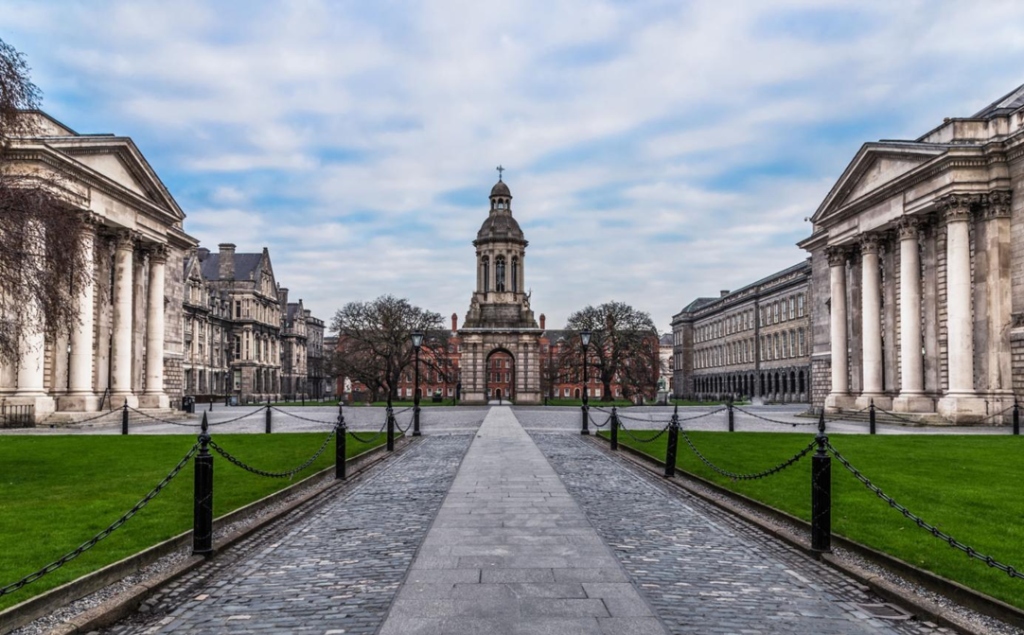
Founded in 1592, Trinity College Dublin is Ireland's oldest and most prestigious university, ranked #87 globally in the QS World University Rankings:
Faculty of Science, Technology, Engineering and Mathematics (STEM): B.A. Computer Science, Computer Engineering, and Biological & Biomedical Sciences demand minimum 90% to 95% in CBSE/ISC, with 85%+ in Mathematics and relevant science subjects.
Faculty of Arts, Humanities and Social Sciences (AHSS): BESS (Business, Economic and Social Studies) and Global Business require an aggregate of 88% to 92% with 80%+ in Mathematics.
Dual B.A. Program with Columbia University: TCD offers a unique dual-degree program where students spend 2 years at Trinity and 2 years at Columbia University in New York, graduating with two bachelor's degrees. This program requires a separate application, supplementary essays, and an intensive video interview.
14. Admissions Criteria for University College Dublin (UCD)
University College Dublin is Ireland's largest university and a member of the prestigious Universitas 21 network:
Quinn School of Business: UCD Lochlann Quinn School of Business holds prestigious triple-crown accreditation (AACSB, AMBA, EQUIS). The Bachelor of Commerce (BComm) and Economics & Finance programs require 88% to 94% in CBSE/ISC, with strong performance in Mathematics.
College of Science and Engineering: Computer Science and Engineering (ME / BE pathway) require 88% to 92%+ with 85%+ in Mathematics.
Global Excellence Scholarships: UCD awards highly competitive 50% and 100% tuition fee scholarships to top-tier international applicants based on outstanding academic merit and supplementary scholarship essays submitted before March 31.
15. Admissions Criteria for University of Galway
Situated on Ireland's scenic west coast, the University of Galway is an international epicenter for biomedical engineering, medical technology, and marine science:
Biomedical Engineering & Med-Tech: Galway produces over 80% of the world's medical stents, with multinational med-tech giants (Medtronic, Boston Scientific) clustered around the campus. Entry into B.E. Biomedical Engineering requires 80% to 85% in CBSE with 80%+ in Maths and Physics/Chemistry.
College of Business, Public Policy & Law: B.Comm and Law programs require an aggregate between 75% and 82%.
Scholarships: Galway provides automatic and competitive merit scholarships ranging from €2,000 to €10,000 per academic year for high-achieving Indian applicants.
16. Admissions Criteria for University College Cork (UCC)
University College Cork is a world leader in sustainability, food science, biotechnology, and clinical pharmacy:
School of Pharmacy & Biological Sciences: UCC's B.Pharm (5-year MPharm pathway) and Biotechnology degrees require 85% to 92% in Class 12, with mandatory high achievement in Chemistry and Biology.
Data Science & Analytics: A cutting-edge interdisciplinary degree combining computer science and statistics, requiring 85%+ in Class 12 Mathematics.
International Student Merit Scholarships: UCC offers merit discounts of 10% to 20% on tuition fees for students achieving 80%+ in Indian board examinations.
17. Admissions Criteria for Dublin City University (DCU)
Dublin City University is celebrated for its enterprise-focused curriculum and its trademark INTRA (Integrated Training) accredited work placement program:
School of Computing: Computing (Software Development, AI, Cloud) requires 80% to 88% in CBSE with 80%+ in Mathematics. DCU computing graduates boast one of the fastest corporate absorption rates in Ireland.
Business School: Business Studies and Global Business require 78% to 85% in Class 12.
INTRA Internship Integration: Over 90% of DCU undergraduate degrees embed a mandatory 6 to 8-month paid corporate internship, ensuring students graduate with substantial professional experience in multinational firms.
18. Undergraduate Medicine & Healthcare in Ireland: HPAT-Ireland and Admissions Rules
Studying undergraduate medicine (MB BCh BAO) in Ireland is one of the most competitive academic pursuits globally:
Direct Entry 5-Year and 6-Year Programs: Offered at Trinity College Dublin, UCD, University of Galway, UCC, and RCSI (Royal College of Surgeons in Ireland).
Non-EU Eligibility: Indian students applying for medicine directly must achieve extraordinary board results (typically 95%+ in Class 12 with 90%+ in Chemistry and Biology).
Testing and Interviews: While domestic students take the HPAT-Ireland exam, non-EU applicants to universities like RCSI, TCD, and UCD are evaluated on board grades, academic references, clinical shadowing experience, and an intensive Multiple Mini Interview (MMI) or panel interview.
19. Technological Universities in Ireland: TU Dublin, Munster TU, TUS, and SETU
In addition to traditional research universities, Ireland's higher education landscape features dynamic Technological Universities (TUs):
Technological University Dublin (TU Dublin): Ireland's largest technological university, located in Grangegorman, renowned for practical software development, architectural engineering, and digital media.
Applied Pedagogical Focus: TUs emphasize hands-on studio work, laboratory experimentation, and compulsory industry co-ops, offering an alternative for students seeking vocational mastery.
Admissions Accessibility: TU entry criteria are typically more flexible, accepting Indian CBSE/ISC scores between 70% and 78% for Level 8 Honours programs.
20. Cost of Studying in Ireland: Tuition Fees, Living Expenses, and Financial Proof
Accurate financial planning is essential for a smooth study abroad journey in Ireland:
Tuition Fees for Non-EU Students: For arts, business, and humanities, tuition ranges from €18,000 to €24,000 per year. For STEM and engineering disciplines, tuition ranges from €22,000 to €28,000 annually. Undergraduate medicine ranges from €45,000 to €58,000 per year.
Cost of Living: Living expenses vary significantly by location. Dublin averages €13,000 to €17,000 per year (due to accommodation demand). Regional cities like Galway, Cork, and Limerick average €10,000 to €13,000 annually.
Financial Proof for Visa: The Irish Immigration Service Delivery (ISD) requires international visa applicants to provide bank statements proving access to at least €10,000 in immediate liquid funds, in addition to receipts showing payment of course tuition.
21. Irish Student Visa (Stamp 2): Eligibility, Documents, and AVATS Lodgement
Indian passport holders must obtain a Stamp 2 Student Visa before traveling to Ireland:
AVATS Online Application: Visa applications are lodged via the official AVATS online system operated by the Department of Justice Ireland, followed by an in-person biometric appointment at a VFS Global center in India.
Mandatory Supporting Evidence: Unconditional Letter of Acceptance, proof of full tuition payment or evidence of scholarship, comprehensive medical insurance policy, educational loan sanction letters or 6 months of family bank statements, and police clearance certificate.
Study Gap Justification: If you have a gap year between Class 12 and university enrollment, you must provide formal documentation (internship certificates, coursework) explaining how this time was productively utilized.
22. Part-Time Work Rights for International Undergraduates (Stamp 2 Rules)
Holding an Irish Stamp 2 student visa permits international undergraduates to gain practical workplace experience and offset living costs:
Term-Time Work Hours: International students are legally permitted to work up to 20 hours per week during normal academic semesters.
Holiday Work Hours: Students can work up to 40 hours per week during scheduled holiday periods (specifically June, July, August, September, and from December 15 to January 15).
Minimum Wage in Ireland: Ireland has one of the highest statutory national minimum wages in Europe (€12.70 per hour as of 2024), allowing hardworking students to earn €1,000 to €1,400 monthly during term time.
23. The Post-Study Work Authorization: Third Level Graduate Scheme (Stamp 1G)
A major attraction of studying an undergraduate degree in Ireland is the clear, legal post-study work framework:
12-Month Stay Back for Level 8 Graduates: Upon successfully completing an accredited NFQ Level 8 Honours Bachelor degree, international students can transition to a Stamp 1G post-study work visa for 12 months.
Full-Time Employment Rights: The Stamp 1G allows you to work full-time (up to 40 hours per week) in any corporate sector without requiring immediate employer visa sponsorship.
Bridge to Critical Skills: This 12-month period serves as the primary stepping stone to securing a permanent role and converting to a multi-year Critical Skills Employment Permit (CSEP).
24. Common Pitfalls and Reasons for Application Rejection
Ensure your application avoids these frequent missteps that derail otherwise qualified candidates:
1. Failing Specific Subject Cutoffs: Having an overall Class 12 score of 93% but scoring 72% in Mathematics when the Computer Science program requires 80%+.
2. Generic Statements of Purpose: Submitting a cut-and-paste essay that fails to name specific modules, professors, or why Ireland was selected over the UK or Canada.
3. Leaving Documents to the Last Minute: Rushing visa lodging in August, leading to visa delays that jeopardize arrival for freshman orientation week.
25. Strategic Admissions Timeline: 18-Month Countdown for Class 12 Aspirants
March - July (Grade 11): Focus on strong Class 11 academic marks; identify preferred subject tracks; prepare for IELTS/Duolingo tests.
August - September (Grade 12): Finalize your university shortlist; request predictive grade transcripts and letters of recommendation from teachers.
October - December (Grade 12): Lodge direct online applications to Irish universities; complete scholarship applications.
January - March: Receive conditional offer letters; accept offers and pay seat acceptance deposits.
May - June: Complete Class 12 board exams; prepare financial proof documents and medical insurance.
July: Upload final board marksheet; convert to unconditional offer; lodge Irish Stamp 2 student visa via AVATS.
August - September: Receive visa clearance, book flights, secure student accommodation, and attend university orientation in Dublin, Galway, or Cork.
26. Accommodation in Ireland: On-Campus Halls vs Private Purpose-Built Housing
Due to high demand for student housing in Dublin and surrounding university cities, securing accommodation early is imperative:
On-Campus Student Residences: Highly convenient and safe, typically costing €700 to €1,100 per month including all utility bills. On-campus rooms at TCD and UCD fill up rapidly, often opening lotteries in March/April for offer-holders.
Private Purpose-Built Student Accommodation (PBSA): Operators like Yugo, Aparto, Scape, and Uninest offer modern student studio apartments and ensuite rooms with gyms, study lounges, and high-speed Wi-Fi across Dublin and Cork.
Shared Private Rental: Renting a house or apartment with fellow students in suburban Dublin, Galway, or Cork, averaging €600 to €900 per month.
27. Scholarships for Indian Undergraduates: Government of Ireland & University Awards
Ireland offers prestigious institutional and national scholarship awards to reward exceptional international students:
Government of Ireland International Education Scholarship (GOI-IES): Highly prestigious award providing a full tuition fee waiver plus a €10,000 living stipend for one academic year.
UCD Global Excellence Scholarships: 50% and 100% full tuition fee waivers awarded annually to outstanding international undergraduate candidates.
Trinity College Dublin Global Excellence Undergraduate Scholarships: Merit-based awards ranging from €3,000 to €5,000 deduction on first-year tuition fees.
University of Galway and UCC Merit Scholarships: Ranging from €2,000 to €10,000 per year, renewed annually based on maintaining first-class honours grades.
28. Cultural Adaptation and Campus Life: What Indian Students Experience in Ireland
Beyond academics, Ireland is renowned globally for its safety, hospitality, and vibrant cultural life:
Warm and Welcoming Community: Known as the land of 'Céad Míle Fáilte' (a hundred thousand welcomes), Ireland consistently ranks among the top 10 safest countries in the world on the Global Peace Index.
Vibrant Indian Diaspora: Large, active Indian student societies, cultural celebrations (Diwali and Holi festivals celebrated on campus), and easy access to authentic Indian groceries and restaurants across Dublin, Cork, and Galway.
Student Societies and Clubs: Over 120 student clubs at universities ranging from debating (The Hist at Trinity) to robotics, Gaelic sports, and outdoor hiking in the Wicklow mountains.
29. Transitioning from Class 12 to Irish Undergraduate Pedagogy
The academic structure in Irish universities differs substantially from Indian high school systems:
Independent Critical Thinking: Instead of rote memorization, Irish professors expect independent academic inquiry, peer debate during seminars, and original literature analysis.
Continuous Assessment vs Final Exams: Course grades are distributed between mid-semester lab reports, group presentations, coding repositories, and end-of-semester written examinations.
Office Hours and Academic Mentorship: Professors and teaching assistants hold weekly open-door office hours to guide students through complex problem sets and research ideas.
30. Checklist: What to Do Before Departing India for Ireland
Ensure all pre-departure arrangements are finalized 4 to 6 weeks prior to flight departure:
1. Verify your original unconditional offer letter and electronic visa approval notice.
2. Ensure original academic marksheets and certificates are attested and packed in carry-on luggage.
3. Arrange at least 2 to 4 weeks of confirmed accommodation upon arrival.
4. Obtain an international multi-currency debit card loaded with Euros for initial expenses before opening an Irish bank account (AIB or Bank of Ireland).
5. Book your in-person IRP (Irish Residence Permit) registration appointment with the immigration office upon arrival in Ireland.
31. EduQuest Admissions Mentorship: Your Bridge to Ireland's Top Universities
Navigating international admissions requires institutional experience, strategic positioning, and meticulous execution:
At EduQuest, our counselors—including former international university admissions officers—provide end-to-end guidance tailored specifically to Indian Class 12 students.
From transcript auditing and school predictive grade positioning to SOP review, scholarship essay mentoring, and student visa lodgement, we ensure your application stands out in Ireland's most competitive applicant pools.
32. Conclusion & Strategic Next Steps for September 2027 Aspirants
Securing admission into an elite Irish undergraduate degree is a life-changing milestone that unlocks world-class academic training, European cultural exposure, and immediate access to the continent's most dynamic corporate market.
The journey begins with early academic preparation in Class 11 and 12, mastering your subject prerequisites, and executing your direct university applications between October and January.
Connect with EduQuest today to evaluate your profile and build your personalized roadmap to Ireland's top universities.
Empower Your Ireland Admissions Journey with EduQuest AI Intelligence Suite
Diagnose faculty acceptance odds, benchmark subject prerequisites, audit your Statement of Purpose, and test your interview readiness using our specialized AI engines.
EduPath Admissions Profiler
Calculates your acceptance probability across individual faculties at Trinity, UCD, Galway, UCC, and DCU based on your Class 10, 11, and 12 marks.
- ✓ Leaving Cert Points Conversion
- ✓ Subject Prerequisite Gap Audit
- ✓ Merit Scholarship Odds Index
Narrative Intelligence Engine
Scans your Statement of Purpose against winning admissions essays for Irish and top European research universities.
- ✓ Academic Rigor Scoring
- ✓ Supercurricular Alignment
- ✓ Scholarship Essay Audit
AI MMI & Interview Coach
Simulates undergraduate medicine MMIs, TCD dual-degree interviews, and competitive scholarship defense panels.
- ✓ Real-Time Scenario Analysis
- ✓ Verbal Logic & Coherence Feedback
- ✓ Executive Presence Scoring
Career Cluster Assessment
Aligns your academic strengths with high-growth corporate sectors across Dublin's Silicon Docks and biopharma hubs.
- ✓ European Job Market Forecasting
- ✓ Critical Skills Occupation Matching
- ✓ Stamp 1G ROI Modeling
What is the percentage required in Class 12 for admission to Irish universities?
Minimum eligibility starts around 75% to 80% in CBSE or ISC for general programs. However, competitive Level 8 Honours programs in Computer Science, Engineering, Actuarial Finance, and Biotechnology at Trinity College Dublin (TCD) and UCD require an aggregate between 90% and 95%+.
Should Indian students apply through CAO or direct university portals?
Indian (non-EU) students are strongly encouraged to apply directly through individual university application portals. Direct applications open earlier (October), operate on a rolling evaluation basis, yield decisions within 3 to 6 weeks, and allow ample time to apply for merit scholarships, student housing, and the Stamp 2 student visa.
Can Indian students get an English language test waiver in Ireland?
Yes. Several top Irish institutions, including UCD, University of Galway, and DCU, offer full IELTS/TOEFL waivers if an applicant scores 80% or higher in English in Class 12 CBSE or ISC. Trinity College Dublin reviews waiver requests on an individual basis.
What is the difference between NFQ Level 7 and Level 8 degrees in Ireland?
NFQ Level 8 is an Honours Bachelor degree (typically 3 to 4 years), which grants automatic eligibility for the 1-year Stamp 1G graduate post-study work authorization. NFQ Level 7 is an Ordinary Bachelor degree (typically 3 years) with more restricted work rights and postgraduate progression.
What are the core subject prerequisites for engineering and computing courses?
Applicants must demonstrate strong performance in Class 12 Mathematics (typically 80% to 85%+ in Standard/Core Mathematics). Applied Mathematics is evaluated cautiously, and Basic Mathematics from CBSE is strictly not accepted for computing or engineering degrees.
Download the Ireland Undergraduate Admissions Master Guide (PDF)
Get our complete 45-page admissions handbook featuring CBSE/ISC points conversion charts, faculty prerequisite matrices, direct vs CAO instructions, and visa financial checklists.