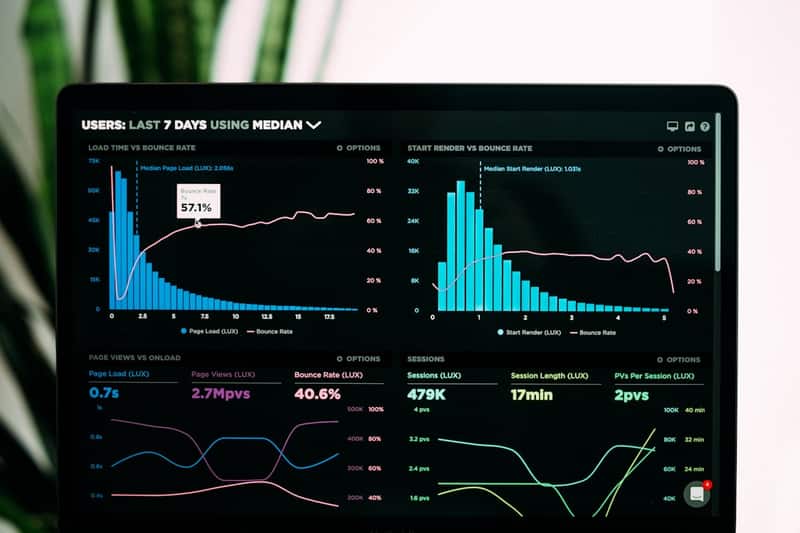

The ACT Science section is widely misunderstood. Many students panic thinking they need to memorize advanced organic chemistry formulas or quantum physics equations. In reality, the ACT Science section tests logical reasoning, data interpretation, and scientific inquiry. It is essentially an open-book reading test where the text is replaced by graphs, scatter plots, and tables.
The real challenge is the time constraint: you have exactly 35 minutes to read 6 passages and answer 40 questions. That is less than 6 minutes per passage! To score highly, you must learn to bypass scientific jargon and go straight to the data.
Understanding the 3 Types of ACT Science Passages
| Passage Type | Description | Number of Questions | EduQuest Strategy |
|---|---|---|---|
| Data Representation | Requires you to read and analyze graphs, tables, and charts. | Approx. 2-3 passages | Skip the text. Go straight to the questions and use axes labels to locate data points. |
| Research Summaries | Describes experiments and studies, focusing on variables and designs. | Approx. 2-3 passages | Identify the independent variable (what they change) and dependent variable (what they measure) first. |
| Conflicting Viewpoints | Presents arguments from two or more scientists on a phenomenon. | 1 passage | Read the text carefully. Map out the similarities and differences in their claims and evidence. |
Pro-Tips for Speed and Accuracy in ACT Science
Do Not Read the Passage First
For Data Representation and Research Summaries, do not spend time reading the introductory text. Start directly with the first question, look at the reference labels (e.g., 'According to Figure 1'), and locate the corresponding graph.
Pay Attention to Units and Labels
ACT questions often try to catch you off guard by changing units (e.g., grams to kilograms, or Celsius to Kelvin). Double-check the axis labels and table headers carefully.
Interpolation and Extrapolation
You will frequently be asked to estimate values between points on a line (interpolation) or predict values beyond the range of the graph (extrapolation). Draw lines directly on the digital screen using standard alignment tools to be precise.
Fast-Track Your College & Career Strategy
Get immediate, personalized AI insights tailored to your grade, strengths, and dream universities — 100% free with instant reports.
Know Your Personality Type for Free
Take our 18-question AI psychometric test to uncover your cognitive archetype, hidden learning superpowers, and ideal university courses.
Personalized Career & University EduPath
Build a step-by-step Grade 8–12 admissions blueprint with AI-matched target universities, exam schedules, and extracurricular profiles.
ACT Science is not about what you know; it is about how quickly you can locate and synthesize data. Treat it like a treasure hunt.
— EduQuest Science Mentor
Struggling to Finish the Science Section on Time?
EduQuest provides targeted science drills to help you master experimental design, data interpretation, and time management.
Download the Official ACT 36 Score Plateau Breaker: 4-Week Study Plan
Get immediate access to EduQuest’s 8-page comprehensive candidate toolkit with diagnostic benchmarks, step-by-step frameworks, error telemetry logs, and structured preparation timelines.