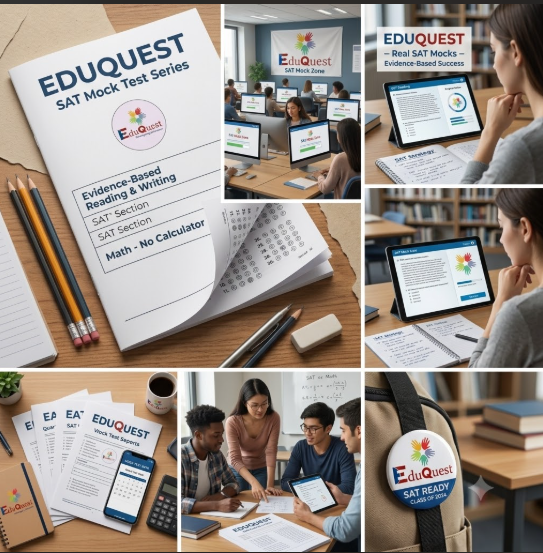


The Thinking and Analytical Reasoning Assessment (TARA) evaluates an applicant’s raw intellectual horsepower, logical inference abilities, and fast numerical problem-solving. Taking our full-length TARA mock test allows aspiring university applicants to test their reasoning speed and calibrate their performance against international student percentiles.
TARA Assessment Sections & Cognitive Domains
| Assessment Section | Questions | Allocated Time | Core Cognitive Skill Tested |
|---|---|---|---|
| Quantitative Problem Solving | 25 Questions | 35 Minutes | Numerical reasoning, data sufficiency, applied mathematical models |
| Logical & Deductive Reasoning | 25 Questions | 35 Minutes | Syllogistic logic, conditional statements, sequence identification |
| Critical Thinking & Textual Inference | 20 Questions | 30 Minutes | Argument analysis, assumption detection, evaluating claims |
| Abstract Pattern Recognition | 20 Questions | 20 Minutes | Matrix transformations, spatial reasoning, visual induction |
| Overall TARA Evaluation | 90 Questions | 120 Minutes | Composite Percentile Score (1st to 99th Percentile) |
EduQuest TARA Practice Suite
Aptitude Simulator
Online TARA Engine
Simulate full-length cognitive testing with automated score calculation and error taxonomy reports.
Launch TARA Mock TestComparison Guide
TARA vs TMUA & SAT
Understand how university admissions committees use TARA scores alongside standard academic marks.
Read TARA FAQsCan preparation improve my score on cognitive reasoning tests like TARA?
Yes! While cognitive tests measure raw problem-solving abilities, practicing archetype recognition, spatial rotation shortcuts, and deductive elimination techniques routinely boosts scores by 20–35 percentile points.
How are TARA mock scores calculated?
TARA scores are standardized against a normative international benchmark cohort, converting raw scores into a normalized 0–100 scale and percentile rankings.
Fast-Track Your College & Career Strategy
Get immediate, personalized AI insights tailored to your grade, strengths, and dream universities — 100% free with instant reports.
Know Your Personality Type for Free
Take our 18-question AI psychometric test to uncover your cognitive archetype, hidden learning superpowers, and ideal university courses.
Personalized Career & University EduPath
Build a step-by-step Grade 8–12 admissions blueprint with AI-matched target universities, exam schedules, and extracurricular profiles.
Download the Official 5-Year High School College Prep Roadmap (Grade 8 to 12)
Get immediate access to EduQuest’s 8-page comprehensive candidate toolkit with diagnostic benchmarks, step-by-step frameworks, error telemetry logs, and structured preparation timelines.