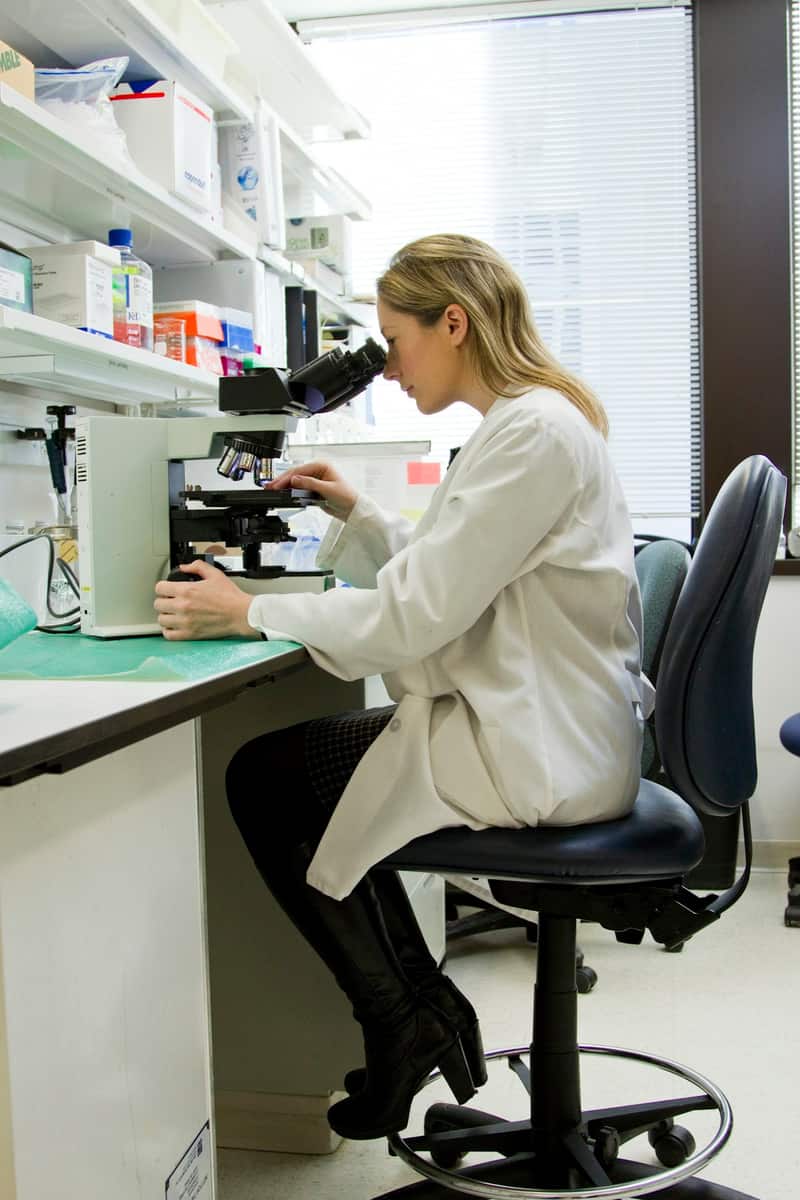
The Medical College Admission Test (MCAT) is the premier standardized entrance examination for medical school admissions across North America and select international jurisdictions. If you are targeting admissions in 2026, mastering the exam architecture, subject syllabi, registration protocols, score benchmarks, and long-term prep schedules is vital for securing a top percentile score (515+).

1. What is the MCAT Exam? (Full Form & Purpose)
The MCAT stands for the Medical College Admission Test. It is a computer-based, standardized multiple-choice examination developed and administered by the Association of American Medical Colleges (AAMC). The exam is designed to assess problem-solving, critical thinking, written reasoning, and knowledge of prerequisite scientific concepts required for medical education.
| Parameter | Official MCAT Detail | Candidate Guidance |
|---|---|---|
| Full Form | Medical College Admission Test | Standard entrance exam for US & Canada MD/DO programs. |
| Conducting Body | AAMC (Association of American Medical Colleges) | Official registration via aamc.org. |
| Delivery Mode | Computer-Based Test (Pearson VUE) | In-person test center delivery only; NO home testing. |
| Total Duration | 7 Hours 30 Minutes (~6h 15m testing time) | 230 multiple-choice questions across 4 test blocks. |
| Scoring Range | 472 to 528 (118–132 per section) | Midpoint centered at 500; 515+ target for top MD schools. |
2. Quick Overview Table of MCAT Parameters
Fast-Track Your College & Career Strategy
Get immediate, personalized AI insights tailored to your grade, strengths, and dream universities — 100% free with instant reports.
Know Your Personality Type for Free
Take our 18-question AI psychometric test to uncover your cognitive archetype, hidden learning superpowers, and ideal university courses.
Personalized Career & University EduPath
Build a step-by-step Grade 8–12 admissions blueprint with AI-matched target universities, exam schedules, and extracurricular profiles.
| Metric | MCAT Specification | Key Notes for Candidates |
|---|---|---|
| Exam Duration | 7.5 Hours Total (6h 15m testing) | Includes tutorial, 2 optional 10m breaks, 30m lunch break. |
| Total Sections | 4 Sections | Chem/Phys, CARS, Bio/Biochem, Psych/Social. |
| Question Count | 230 Multiple-Choice Questions | 59 Qs per science section, 53 Qs in CARS. |
| Testing Fee | $335 – $385 USD (varies by country) | Includes international center surcharge in India. |
| Attempt Limits | 3 times in 1 year / 4 times in 2 years / 7 lifetime | AAMC enforces strict lifetime attempt caps. |
| Score Validity | 2 to 3 Years | Accepted by almost all US & Canadian medical schools. |
3. Why MCAT Matters in Medical Admissions
Medical schools evaluate thousands of applicants with stellar GPAs. The MCAT serves as the single standardized metric allowing admissions committees to compare candidates across different universities, grading scales, and international educational systems.
4. Who Should Take the MCAT?
Applicant Profiles Requiring MCAT
Pre-Med Undergraduates
BS / B.Sc Students
Students completing 4-year bachelor's degrees in Bio, Chem, Psych, or Life Sciences.
Learn MoreIndian PCB Graduates
International Pre-Meds
Indian Class 12 PCB students pursuing undergraduate degrees targeting US MD/DO programs.
Learn MoreMBBS Graduates
Post-Graduate Applicants
International medical graduates applying for US residency or post-bacc master's programs.
Learn MoreCareer Changers
Non-Traditional Students
Applicants completing post-baccalaureate pre-med prerequisite courses.
Learn More5. MCAT Eligibility Criteria in Detail
Unlike undergraduate tests, the MCAT is open to individuals preparing to apply to health profession schools (MD, DO, Podiatric, Veterinary). Candidates do not need prior pre-approval unless they do not intend to apply to health professions programs.
6. Age Requirements
There is NO official age limit (minimum or maximum) to register or sit for the MCAT exam. However, candidates must hold a valid government-issued photo ID or unexpired Passport at the test center.
7. Educational Prerequisites
While AAMC does not mandate a specific degree, successful candidates complete coursework in General Chemistry, Organic Chemistry, Biochemistry, Physics, Biology, Psychology, and Sociology.
8. Countries Accepting the MCAT
| Country | MCAT Status | Admissions Requirement Context |
|---|---|---|
| 🇺🇸 United States | Mandatory | Required by almost all MD and DO medical programs. |
| 🇨🇦 Canada | Required | Required by most English-taught medical schools (high CARS weightage). |
| 🇦🇺 Australia | Accepted | Accepted for international applicants to 4-year graduate MD programs. |
| 🌴 Caribbean | Accepted | Accepted by accredited schools like SGU and Ross University. |
| 🇬🇧 UK / 🇮🇪 Ireland | Not Standard | UK uses UCAT/GAMSAT; Ireland uses HPAT/GAMSAT. |
9. Universities Accepting MCAT (Admissions Table)
| University Name | Country | Avg MCAT Score | Acceptance Rate | Est. Tuition / Year |
|---|---|---|---|---|
| Harvard Medical School | USA | 520+ | 3.2% | $68,000 USD |
| Johns Hopkins University | USA | 521+ | 2.8% | $65,000 USD |
| University of Toronto | Canada | 516+ (CARS 128+) | 5.1% | $92,000 CAD |
| McMaster University | Canada | CARS 129+ | 3.8% | $96,000 CAD |
| University of Melbourne | Australia | 512+ | 8.5% | $84,000 AUD |
| St. George's University | Caribbean | 504+ | 42.0% | $62,000 USD |
10. MCAT Exam Pattern & Format
The MCAT contains 230 multiple-choice questions administered across 4 distinct test sections. Answers are recorded on a computer monitor at Pearson VUE centers.
11. Section-by-Section Deep Dive
Chemical & Physical Foundations (59 Qs, 95m)
Topics: Gen Chem (30%), Biochem (25%), Physics (25%), Org Chem (15%), Bio (5%). Strategy: Master mental math without calculators and fluid mechanics equations.
Critical Analysis & Reasoning - CARS (53 Qs, 90m)
Topics: Humanities & Social Sciences. Strategy: 10 mins per passage. Focus on thesis identification and avoiding extreme language traps.
Biological & Biochemical Foundations (59 Qs, 95m)
Topics: Biology (65%), Biochem (25%), Chem (10%). Strategy: Memorize metabolic pathways, enzyme kinetics, and organ system physiology.
Psychological, Social & Biological (59 Qs, 95m)
Topics: Psychology (65%), Sociology (30%), Bio (5%). Strategy: Memorize 300+ behavioral science definitions and research study designs.
12. Detailed MCAT Syllabus Breakdown
The AAMC syllabus covers foundational concepts across foundational sciences:
13. Biology Syllabus Topics
- Molecular Biology: DNA Replication, Transcription, Translation, Gene Regulation, PCR.
- Cell Biology: Organelles, Plasma Membrane Transport, Mitosis, Meiosis, Cell Cycle Control.
- Organ Systems: Nervous System, Endocrine System, Circulatory & Lymphatic Systems, Immune System, Digestive & Excretory Systems, Musculoskeletal & Integumentary Systems.
14. Chemistry & Biochemistry Syllabus Topics
- General Chemistry: Atomic Structure, Periodic Trends, Bonding, Gases, Thermodynamics, Equilibrium, Acid-Base Chemistry, Electrochemistry.
- Organic Chemistry: Nomenclature, Stereochemistry, Nucleophilic Substitutions, Carbonyl Chemistry, Separations & Spectroscopy (NMR, IR, UV-Vis).
- Biochemistry: Amino Acids, Protein Structure, Enzyme Kinetics (Michaelis-Menten), Carbohydrates, Lipids, Glycolysis, Krebs Cycle, ETC, Gluconeogenesis.
15. Physics Syllabus Topics
- Translational Motion, Force, Work, Energy, Momentum.
- Fluids & Solids: Poiseuille Flow, Continuity Equation, Bernoulli's Principle, Hydrostatic Pressure.
- Electrostatics & Magnetism: Coulomb's Law, Circuits, Ohm's Law, Capacitors.
- Waves & Optics: Sound, Harmonic Motion, Light, Reflection, Refraction, Lenses, Mirrors.
16. Psychology & Sociology Syllabus Topics
- Psychology: Sensation & Perception, Attention, Memory, Learning (Classical & Operant), Cognition, Personality, Psychological Disorders, Emotion & Stress.
- Sociology: Social Structure, Social Inequality, Demographics, Culture, Social Institutions, Social Interaction.
17. Dedicated CARS Preparation Guide
CARS requires active passage reading without prior subject knowledge. Allocate 3.5 minutes to reading and 6.5 minutes to answering questions per passage set.
18. MCAT Scoring System (472 to 528)
Each section is scored 118–132. Total score ranges 472–528. Midpoint is 500. A score of 515 places you in the 90th percentile.
19. Score & Percentile Conversion Table
| Total MCAT Score | Percentile Rank | Admissions Competitiveness |
|---|---|---|
| 524 – 528 | 99th–100th Percentile | Elite (Top 10 US MD Schools) |
| 518 – 523 | 95th–98th Percentile | High Competitive Range (Top 25 MD) |
| 514 – 517 | 88th–94th Percentile | Strong Range for US MD Programs |
| 508 – 513 | 73rd–87th Percentile | Competitive Range for US DO & Canadian Schools |
| 500 – 507 | 50th–72nd Percentile | Average Range for Select DO Schools |
20. How Medical Schools Evaluate Scores
Admissions committees evaluate total score, subtest score balance (e.g. no subtest below 125), undergraduate GPA, clinical shadowing, research, and personal statement essays.
21. Step-by-Step Registration Process
Create AAMC Account
Official Registration
- Register at aamc.org.
- Verify full legal name matches government Passport.
Access MCAT Registration System
Select Test Center
- Choose test city (New Delhi, Mumbai, Bangalore, Hyderabad, etc.).
- Select available test date.
Pay Registration Fee
Complete Payment
- Pay test fee ($335–$385 USD).
- Receive official email confirmation & admission ticket.
22. Registration Fees & Refund Table
| Fee Category | Amount (USD) | Deadline / Policy |
|---|---|---|
| Standard Registration | $335 USD | Up to 30 days prior to test date. |
| International Surcharge (India) | +$120 USD | Mandatory for testing centers outside US/Canada. |
| Reschedule Fee (Gold Zone) | $50 USD | 30+ days before exam date. |
| Reschedule Fee (Silver Zone) | $100 USD | 15–29 days before exam date. |
| Cancellation Refund | $165 USD Partial Refund | Available up to 30 days prior to exam. |
23. MCAT Exam Schedule & Calendar 2026
The MCAT is offered on multiple dates between January and September each year. In India, test dates fill rapidly; book 3 to 6 months in advance.
24. Structured Study Timelines (3, 6, 9 & 12 Months)
Study Schedule Frameworks
6-Month Master Plan
25–30 Hours / Week
3 months content review + 3 months intensive AAMC mocks & practice.
Learn More3-Month Fast Track
40+ Hours / Week
Rapid content review + daily CARS & weekly full-length mocks.
Learn More12-Month Pre-Med Plan
15 Hours / Week
Ideal for students balancing college semester courses.
Learn More25. Sample Daily Study Schedule
| Time Block | Activity / Focus Area | Resource Used |
|---|---|---|
| 07:30 AM – 09:00 AM | CARS Practice (2–3 Timed Passages) | Jack Westin / AAMC CARS QPack |
| 09:30 AM – 12:30 PM | Science Content Review & Anki Cards | Kaplan Books / Anki Flashcards |
| 01:30 PM – 04:30 PM | Passage Practice Drills | UWorld / EduQuest Mock Hub |
| 05:00 PM – 06:30 PM | Error Log Analysis & Note Review | Personal Mistake Journal |
| 08:00 PM – 09:30 PM | Psychology/Sociology Vocabulary Flashcards | 300-Page Psych/Soc Anki Deck |
26. Recommended Prep Books Table
| Book Title | Author / Publisher | Core Purpose | Difficulty |
|---|---|---|---|
| Kaplan MCAT Complete 7-Book Subject Review | Kaplan Test Prep | Comprehensive Science Content | Intermediate |
| The Princeton Review MCAT Subject Review | Princeton Review | In-depth Physics & Gen Chem | Advanced |
| Examkrackers MCAT Complete Study Package | Examkrackers | Conceptual Summaries & Shortcuts | Intermediate |
| Official AAMC MCAT Official Prep Complete Bundle | AAMC | Essential Authentic Exam Practice | Exam Standard |
27. Best Online Prep Resources Comparison
| Platform Name | Primary Strength | Best Suited For |
|---|---|---|
| Official AAMC Practice Portal | Official Practice Questions & Mocks | Mandatory for all test-takers |
| UWorld MCAT Question Bank | In-depth Explanations & Diagrams | Passage practice & concept mastery |
| Jack Westin CARS | Daily Free CARS Passages | Speed reading & CARS timing |
| EduQuest Mock Hub (`/mock_hub/`) | Full-Length Mocks & AI Analytics | Stamina building & diagnostic reviews |
| Anki Flashcard System | Spaced Repetition Flashcards | Psych/Soc terms & Bio pathways |
28. Top Mock Test Providers Comparison
| Provider | Mock Count | Scoring Predictiveness | Key Advantage |
|---|---|---|---|
| AAMC Official Mocks | 5 Full-Length Mocks | 100% Exact Match | Real exam scaling & question style |
| EduQuest Mock Hub | 8 Full-Length Mocks | 95% Predictive | Proctored environment & 1-on-1 review |
| Blueprint / Next Step | 10 Mocks | 90% Predictive | Detailed analytics dashboard |
| Kaplan Mocks | 6 Mocks | Harder than real exam | Defensive prep & stamina |
29. 20 Critical Mistakes Future Doctors Must Avoid
- 1. Passive Reading Highlighting textbooks without active recall or flashcards.
- 2. Delaying CARS Practice Waiting until the last month to start CARS passages.
- 3. Ignoring Error Logs Taking mock tests without spending 3+ hours reviewing wrong choices.
- 4. Mismanaging Mental Math Relying on calculators during practice when calculators are banned on test day.
- 5. Skipping Psych/Sociology Terms Assuming Psych/Social is easy common sense without memorizing 300+ official definitions.
- 6. Over-studying Low-Yield Detail Spending weeks on complex physics derivations instead of Michaelis-Menten kinetics.
- 7. Neglecting Test Stamina Taking practice sections in pieces rather than sitting full 7.5-hour mock blocks.
- 8. Panic-Testing Early Taking official AAMC practice exams before completing core content review.
- 9. Poor Sleep Schedule Studying late nights and testing groggy during 8:00 AM test sessions.
- 10. Ignoring Passport ID Rules Arriving at Pearson VUE with an expired or mismatched legal name ID.
- 11. Skipping Break Times Skipping lunch break and suffering cognitive burnout during Section 3 & 4.
- 12. Spending > 2 Mins per Question Getting stuck on a hard physics problem and rushing through easy CARS items.
- 13. Not Memorizing Amino Acids Failing to know 1-letter, 3-letter codes, side chain structures, and pKa values.
- 14. Ignoring Graph Axis Labels Misreading dependent vs independent variables in experimental passages.
- 15. Extreme Choice Trap Selecting answers with 'always' or 'never' in CARS.
- 16. Not Practicing Computer Interfaces Testing on paper and feeling overwhelmed by desktop computer controls.
- 17. Late Registration Waiting until 30 days prior and losing preferred test center seats.
- 18. Unrealistic Retake Timing Booking a retake 2 weeks later without fixing root concept gaps.
- 19. Ignoring Medical Ethics Neglecting MMI interview prep while focusing 100% on MCAT.
- 20. Cramming Final 24 Hours Taking heavy mocks the day before the official exam.
30. Time Management & Pacing Strategies
Rule of 10s: Spend 10 minutes per CARS passage (3.5m read, 6.5m answer) and 8 minutes per science passage. Never let a single question burn more than 120 seconds.
31. Exam Day Checklist & Center Guidelines
- Valid Government-issued Passport (unexpired, name matching AAMC account).
- Printed AAMC Confirmation Email Ticket.
- Healthy lunch & energy snacks (stored in locker).
- Arrive at Pearson VUE center 30 minutes prior to scheduled start time.
32. Retake Policy & Attempts Rules
AAMC allows candidates to take the MCAT up to 3 times in a single calendar year, 4 times in two consecutive years, and 7 times maximum over a lifetime.
33. Medical School Scholarships After MCAT
| Scholarship Name | Target Region | Eligibility Requirement | Funding Value |
|---|---|---|---|
| Merit-Based Med School Grants | USA / Canada | 518+ MCAT + 3.9 GPA | Full or Partial Tuition Waiver |
| EduQuest Pre-Med Excellence Grant | Global / India | 515+ MCAT score | Mentorship & Application Grant |
| International Dean's Scholarship | Australia / Caribbean | 508+ MCAT score | $10,000 – $30,000 USD Annual |
34. Cost of Studying Abroad After MCAT
| Expense Category | Estimated Annual Cost (USD) | Notes |
|---|---|---|
| Medical School Tuition | $55,000 – $75,000 USD | Varies between US MD, DO, and Canadian med schools. |
| Living Expenses & Rent | $15,000 – $22,000 USD | Housing, food, utilities, local transport. |
| Medical Insurance & Health | $3,000 – $5,000 USD | Mandatory university health insurance coverage. |
| Books, Scrubs & USMLE Exams | $2,500 – $4,000 USD | Clinical equipment, licensing exam fees. |
35. Student Visa Process (F-1 Medical Pathway)
Upon receiving an acceptance offer from an accredited US medical school, students receive Form I-20 to apply for an F-1 Student Visa at the US Embassy.
36. Career Opportunities After MCAT & MD/DO Graduation
- Licensed Attending Physician / Surgeon (Family Medicine, Internal Medicine, Surgery, Pediatrics).
- Clinical Research Scientist & Academic Medical Faculty.
- Healthcare Management & Pharmaceutical Consulting.
- Biotechnology Innovation & Medical Device Leadership.
37. Verified Student Success Stories
EduQuest MCAT Achievers
Aarav Sharma (Johns Hopkins MD)
522 MCAT
Indian BS pre-med graduate achieving 99th percentile MCAT score after EduQuest Mock Hub drills.
Learn MoreRiya Patel (Toronto Medicine)
518 MCAT (129 CARS)
Mastered CARS passage speed reading to secure admission to University of Toronto.
Learn MoreDevansh Gupta (Sydney MD)
515 MCAT
Transitioned from CBSE Class 12 to 4-year pre-med and Australian graduate MD entry.
Learn More38. Strategic Mentorship with EduQuest AI Tools
Accelerate Your Admissions Profile with EduQuest AI Engines
AI MCAT Diagnostic & Score Predictor
EduQuest Practice Hub & Full Mocks (`/mock_hub/`)
CARS Speed Reading & Reasoning Simulator
“Accelerate your MCAT prep with EduQuest digital tools and diagnostic analytics.”
Download EduQuest MCAT & Medical School Admissions Guide (PDF)
Get complete syllabus checklists, AAMC mock schedules, score cutoffs, and pre-med roadmaps.
39. Frequently Asked Questions (FAQ)
What is the full form of MCAT?
MCAT stands for Medical College Admission Test, administered by the AAMC.
Can Indian students take the MCAT in India?
Yes. Official Pearson VUE test centers are located in major Indian cities like New Delhi, Mumbai, Bangalore, and Hyderabad.
What is a competitive MCAT score for US medical schools?
A total score of 515+ (out of 528) places you in the top 90th percentile, making you highly competitive for US MD programs.
Is the MCAT exam conducted online at home?
No. The MCAT is a computer-based exam conducted strictly in-person at authorized Pearson VUE test centers.
How long should I prepare for the MCAT?
Most successful candidates dedicate 3 to 6 months (300 to 500 total study hours) to MCAT preparation.
Achieve Your Medical Admissions Goal
Schedule a 1-on-1 strategy session with EduQuest head faculty and pre-med mentors.