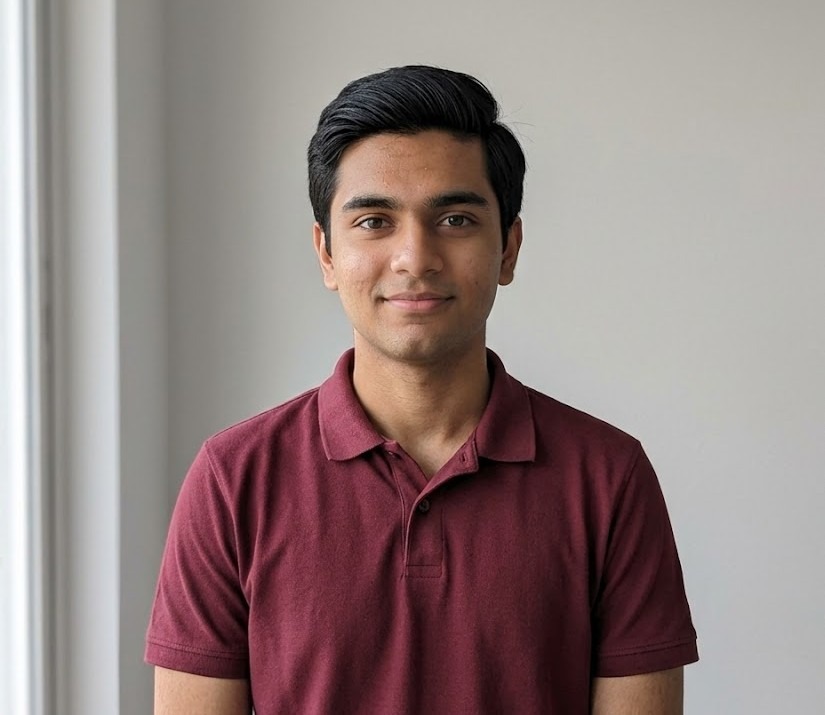
Verified Student Profile & Official ISAT Scorecard
Initial 1st Attempt Score
144 (38th Percentile)
Self-study attempt collapsed under clock panic, complex multi-graph data, and remote proctoring stress.
Final Official ISAT Score
185 (98th Percentile)
CR: 182 (96th Percentile) | QR: 188 (99th+ Percentile) — An astounding +41 scaled point comeback!
Admitted University
UNSW Sydney, Australia
Direct-entry admission into one of the world's top-ranked medical faculties.
Mentorship Program
EduQuest ISAT Retake & Elite Mastery
Forensic error auditing, visual graph scanning heuristics, and full-length ProctorU simulation drills.
When Delhi NCR student Arun Sharma opened his official ACER ISAT scorecard after his first self-study attempt in early 2024, his screen showed a disheartening number: 144. For a student with consistently stellar academic grades who had dreamt of studying medicine at the University of New South Wales (UNSW Sydney) since Class 9, the score felt like a closed door.
With international medical admissions cutoffs hovering between 175 and 185, a score of 144 was not even close to securing an interview. Arun was devastated, plagued by self-doubt, and convinced that the ISAT was an unpredictable gamble that couldn't be systematically mastered.
"I had studied for three months using generic internet resources," Arun recalls. "On exam day, the ProctorU environment made me anxious, the multi-tiered graphs in Quantitative Reasoning were completely overwhelming, and I ran out of time with 25 questions still left to read. I thought my Australian medical dream was over until my parents reached out to EduQuest."
Fast-Track Your College & Career Strategy
Get immediate, personalized AI insights tailored to your grade, strengths, and dream universities — 100% free with instant reports.
Know Your Personality Type for Free
Take our 18-question AI psychometric test to uncover your cognitive archetype, hidden learning superpowers, and ideal university courses.
Personalized Career & University EduPath
Build a step-by-step Grade 8–12 admissions blueprint with AI-matched target universities, exam schedules, and extracurricular profiles.
What Went Wrong in Arun’s First Attempt: The Autopsy of a 144
Before assigning new practice tests, EduQuest's senior admissions strategists conducted a granular Forensic Diagnostic Audit of Arun’s first attempt. The analysis exposed four major breakdowns:
- Multi-Graph Overload & Calculation Drag in QR: ACER Quantitative questions rarely feature simple single-axis charts. Arun faced questions integrating 3 separate charts — such as kinetic enzyme rates plotted against concentration curves and clinical outcome histograms. He was attempting manual arithmetic for every sub-point, spending upwards of 3.5 minutes per question.
- Lack of Question-Triage Discipline: Arun treated all questions with equal emotional weight. When stuck on a grueling 5-variable physics logic puzzle on question 32, he spent nearly 5 minutes refusing to let it go, starving the rest of his test of vital time.
- Tone and Perspective Confusion in Critical Reasoning: In passages featuring multiple speakers or debates, Arun consistently confused the author’s primary stance with counter-arguments cited only for balance. This led him directly into ACER’s designed "attributive traps".
- Remote Proctor Anxiety & Technical Friction: During his first attempt, fear of looking away from the webcam or triggering proctor warnings had Arun physically stiff and terrified, creating mental tunnel vision and elevated cortisol levels that wrecked his cognitive processing.
The EduQuest Comeback Strategy: Engineering a 41-Point Surge
EduQuest built a rigorous, personalized 10-week intensive turnaround program tailored specifically to Arun’s retake psychology:
Visual-First "Chart De-Layering" Heuristics in QR
Our quantitative reasoning faculty trained Arun to never read the wordy prompt first. Instead, he learned to de-layer the graph: reading the axes, units, legends, and slope inflections within 15 seconds. This visual pre-computation allowed him to predict answer choices before calculating a single number.
The "Triage & Bailout" 75-Second Protocol
Arun was conditioned with strict triage rules: if a quantitative problem did not show a clear elimination path within 75 seconds, he executed an educated guess, flagged it, and moved forward immediately. This guaranteed he attempted all 100 questions with energy to spare.
Authorial Mapping & Counter-Argument Isolation
In Critical Reasoning, verbal coaches trained Arun to mentally tag paragraphs into [Claim], [Evidence], [Counter-Claim], and [Verdict]. By isolating counter-claims, he eliminated ACER’s attractive secondary distractors with 100% precision.
Live ProctorU Simulation Environments
To completely desensitize Arun to test-day anxiety, EduQuest ran 16 full-length proctored mocks simulating real exam conditions — including proctor room checks, strict scratchpad protocols, and webcam monitoring. By exam day, the environment felt familiar and routine.
Post-Mock Blind Review & Telemetry Logging
Every mock was reviewed twice: once under untimed conditions to test pure conceptual understanding, and then against official telemetry logs to pinpoint time-panic errors.
Failing the ISAT on my first try was devastating. But EduQuest didn't just give me questions — they gave me psychological resilience and a clinical strategy. My mentor taught me how to read graphs like a radiologist scans an X-ray: instantly seeing the inflection points without getting lost in the noise.
— Arun Sharma (ISAT Overall: 185 / 200 — 98th Percentile)
The Result: 185 Composite Score & UNSW Medicine Admit
Sitting for his second official ACER ISAT exam, Arun was completely in control. The pacing was clockwork, the graph interpretation was instantaneous, and he completed the entire test with 8 minutes remaining to review flagged items.
When the official ACER results arrived, Arun’s score had made history:
| ISAT Section | 1st Attempt (Self-Study) | 2nd Attempt (With EduQuest) | Net Leap & Percentile |
|---|---|---|---|
| Critical Reasoning (CR) | 142 (Scaled) | 182 (Scaled) | +40 Scaled Points (96th Percentile) |
| Quantitative Reasoning (QR) | 146 (Scaled) | 188 (Scaled) | +42 Scaled Points (99th+ Percentile) |
| Overall ISAT Composite | 144 (Scaled) | 185 (Scaled) | +41 Points — 98th Percentile Globally |
| Admissions Shortlist | Out of Contention | Top 2% Globally | Direct UNSW Medicine Admit + Flinders Offer |
With an Overall ISAT score of 185, Arun secured direct admission into the prestigious UNSW Sydney Bachelor of Medical Studies / Doctor of Medicine (BMed/MD) program, alongside an offer from Flinders University. His journey stands as definitive proof that with the right diagnostic framework, even a disastrous initial score can be transformed into global top-tier success.
ISAT Exam Pattern Breakdown (Official ACER Specifications)
The ISAT is designed to assess general reasoning skills essential for medical and healthcare disciplines:
| Feature | Official Specification | Strategic Preparation Note |
|---|---|---|
| Testing Authority | ACER (Australian Council for Educational Research) | Administered globally via ProctorU online remote proctoring. |
| Duration | 3 Hours (180 Minutes) | Continuous testing without scheduled breaks. |
| Question Count | 100 Multiple Choice Questions (MCQs) | Questions have 4 or 5 options with equal weighting. |
| Pacing Budget | 108 Seconds per question | Strict discipline needed to attempt all 100. |
| Section 1: Critical Reasoning | ~50 Questions | Humanities, comprehension, ethical logic, argument critique. |
| Section 2: Quantitative Reasoning | ~50 Questions | Scientific data interpretation, graph slopes, mathematical deduction. |
| Negative Marking | NO Negative Marking | Never leave blanks; eliminate and guess if needed. |
| Calculator Access | STRICTLY PROHIBITED | Mental math, estimation, and proportional reasoning are vital. |
ISAT Scoring & Australian University Benchmarks
ISAT scores are reported on a scaled range from 100 to 200, with a standardized international mean of 150. The table below outlines typical competitive requirements for international students:
| University | Program | Competitive ISAT Score Range | Admissions Role |
|---|---|---|---|
| University of New South Wales (UNSW) | Bachelor of Medical Studies / MD | 175 – 185+ (85th – 98th Percentile) | High-demand international medical quota shortlisting. |
| Monash University (Melbourne) | BMedSci/MD (Direct-Entry) | 176 – 186+ (88th – 99th Percentile) | Primary shortlisting metric alongside Year 12 ATAR and MMI. |
| University of Western Australia (UWA) | Direct Pathway to Medicine & Dentistry | 172 – 182+ (80th – 95th Percentile) | Evaluated alongside predicted grades for interview invites. |
| Flinders University | Bachelor of Clinical Science / MD | 168 – 178+ (70th – 88th Percentile) | Hurdle requirement for high-performing overseas applicants. |
| University of Limerick (Ireland) | Health Sciences / Paramedic | 165 – 175+ (65th – 85th Percentile) | Standard admissions baseline. |
ISAT Exam Schedule & Annual Testing Windows
ACER conducts the ISAT across four dedicated testing windows per calendar year. Candidates may take the test once per window, and scores remain valid for up to two years:
| Testing Window | Registration Period | Exam Window Dates | Ideal Candidate Alignment |
|---|---|---|---|
| Window 1 (Jan – Feb) | Late November to Early January | Mid January – Early February | Gap year applicants and early-round university deadlines. |
| Window 2 (Apr – May) | Mid February to Mid April | Late April – Mid May | CBSE/IB Grade 12 students aiming for primary Australian application rounds. |
| Window 3 (Jul – Aug) | Early May to Early July | Late July – Early August | The most popular window chosen by 70% of UNSW & Monash applicants. |
| Window 4 (Oct – Nov) | Early August to Early October | Late October – Early November | Late application rounds and advance testing for Grade 11 students. |
Arun's 5 Strategic Rules for ISAT Retakers
Audit Your First Attempt Ruthlessly
Don’t just start solving more questions. Analyze exactly which question types cost you time and why you fell for specific distractor traps.
Inspect Charts Before Reading Prompts
In Quantitative Reasoning, look at axes, legends, and inflection slopes first. Pre-digesting the data makes reading the question twice as fast.
Enforce a Hard 75-Second Bailout Rule
Never let any single question consume 3 minutes. Eliminate obvious distractors, choose the best guess, flag the item, and preserve momentum.
Practice Under Strict Proctor Conditions
Take full 3-hour mocks using a webcam, clear desk, and strictly enforced rules to desensitize your nervous system to exam surveillance.
Engage Expert 1-on-1 Diagnostic Mentorship
Generic question banks won’t fix deep psychological pacing flaws. A skilled mentor who understands ACER question design will pinpoint errors you cannot see yourself.
Frequently Asked Questions (FAQs)
Can I retake the ISAT if I get a low score on my first attempt?
Yes. You can take the ISAT in a subsequent testing window, provided you adhere to ACER guidelines and university submission deadlines. Top universities like UNSW consider your most competitive valid score.
How did Arun improve his score from 144 to 185?
Arun improved by 41 scaled points through EduQuest’s forensic diagnostic audit, visual chart scanning heuristics, Socratic counter-argument tagging in Critical Reasoning, and 16 full-length ProctorU simulated mocks.
What is a good ISAT score for UNSW Medicine?
For international applicants targeting UNSW Sydney Medicine, an Overall ISAT score of 175+ is competitive, with scores of 180–185+ (90th–98th percentile) placing applicants in the top tier for interview calls.
Is there an on-screen calculator in the ISAT exam?
No. The ISAT strictly prohibits all calculators. All calculations must be performed using mental estimation, dimensional analysis, and rough notes on proctor-approved paper.
How many times per year is the ISAT conducted?
ACER conducts the ISAT in four designated testing windows annually: January/February, April/May, July/August, and October/November.
Download the Complete ISAT Medical Admissions & Preparation Blueprint
Get our comprehensive 8-page guide covering ACER scoring curves, Critical Reasoning trap avoidance, Quantitative mental math heuristics, and UNSW/Monash Medicine interview cutoffs.
Ready to Turn Your ISAT Score Around & Enter Australian Medicine?
Get 1-on-1 personalized mentorship, forensic diagnostic error auditing, and official ACER-standard simulated mock tests from EduQuest senior faculty.