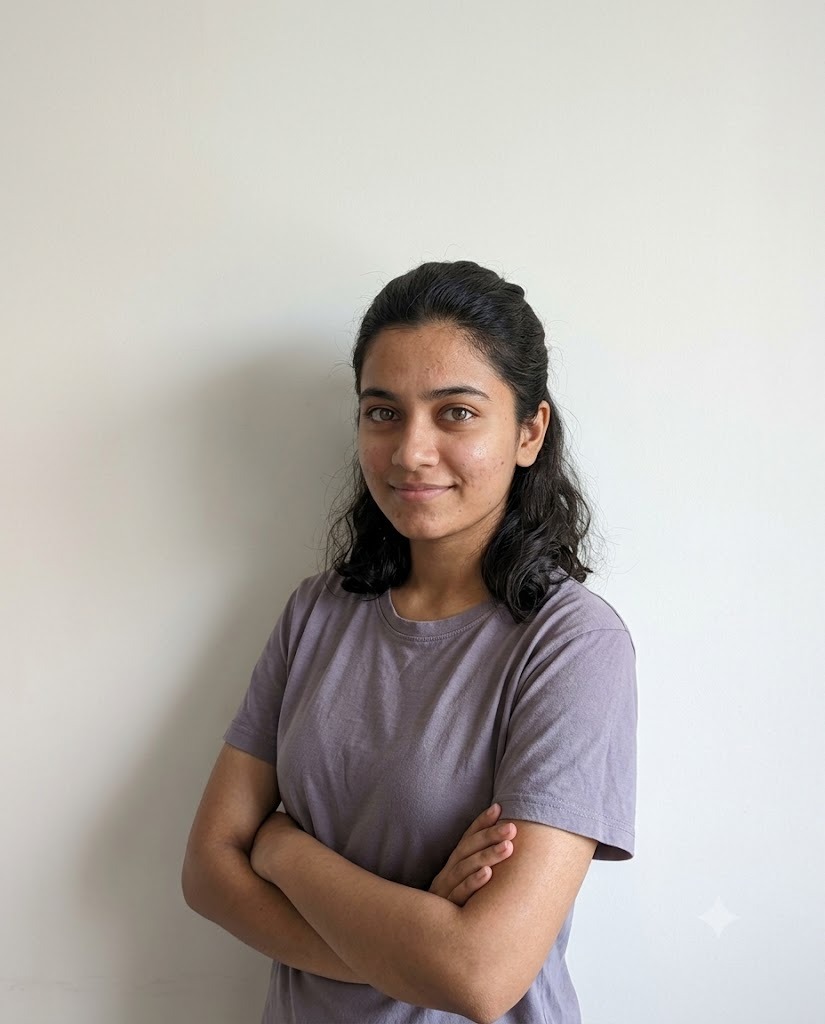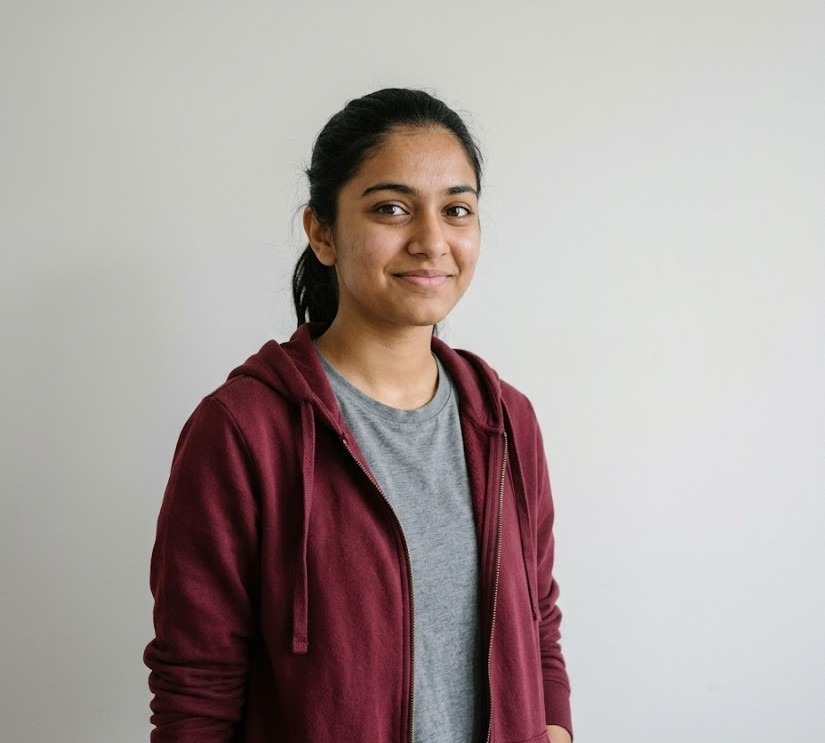
Verified Student Profile & Official ISAT Scorecard
Initial Diagnostic Score
147 (43rd Percentile)
Struggled under 108-second pacing constraints, multi-tier data graphs, and subtle critical reasoning traps.
Final Official ISAT Score
187 (99th Percentile)
CR: 185 (98th Percentile) | QR: 189 (99th Percentile) — A massive +40 scaled point surge!
School & City
Sanskriti School, New Delhi
Grade 12 CBSE Science student balancing intense board preparation with overseas direct-entry medical admissions.
Admitted University
UNSW Sydney & Monash Medicine
Accepted into Australia's highest-ranked direct-entry medical faculties alongside top interview performance.
When New Delhi student Kajal took her first diagnostic simulation for the International Student Admissions Test (ISAT) in 2024, the outcome was an eye-opening composite score: 147. For an exceptional student from Sanskriti School, Chanakyapuri who had nurtured a dream of entering an elite Australian medical school since high school, the result was a difficult hurdle to confront.
With premier Australian direct-entry medical programs like the University of New South Wales (UNSW Sydney) and Monash University demanding cutoffs typically between 175 and 185+ for international candidates, a score of 147 meant that interview shortlisting was impossible. Leaving 16 questions completely untouched due to severe clock pressure, Kajal recognized that textbook memorization and standard coaching approaches were completely ineffective for ACER's psychometric reasoning model.
"In school exams, having more time to calculate every single step is normal," Kajal explains. "On the ISAT, you have exactly 108 seconds per question and zero calculator. I tried manual long division on complex biochemical kinetics graphs and ran out of time with 16 questions left. In Critical Reasoning, I kept falling for attractive distractor choices that felt intuitively true. EduQuest's forensic diagnostic audit fundamentally dismantled my flaws and taught me how to think like an ACER examiner."
Fast-Track Your College & Career Strategy
Get immediate, personalized AI insights tailored to your grade, strengths, and dream universities — 100% free with instant reports.
Know Your Personality Type for Free
Take our 18-question AI psychometric test to uncover your cognitive archetype, hidden learning superpowers, and ideal university courses.
Personalized Career & University EduPath
Build a step-by-step Grade 8–12 admissions blueprint with AI-matched target universities, exam schedules, and extracurricular profiles.
The Diagnostic Crisis: Dissecting Kajal’s Initial 147 Attempt
Rather than assigning generic question banks, EduQuest’s senior admissions faculty conducted a granular Forensic Diagnostic Audit of Kajal's baseline test. The investigation exposed four specific cognitive breakdowns:
- Calculation Drag & Arithmetic Exhaustion in Quantitative Reasoning: ACER Quantitative questions rarely feature basic single-axis charts. Kajal faced questions integrating 3 complex figures — enzyme kinetics, substrate concentration gradients, and inhibition curves. She attempted exact decimal division on her scratchpad, spending over 3.5 minutes per question and draining her cognitive energy.
- Attributive & Tone Confusion in Critical Reasoning: In nuanced philosophical, ethical, and socio-legal passages, Kajal consistently conflated cited counter-arguments with the author's primary thesis. This led her directly into ACER’s designed "attributive traps".
- Failure of the 108-Second Time-Triage Discipline: Kajal suffered from the sunk cost fallacy. When encountering an intricate logic item on Question 31, she spent nearly 5 minutes refusing to abandon it, ultimately starving the final 20 questions of vital minutes and leaving 16 unattempted.
- Remote ProctorU Surveillance Anxiety & Sensory Tension: Testing under remote webcam invigilation via ProctorU created high sensory tension. Fear of looking away from the camera or receiving room audit warnings resulted in cognitive tunneling, elevating cortisol levels and slowing her decision speed.
The EduQuest Turnaround Strategy: Engineering a +40 Point Leap
To propel Kajal from the 43rd percentile to the top 1% worldwide, EduQuest implemented an intensive 12-week cognitive coaching curriculum:
Zero-Calculator Mental Approximation & Ratio Scaling
EduQuest mentors trained Kajal to eliminate paper math entirely. Utilizing axis-first visual scanning, benchmark percentage splitting (10%, 5%, 1%), and order-of-magnitude bounds, she learned to eliminate 3 out of 4 options in under 55 seconds without writing down lengthy calculations.
Socratic Premise-Polarity Tagging in Critical Reasoning
Her mentors instituted a strict structural polarity system: labeling statements as Author Stance (+), Opposing Counterclaim (-), or Neutral Fact (0). This eliminated author-attribution ambiguity and boosted her accuracy to 96% on dense 450-word humanities passages.
The Non-Negotiable 75-Second Bailout Rule
Kajal practiced strict pacing triage: if the solution path was not evident within 40 seconds, or if processing exceeded 75 seconds, she eliminated obvious distractors, made an informed probability selection, flagged the item, and pressed forward without remorse.
14 Full-Length ProctorU Proctored Simulation Mocks
To conquer surveillance stress, Kajal took 14 full-length, 3-hour uninterrupted simulated tests under strict live ProctorU parameters — complete with webcam room sweeps, 2-sheet scratchpad limits, and real-time fatigue management drills.
1-on-1 Forensic Diagnostic Mentorship
Weekly 1-on-1 error sessions with senior EduQuest mentors focused on dissecting thinking patterns, cognitive biases, and time allocation, ensuring steady progress toward the 99th percentile.
Official ACER ISAT Exam Pattern & Format Specification
The ACER ISAT is an aptitude-driven computer-based examination used by Australia's leading faculties of medicine, dentistry, and healthcare sciences to select international candidates. The core exam architecture is outlined below:
| Parameter | Official ACER Specification | Strategic Preparation Protocol |
|---|---|---|
| Total Duration | 3 Hours (180 Minutes) | Continuous uninterrupted testing without scheduled breaks; endurance conditioning essential. |
| Question Count | 100 Multiple Choice Questions (MCQs) | Items feature 4 or 5 options with equal score weighting. |
| Pacing Budget | Strictly 108 Seconds per question | Target 60–75s on standard items to build a 15-minute review buffer. |
| Section 1: Critical Reasoning | 50 Questions (Interleaved) | Humanities, comprehension, ethical reasoning, argumentative critique. |
| Section 2: Quantitative Reasoning | 50 Questions (Interleaved) | Scientific data interpretation, graph slopes, biomedical deduction, mathematical analysis. |
| Negative Marking | NO Negative Marking (0 for wrong) | Never leave blanks; eliminate distractors and submit an educated guess. |
| Calculator Policy | STRICTLY PROHIBITED | Mental math, estimation, proportional scaling, and order-of-magnitude bounds are vital. |
ISAT Scoring Benchmarks for Australian Medical Schools
ACER reports ISAT scores on a scaled metric from 100 to 200, with 150 representing the standardized international median. Competitive benchmarks for direct-entry medical admissions include:
| University | Program | Competitive ISAT Score Range | Admissions Role & Selection Weightage |
|---|---|---|---|
| University of New South Wales (UNSW) | Bachelor of Medical Studies / MD | 175 – 185+ (85th – 98th Percentile) | Primary screening criterion for limited overseas quota interview calls. |
| Monash University (Melbourne) | Bachelor of Medical Science & MD | 178 – 186+ (90th – 99th Percentile) | Direct ranking component alongside Year 12 academic marks and MMI interview. |
| University of Western Australia (UWA) | Direct Pathway to MD / DMD | 172 – 182+ (80th – 95th Percentile) | Combined assessment alongside high school predicted grades. |
| Flinders University (Adelaide) | Bachelor of Clinical Science / MD | 168 – 178+ (70th – 88th Percentile) | Strict prerequisite threshold for high-performing international applicants. |
| University of Queensland (UQ) | Doctor of Medicine (Provisional) | 174 – 184+ (83rd – 97th Percentile) | Ranked evaluation for direct international applicant seats. |
ISAT Exam Schedule & Annual Testing Windows
ACER conducts the ISAT across four dedicated testing cycles per calendar year. Scores remain valid for up to two years across participating Australian universities:
| Testing Window | Registration Window | Testing Window Dates | Ideal Candidate Alignment |
|---|---|---|---|
| Window 1 (Jan – Feb) | Late November to Early January | Mid January – Early February | Gap-year students and early-round university admission deadlines. |
| Window 2 (Apr – May) | Mid February to Mid April | Late April – Mid May | CBSE/IB Grade 12 students aiming for primary Australian application rounds. |
| Window 3 (Jul – Aug) | Early May to Early July | Late July – Early August | The most popular window chosen by 70% of UNSW & Monash applicants. |
| Window 4 (Oct – Nov) | Early August to Early October | Late October – Early November | Late application rounds and advance baseline testing for Grade 11 students. |
Kajal's 5 Strategic Rules for ISAT Success
Never Derive When You Can Disqualify
The ISAT is an elimination exam. Options are widely separated; estimating the range or testing extreme boundaries disqualifies 2 to 3 choices in 45 seconds without calculating exact digits.
Label Claims Before You Answer
In Critical Reasoning, differentiate between the author’s primary thesis and cited concessions. Tagging polarity prevents you from falling for attractive counter-argument distractors.
Execute the 75-Second Bailout Without Hesitation
Every question is worth exactly +1 mark. Spending 4 minutes on a tough logic item robs you of answering 3 easier questions at the end of the test.
Condition Your Nervous System for ProctorU
Practice sitting for 3 uninterrupted hours in a clear room with webcam surveillance. Developing physical comfort with remote invigilation prevents exam-day cognitive freeze.
Engage in Forensic Error Diagnostics
Solving more practice sets without diagnosing the root cause of your mistakes leads to score plateaus. A mentor who understands psychometrics helps you debug flawed reasoning habits.
Frequently Asked Questions (FAQs)
What is a competitive ISAT score for UNSW Medicine?
For international candidates targeting UNSW Sydney Medicine (BMed/MD), an Overall ISAT score of 175+ is competitive, with scores of 185–187+ (98th–99th percentile) placing applicants in the top tier for interview calls.
How did Kajal improve her score from 147 to 187?
Kajal improved by +40 scaled points through EduQuest’s forensic diagnostic error audits, zero-calculator estimation heuristics, Socratic premise polarity tagging in Critical Reasoning, and 14 full-length simulated ProctorU mocks.
Is a calculator permitted on the ACER ISAT?
No. Calculators of all types are strictly prohibited. Candidates must use mental math, estimation, and scratchpad notes on proctor-approved paper.
Can Indian CBSE/ISC students apply for Australian Medicine via ISAT?
Yes. The ISAT is the primary standardized assessment used by Australian medical schools to evaluate international applicants, including CBSE, ISC, and IB students.
How many times can a student sit for the ISAT in a year?
ACER provides four designated testing windows annually. A student may take the ISAT once per testing window.
Download Kajal's ISAT Problem Diagnosis, Conclusion Report & Admissions Strategy Blueprint
Get our comprehensive 6-page strategy document covering forensic error diagnosis, root-cause conclusions, Quantitative zero-calculator heuristics, Critical Reasoning trap avoidance, and UNSW/Monash Medicine cutoff matrices.
Ready to Transform Your ISAT Score & Secure Australian Medicine Admission?
Get 1-on-1 personalized mentorship, forensic diagnostic error auditing, and official ACER-standard simulated mock tests from EduQuest senior faculty.