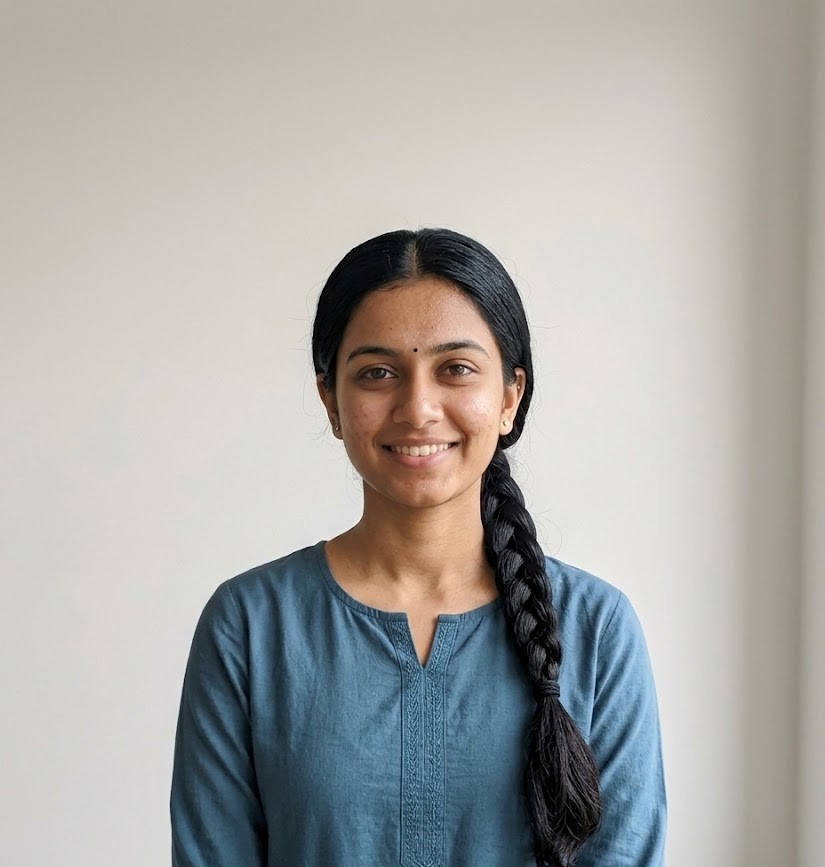
Verified Student Profile & Official ISAT Scorecard
Initial Diagnostic Score
146 (41st Percentile)
Collapsed under 108-second pacing, multi-tier biochemical graphs, and subtle critical reasoning distractor traps.
Final Official ISAT Score
188 (99th Percentile)
CR: 186 (98th Percentile) | QR: 190 (99th+ Percentile) — An astonishing +42 scaled point transformation!
School & Location
DPS R.K. Puram, New Delhi
Class 12 CBSE Science student balancing board examinations with high-stakes international medical admissions.
Admitted University
Monash University, Australia
Direct-entry admission into one of the top 35 medical faculties globally, with additional interview offers from Melbourne & UNSW.
When New Delhi student Himanshi Sehgal received her first diagnostic assessment results for the International Student Admissions Test (ISAT) in mid-2024, her screen registered an alarming composite score: 146. For an academically driven student who had consistently stood among the top performers at Delhi Public School (DPS), R.K. Puram, the result was a jarring wake-up call.
With premier Australian medical programs such as Monash University and the University of New South Wales (UNSW Sydney) requiring cutoffs between 175 and 185+ for overseas applicants, a score of 146 meant that direct admission was completely out of reach. Overwhelmed by the 180-minute uninterrupted testing duration and leaving 18 questions completely unread on her baseline test, Himanshi realized that standard rote-learning and school-level science preparation could not crack ACER’s psychometric assessment.
"In school, exams reward memorizing textbooks and showing every single step of calculations," Himanshi explains. "The ISAT was the complete opposite. In Quantitative Reasoning, there was no calculator, and the graphs had multiple intersecting curves with logarithmic scales. In Critical Reasoning, every single answer option sounded plausible. I ran out of time with 18 questions untouched and had nearly given up on Australia until my parents enrolled me at EduQuest."
Fast-Track Your College & Career Strategy
Get immediate, personalized AI insights tailored to your grade, strengths, and dream universities — 100% free with instant reports.
Know Your Personality Type for Free
Take our 18-question AI psychometric test to uncover your cognitive archetype, hidden learning superpowers, and ideal university courses.
Personalized Career & University EduPath
Build a step-by-step Grade 8–12 admissions blueprint with AI-matched target universities, exam schedules, and extracurricular profiles.
The Diagnostic Crisis: Dissecting Himanshi’s Initial 146 Attempt
Rather than rushing Himanshi into solving hundreds of repetitive questions, EduQuest’s senior admissions faculty performed an exhaustive Forensic Diagnostic Audit of her baseline performance. The audit revealed four distinct cognitive bottlenecks:
- Calculation Drag & Multi-Axis Graph Paralysis in QR: ACER Quantitative items rarely feature simple charts. Himanshi encountered biochemical questions integrating 3 separate figures — enzyme kinetic curves, substrate concentration gradients, and inhibition histograms. She attempted manual long division on her scratch paper, spending upwards of 3.2 minutes per problem.
- Attributive & Author-Intent Traps in Critical Reasoning: In complex philosophical, sociological, and ethical passages, Himanshi frequently mistook cited counter-arguments or neutral contextual remarks for the author's main thesis, falling directly into ACER’s carefully engineered distractor choices.
- Breach of the 108-Second Pacing Threshold: Himanshi treated every item with identical emotional urgency. When confronted by a grueling multi-variable logic riddle on question 29, she spent nearly 5 minutes trying to reach certainty, severely starving the remaining 70 questions of vital minutes.
- Remote ProctorU Surveillance Anxiety & Technical Friction: The requirement to test under live webcam invigilation via ProctorU created palpable tension. The fear of triggering gaze warnings, webcam readjustments, or unexpected room audits produced cognitive tunneling and elevated cortisol, degrading her speed.
The EduQuest Turnaround Strategy: Engineering a +42 Point Surge
To bridge the gap between 146 and the 99th percentile, EduQuest developed a bespoke, high-intensity 12-week preparation strategy tailored specifically to Himanshi’s cognitive strengths and weak spots:
Zero-Calculator Mental Math & Visual Data Scanning
EduQuest mentors trained Himanshi to eliminate paper arithmetic entirely. Using axis-first visual scanning, benchmark percentage splitting (10%, 5%, 1%), and order-of-magnitude bounds, she learned to rule out 3 out of 4 multiple-choice options in under 55 seconds without writing a single line of calculation.
Socratic Core-Premise Isolation in Critical Reasoning
Her mentors introduced a rigorous polarity-tagging method: tagging statements as Author Thesis (+), Opponent Counterclaim (-), or Neutral Premise (0). This eliminated author-attribution confusion and allowed her to deconstruct dense 400-word humanities passages with 95%+ accuracy.
Strict 75-Second Bailout & Question Triage Discipline
Himanshi implemented a non-negotiable triage protocol: if the solution path was not evident within 40 seconds, or if calculations exceeded 75 seconds, she immediately applied intelligent elimination, selected the best probability guess, flagged the item, and preserved momentum.
14 Full-Length ProctorU Proctored Simulation Mocks
To conquer invigilation panic, Himanshi sat for 14 full-length, 3-hour uninterrupted simulated tests under authentic ProctorU conditions — complete with webcam room scans, strict 2-sheet scratch paper restrictions, and real-time fatigue management.
1-on-1 Forensic Diagnostic Mentorship
Weekly 1-on-1 error audit sessions with EduQuest senior mentors scrutinized not just incorrect answers, but also "lucky guesses" and slow correct answers, systematically debugging her decision trees.
Official ACER ISAT Exam Pattern & Format Specification
The ACER ISAT is an aptitude-based test specifically designed to select international candidates for medical, dental, and health science degree admissions. The core architecture is outlined below:
| Parameter | Official ACER Specification | Strategic Preparation Protocol |
|---|---|---|
| Total Duration | 3 Hours (180 Minutes) | Continuous testing without scheduled pauses; mental stamina conditioning is vital. |
| Question Count | 100 Multiple Choice Questions (MCQs) | Questions feature 4 or 5 options with equal score weighting. |
| Pacing Budget | Strictly 108 Seconds per question | Target 60–75s for standard items to accumulate a 15-minute buffer. |
| Section 1: Critical Reasoning | 50 Questions (Interleaved) | Humanities, comprehension, ethical reasoning, argumentative critique. |
| Section 2: Quantitative Reasoning | 50 Questions (Interleaved) | Scientific charts, kinetic curves, biomedical deduction, mathematical analysis. |
| Negative Marking | NO Negative Marking (0 for incorrect) | Never leave blanks; eliminate 2 distractors and make an informed attempt. |
| Calculator Policy | STRICTLY PROHIBITED | Mental estimation, proportional scaling, and order-of-magnitude bounds are mandatory. |
ISAT Scoring Benchmarks for Premier Australian Medical Schools
ACER reports ISAT scores on a scaled metric from 100 to 200, with 150 representing the standardized international median. Competitive benchmarks for international direct-entry medical admissions include:
| University | Program | Competitive ISAT Score Range | Admissions Role & Selection Weightage |
|---|---|---|---|
| Monash University (Melbourne) | Bachelor of Medical Science & MD | 178 – 186+ (90th – 99th Percentile) | Direct primary filter alongside Year 12 CBSE/IB scores and MMI interview. |
| University of New South Wales (UNSW) | Bachelor of Medical Studies / MD | 175 – 185+ (85th – 98th Percentile) | High-demand international medical quota shortlisting benchmark. |
| University of Western Australia (UWA) | Direct Pathway to MD / DMD | 172 – 182+ (80th – 95th Percentile) | Ranked alongside predicted grades for international interview invitations. |
| Flinders University (Adelaide) | Bachelor of Clinical Science / MD | 168 – 178+ (70th – 88th Percentile) | Mandatory threshold requirement for high-performing overseas candidates. |
| University of Melbourne | Biomedicine (Provisional MD Pathway) | 176 – 184+ (88th – 97th Percentile) | Key quantitative aptitude indicator for high-tier scholarship shortlisting. |
ISAT Exam Schedule & Annual Testing Windows
ACER administers the ISAT across four dedicated testing cycles per calendar year. Scores remain valid for up to two years across Australian participating medical faculties:
| Testing Window | Registration Window | Testing Window Dates | Ideal Candidate Alignment |
|---|---|---|---|
| Window 1 (Jan – Feb) | Late November to Early January | Mid January – Early February | Gap-year students and early-round university admission deadlines. |
| Window 2 (Apr – May) | Mid February to Mid April | Late April – Mid May | CBSE/IB Grade 12 students aiming for primary Australian application rounds. |
| Window 3 (Jul – Aug) | Early May to Early July | Late July – Early August | The most popular window chosen by 70% of Monash & UNSW applicants. |
| Window 4 (Oct – Nov) | Early August to Early October | Late October – Early November | Late application rounds and advance baseline testing for Grade 11 students. |
Himanshi's 5 Strategic Rules for Cracking the ISAT
Stop Calculating What You Can Eliminate
Never compute multi-digit arithmetic from scratch. ACER multiple-choice options are spaced widely enough that estimating order of magnitude or verifying extremes instantly eliminates 2 to 3 distractors.
Separate Text Stance from Author Claim
In Critical Reasoning, authors frequently cite opposing views to demonstrate intellectual balance. Label opposing claims explicitly so you do not select them as the author’s final conclusion.
Enforce the 75-Second Pacing Rule
No question on the ISAT is worth 3 minutes of your life. If you are stuck in a mental loop at 75 seconds, take your best calculated guess, flag the item, and move forward with clear confidence.
Train Under Severe Remote Proctor Conditions
Take at least 10 full 3-hour mocks using a live webcam, clear desk, no headphones, and strict room guidelines. Acclimatizing your nervous system to ProctorU eliminates exam-day paralysis.
Work with Mentors Who Understand Psychometrics
The ISAT is not a science test; it is an aptitude exam. You need mentors who dissect item discrimination indices, trap design, and time-triage heuristics rather than just solving textbook problems.
Frequently Asked Questions (FAQs)
What is a good ISAT score for Monash Medicine?
For international applicants targeting Monash University direct-entry Medicine (BMedSci/MD), an Overall ISAT score of 178+ is competitive, with scores of 184–188+ (98th–99th percentile) placing applicants in the highest tier for immediate interview calls.
How did Himanshi improve her score from 146 to 188?
Himanshi improved by +42 scaled points through EduQuest’s forensic diagnostic error audits, zero-calculator mental estimation heuristics, Socratic premise polarity tagging in Critical Reasoning, and 14 full-length simulated ProctorU mocks.
Is a calculator allowed on the ACER ISAT?
No. Calculators of any kind (handheld or on-screen) are strictly prohibited. Candidates must rely entirely on mental arithmetic, estimation, and scrap paper calculations.
Can Indian CBSE or ISC students take the ISAT?
Yes. The ISAT is specifically designed for international students applying to Australian undergraduate medicine, dentistry, and healthcare programs. Students typically take it in Grade 12 or during their gap year.
How many times can you take the ISAT in a year?
ACER conducts four testing windows per calendar year. A candidate is permitted to take the ISAT once per testing window.
Download Himanshi's ISAT 99th Percentile Blueprint & Medical Admissions Guide
Get our comprehensive 6-page strategy document covering ACER scaled scoring curves, Critical Reasoning trap avoidance, Quantitative zero-calculator heuristics, and Monash/Melbourne Medicine cutoff matrices.
Ready to Transform Your ISAT Score & Secure Australian Medicine Admission?
Get 1-on-1 personalized mentorship, forensic diagnostic error auditing, and official ACER-standard simulated mock tests from EduQuest senior faculty.