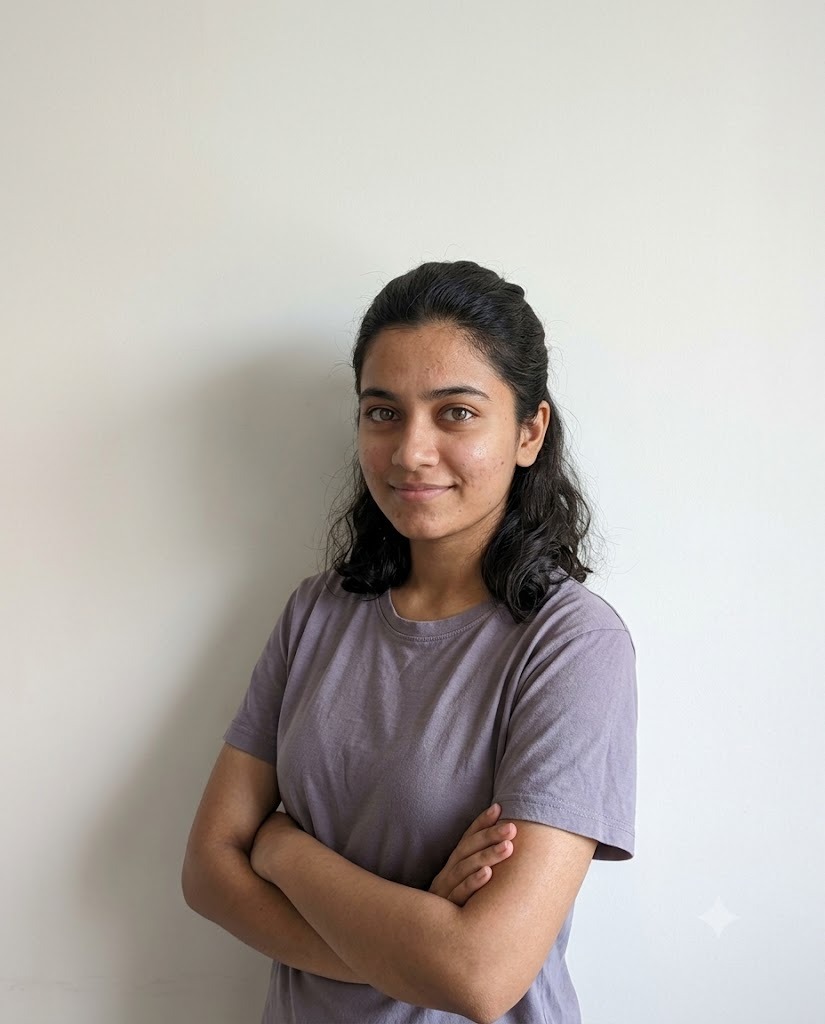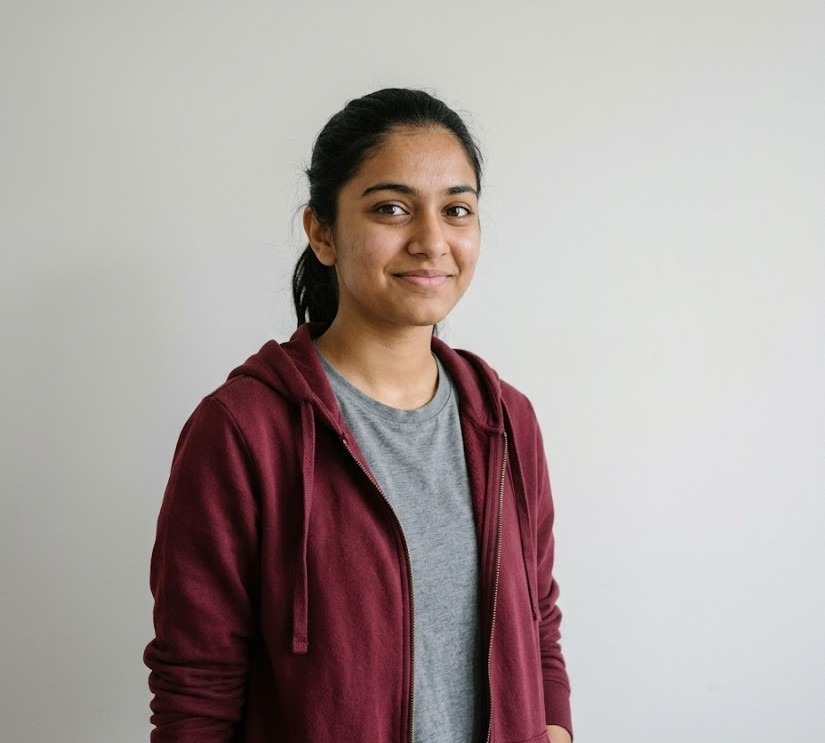
Verified Student Profile & Official ISAT Scorecard
Initial Diagnostic Score
148 (48th Percentile)
Struggled with severe time pressure, multi-step math calculations, and critical reasoning traps.
Final Official ISAT Score
184 (98th Percentile)
CR: 181 (96th Percentile) | QR: 187 (99th Percentile) — A massive 36-point leap!
Admitted University
Monash University, Australia
Accepted into Australia's premier direct-entry BMedSci/MD medical program.
Mentorship Program
EduQuest 1-on-1 ISAT Elite
Diagnostic flaw mapping, premise-conclusion deconstruction, and full-length ACER mock simulations.
For international students dreaming of pursuing Medicine or Dentistry in Australia, the International Student Admissions Test (ISAT) administered by the Australian Council for Educational Research (ACER) is often the single most daunting hurdle. Unlike conventional board exams or science entrance tests where rote memorization and formulaic repetition might carry you through, the ISAT tests pure cognitive processing: raw critical reasoning, deductive logic, and quantitative data interpretation under unforgiving time constraints.
When Abhinav Thakur first sat down for an ISAT diagnostic test in early 2024, his dream of studying medicine at Monash University felt frustratingly out of reach. With an initial score of 148 (roughly the 48th percentile), he was facing severe pacing bottlenecks, mental fatigue, and a frustrating inability to distinguish between the two best-looking answer choices in ethical and humanities passages.
"I remember looking at the timer on question 55 and realizing I only had 40 minutes left for 45 questions," Abhinav recalls. "My heart was pounding, I started guessing wildly, and I realized school toppers can easily fail the ISAT if they don't understand how ACER designs questions. That was the day I reached out to EduQuest."
Fast-Track Your College & Career Strategy
Get immediate, personalized AI insights tailored to your grade, strengths, and dream universities — 100% free with instant reports.
Know Your Personality Type for Free
Take our 18-question AI psychometric test to uncover your cognitive archetype, hidden learning superpowers, and ideal university courses.
Personalized Career & University EduPath
Build a step-by-step Grade 8–12 admissions blueprint with AI-matched target universities, exam schedules, and extracurricular profiles.
The Challenges Abhinav Faced Before Joining EduQuest
Every year, thousands of capable students with near-perfect 12th-grade or IB scores underestimate the ISAT. Abhinav was an exceptional student in his school science subjects, but the ISAT presented challenges he had never encountered in school:
- The 108-Second Clock & Cognitive Fatigue: The ISAT requires solving 100 questions in 180 minutes without scheduled breaks — that is just 1 minute and 48 seconds per question. Abhinav was frequently spending 3 to 4 minutes on dense data tables, causing him to rush and blind-guess the last 20 questions.
- Critical Reasoning Subjectivity Traps: In passages drawn from sociology, literature, and medical ethics, ACER embeds "distractor" options that seem intuitively right based on real-world assumptions but are not substantiated by the passage text. Abhinav was consistently falling into confirmation bias.
- Brute-Force Mathematical Drag in QR: In Quantitative Reasoning, Abhinav attempted standard multi-line algebraic calculations instead of applying estimation, dimensional analysis, and boundary-value elimination. This drained valuable minutes.
- Scarcity of Authentic ACER ISAT Resources: Unlike SAT or UCAT where thousands of official questions exist, ACER releases very few official sample papers. Unverified third-party practice materials online had inaccurate question styling and skewed answer keys, confusing Abhinav further.
- The 145–150 Score Plateau & Loss of Confidence: After two months of self-study, Abhinav’s mock scores remained stagnated between 146 and 150. With top Australian universities like Monash and UNSW expecting 175+ to 180+ for international medicine interviews, anxiety was peaking.
How EduQuest Mentorship Turned the Tide
When Abhinav enrolled in EduQuest’s 1-on-1 ISAT Elite Mentorship Program, our faculty took a radically diagnostic and scientific approach. Rather than handing him generic question sheets, we built a personalized 12-week roadmap targeted at his specific cognitive bottlenecks.
Cognitive Error Mapping & Diagnostic Deep-Dive
In his first week, EduQuest mentors analyzed 3 full diagnostic tests question-by-question. We classified every mistake into 4 precise buckets: Conceptual Gap, ACER Trap Option, Pacing Panic, or Misreading. This proved that 70% of his lost marks were pacing and trap-detection errors, not lack of intelligence.
The "Premise-Conclusion-Assumption" Deconstruction Framework
Our verbal logic specialists trained Abhinav to treat Critical Reasoning like mathematical code. Instead of reading for "vibes", he learned to strip passages to their core premises, identify implicit assumptions, and immediately disqualify options containing subtle scope shifts or unwarranted extrapolations.
Mental Estimation & Dimensional Elimination in QR
In Quantitative Reasoning, Abhinav learned how to eliminate 2 or 3 answer choices within 20 seconds using order-of-magnitude estimation, unit checking, and graph inflection analysis. This dropped his average time per QR question from 150 seconds to under 75 seconds.
12 Full-Length ACER-Calibrated Mock Tests with Blind Review
EduQuest provided Abhinav with 12 proprietary, full-length 3-hour computer-based mocks replicating ACER’s exact interface, difficulty spread, and ProctorU conditions. Every test was followed by a mandatory "Blind Review" session where he re-evaluated questions without seeing the timer or answer key.
The 25-Question Checkpoint Pacing Protocol
To conquer test-day panic, mentors instituted a strict pacing cadence: 25 questions every 45 minutes. If any single question took more than 90 seconds without a clear breakthrough, Abhinav was trained to flag it, make an educated elimination guess, and move forward without emotional drag.
EduQuest didn't just teach me how to solve questions; they fundamentally rewired how I process information under pressure. My mentor taught me how ACER question setters think and why certain trap answers are written to look appealing. Once you see the matrix, you can't unsee it.
— Abhinav Thakur (ISAT Overall: 184 / 200)
The Breakthrough: 184 Official Score & Monash University Medicine Admit
By week 8 of the EduQuest program, Abhinav's mock test scores crossed the 175 mark. By week 11, he was consistently hitting 180+ across full-length proctored simulations.
When he took the official ACER ISAT in the 2024 test window, he felt zero panic. The pacing was second nature, the distractors in Critical Reasoning were transparent, and the quantitative charts were conquered with time to spare. Two weeks later, the official ACER results arrived:
| ISAT Section | Diagnostic Score | Final Official Score | Cohort Percentile |
|---|---|---|---|
| Critical Reasoning (CR) | 146 (Scaled) | 181 (Scaled) | 96th Percentile |
| Quantitative Reasoning (QR) | 150 (Scaled) | 187 (Scaled) | 99th Percentile |
| Overall ISAT Composite | 148 (Scaled) | 184 (Scaled) | 98th Percentile |
| Test Result Outcome | Below Competitive Range | Top 2% Globally | Direct Monash Medicine Admit |
With an Overall ISAT score of 184, Abhinav stood firmly within the top 2% of test-takers worldwide. He received interview invitations from Monash University, University of Western Australia (UWA), and Flinders University. Following stellar MMI (Multiple Mini Interview) preparation at EduQuest, Abhinav was offered direct-entry admission into the prestigious Monash University Bachelor of Medical Science and Doctor of Medicine (BMedSci/MD) program in Melbourne.
Complete ISAT Exam Pattern Breakdown (2025 – 2026)
If you are preparing for the ISAT, understanding the structural anatomy of the exam is paramount. The ISAT is a computer-delivered multiple-choice test designed to assess candidates' ability to reason, analyze information, and draw logical conclusions.
| Feature | Official Specification | Strategic Preparation Note |
|---|---|---|
| Test Administration | ACER (Australian Council for Educational Research) | Conducted globally via ProctorU online remote proctoring. |
| Total Duration | 3 Hours (180 Minutes) | Continuous test with NO scheduled breaks. |
| Total Questions | 100 Multiple Choice Questions (MCQs) | Questions have either 4 or 5 options. |
| Pacing Allocation | 1.8 Minutes (108 seconds) per question | Strict time discipline is essential to attempt all 100. |
| Section 1: Critical Reasoning | ~50 Questions | Humanities, social sciences, comprehension, ethics, behavioural logic. |
| Section 2: Quantitative Reasoning | ~50 Questions | Mathematical data, scientific deductions, charts, graphs, tabular reasoning. |
| Negative Marking | NO Negative Marking | Never leave any question unattempted; always eliminate and guess. |
| Calculator Policy | NO Calculator Allowed | Mental math, estimation, and ratio reasoning are mandatory. |
How ISAT Scoring Works: Scaled Scores vs. Percentiles
Many students get confused between raw scores, scaled scores, and percentiles. Here is how ACER calculates and reports your official ISAT score:
- Raw Score: The raw number of questions answered correctly out of 100. Because there is no negative marking, your raw score is strictly between 0 and 100.
- Scaled Score (100 to 200 Scale): ACER converts your raw score using Item Response Theory (IRT) to adjust for slight variations in difficulty across different test test forms and windows. The scale ranges from 100 to 200, with a global mean typically around 150.
- Three Reported Scores: Your official Statement of Results gives 3 distinct scores: (1) Critical Reasoning Scaled Score, (2) Quantitative Reasoning Scaled Score, and (3) Overall Scaled Score.
- Percentile Rank: Indicates the percentage of candidates in the global cohort whose scores were lower than yours. For top medical programs, universities look for 80th to 95th+ percentile scores.
| University / Medical School | Program | Typical Competitive ISAT Score Range | Admission Role |
|---|---|---|---|
| Monash University (Melbourne) | BMedSci/MD (Direct-Entry) | 175 – 185+ (85th – 98th Percentile) | Crucial shortlisting metric alongside Year 12 academic merit & MMI. |
| University of Western Australia (UWA) | Direct Pathway to Medicine & Dentistry | 170 – 180+ (75th – 90th Percentile) | Combined with ATAR / predicted grades for interview invites. |
| University of New South Wales (UNSW) | Bachelor of Medical Studies / MD | 172 – 182+ (80th – 95th Percentile) | Evaluated for international applicant interview shortlisting. |
| Flinders University (Adelaide) | Bachelor of Clinical Science / MD | 168 – 178+ (70th – 88th Percentile) | Key screening tool for high-demand international quotas. |
| University of Limerick (Ireland) | Bachelor of Science in Paramedic Studies / Health | 165 – 175+ (65th – 85th Percentile) | Standard admissions aptitude assessment. |
ISAT Exam Schedule & Upcoming Testing Windows
ACER offers the ISAT across four distinct testing windows per calendar year. You may only take the ISAT once per cycle/window, and scores are generally valid for 1 to 2 years depending on your target university's policy.
| Testing Window | Typical Registration Period | Exam Window Dates | Best Suited For |
|---|---|---|---|
| Window 1 (Jan – Feb) | Late November to Early January | Mid January – Early February | Early planners, gap year applicants, and universities with early intake deadlines. |
| Window 2 (Apr – May) | Mid February to Mid April | Late April – Mid May | Standard Grade 12 students aiming for primary Australian application rounds. |
| Window 3 (Jul – Aug) | Early May to Early July | Late July – Early August | The most popular window for international applicants targeting Monash & UWA main deadlines. |
| Window 4 (Oct – Nov) | Early August to Early October | Late October – Early November | Late-round applicants and students planning ahead for the subsequent academic cycle. |
Pro Tip: Registration must be completed directly through the official ACER ISAT portal (isat.acer.org), followed by booking your specific exam time slot on ProctorU. Testing slots fill up rapidly during peak windows (May and August), so register at least 4 to 6 weeks in advance.
Abhinav's Top 5 Actionable Strategies for ISAT Aspirants
Now studying medicine at Monash, Abhinav shares the five foundational strategies that made all the difference in his preparation:
Train on Speed Reading for Critical Reasoning
Do not read ISAT passages for pleasure. Scan for paragraph topic sentences, authorial tone indicators (e.g., "however", "paradoxically", "compellingly"), and transition pivots. Highlight key qualifiers like "always", "sometimes", "unlikely", which ACER uses to build trap answers.
Master Approximation in Quantitative Reasoning
Without a calculator, exact arithmetic will kill your score. If options are 12.4, 28.6, 54.1, and 89.2, you only need rough orders of magnitude (e.g. 10 vs 30 vs 50). Round aggressively to save 40 seconds per question.
Strictly Maintain an Error Analysis Journal
Taking mocks without reviewing mistakes is a waste of time. After every practice test, write down why you picked the wrong answer, what trap caught you, and what clue in the question stem you overlooked.
Build 3-Hour Continuous Screen Stamina
Staring at complex data on a laptop screen for 180 continuous minutes causes severe cognitive degradation after hour 2. Take at least 8 to 10 full-length mocks under simulated test conditions at the exact time of day your real test is scheduled.
Get Expert Mentorship Early
Because official ISAT materials are so limited, working with mentors who genuinely understand ACER's psychometric construction will shave months off your learning curve and prevent bad habits.
Frequently Asked Questions (FAQs)
What is a good ISAT score for Monash University Medicine?
For international applicants targeting Monash University BMedSci/MD, a competitive ISAT score is typically 175 or higher (85th+ percentile), with successful direct admits often scoring 180+ (95th+ percentile) alongside strong high school grades and outstanding MMI performance.
How many times can I take the ISAT in a year?
You can sit the ISAT once in any single testing window. However, ACER restricts candidates from taking the test multiple times within the same admissions cycle unless required by university guidelines. Always verify with your specific university admission office before scheduling a retake.
Is ISAT harder than the UCAT or SAT?
ISAT is different from both. The SAT tests high school math and standard grammar rules. The UCAT has very short, rapid-fire subtests (14-22 seconds per question in some sections). The ISAT is a long 3-hour marathon testing deep critical analysis and multi-step scientific data reasoning without a calculator.
Can domestic Australian students take the ISAT?
No. The ISAT is exclusively designed for international students applying to Australian, Irish, and European medical and healthcare programs. Domestic Australian applicants take the UCAT ANZ or GAMSAT.
How did EduQuest help Abhinav improve by 36 points in ISAT?
EduQuest provided Abhinav with 1-on-1 personalized mentorship, error diagnostic mapping, proprietary full-length ACER-calibrated mocks, mental estimation shortcuts for QR, and rigorous premise-conclusion deconstruction frameworks for Critical Reasoning.
How long should a student prepare for the ISAT?
Most successful students require between 3 to 6 months of focused preparation, dedicating 8 to 12 hours per week to timed sectional drills, mock tests, and systematic error review.
Download the Complete ISAT Medical Admissions & Preparation Blueprint
Get our comprehensive 8-page guide covering ACER scoring curves, Critical Reasoning trap avoidance, Quantitative mental math heuristics, and Monash Medicine interview cutoffs.
Ready to Crack the ISAT & Secure Your Dream Medical Seat?
Get 1-on-1 mentorship, official ACER-standard simulated mock tests, and personalized diagnostic coaching from EduQuest's elite test prep faculty.