
Singapore University Course Benchmarking Intelligence (2027 Entry)
Course Advisory
1-on-1 Faculty Matching
Align your mathematical and scientific strengths with faculty curricula across NUS, NTU, SMU, and SUTD.
Book Course StrategyAI & Career Diagnostics
Career Cluster Assessment
Identify which Singapore degree specialization maximizes your post-graduation career ROI and global mobility.
Take Career AssessmentOfficial Directory
Download Free PDF Guide
Get the complete Singapore undergraduate course directory with faculty rankings, course modules, and starting salary data.
1. Executive Overview: Singapore's World-Leading Undergraduate Academic Landscape
Singapore has emerged as an undisputed epicenter of global higher education excellence. Boasting two institutions firmly established within the World Top 15 (NUS and NTU), alongside globally specialized powerhouses in business (SMU) and technology design (SUTD), Singapore provides undergraduate students with access to some of the world's most rigorously funded, industry-aligned, and academically prestigious degree programs.
However, selecting among the best universities in Singapore for undergraduate courses requires moving beyond generic institutional rankings. An Indian high school student choosing between NUS Computer Science and NTU Data Science & AI, or deciding between SMU's seminar-based business curriculum and NUS Business School's corporate network, is making a fundamental decision about pedagogical philosophy, campus lifestyle, and long-term career trajectory.
This comprehensive institutional directory provides rigorous, departmentalized benchmarking across five premier disciplines: Computer Science, Artificial Intelligence, Business Administration, Economics, and Engineering, analyzing the unique course strengths of NUS, NTU, SMU, and SUTD for Indian candidates targeting 2027 entry.
2. Global Rankings & Academic Standing: QS, THE, and Subject-Level Supremacy
Fast-Track Your College & Career Strategy
Get immediate, personalized AI insights tailored to your grade, strengths, and dream universities — 100% free with instant reports.
Know Your Personality Type for Free
Take our 18-question AI psychometric test to uncover your cognitive archetype, hidden learning superpowers, and ideal university courses.
Personalized Career & University EduPath
Build a step-by-step Grade 8–12 admissions blueprint with AI-matched target universities, exam schedules, and extracurricular profiles.
Singapore universities consistently outperform Western and Asian peer institutions across international ranking benchmarks:
In the latest QS World University Rankings, the National University of Singapore (NUS) is ranked #8 globally, while Nanyang Technological University (NTU) ranks #15 globally. Crucially, in subject-specific rankings, both institutions hold Top 10 global standing across Computer Science, Civil Engineering, Electrical Engineering, Materials Science, and Data Science.
Singapore Management University (SMU) ranks among the World Top 40 for Business & Management Studies and holds triple-crown accreditation (AACSB, EQUIS, AMBA) for its Lee Kong Chian School of Business.
SUTD, established in official partnership with MIT, ranks among the top emerging engineering universities in the world, renowned for pioneering active multidisciplinary education.
| Discipline Field | Top Singapore University | Secondary Powerhouse | Global Rank Standing | Key Differentiating Strength |
|---|---|---|---|---|
| Computer Science | NUS (School of Computing) | NTU (College of Computing) | Global #6 - #11 | NUS Overseas Colleges (Silicon Valley) & Algorithmic Rigor |
| Artificial Intelligence | NTU (DSAI Program) | NUS (CS AI Specialization) | Global #8 - #12 | NTU Corporate Labs (Alibaba) & Applied ML Deployments |
| Business Administration | SMU (Lee Kong Chian) | NUS (Business School) | World Top 30 | SMU Seminar Pedagogy & 100% Mandatory Global Exposure |
| Economics | SMU (School of Economics) | NUS (FASS / CHS) | World Top 25 | SMU Econometric Modeling & Central Financial District Proximity |
| Aerospace Engineering | NTU (Aerospace Eng) | NUS (Mechanical Eng Aero) | Global Top 10 | NTU Joint Research Center with Rolls-Royce & Singapore Airlines |
| Design & Tech Architecture | SUTD (CSD & EPD) | NUS (CDE) | Top Emerging Global | MIT-Collaborative Pedagogy & Cross-Disciplinary Prototyping |
3. Computer Science in Singapore: NUS School of Computing vs NTU CCDS
Computer Science represents the most competitive undergraduate credential in Asia, attracting top-percentile talent worldwide:
National University of Singapore (NUS) School of Computing (SoC): Widely regarded as the undisputed leader in Asia, ranking #6 globally for Computer Science. SoC offers Bachelor of Computing degrees in Computer Science, Information Security, Business Analytics, and Computer Engineering. Its curriculum combines foundational theoretical algorithms with state-of-the-art electives in distributed computing, cryptography, and compiler design. SoC students gain exclusive access to the NUS Overseas Colleges (NOC) program, spending up to a full year embedded in Silicon Valley, Israel, or Shenzhen tech startups while taking courses at Stanford or Tsinghua.
NTU College of Computing and Data Science (CCDS): NTU offers the Bachelor of Engineering in Computer Science and Bachelor of Science in Data Science & Artificial Intelligence. CCDS is distinguished by its intensive industry collaboration, hosting multimillion-dollar corporate research labs with Alibaba, HP, and Delta Electronics. NTU's curriculum is intensely applied, offering rapid industry immersion and flexible interdisciplinary double majors with economics or business.
4. Artificial Intelligence & Data Science: The Best Singapore Universities for AI
Singapore's National AI Strategy 2.0 has poured billions into artificial intelligence research, transforming its universities into global testbeds for machine learning innovation:
NTU Bachelor of Science in Data Science and Artificial Intelligence (DSAI): Co-administered by the School of Computer Science and Engineering and the School of Physical and Mathematical Sciences. The DSAI curriculum is rigorously mathematical, covering advanced linear algebra, stochastic processes, deep neural architectures, natural language processing, and computer vision. NTU houses the AI Singapore national initiative, placing undergraduates directly on national AI deployment projects.
NUS Bachelor of Computing in Computer Science (Artificial Intelligence Specialization): NUS undergraduates can declare formal specializations in AI, Machine Learning, and Robotics. Coursework spans neural networks, probabilistic graphical models, autonomous agents, and reinforcement learning, backed by the NUS Centre for Trusted Internet and Community.
SMU Bachelor of Science in Information Systems (AI & Smart City Track): Focuses on practical, enterprise-grade AI deployment, machine learning operations (MLOps), and automated business process intelligence.
5. Business Administration & Management: SMU Lee Kong Chian vs NUS Business vs NBS
Singapore is the financial and operational headquarters for over 7,000 multinational corporations, making its undergraduate business degrees premier recruitment pipelines:
Singapore Management University (SMU) Lee Kong Chian School of Business: Modeled directly after Wharton, SMU revolutionized Singapore business education with interactive, participation-heavy seminar rooms (no 400-person lecture halls). SMU mandates 100% global exposure and requires two full-time internships, ensuring graduates possess unmatched professional poise, case analysis capabilities, and corporate polish.
NUS Business School: Established in 1965, NUS Business provides deep academic prestige, strong quantitative training in finance, supply chain management, and marketing, combined with an enormous alumni network dominating regional banking and state investment funds (Temasek, GIC).
Nanyang Business School (NBS) at NTU: Highly celebrated for its premier 3-Year Direct Honours Bachelor of Business and Bachelor of Accountancy degrees, enabling ambitious Indian students to enter the workforce or complete a dual degree in just 36 to 48 months.
6. Quantitative Finance, FinTech, and Financial Engineering Programs
As global fintech and hedge fund capital floods into Singapore, specialized quantitative programs have seen exponential demand:
SMU BSc in Information Systems (FinTech Track): Combines financial market microstructure with blockchain, digital banking architectures, algorithmic trading, and smart contract engineering.
NUS Double Degree in Computer Science and Business (Finance): An elite 5-year dual degree producing graduates who bridge high-frequency trading software development with macroeconomic asset valuation.
NTU Bachelor of Science in Mathematical Sciences with Minor in Finance: Designed for students targeting quantitative analyst (Quant) and risk modeling roles at top proprietary trading desks.
7. Economics & Social Sciences: SMU Economics vs NUS FASS
Undergraduate economics education in Singapore blends classical macroeconomic theory with cutting-edge econometric data science:
SMU School of Economics: Ranked among the top 10 economics faculties in the world for econometrics. Curriculum focuses heavily on empirical microeconomics, financial economics, trade policy, and big data econometrics.
NUS Faculty of Arts and Social Sciences (FASS / CHS): Offers Bachelor of Social Sciences in Economics within the College of Humanities and Sciences. Features renowned specializations in Applied and Policy Economics, International Economics, and Behavioral Economics.
8. Engineering Disciplines at NTU: The Global Engineering Powerhouse
Nanyang Technological University is globally recognized as an engineering colossus, ranking #1 in Asia for engineering and technology:
NTU Aerospace Engineering: The only Bachelor of Engineering in Aerospace Engineering degree offered by an autonomous university in Singapore, supported by joint research with Rolls-Royce, Singapore Airlines, and Airbus.
NTU Mechanical Engineering: Offers specializations in Robotics, Mechatronics, Aerospace, Bioengineering, and Energy Systems, with access to advanced wind tunnels and rapid manufacturing labs.
NTU Electrical & Electronic Engineering (EEE): One of the world's largest EEE faculties, globally preeminent in semiconductor fabrication, microelectronics, power grids, and optical communications.
9. Engineering Disciplines at NUS: Multidisciplinary Innovation at CDE
The NUS College of Design and Engineering (CDE) represents a unified fusion of engineering precision and architectural design thinking:
Common Curriculum Framework: All CDE engineering undergraduates complete foundational modules in design thinking, systems engineering, artificial intelligence, and project management before deep specialization.
NUS Biomedical Engineering: World-class training in medical device innovation, tissue engineering, neurotechnology, and biocompatible microdevices in partnership with NUS Medicine.
NUS Chemical & Biomolecular Engineering: Ranked #7 globally, driving cutting-edge research in clean pharmaceutical synthesis, green hydrogen systems, and carbon capture.
10. Design & Technology at SUTD: The MIT Partnership Paradigm
The Singapore University of Technology and Design (SUTD) offers a radically modern engineering philosophy:
Cohort-Based Active Learning: Modeled directly after MIT's pedagogy, lectures are replaced with collaborative studio spaces where teams design, build, and test real-world prototypes.
Foundational Freshmore Curriculum: The first three terms immerse every student in chemistry, physics, mathematics, humanities, and software architecture regardless of intended major.
Four Core Pillars: Computer Science and Design (CSD), Engineering Product Development (EPD), Engineering Systems and Design (ESD), and Architecture and Sustainable Design (ASD).
11. Curriculum Architectures: Traditional Modular vs Seminar-Based vs Active Learning
Understanding how daily academic life functions across Singapore universities helps candidates select the ideal environment:
NUS: Traditional lecture-tutorial-modular credit system. Highly flexible, allowing extensive double majors and unrestricted minor selections across diverse faculties.
SMU: American seminar-style model. Small classes capped at 40-45 students, interactive U-shaped tables, 20% to 30% of course grades derived from vocal seminar participation and group presentations.
SUTD: MIT-style cohort classrooms. Integrated interactive studio spaces where theory and physical prototyping occur simultaneously in collaborative pods.
12. Indicative Grade Profiles (IGP) and Grade 12 Cutoffs Across Programs
Singapore autonomous universities publish annual Indicative Grade Profiles (IGP) representing the 10th and 90th percentile of admitted cohorts:
Computer Science & AI (NUS/NTU): 10th percentile Indian equivalent is approximately 96.5%, with the median exceeding 97.5%.
Mechanical / Electrical Engineering: 10th percentile Indian equivalent is approximately 92.0% - 93.5%.
Business Administration & Economics: 10th percentile Indian equivalent is approximately 93.0% - 94.5%.
SUTD Engineering & Design: 10th percentile Indian equivalent is approximately 88.0% - 91.0%.
13. Industry Connections, Corporate Labs, and Co-Op Internships
Singapore's higher education system is uniquely intertwined with global multinational corporations:
Corporate Labs: NTU hosts joint labs with Rolls-Royce, HP, Singtel, and Delta Electronics. NUS hosts global corporate research centers with Applied Materials, Johnson & Johnson, and Cisco.
Mandatory Internships: SMU mandates minimum 10 weeks of accredited internships (most students complete two or three). NUS and NTU offer structured 20-week to 6-month industrial attachments with high stipend rates (S$1,200 - S$2,500/month).
14. Global Exposure Programs: NUS Overseas Colleges (NOC) and Global Exchanges
Every autonomous university guarantees international study and global immersion opportunities:
NUS Overseas Colleges (NOC): The crown jewel of NUS entrepreneurship. Students live and intern for 6 to 12 months at technology startups in Silicon Valley, New York, Toronto, Israel, Munich, Stockholm, or Beijing while taking university courses at partner institutions.
SMU 100% Global Exposure Guarantee: Every single SMU undergraduate completes at least one international study mission, exchange semester, or overseas community project across 300+ partner universities.
NTU Global Education: Over 80% of NTU undergraduates participate in overseas internships, summer research programs, or semester exchanges at Ivy League, Oxbridge, and European institutions.
15. Graduate Starting Salaries and Employment Outcomes by Course
The official Joint Graduate Employment Survey (GES) reveals substantial earning variations across degree disciplines:
Computer Science & Data Science: Median starting salary of S$6,500 - S$7,200/month (Rs. 49.5 - 54.8 Lakhs/year).
Business Analytics & Quantitative Finance: Median starting salary of S$5,500 - S$6,200/month (Rs. 41.8 - 47.1 Lakhs/year).
Core Engineering (Aerospace, Electrical, Mechanical): Median starting salary of S$4,800 - S$5,500/month (Rs. 36.5 - 41.8 Lakhs/year).
Business Administration & Management: Median starting salary of S$4,600 - S$5,400/month (Rs. 35.0 - 41.0 Lakhs/year).
16. Double Degrees and Interdisciplinary Programs in Singapore
Singapore universities are global pioneers in rigorous double degree combinations:
NUS Double Degree in Computer Science and Economics: Equips students to build macroeconomic forecasting models, algorithmic auctions, and crypto-economic systems.
NTU Double Degree in Business and Computing: Complete two complete Honours degrees in four years, mastering corporate finance and full-stack software development.
SMU Fast-Track Dual Degrees: Pair a Bachelor of Business Management with a Bachelor of Science in Information Systems, completing both in four years.
17. Campus Infrastructure: Living in University Town vs NTU Eco-Campus vs SMU City
Campus environment heavily shapes undergraduate quality of life:
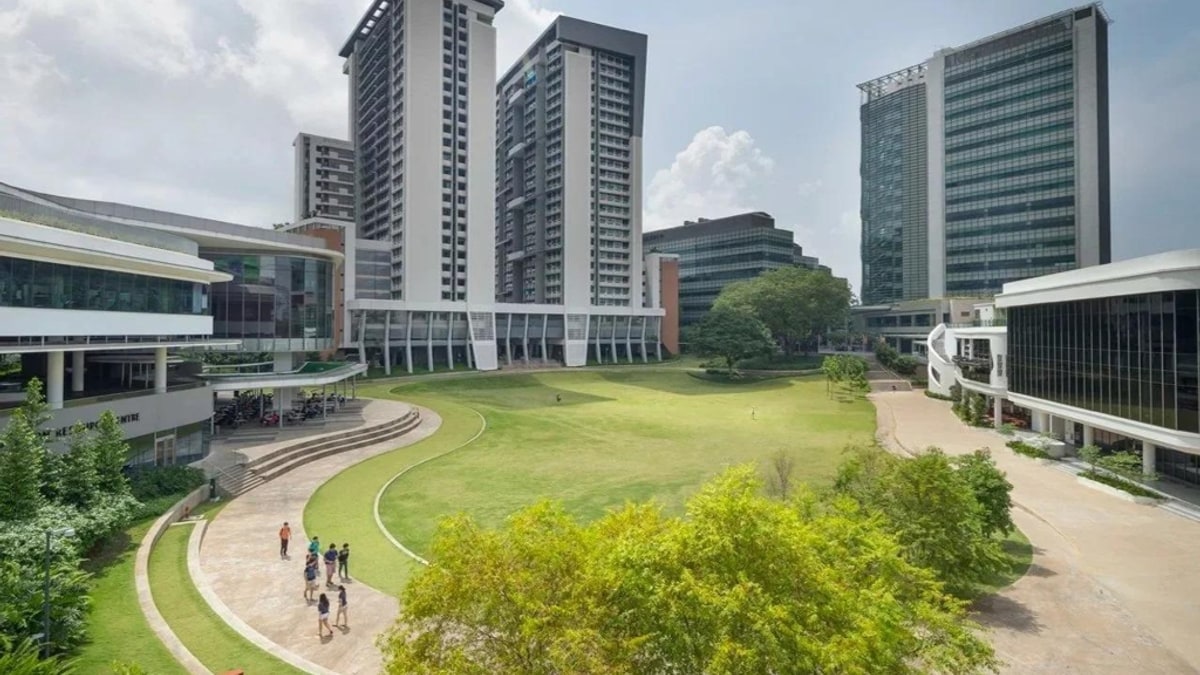
NUS Kent Ridge Campus: A massive 150-hectare hillside campus featuring University Town (UTown), residential colleges, Olympic sports complexes, and internal shuttle bus networks.
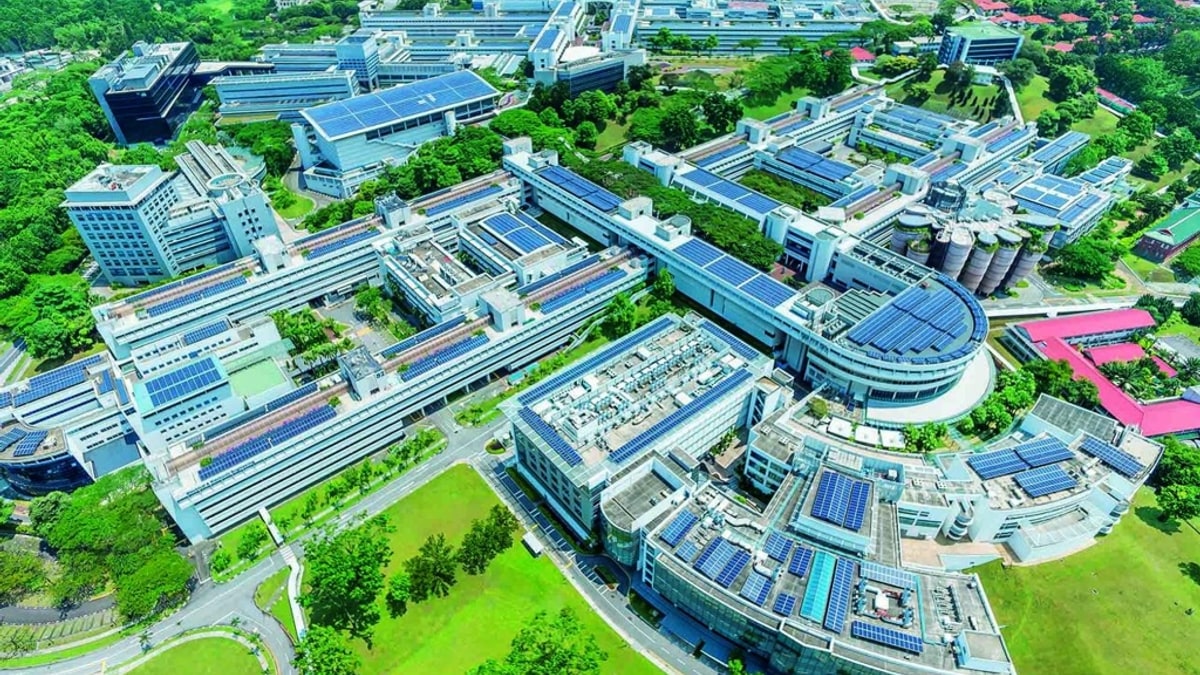
NTU Yunnan Garden Campus: One of the world's top 15 most beautiful university campuses, featuring lush gardens, The Hive learning hub, solar-powered complexes, and guaranteed residential housing.
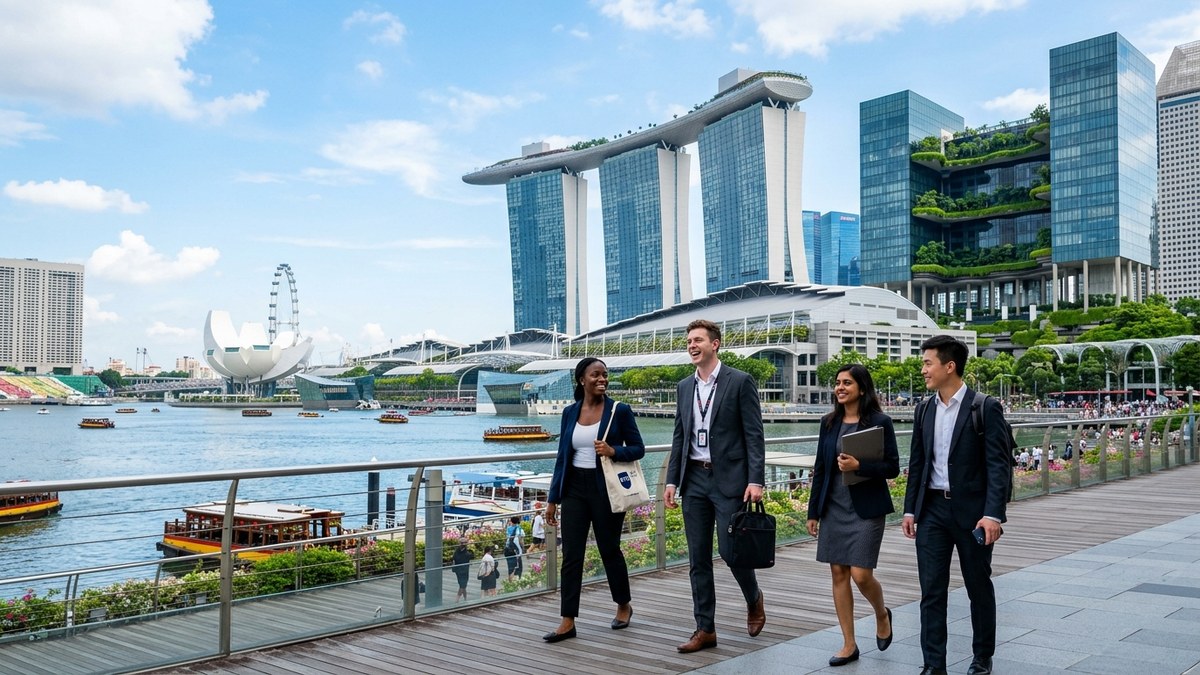
SMU Downtown Campus: Seamlessly integrated into Singapore's cultural and civic district, situated directly over three MRT train stations with immediate walking access to corporate towers, museums, and dining hubs.
18. Faculty Research Centers and Undergraduate Research Schemes
Undergraduates in Singapore conduct cutting-edge research alongside world-renowned professors:
NUS UROPS (Undergraduate Research Opportunities Programme in Science): Allows students to replace course modules with original semester research in physics, chemistry, or computing.
NTU URECA (Undergraduate Research Experience on CAmpus): An elite invitation-only program for top academic performers, providing research grants, faculty mentorship, and conference travel funding.
19. Entrepreneurship & Startup Ecosystems: BLOCK71 and NTUitive
Singapore's universities have spawned some of Southeast Asia's most valuable tech unicorns (including Sea Group, Grab, Carousell, and Patsnap):
NUS BLOCK71: Singapore's premier startup incubator and tech ecosystem builder, providing incubation space, seed funding grants (up to S$50,000), and investor networks.
NTUitive: NTU's commercialization arm, managing intellectual property, patent commercialization, and student venture incubation.
20. Cost Comparison: Tuition Fees by Program and University
Tuition fees across autonomous universities are regulated by the Ministry of Education:
Under MOE Tuition Grant, annual international student tuition for computing and engineering ranges from S$18,200 to S$22,500.
Non-subsidized tuition (without Tuition Grant) ranges from S$39,500 to S$44,000 annually.
SMU Business Management subsidized tuition stands at approximately S$20,500 annually.
21. Specialized Course Review: Biomedical Sciences and Healthcare Programs
Singapore's healthcare biotechnology cluster (Biopolis) drives premier life sciences education:
NUS Life Sciences: Offers rigorous molecular and cell biology, biomedical science, and computational biology specializations.
NTU Biological Sciences with Minor in Business: Prepares students for pharmaceutical patent law, biotech venture capital, and clinical regulatory affairs.
22. Specialized Course Review: Architecture and Sustainable Design
Singapore is the global capital of biophilic, sustainable high-rise architecture:
NUS Department of Architecture: Ranked #6 worldwide, emphasizing tropical architecture, computational urban design, and green building systems.
SUTD Architecture and Sustainable Design (ASD): Integrates advanced digital fabrication, algorithmic design, and parametric modeling.
23. Specialized Course Review: Environmental Earth Systems and Sustainability
Responding to the global climate transition, Singapore universities have built world-class environmental institutes:
NTU Asian School of the Environment (ASE): Offers hands-on field research across Southeast Asia, volcanic monitoring, marine biology, and climate forecasting.
NUS Bachelor of Environmental Studies (BES): A joint interdisciplinary degree between science and arts, combining environmental law, economics, and ecology.
24. Accreditation & Global Mobility: Washington Accord & AACSB Standing
All engineering degrees from NUS and NTU are accredited by the Engineering Accreditation Board (EAB) of Singapore under the prestigious Washington Accord.
This accreditation guarantees that an engineering degree from NUS or NTU is fully recognized as academically equivalent to engineering degrees from MIT, Stanford, Imperial College London, or University of Toronto for professional engineer licensing.
All business degrees from SMU, NUS, and NTU hold elite AACSB and EQUIS international accreditations.
25. Which Singapore University is Best for You? The Decision Framework
Selecting your target institution comes down to personal learning style and career orientation:
Choose NUS if: You want the highest overall academic brand prestige, aspire to the Silicon Valley NOC exchange, or desire broad interdisciplinary double majors.
Choose NTU if: You are passionate about deep engineering, robotics, aerospace, cutting-edge AI corporate research, or desire a 3-year accelerated business degree.
Choose SMU if: You thrive in interactive seminar debate, love city living, and want to work in investment banking, corporate law, or strategy consulting in Singapore.
Choose SUTD if: You love hands-on prototyping, design thinking, small cohort camaraderie, and MIT-style active engineering.
26. Case Study: Why an Indian High Achiever Picked NTU Data Science over NUS CS
A CBSE student with 98.4% and 1550 SAT evaluated both NUS Computer Science and NTU Data Science & AI.
Decision Drivers: NTU's dedicated corporate lab partnership with Alibaba Cloud and guaranteed 4-year campus housing tilted the decision.
Outcome: The student graduated with First Class Honours, secured a machine learning engineering role at Grab Singapore, and completed an exchange semester at Georgia Tech.
27. Case Study: Why a Quantitative Finance Aspirant Chose SMU over NUS Business
An ISC candidate with 96.2% and 1520 SAT compared NUS BBA with SMU's BSc in Information Systems (FinTech & Quantitative Trading track).
Decision Drivers: SMU's central financial district location allowed the student to complete a part-time junior quant internship during the semester at a Raffles Place hedge fund.
Outcome: Transitioned directly into a full-time quantitative analyst role at an algorithmic trading desk in Singapore upon graduation.
28. Checklist: Course Selection Audit for 2027 Singapore Applicants
Before finalizing your degree choices on university application portals:
1. Verify that your Class 12 subject combinations explicitly meet published prerequisites.
2. Review the detailed 4-year curriculum structure and module electives for each major.
3. Compare the graduate employment rate and median starting salaries from the latest GES survey.
4. Confirm whether your program is eligible for the MOE Tuition Grant subsidy.
5. Check international exchange and double degree availability within your target faculty.
29. Transitioning from Indian High School to Singapore University Academics
The academic transition from CBSE/ISC rote learning to Singapore's high-rigor pedagogical standard requires mental adaptation:
Continuous Assessment (CA): In Singapore, final exams rarely account for more than 40% to 50% of your grade. Midterms, weekly quizzes, lab assignments, and group projects determine your cumulative GPA from week three onwards.
Bell Curve Grading: Singapore autonomous universities employ bell curve grade moderation, meaning students compete directly against top-tier global peers for top honors classifications.
30. EduQuest Course & University Matching Advisory Program
EduQuest offers diagnostic counseling to help Indian families evaluate faculty fit across NUS, NTU, SMU, and SUTD:
Detailed academic prerequisite analysis, course ROI benchmarking, personal statement refinement, and interview coaching.
Our team of former Singapore admissions assessors ensures that your application strategy targets the exact faculties where your profile maximizes admission probability.
31. Conclusion & Next Steps: Charting Your Singapore Academic Journey
Singapore offers an unmatched undergraduate learning ecosystem that prepares young scholars to lead global industries in technology, finance, engineering, and enterprise. By matching your individual intellectual strengths with the distinctive cultural and academic architecture of NUS, NTU, SMU, or SUTD, you set the foundation for a transformative global career.
Connect with EduQuest today to schedule your comprehensive course selection consultation.
32. Frequently Asked Questions: Best Singapore Universities and Undergraduate Degrees
Get answers to key questions regarding course rankings, admissions competitiveness, and faculty comparisons.
Discover Your Ideal Singapore Degree with EduQuest AI Intelligence Suite
Analyze your cognitive profile, benchmark faculty prerequisites, and simulate admissions interviews for NUS, NTU, SMU, and SUTD using our AI engines.
Career Cluster Finder
Maps your mathematical, analytical, and creative affinities to high-ROI Singapore degree specializations.
- ✓ Psychometric Aptitude Mapping
- ✓ GES Salary Projection Model
- ✓ Global Employment Mobility Index
EduPath Admissions Profiler
Calculates your statistical acceptance odds across individual faculties at NUS, NTU, SMU, and SUTD.
- ✓ Indicative Grade Profile (IGP) Matching
- ✓ Prerequisite Verification Engine
- ✓ Scholarship Eligibility Audit
Narrative Intelligence Engine
Evaluates your extracurricular portfolio and ABA essays against historical accepted cohorts in your target major.
- ✓ Major-Specific Spike Analysis
- ✓ Aptitude-Based Admissions Scoring
- ✓ Essay Clarity & Impact Audit
AI MMI & Interview Coach
Prepare for high-stakes behavioral and case interview rounds for SMU Business/Law and SUTD collaborative assessments.
- ✓ Seminar Case Study Simulator
- ✓ Speech Logic & Coherence Feedback
- ✓ Real-Time Critical Thinking Analytics
Which university is better for Computer Science: NUS or NTU?
Both NUS and NTU offer world-top-15 computer science education. NUS School of Computing is slightly more prestigious globally (ranked #6 worldwide), emphasizing theoretical computer science and boasting the premier NUS Overseas Colleges (NOC) Silicon Valley exchange. NTU College of Computing is renowned for its applied artificial intelligence curriculum and direct joint corporate research labs with tech giants like Alibaba and HP.
Is Singapore Management University (SMU) recognized internationally for business?
Yes. SMU's Lee Kong Chian School of Business is triple-accredited (AACSB, EQUIS, AMBA) and widely recognized across global investment banks, strategy consultancies, and multinational corporations. Its Wharton-modeled interactive seminar pedagogy produces exceptionally articulate, commercially ready graduates.
What makes SUTD different from traditional engineering universities like NUS or NTU?
SUTD was established in collaboration with MIT and features an active, design-centric curriculum. Instead of traditional lecture halls, students learn in collaborative cohort studios, combining software, hardware, and design thinking from day one. It is ideal for students who love hands-on prototyping and multidisciplinary innovation.
Can Indian students pursue a double degree in Singapore?
Yes. NUS, NTU, and SMU offer prestigious double degree programs (such as Computer Science + Economics, or Business + Computing). These programs can be completed in 4 to 5 years, awarding two separate undergraduate degrees.
What is the average starting salary for computer science graduates in Singapore?
According to the official Singapore Joint Graduate Employment Survey (GES), fresh computer science graduates from NUS and NTU earn a median basic starting salary between S$6,500 and S$7,200 per month (approx. Rs. 49.5 to 54.8 Lakhs annually), representing the highest starting pay among all undergraduate disciplines in Asia.
Download the Singapore Top Universities & Courses Directory 2027 (PDF)
Get our full 45-page comparative guide featuring faculty rankings, course prerequisite conversions, curriculum breakdowns, and official starting salary benchmarks.