
Finishing school is one of the most exciting yet daunting milestones in a young person’s life. Whether completing Class 10 and facing critical stream selection decisions (Science, Commerce, Humanities, or IB) or graduating from Class 12 and evaluating global university degree programs, millions of students find themselves asking the same high-stakes question: how to choose the right career after school?
With rapid advances in artificial intelligence, the rise of interdisciplinary industries, and shifting global university admissions criteria, traditional advice—such as picking a career purely because a relative did it or because of outdated prestige—leads to severe career mismatch, academic disengagement, and unnecessary stress. Learning how to choose the right career after school requires an objective, data-backed approach that connects your intrinsic cognitive problem-solving tendencies with high-growth career options after school. Powered by EduQuest Career Clusters and EduPath, this comprehensive guide walks students and parents through a proven, scientific framework to identify the right vocational path, select target university degrees, and build an unshakeable career foundation.

Discover the Right Career Options After School with EduQuest AI
Free Cluster Diagnostic
AI Career Cluster Engine
Take our 10-minute assessment to identify your top 3 matching career clusters based on cognitive problem-solving vectors.
Launch Career Cluster ScanFree Cognitive Diagnostic
Narrative Intelligence Scan
Decode your 16 MBTI archetype, learning preferences, and Class 11 stream fit with our proprietary 18-question AI scan.
Take Free Cognitive ScanPersonalized Student Roadmap
EduQuest EduPath Platform
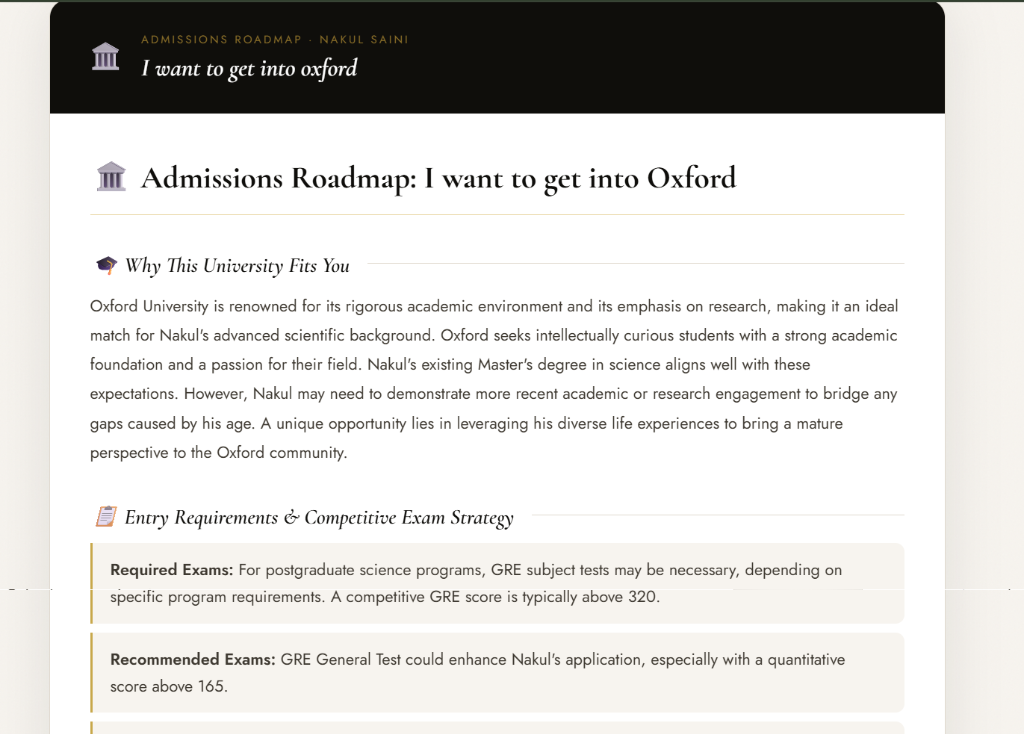
Generate your bespoke academic and career roadmap connecting high school streams, test prep milestones, and top global colleges.
Launch EduPath Roadmap1. The 5-Pillar Decision Framework: How to Evaluate Career Options After School
To make an informed, future-proof career decision after school, students should evaluate potential pathways across five objective dimensions:
Fast-Track Your College & Career Strategy
Get immediate, personalized AI insights tailored to your grade, strengths, and dream universities — 100% free with instant reports.
Know Your Personality Type for Free
Take our 18-question AI psychometric test to uncover your cognitive archetype, hidden learning superpowers, and ideal university courses.
Personalized Career & University EduPath
Build a step-by-step Grade 8–12 admissions blueprint with AI-matched target universities, exam schedules, and extracurricular profiles.
- 1. Cognitive Psychometrics & Processing Tendencies: Understanding whether your mind naturally thrives in quantitative deduction, empirical scientific inquiry, creative divergence, persuasive verbal articulation, or interpersonal resonance.
- 2. Flow-State Subject Alignment: Identifying the school subjects where challenging concepts feel energizing rather than exhausting (e.g., pure mathematics vs creative writing vs historical debate).
- 3. Career Cluster Compatibility: Matching your strengths with broad, high-growth occupational clusters (like STEM & Deep Tech, Quantitative Finance, Health Sciences, or Intellectual Property Law) rather than locking into a single fragile job title.
- 4. 2030+ Industry Growth & Automation Resilience: Selecting domains that are expanding with AI and global technological transformation rather than static roles at risk of automation.
- 5. University Prerequisite Alignment: Ensuring your high school subjects (CBSE, ICSE, Cambridge, IB) fulfill the entry criteria for target global degree programs and standardized exams (Digital SAT, ACT, UCAT, LNAT, TMUA).
2. Comprehensive Breakdown of Career Options After School by Stream
Here is a detailed breakdown of major **career options after school** across high school streams, target college majors, and expected global compensation:

| Academic Stream | Ideal Cognitive Archetype | Top High-Growth Career Pathways | Target College Degrees | Required Entrance Exams | Median Global Salary |
|---|---|---|---|---|---|
| Science (PCM + CS) | Quantitative Deductive (INTJ/INTP) | AI Systems, Robotics, Quantum Computing, Aerospace | B.Tech/BS in Computer Science, Robotics, Data Science | Digital SAT, TMUA, AP Calc BC | $140K – $280K+ |
| Science (PCB / Pre-Med) | Empirical Analytical (ISTJ/INFJ) | Neurosurgery, Genomic Medicine, Biomedical Engineering | MBBS, MD, BS in Neuroscience, Biotechnology | UCAT, MMI Interview, BMAT | $160K – $340K+ |
| Commerce with Math | Strategic Commercial (ENTJ/ESTJ) | Quantitative Trading, FinTech, Investment Banking, Actuarial Sci | B.Sc Economics, BBA Finance, Applied Math | Digital SAT, TMUA, ACT | $150K – $350K+ |
| Humanities & Pre-Law | Persuasive Articulation (ENFP/ENTP) | Intellectual Property Law, Cyber Policy, Geopolitics, UX Research | BA/LLB Law, Political Science, Cognitive Science | LNAT, AP Comparative Gov, SAT | $120K – $250K+ |
| Design & Visual Arts | Divergent Synthesis (ISFP/INFP) | AR/VR Product Design, Interaction Architecture, Creative Tech | B.Des, B.Arch, Interactive Digital Media | Design Portfolio, Digital SAT | $105K – $210K+ |
| Interdisciplinary Track | Holistic Integrative (ENFJ/INTP) | Bioinformatics, FinTech Policy, Computational Linguistics | Dual Major / Interdisciplinary Degrees abroad | Digital SAT, AP Exams | $130K – $270K+ |
3. The 5-Step Action Roadmap: From School Graduation to Career Launch
Follow this sequential 5-stage timeline developed by EduQuest’s Ivy League admissions readers to transition smoothly from school to professional success:

Cognitive Diagnostics & Strength Discovery
Identify Innate Aptitudes & Behavioral Vectors
- Take the 10-minute EduQuest Narrative Intelligence Scan.
- Discover your 16 MBTI archetype and 6 cognitive vectors before making irreversible stream choices.
High School Stream & Prerequisite Selection
Preserve Prerequisite Versatility
- Choose Class 11 stream subjects that keep multiple target career options open.
- Retain Mathematics to ensure eligibility for STEM, Economics, Architecture, and Finance globally.
Super-Curricular Spikes & Original Research
Build an Unbeatable Academic Profile
- Author and publish original academic research in peer-reviewed international journals.
- Participate in prestigious international competitions (Regeneron ISEF, John Locke Essay Prize, Conrad Challenge).
Standardized Admissions Test Mastery
Digital SAT, UCAT, TMUA & AP Exams
- Achieve top 1% percentiles on target entrance exams ([Digital SAT](/sat), [ACT](/act), [UCAT](/ucat), [TMUA](/tmua)).
- Shortlist 12–15 global universities across Dream, Target, and Safety tiers in USA, UK, Canada, and Singapore.
University Applications & 2030+ Career Launch
Ivy League Essays, Scholarships & Elite Internships
- Craft narrative personal statements and supplemental essays that highlight your unique intellectual voice.
- Secure top-tier summer internships in quantitative finance, AI research, biomedical tech, or corporate litigation.
4. 5 Golden Rules for Choosing the Right Career After School
Never Drop Mathematics Prematurely
Dropping Math in Class 11 permanently closes doors to top-tier programs in STEM, Computer Science, Economics, Architecture, Data Science, and Finance globally.
Validate Your Interests with Real-World Projects
Before finalizing a career path, write a mini-research paper, build a code repository, shadow a professional, or enter an essay competition (John Locke, Conrad Challenge).
Differentiate Between a "Hobby" and a "Career"
Enjoying playing video games does not automatically mean you will enjoy writing 50,000 lines of graphics C++ code. Evaluate the daily cognitive tasks required.
Build an "Angular" Profile Spike for University Admissions
Top global universities (Harvard, Stanford, Oxford, NUS) favor applicants with deep expertise in a specific career cluster over generic well-rounded students.
Base Decisions on Scientifically Validated Diagnostics
Make decisions based on scientific cognitive scans (like EduQuest Narrative Intelligence) rather than informal opinions or transient social media trends.

5. Common Mistakes Students Make When Choosing a Career After School
- Choosing Based Solely on Parental or Peer Pressure: Pursuing demanding streams like Medicine or Engineering without intrinsic cognitive interest leads to severe burnout and underperformance.
- The "High Starting Salary" Fallacy: Selecting a field purely for short-term compensation without evaluating your natural aptitude ensures dissatisfaction and career stagnation.
- Postponing Career Planning Until Board Exam Results: Leaving college planning until Class 12 board marks are announced leaves zero time to build research papers, secure leadership roles, or prep for the SAT/UCAT.
- Falling for Commission-Driven Agency Counselors: Be wary of agencies that push specific partner colleges rather than shortlisting institutions based on your genuine merit and ambitions.
6. How EduQuest Powers Your Career Discovery Journey
At EduQuest, discovering **how to choose the right career after school** is powered by our complete global admissions advisory ecosystem:
- 1. Stream & Subject Strategy: Selecting optimal Class 11 subject combinations across CBSE, ISC, Cambridge, and IB curricula.
- 2. Super-Curricular Research Papers: Mentoring students to publish original research and enter international competitions (Regeneron ISEF, John Locke Essay Prize).
- 3. Elite Test Prep & Profile Strategy: Expert coaching for Digital SAT, ACT, UCAT, LNAT, and TMUA, combined with comprehensive Study Abroad Counseling.
7. Frequently Asked Questions (FAQ) About Choosing Careers After School
How do I know which career is right for me after school?
Start by taking an objective psychometric assessment (like EduQuest Narrative Intelligence) to evaluate your cognitive problem-solving style, audit your flow-state subjects, and map your profile to high-growth 2030+ Career Clusters.
What if I chose the wrong stream in Class 11?
As long as you maintain versatile subjects like Mathematics, lateral transitions into business, economics, data analytics, law, and design during college remain open.
Are non-STEM careers lucrative in the AI era?
Yes! High-leverage careers in Quantitative Economics, Intellectual Property Law, Strategic Management, and UX Design command salaries exceeding $150K–$300K+ globally.
How does studying abroad factor into career planning after school?
Top global universities in the US, UK, Canada, and Singapore provide flexible degree structures (allowing major/minor combinations) and direct access to high-paying international job markets.
Is the EduQuest Career Cluster diagnostic free for students?
Yes! The online AI diagnostic is 100% free and delivers an instant 20+ page intelligence report covering cluster matches, subject recommendations, and university degree tracks.
Download the 2026 Career Options After School Strategy Guide
Get instant access to EduQuest’s 28-page whitepaper featuring stream selection matrices, 16 archetype career maps, SAT/UCAT prep guides, and Ivy League essay strategies.
Discover the Right Career Built for Your Future Today
Join 10,000+ ambitious students who have transformed their academic and career trajectory with EduQuest AI. Take the free 10-minute scan now.