
UK Undergraduate Admissions Strategic Cluster Hub (2027)
UCAS Assessment
1-on-1 Academic Audit
Evaluate your predicted Class 12 CBSE/ISC grades, admissions test targets (TMUA, UCAT, LNAT), and personal statement depth.
Audit UCAS ProfileAI Personal Statement
Supercurricular Analyzer
Analyze your 4,000-character UCAS statement for academic voice, critical analysis of texts, and Oxbridge tutor engagement.
Analyze Personal StatementFree Master Dossier
Download Master PDF
Get our 50-page UK Undergraduate Admissions Master Guide featuring UCAS timelines, test syllabi, and Russell Group cutoffs.
1. Executive Overview: The British Higher Education Model
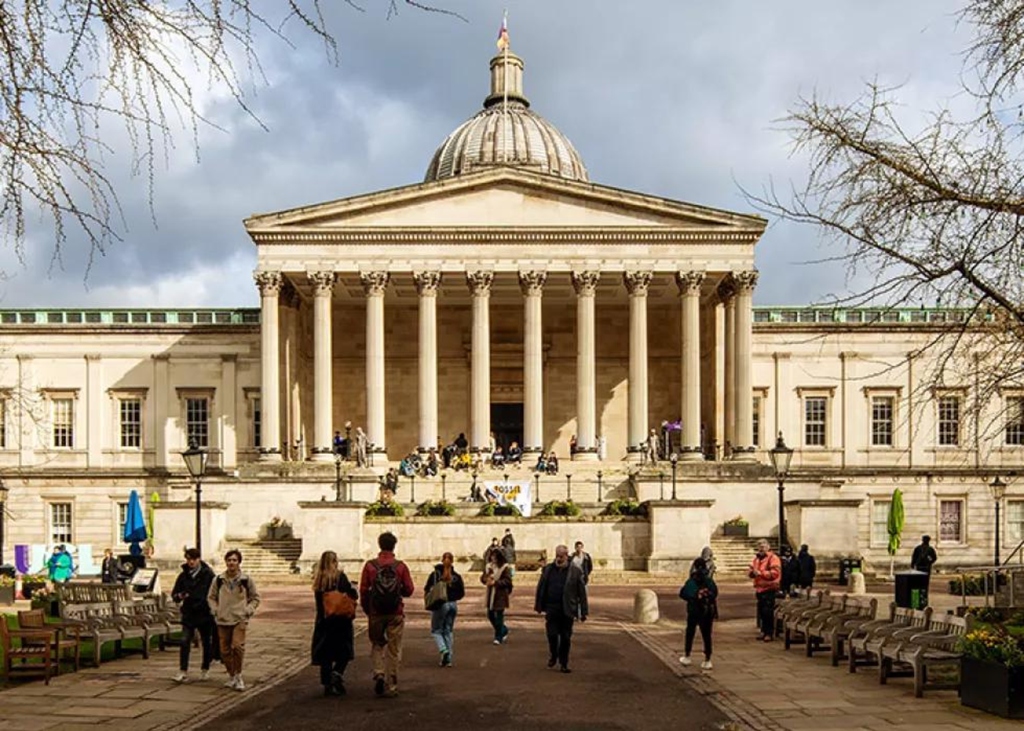
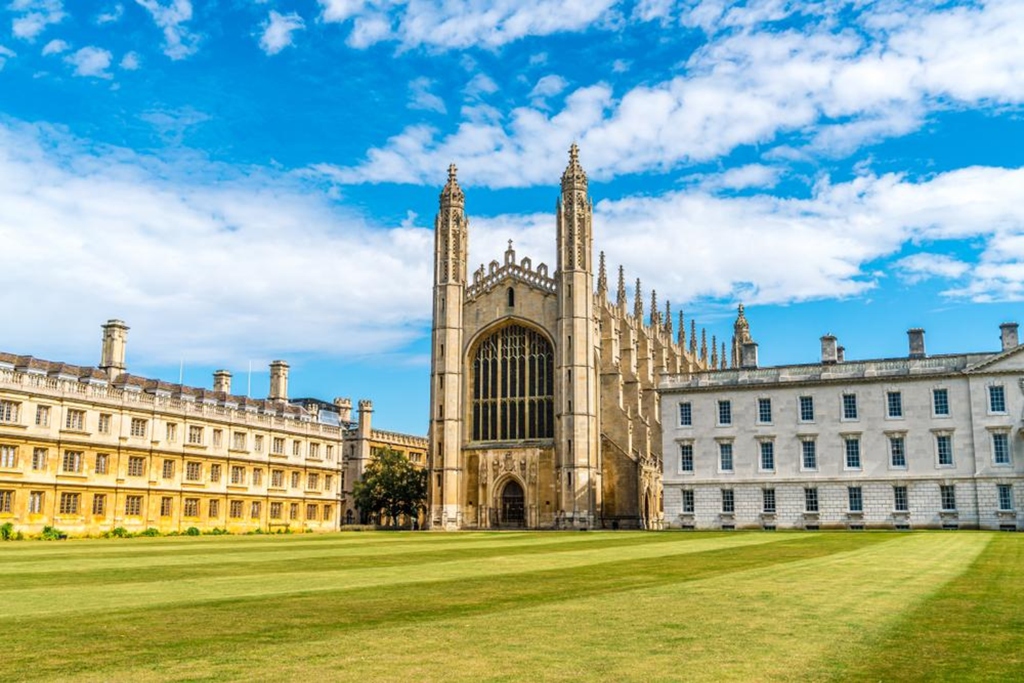
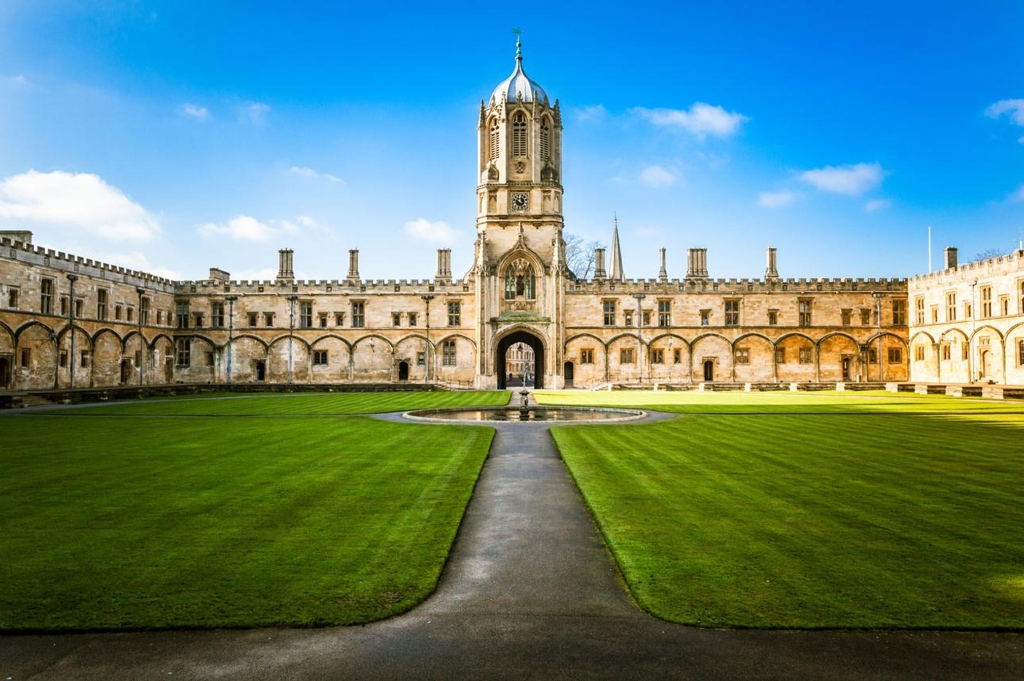
For over eight centuries, the United Kingdom has stood at the epicenter of global intellectual discovery. From the historic collegiate halls of **Oxford and Cambridge** to the powerhouse research universities of the **Russell Group**—including Imperial College London, the London School of Economics (LSE), University College London (UCL), and Edinburgh—the British university system offers an intense, focused academic immersion.
Unlike the broad 4-year American undergraduate curriculum, bachelor's degrees in England, Wales, and Northern Ireland are **three years in duration** (with Scotland offering 4-year Master of Arts or BSc degrees). In the UK, students apply to study a specific discipline from day one. There is no general exploratory period; a student admitted to read Law, History, or Mechanical Engineering begins specialized, rigorous coursework in their first week of university. This compressed timeline delivers exceptional cost efficiency and enables graduates to enter high-paying professional roles or master's degrees a full year ahead of their peers.
Under the UK's **Graduate Route Visa**, all international bachelor's degree graduates are entitled to **two full years of post-study work authorization** in the United Kingdom, with no employer sponsorship or minimum salary threshold required. This comprehensive pillar guide explores every phase of the UK admissions cluster, connecting Indian students directly to our detailed child guides.
2. Admission Criteria: CBSE & ISC Benchmarks, Subject Prerequisites & English Waivers
Fast-Track Your College & Career Strategy
Get immediate, personalized AI insights tailored to your grade, strengths, and dream universities — 100% free with instant reports.
Know Your Personality Type for Free
Take our 18-question AI psychometric test to uncover your cognitive archetype, hidden learning superpowers, and ideal university courses.
Personalized Career & University EduPath
Build a step-by-step Grade 8–12 admissions blueprint with AI-matched target universities, exam schedules, and extracurricular profiles.
Admissions to UK universities for Indian students are managed through **UCAS (Universities and Colleges Admissions Service)**. British universities are highly familiar with CBSE and CISCE/ISC board grading, establishing clear percentage equivalents to UK A-Levels:
| UK University Tier | Typical A-Level Requirement | Equivalent CBSE / ISC Benchmark | Crucial Program Prerequisites |
|---|---|---|---|
| **Oxbridge (Oxford & Cambridge)** | A*A*A – A*AA | **95% – 98% overall aggregate** | Minimum 95%+ in subject-specific electives (e.g. Core Math, Physics, English); top percentile in mandatory admissions test |
| **London Russell Group (Imperial, LSE, UCL)** | A*AA – AAA | **92% – 96% overall aggregate** | 95%+ in Core Mathematics for Economics, Computer Science, and Engineering |
| **Premier Russell Group (Warwick, Manchester, Bristol)** | AAA – AAB | **88% – 93% overall aggregate** | Class 12 Core Math and relevant sciences; strong school-predicted marks |
| **Top Scottish 4-Year (St Andrews, Edinburgh, Glasgow)** | AAA – ABB | **85% – 92% overall aggregate** | Offers greater curricular breadth and flexibility to switch related sub-disciplines |
Furthermore, Indian students with **80% to 85%+ in Class 12 CBSE English Core or ISC English Language** frequently qualify for full **IELTS / English Language test waivers** across major Russell Group universities. For an exhaustive, university-by-university cutoff table and document checklist, read: [UK Undergraduate Admission Requirements for Indian Students (2027)](/blog/uk-university-admission-requirements-after-class-12-indian-students/).
3. UCAS Application Timetable: October 15 vs January 29 Deadlines
Undergraduate applications to the UK follow a strict, centralized portal governed by UCAS. Applicants can select a **maximum of five course choices** across the entire country (and students cannot apply to both Oxford and Cambridge in the same cycle):
October 15 Deadline (Early Round)
Strict deadline for all courses at the University of Oxford, the University of Cambridge, and all Medicine, Dentistry, and Veterinary Medicine courses across the UK. Applications submitted after 18:00 UK time on this date are rejected automatically.
January 29 Deadline (Equal Consideration Date)
The main national deadline for all other undergraduate courses across the UK. All applications received by this date are guaranteed equal academic review by university admissions tutors.
February to April: Interviews & Conditional Offers
Universities issue conditional offers specifying exact Class 12 board marks required. Candidates hold two choices: a Firm Choice (first preference) and an Insurance Choice (safety).
July to August: Clearing & Confirmation
Upon release of CBSE/ISC board results, unconditional confirmations are finalized. Students who missed their conditional targets enter UCAS Clearing to secure remaining vacancies.
For complete 12-month calendar strategies and step-by-step UCAS portal walkthroughs, consult: [UK University Applications 2027: UCAS Deadlines & Entry Requirements](/blog/uk-university-applications-2027-ucas-deadlines-entry-requirements/).
4. Supercurricular Profile Building: Writing an Elite UCAS Personal Statement
In the UK, admissions tutors care very little about whether you play the guitar or volunteer at a local charity, unless it directly relates to your chosen degree. The UK admissions system demands **supercurricular exploration**—intellectual engagement with your subject that extends beyond the classroom syllabus:
| Personal Statement Component | Recommended Proportion | Expected Supercurricular Evidence | Common Indian Student Errors |
|---|---|---|---|
| **Academic Motivation & Catalyst** | ~15% of statement | A specific academic problem, paradox, or theoretical question that provoked intellectual enquiry. | Avoid childhood clichés ('I have wanted to study law since watching courtroom dramas'). |
| **Independent Reading & Scholarly Critique** | ~45% of statement | Critical analysis of academic books, university lecture series, or peer-reviewed journals. Critiquing an author's methodology shows undergraduate potential. | Do not merely drop book titles like a reading list; discuss *how* an argument changed your perspective. |
| **Practical Projects, Research & Competitions** | ~30% of statement | Independent research papers, algorithmic code repositories, Olympiad problems (BMO, Senior Physics Challenge), or academic internships. | Avoid listing unverified course completion certificates from Coursera without original artifacts. |
| **Extracurricular Balance** | Max ~10% of statement | Relevant transferable skills (leadership, stamina under pressure, ethical debate). | Wasting 30% of the statement recounting hobbies that have zero connection to the academic discipline. |
For sentence-by-sentence analysis and successful personal statement samples for Oxford, Cambridge, and LSE, visit: [How to Write a Strong UCAS Personal Statement](/blog/how-to-write-strong-ucas-personal-statement-competitive-academic-profile/).
5. Top UK Universities: Russell Group Powerhouses & Subject Rankings
The Russell Group represents 24 world-class, research-intensive UK universities that produce two-thirds of the nation's world-leading research. Understanding which university leads in your chosen discipline is crucial:
| Degree Discipline | Top-Ranked UK Universities | Mandatory Admissions Test | Target Career Placement |
|---|---|---|---|
| **Computer Science & Artificial Intelligence** | Cambridge, Oxford, Imperial College, UCL, Edinburgh, Manchester | TMUA (Cambridge & Imperial), ESAT | DeepMind, Google UK, Meta, Bloomberg London, Arm Holdings, Quant Trading |
| **Economics & Quantitative Finance** | LSE, Oxford, Cambridge, Warwick, UCL | TMUA (LSE & Cambridge Economics) | Goldman Sachs, Morgan Stanley, Bank of England, McKinsey, Citadel |
| **Law (LLB)** | Oxford, Cambridge, LSE, UCL, King's College, Durham | LNAT (National Admissions Test for Law) | Magic Circle Law Firms (Clifford Chance, Linklaters, Freshfields, Allen & Overy) |
| **Medicine & Surgery (MBBS / MBChB)** | Oxford, Cambridge, Imperial, King's College, Edinburgh, Bristol | UCAT (University Clinical Aptitude Test) | NHS Specialist Foundation Training, academic clinical research |
For comprehensive subject comparison tables, faculty laboratory breakdowns, and student satisfaction metrics, explore: [Best UK Universities for Undergraduate Courses](/blog/best-uk-universities-for-undergraduate-courses-law-economics-engineering/).
6. Graduate ROI: Salaries & The 2-Year Graduate Route Work Visa
The British undergraduate degree is one of the highest-yield credentials in international corporate recruiting. The **2-Year Graduate Route Visa** allows international undergraduates to work in any role across the UK upon graduation:
| Degree Field | Starting Salary Range (£) | INR Equivalent (Annual) | Key Corporate Employers in the UK |
|---|---|---|---|
| Quantitative Trading & Software Engineering | £55,000 – £85,000 / year | **~₹60 Lakhs – ₹92 Lakhs** | Jane Street, Citadel, Optiver, Google UK, Amazon Web Services, Arm |
| Investment Banking & Private Equity | £50,000 – £70,000 / year | **~₹54 Lakhs – ₹76 Lakhs** | J.P. Morgan, Goldman Sachs, Morgan Stanley, Barclays, HSBC London |
| Management Consulting & Strategy | £42,000 – £55,000 / year | **~₹45 Lakhs – ₹60 Lakhs** | McKinsey, Boston Consulting Group (BCG), Bain, Oliver Wyman, Strategy& |
| Engineering (Aerospace, Civil, Mechanical) | £34,000 – £45,000 / year | **~₹37 Lakhs – ₹49 Lakhs** | Rolls-Royce, Airbus UK, Arup, Dyson, Jaguar Land Rover, Atkins |
| Commercial Law (Training Contract Trainee) | £50,000 – £60,000 / year | **~₹54 Lakhs – ₹65 Lakhs** | Magic Circle law firms (Clifford Chance, Slaughter and May, Freshfields) |
For complete analysis of graduate visa sponsorship, Skilled Worker Visa conversion rules, and long-term career growth, see: [Best Degrees to Study in the UK for Jobs, Careers & Salaries](/blog/best-degrees-to-study-in-uk-for-career-opportunities-graduate-jobs/).
7. Tuition Fees, London vs Non-London Living Budgets & Financial Proof
Under UK Visas and Immigration (UKVI) regulations, international students must demonstrate sufficient financial funds to cover their first year's tuition fees plus living expenses. Costs vary markedly between inner London and regional university towns:
| Budget Component (Annual) | London Universities (Imperial, LSE, UCL, KCL) | Regional Russell Group (Warwick, Manchester, Leeds) | INR Equivalent (Annual) |
|---|---|---|---|
| **Undergraduate Tuition (STEM / Business)** | £28,000 – £42,000 / year | £22,000 – £32,000 / year | ~₹24 Lakhs – ₹45 Lakhs / year |
| **Undergraduate Tuition (Clinical Medicine)** | £45,000 – £64,000 / year | £38,000 – £52,000 / year | ~₹40 Lakhs – ₹68 Lakhs / year |
| **UKVI Mandatory Living Maintenance Proof** | **£1,483 per month** (£13,347 / 9 months) | **£1,136 per month** (£10,224 / 9 months) | ~₹11 Lakhs – ₹14.5 Lakhs (Bank proof required for 28 consecutive days) |
| **Actual Accommodation & Private Rent** | £8,500 – £14,000 / year | £5,500 – £8,500 / year | ~₹6.0 Lakhs – ₹15 Lakhs / year |
| **Food, Public Transit & Utilities** | £3,500 – £5,000 / year | £2,500 – £3,800 / year | ~₹2.7 Lakhs – ₹5.4 Lakhs / year |
| **Total Annual Budget (Tuition + Living)** | **£40,000 – £61,000 / year** | **£30,000 – £44,000 / year** | **~₹32 Lakhs – ₹65 Lakhs / year** |
8. Strategic Planning Questions for Indian Families
English 3-Year Degrees vs Scottish 4-Year Degrees: Which is better?
English 3-year degrees are ideal for students who have pinpointed their exact major (e.g., Law, Economics, CS) and want to graduate and enter the workforce or master's programs faster. Scottish 4-year degrees (like St Andrews or Edinburgh) provide broader liberal arts flexibility to take sub-honours modules outside your main major.
How do Oxbridge interviews differ from US admission interviews?
US interviews are informal behavioral chats exploring personality and activities. Oxbridge interviews are intense, mock academic supervisions where university professors present you with unfamiliar mathematical theorems, legal cases, or scientific data to test how you think, adapt, and learn under pressure.
When should Indian students begin preparing for UK admissions tests (TMUA, UCAT, LNAT)?
Admissions tests take place between August and October of Class 12. Indian students should begin structured diagnostic preparation in April of Class 11, dedicating 4 to 6 months to timed mock test practice and abstract reasoning drills.
Can I work part-time in the UK while studying on a Student Visa?
Yes. International students at degree-level higher education institutions are legally permitted to work up to 20 hours per week during term time and full-time during vacations.
9. Frequently Asked Questions (FAQs)
Can Indian students apply to both Oxford and Cambridge in the same year?
No. Under UCAS regulations, applicants are strictly prohibited from applying to both Oxford and Cambridge in the same admissions cycle. You must choose one institution.
What is the fee for submitting a UCAS undergraduate application?
The UCAS application fee for 2027 entry is £28.50 for up to five university course choices.
Can I get an IELTS waiver with my Class 12 English marks?
Yes. Most Russell Group universities (including Warwick, Manchester, Bristol, and Sheffield) waive the IELTS requirement if you score 80% to 85%+ in Class 12 CBSE English Core or ISC English Language.
What is the difference between a Conditional and Unconditional offer in the UK?
A Conditional Offer requires you to achieve specific minimum scores in your final Class 12 board examinations (e.g. 95% overall with 95% in Mathematics). An Unconditional Offer means you have already met all academic criteria and have a confirmed seat.
How does EduQuest assist Indian students targeting Oxbridge and Russell Group universities?
EduQuest provides comprehensive British admissions mentorship: supercurricular reading curation, UCAS personal statement drafting, rigorous TMUA/UCAT/LNAT test coaching, and realistic mock interview simulations with Oxbridge alumni.
What are the British university scholarship opportunities for Indian students?
While full undergraduate scholarships in the UK are rarer than in the US, premier awards include the Rhodes Scholarships (postgraduate), Oxford Reach Scholarship, Cambridge Trust Undergraduate Awards, and Warwick Undergraduate Global Excellence Scholarships (£5,000 to full tuition).
What happens if I miss my conditional offer grade by 1% or 2%?
On board results day in May, contact your firm choice university immediately. Admissions tutors often accept 'near-miss' candidates if their supercurricular statement, admissions test score, or major subject marks were outstanding.
Power Your UK Admissions Strategy with EduQuest AI
Master your UCAS application, forecast conditional offer benchmarks, and prepare for high-stakes admissions tests with our integrated intelligent engines.
UCAS Personal Statement Analyzer
Scans your 4,000-character UCAS statement for academic voice, supercurricular depth, argument critique, and subject-specific vocabulary.
- ✓ Oxbridge Supercurricular Depth Score
- ✓ Character & Line Count Compliance
- ✓ Plagiarism & Cliché Detection
TMUA, UCAT & LNAT Test Simulator
Full-length timed computer-based mock exams for TMUA, UCAT, and LNAT with detailed diagnostic performance dashboards.
- ✓ Real Exam Format Simulation
- ✓ Step-by-Step Mathematical Logic
- ✓ Percentile Score Ranking
Oxbridge & MMI Interview Simulator
Simulates academic tutorial and MMI interview scenarios with real-time feedback on logical clarity, adaptability, and intellectual poise.
- ✓ Faculty Question Bank Simulation
- ✓ Live Problem-Solving Evaluation
- ✓ Medical MMI Station Scenarios
UCAS Milestone & Deadline Navigator
Builds a synchronized timetable managing Oct 15 Oxbridge cutoffs, admissions tests, school predicted grades, and Clearing checkpoints.
- ✓ Automated UCAS Deadline Countdown
- ✓ Conditional Offer Target Calculator
- ✓ Visa CAS Issuance Roadmap
“In UK admissions, genuine academic curiosity is paramount. When an applicant proves deep, self-directed supercurricular exploration backed by stellar board marks, admissions tutors take notice immediately.”
Download the Complete Study in the UK Master Guide (PDF)
Get our 50-page master guide detailing UCAS 5-choice strategies, Oxbridge admissions test syllabi, personal statement templates, and 2-Year Graduate Route visa rules.