
When high school students begin exploring the future, they are often overwhelmed by tens of thousands of individual job titles. Attempting to choose a single static profession—such as “Cloud Architect” or “Bioinformatics Engineer”—before even completing Class 10 or 12 creates intense anxiety and pigeonholes learners into rigid paths. This is where understanding career clusters transforms the entire educational planning experience.
Career clusters organize thousands of occupational roles into broad, interconnected groups based on shared foundational skills, academic subjects, and core cognitive strengths. Instead of betting your future on a single job that might be automated by 2030, exploring career clusters provides high school and college students with versatile pathways spanning high school stream selection, university major shortlisting, and high-growth industry leadership. In this comprehensive guide, we unpack what career clusters are, explore all 16 recognized frameworks, and show you how to use them to construct an unshakeable academic roadmap.

Discover Your Ideal Career Cluster with EduQuest AI
Free Career Cluster Diagnostic
AI Career Cluster Engine
Take our 10-minute AI assessment to identify which of the major career clusters best matches your cognitive profile and academic strengths.
Launch Career Cluster ToolStudent Intelligence Hub
Personality & Profile Hub
Explore full archetype breakdowns, scholarship opportunities, and SAT/AP roadmaps tailored across 10,000+ student profiles.
Explore Student HubFree Narrative Intelligence Test
Cognitive Vector Scan
Decode your 16 MBTI archetype, learning preferences, and Class 11 stream fit with our proprietary 18-question AI scan.
Take Free Cognitive Scan1. What Is a Career Cluster? Definition & Core Architecture
A **career cluster** is a standardized organizational framework that groups related jobs, industries, and occupations based on common technical skills, academic foundations, and problem-solving methodologies.
Fast-Track Your College & Career Strategy
Get immediate, personalized AI insights tailored to your grade, strengths, and dream universities — 100% free with instant reports.
Know Your Personality Type for Free
Take our 18-question AI psychometric test to uncover your cognitive archetype, hidden learning superpowers, and ideal university courses.
Personalized Career & University EduPath
Build a step-by-step Grade 8–12 admissions blueprint with AI-matched target universities, exam schedules, and extracurricular profiles.
The career cluster model operates on a hierarchical 3-tier architecture:
- 1. The Career Cluster (Top Tier): A broad economic and vocational domain (e.g., Information Technology & AI or Finance & Economics).
- 2. Career Pathways (Middle Tier): Specialized tracks within the cluster sharing specific skill requirements (e.g., within Information Technology: Cybersecurity, AI & Machine Learning, Data Analytics, Software Development).
- 3. Individual Occupations (Granular Tier): Specific job roles and titles within a pathway (e.g., Cyber Forensics Investigator, Chief Information Security Officer, Penetration Tester).
2. The 16 Recognized Career Clusters: Complete Directory for Students
The globally recognized career clusters framework covers the entire spectrum of the modern global economy:
- 1. Science, Technology, Engineering & Mathematics (STEM): Pure and applied research, aerospace engineering, robotics, and biotechnology. Ideal Stream: Science (PCM/PCB). Top Majors: Mechanical Eng, Bio-Eng, Pure Math.
- 2. Information Technology & AI: Machine learning architecture, cybersecurity, cloud infrastructure, and software engineering. Ideal Stream: Science (PCM + CS). Top Majors: Computer Science, Data Science, AI & ML.
- 3. Finance & Quantitative Economics: Investment banking, algorithmic trading, wealth management, and corporate financial planning. Ideal Stream: Commerce with Math / Economics. Top Majors: Quant Finance, Actuarial Science, Economics. Target Prep: Digital SAT, TMUA.
- 4. Health Science & Clinical Medicine: Surgery, clinical research, medical technology, pharmacology, and neuropsychology. Ideal Stream: Science (PCB / Pre-Med). Top Majors: Medicine, Biomedical Sciences, Neuroscience. Target Prep: UCAT Coaching, MMI Interview.
- 5. Business Management & Administration: Operations, enterprise strategy, organizational leadership, and international commerce. Ideal Stream: Commerce / Business Studies. Top Majors: Business Administration, Supply Chain Management.
- 6. Law, Public Safety, Corrections & Security: Constitutional litigation, corporate law, intellectual property, and national intelligence. Ideal Stream: Humanities / Pre-Law / Commerce. Top Majors: Law (LLB/JD), Criminology, Cyber Law. Target Prep: LNAT for Law.
- 7. Arts, A/V Technology & Communications: Augmented reality design, film production, digital journalism, and animation. Ideal Stream: Humanities / Media Studies / Fine Arts. Top Majors: Interactive Media, Visual Communication, AR/VR Design.
- 8. Marketing, Sales & Brand Architecture: Consumer psychology, growth marketing, digital brand architecture, and venture sales. Ideal Stream: Commerce / Humanities with Psychology. Top Majors: Marketing Analytics, Behavioral Economics.
- 9. Architecture & Construction: Sustainable urban design, civil engineering, smart city infrastructure, and architectural planning. Ideal Stream: Science (PCM) / Design. Top Majors: Architecture (B.Arch), Structural Engineering.
- 10. Government & Public Administration: Foreign diplomacy, national economic policy, civil service, and public health governance. Ideal Stream: Humanities / Social Sciences. Top Majors: International Relations, Public Policy, Political Science.
- 11. Human Services & Psychology: Clinical counseling, mental health advocacy, social work, and organizational psychology. Ideal Stream: Humanities with Psychology / PCB. Top Majors: Clinical Psychology, Social Work, Cognitive Science.
- 12. Education & Training: University professorship, EdTech instructional design, academic research, and educational policy. Ideal Stream: All streams. Top Majors: Educational Leadership, Subject Specializations.
- 13. Agriculture, Food & Natural Resources: Agritech innovation, genetic crop modeling, sustainability science, and environmental forestry. Ideal Stream: Science (PCB/PCM). Top Majors: Environmental Engineering, Sustainable Agriculture.
- 14. Manufacturing & Advanced Robotics: Industrial automation, mechatronics, additive 3D manufacturing, and quality engineering. Ideal Stream: Science (PCM). Top Majors: Mechatronics, Industrial Engineering.
- 15. Transportation, Distribution & Logistics: Autonomous vehicle logistics, commercial aviation, aerospace navigation, and maritime trade. Ideal Stream: Science (PCM) / Commerce. Top Majors: Aviation Science, Supply Chain Logistics.
- 16. Hospitality & Tourism: Luxury estate management, international event architecture, and global hospitality operations. Ideal Stream: Commerce / Humanities. Top Majors: Hospitality Management, Global Tourism.
Career Clusters Master Reference Matrix
| Career Cluster | Key High School Subjects | Target University Majors | Sample 2030+ Job Titles | Avg Global Median Salary |
|---|---|---|---|---|
| STEM & Deep Tech | Physics, Chemistry, Math, CS | Robotics, Aerospace, Pure Math | Quantum Engineer, Aerospace Lead | $135K – $240K+ |
| Information Technology & AI | Computer Science, Math, Stats | Computer Science, Data Analytics | AI Research Scientist, Cloud Architect | $145K – $280K+ |
| Finance & Quant Economics | Mathematics, Economics, Accounting | Quant Finance, Financial Economics | Quant Trader, Investment Banker | $150K – $350K+ |
| Health Science & Medicine | Biology, Chemistry, Physics | Medicine (MBBS/MD), Neuroscience | Surgeon, Clinical Researcher | $160K – $320K+ |
| Law & Public Policy | Legal Studies, Political Sci, History | Law (LLB/JD), Public Policy | Corporate Litigation Attorney, Diplomat | $130K – $260K+ |
| Arts, Media & A/V Tech | Fine Arts, Media, Literature, CS | Interactive Media, Animation, UX | AR Product Designer, Creative Director | $100K – $190K+ |
| Architecture & Construction | Physics, Math, Art & Design | Architecture (B.Arch), Civil Eng | Sustainable Urban Architect, BIM Lead | $110K – $210K+ |
| Business & Enterprise Strategy | Commerce, Economics, Business Math | Business Administration, Operations | Operations VP, Management Consultant | $125K – $230K+ |
3. How High School Students Can Use Career Clusters for Stream Selection
The biggest decision facing students in Class 8, 9, and 10 is selecting their Class 11 academic stream. Here is how career clusters simplify this process across CBSE, ICSE, Cambridge (IGCSE/A-Levels), and IB curricula:
Take AI Career Cluster Assessment
Identify 2–3 Complementary Clusters
- Complete the 10-minute EduQuest Career Cluster Scan.
- Shortlist 2–3 clusters that match your high cognitive vectors (e.g., Information Technology + Finance).
Select Class 11 Subject Combinations
Preserve Maximum Educational Versatility
- Choose subjects that fulfill prerequisite requirements across your shortlisted clusters.
- Example: Combining Math with Economics and Computer Science opens doors to both STEM and Quantitative Finance.
Build Research & Profile Portfolio
Extracurriculars That Prove Domain Mastery
- Publish original research papers in international journals.
- Compete in prestigious olympiads and capstone hackathons aligned with your cluster.
Ace Standardized Admissions Exams
SAT, ACT, UCAT & University Applications
- Prepare for standardized entrance exams ([Digital SAT](/sat), [ACT](/act), [UCAT](/ucat), [TMUA](/tmua)).
- Shortlist top global university degree programs in the USA, UK, Canada, and Singapore.
4. 5 Benefits of Using Career Clusters in High School Planning
Eliminates Decision Paralysis
Reduces the anxiety of choosing between 10,000+ individual jobs by focusing on 16 structured, manageable domains.
Future-Proofs Against AI Disruption
Focuses on durable foundational skills and cognitive problem-solving that transfer across multiple emerging 2030+ industry roles.
Simplifies High School Subject Selection
Directly aligns Class 11 subject choices with the prerequisites required by global universities for degree programs in your cluster.
Accelerates College Admissions Spikes
Helps students construct focused, cohesive extracurricular profiles and research projects that impress Ivy League and Oxbridge admissions officers.
Saves Tuition Money & Time
Prevents expensive college major changes and dropouts by ensuring psychological and cognitive alignment before university begins.
5. Common Pitfalls When Exploring Career Clusters
- Choosing a Cluster Based Solely on Current Salary Trends: Selecting Finance or IT purely for money without evaluating your intrinsic cognitive problem-solving style leads to burnout.
- Assuming Clusters Are Mutually Exclusive: The most lucrative 2030+ careers are interdisciplinary combinations—such as Health Science + AI (Bioinformatics) or Finance + Technology (FinTech).
- Ignoring High School Subject Prerequisites: Dropping Mathematics in Class 11 eliminates future eligibility for STEM, Architecture, Economics, and Computer Science programs globally.
- Relying on Generic School Advice Without Diagnostic Data: Making choices based on what friends are picking rather than taking an objective psychometric diagnostic.
6. How EduQuest Accelerates Your Career Cluster Strategy
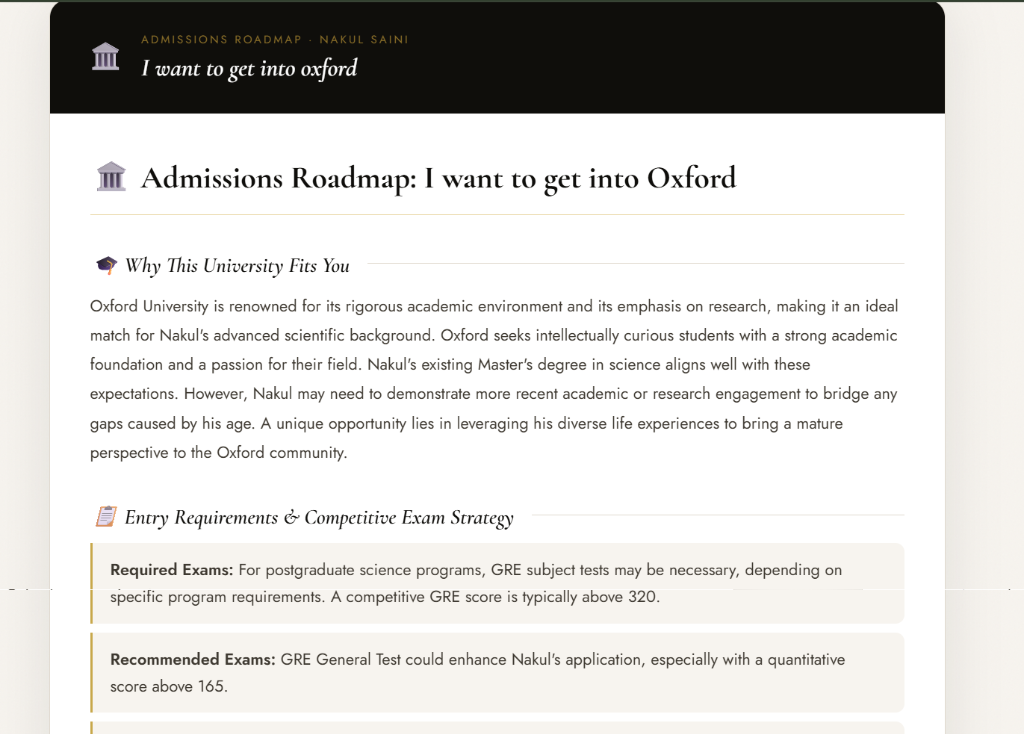
At EduQuest, discovering your ideal **career clusters** is the launching pad for our complete global admissions advisory ecosystem:
- 1. Stream & Subject Strategy: Selecting optimal Class 11 subject combinations across CBSE, ISC, Cambridge, and IB curricula.
- 2. Super-Curricular Research Papers: Mentoring students to publish original research and enter international competitions (Regeneron ISEF, John Locke Essay Prize).
- 3. Elite Test Prep & Profile Strategy: Expert coaching for Digital SAT, ACT, UCAT, LNAT, and TMUA, combined with comprehensive Study Abroad Counseling.
7. Frequently Asked Questions (FAQ) About Career Clusters
What is a career cluster and why is it important for students?
A career cluster is a grouping of related careers based on common skills, subjects, and cognitive strengths. It helps students explore vocational domains, choose Class 11 streams, and select college majors without prematurely locking into a single job title.
How many career clusters are recognized globally?
There are 16 standardized career clusters recognized by global educational bodies, covering STEM, Health Sciences, Business, Finance, Law, Arts, and Governance.
How do I find out which career cluster fits me best?
Take an AI-powered diagnostic such as the EduQuest Career Cluster Assessment or Narrative Intelligence Scan, which evaluates your cognitive problem-solving vectors and subject interests in under 10 minutes.
Can I choose more than one career cluster?
Yes! In fact, the most valuable and resilient 2030+ careers sit at the intersection of two or more clusters (e.g., Computer Science + Finance for FinTech, or Biology + AI for Bioinformatics).
Is the EduQuest Career Cluster Assessment free for students?
Yes! The online assessment is 100% free and provides an instant comprehensive roadmap covering cluster matches, subject recommendations, and global college degree pathways.
Download the 2026 16 Career Clusters & Stream Selection Guide
Get instant access to EduQuest’s 28-page whitepaper featuring 16 career cluster breakdowns, Class 11 stream selection matrices, and Ivy League essay strategies.
Discover the Career Cluster Built for Your Genius Today
Join 10,000+ ambitious students who have transformed their academic and career trajectory with EduQuest AI. Take the free 10-minute scan now.