Unlike AP Physics 1, which relies on algebra and conceptual trickery, AP Physics C: Mechanics uses the raw power of calculus to solve complex physical problems. It is a semester-long college equivalent course, meaning the pace is blisteringly fast and the depth is profound.
The 7 Core Units
The syllabus is highly focused. Instead of skimming multiple branches of physics, it dives exclusively into Newtonian Mechanics. You will revisit familiar concepts from Physics 1, but this time, the forces won't always be constant.
Kinematics
Motion with Calculus
- Using derivatives to find velocity from position.
- Using integrals to find position from velocity.
- 2D projectile motion with air resistance.
Newton's Laws of Motion
Dynamics & Differential Equations
- Static and kinetic friction.
- Dynamics of circular motion.
- Setting up differential equations for drag forces.
Work, Energy, and Power
The Dot Product
- Calculating work done by a variable force using integrals.
- Potential energy functions (U = -∫F dx).
- Conservation of mechanical energy.
The Deep Dive into Mechanics
Unit 4: Systems of Particles
You will calculate the center of mass for continuous objects using integration, rather than just discrete points.
Unit 5: Rotation
This is the hardest unit. You must calculate the moment of inertia for rods, disks, and spheres using calculus.
Units 6 & 7: Oscillations & Gravitation
Simple Harmonic Motion using differential equations, and calculating escape velocities and orbital mechanics.
Fast-Track Your College & Career Strategy
Get immediate, personalized AI insights tailored to your grade, strengths, and dream universities — 100% free with instant reports.
Know Your Personality Type for Free
Take our 18-question AI psychometric test to uncover your cognitive archetype, hidden learning superpowers, and ideal university courses.
Personalized Career & University EduPath
Build a step-by-step Grade 8–12 admissions blueprint with AI-matched target universities, exam schedules, and extracurricular profiles.
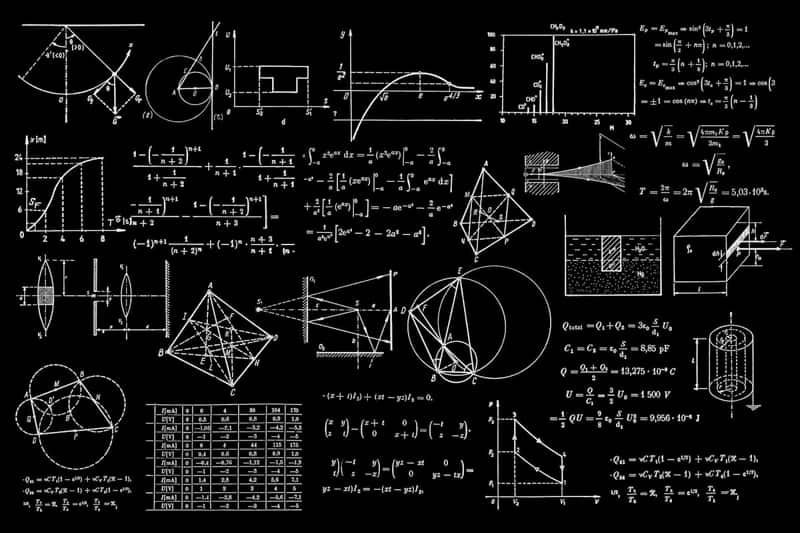
Rotational motion historically crushes students because it combines all previous units—kinematics, dynamics, energy, and momentum—and applies them to rotating bodies with complex mass distributions.
Common Pitfalls
- Forgetting the '+ C': When integrating velocity to find position, forgetting the constant of integration (initial position) will ruin your answer.
- Cross Products vs Dot Products: Work is a dot product (scalar). Torque is a cross product (vector). Mixing them up leads to impossible math.
- Parallel Axis Theorem: Students often forget to shift the moment of inertia when an object rotates around an axis other than its center of mass.
The syllabus is deliberately short (only 7 units) because the problems are extraordinarily deep. A single problem might take a full page of algebraic and calculus derivation to solve.
AP Physics C doesn't trick you with words like Physics 1 does. It just puts a brick wall of calculus in front of you and asks you to climb it.
— EduQuest Engineering Mentor
Exam Weightage Breakdown
| Unit Name | Approximate Exam Weighting |
|---|---|
| 1. Kinematics | 14-20% |
| 2. Newton's Laws of Motion | 17-23% |
| 3. Work, Energy, and Power | 14-17% |
| 4. Systems of Particles & Momentum | 14-17% |
| 5. Rotation | 14-20% |
| 6. Oscillations | 6-14% |
| 7. Gravitation | 6-14% |
Rotation and Newton's Laws are the undisputed kings of this exam. If you master setting up differential equations for forces and integrating moments of inertia, you are well on your way to a 5.
Targeting Top Engineering Schools?
A 5 in AP Physics C is practically a requirement for MIT, Caltech, and Stanford. Let our expert tutors guide you.
The Value of Physics C
Unlike Physics 1, almost every university in the United States accepts a high score on Physics C for engineering credit. This single exam can save you thousands of dollars in college tuition.
- It proves to admissions officers that you can handle extreme academic rigor.
- It builds a foundation for Statics and Dynamics courses in college.
- It makes AP Calculus BC feel much easier by giving you physical applications for the math.
Pacing Your Study
If you are taking this as a year-long course, you have a massive advantage over those taking it in a single semester. Use the extra time to do dozens of past FRQs.
Final Thoughts
Don't let the calculus scare you. The calculus in Physics C is highly repetitive. Once you learn the 4 or 5 standard derivation patterns, you can solve anything.
FAQs: Physics C Mechanics
Should I take Physics 1 before Physics C?
It is highly recommended, though very strong students can take Physics C as their first physics course if they have already completed Calculus.
Is AP Physics C Electricity & Magnetism harder?
Yes. E&M requires 3D integration and applies calculus to abstract, invisible fields. Mechanics is generally considered easier because you can visualize the problems.
What if I haven't taken Calculus?
You must be taking AP Calculus concurrently with Physics C, at an absolute minimum. You cannot pass this course without calculus.
Conquer Calculus-Based Physics
Join EduQuest's elite AP prep program to master the most challenging concepts in AP Physics C.
Accelerate Your College Prep
Evaluate Your Profile
AI Profile Evaluator
Submit your academic scores, AP results, and extracurriculars to get instant feedback on your chances for top universities.
Evaluate ProfileDiscover Your True Potential
Narrative Intelligence Scan
Personality Tester
Uncover your hidden strengths and cognitive profile with our scientifically backed assessment.
Take the TestFind Your Path
Career Cluster AI
Explore the best career pathways perfectly aligned with your unique personality and goals.
Check ProfileTake an AP Mock Test
Download the Official AP Exam Mastery & 5-Score Strategy Blueprint
Get immediate access to EduQuest’s 8-page comprehensive candidate toolkit with diagnostic benchmarks, step-by-step frameworks, error telemetry logs, and structured preparation timelines.