
Australia Undergraduate Admissions Strategic Portals for Indian Students (2027 Entry)
Admissions Advisory
1-on-1 Go8 Mentorship
Get your CBSE/ISC marks evaluated for Melbourne, Sydney, UNSW, Monash, ANU & UQ. Calibrate course prerequisites and guaranteed entry cutoffs.
Explore Australia MentorshipMedical Test Prep
ISAT & UCAT ANZ Accelerator
Target 175+ on ACER ISAT for direct-entry Medicine and Dentistry at Monash, UNSW, UQ, and University of Western Australia.
Explore ISAT CoachingOfficial Dossier
Download Free 2027 Guide
Get the complete Go8 CBSE/ISC percentage matrix, subject conversion chart, and Genuine Student (GS) financial calculator in PDF.
1. Executive Overview: Navigating Australia Undergraduate Admission Requirements in 2027
Australia has established itself as one of the world's top three destinations for Indian high school graduates seeking world-class academic qualifications, cutting-edge research facilities, a high standard of living, and transparent post-study work opportunities. Australia hosts 43 universities, with the prestigious Group of Eight (Go8)—including the University of Melbourne, University of Sydney, UNSW Sydney, Monash University, Australian National University (ANU), University of Queensland (UQ), University of Western Australia (UWA), and University of Adelaide—consistently ranking among the top 100 universities worldwide.
However, successfully navigating Australia undergraduate admission requirements requires understanding a system that is distinct from both the American holistic admissions framework and the high-stakes Indian entrance examination model (JEE, NEET, CUET). Australian undergraduate admissions are predominantly transparent, criteria-based, and objective: if an applicant meets the published academic threshold, prerequisite subject criteria, and English language benchmark, admission is virtually guaranteed.
Nevertheless, the landscape for 2027 entry requires sharp strategic navigation. Under updated Australian Department of Home Affairs guidelines, international applicants must clear the rigorous Genuine Student (GS) requirement, demonstrate verified financial capacity of at least AUD $29,710, and understand the crucial distinction between admission eligibility and competitive scholarship criteria. This comprehensive guide details every dimension of Australian university eligibility after 12th, the exact CBSE marks required for Australia, and the complete checklist of documents needed to study in Australia.
2. The Australian Degree Architecture: 3-Year Bachelor's vs. 4-Year Honours Degrees
Fast-Track Your College & Career Strategy
Get immediate, personalized AI insights tailored to your grade, strengths, and dream universities — 100% free with instant reports.
Know Your Personality Type for Free
Take our 18-question AI psychometric test to uncover your cognitive archetype, hidden learning superpowers, and ideal university courses.
Personalized Career & University EduPath
Build a step-by-step Grade 8–12 admissions blueprint with AI-matched target universities, exam schedules, and extracurricular profiles.
Undergraduate education in Australia operates on the British Commonwealth model, structured into two principal formats:
- Three-Year Bachelor's Degrees (Standard): Most degrees in Commerce, Business, Arts, Computer Science, and Science are 3-year programs (144 credit points). Unlike the US where general education takes two years, Australian students dive into their major discipline from Year 1, saving a full year of international tuition and living expenses.
- Four-Year Honours Bachelor's Degrees (Professional): Engineering (Bachelor of Engineering Honours), Pharmacy, Laws (LLB), and specialized research programs are 4-year degrees accredited by professional statutory bodies like Engineers Australia.
- Embedded vs. Standalone Honours: In 3-year bachelor degrees, high-achieving students can apply for a competitive 4th "Honours Year" dedicated to an independent research thesis, which serves as a direct pathway to Ph.D. or Master's research programs without needing a separate coursework Master's degree.
3. The Group of Eight (Go8): Australia's Elite Research-Intensive Universities
The Group of Eight (Go8) is the coalition of Australia's leading research-intensive universities, educating over 400,000 students and conducting 70% of all Australian university research. For Indian students, the Go8 represents the pinnacle of global academic prestige and graduate employability:
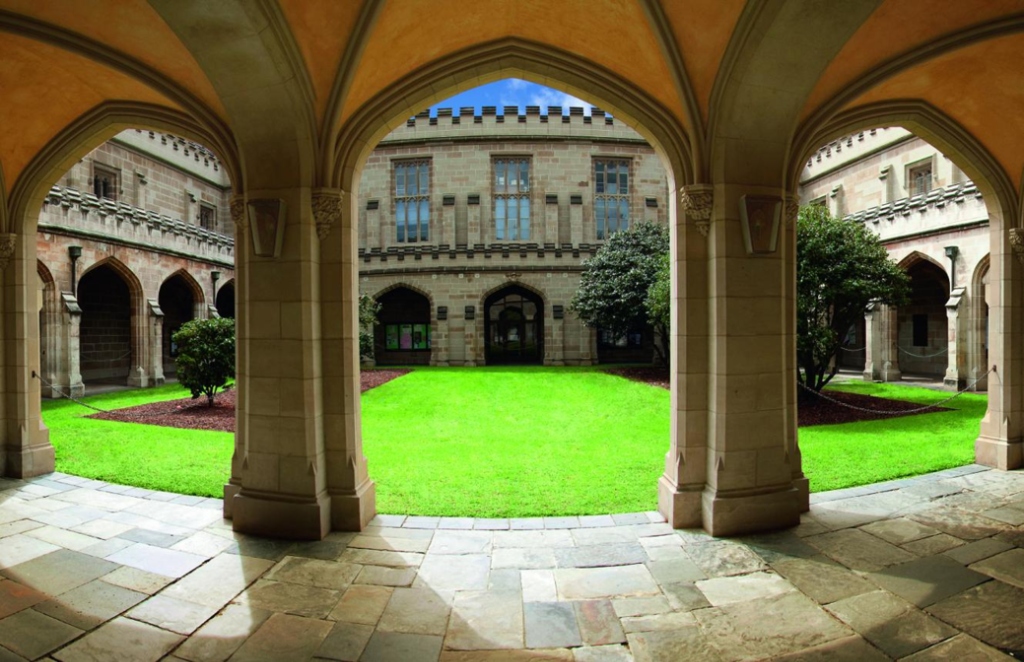
- University of Melbourne (Victoria): Australia's #1 ranked university (QS Top 15 globally). Pioneered the "Melbourne Model" emphasizing interdisciplinary breadth and graduate professional entry.
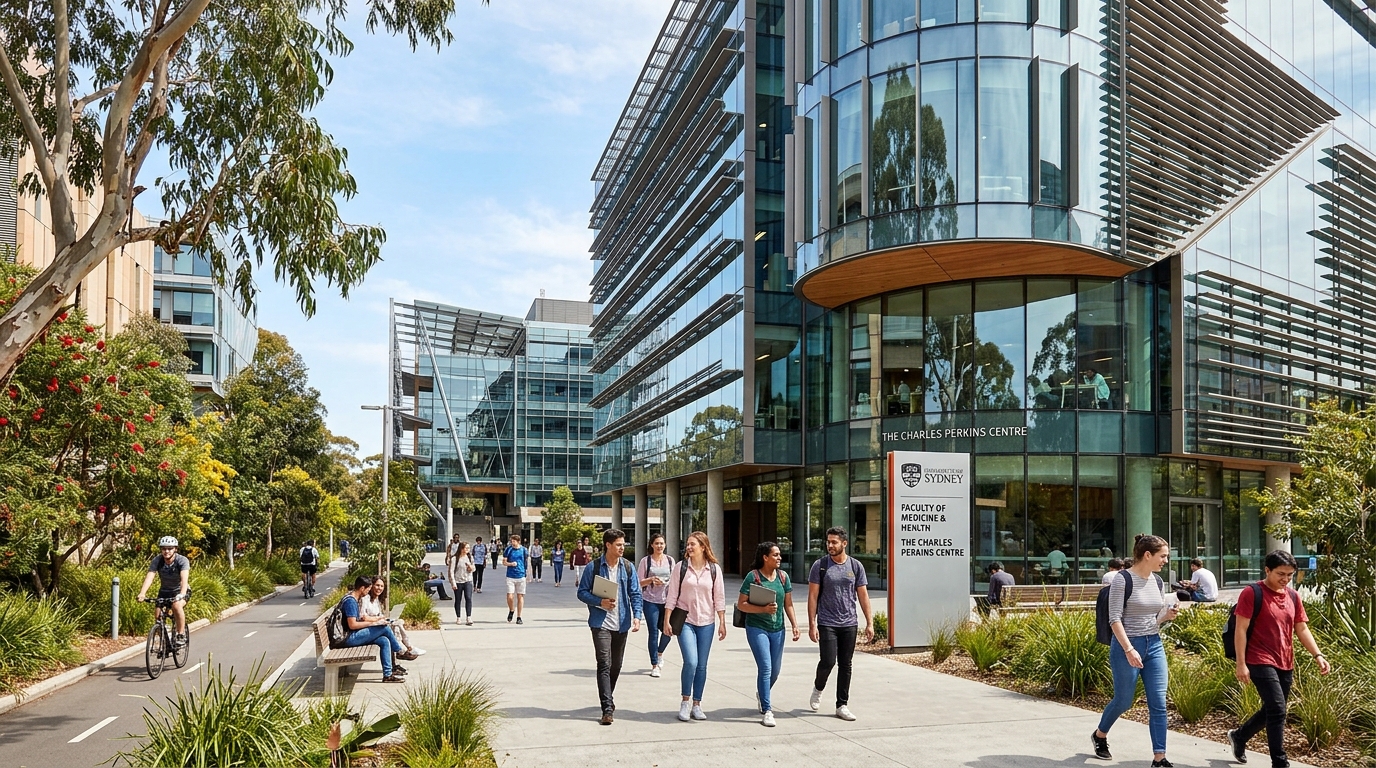
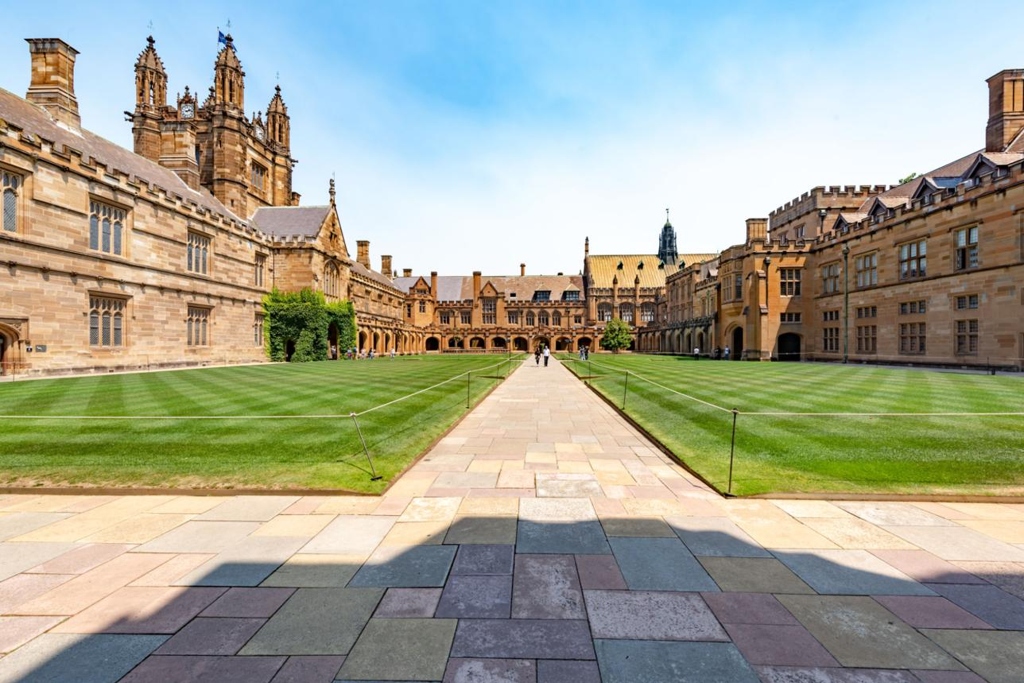
- University of Sydney (New South Wales): Australia's oldest university (established 1850). World leader in law, medicine, engineering, and architecture.
- UNSW Sydney (New South Wales): Renowned powerhouse in engineering, technology, renewable energy, and corporate finance. Operates on the dynamic "UNSW 3+" trimester calendar.
- Monash University (Victoria): Largest university in Australia. Globally ranked #2 for Pharmacy & Pharmacology (behind Harvard); elite direct-entry undergraduate medical school.
- Australian National University - ANU (ACT, Canberra): Australia's national research university, located in the federal capital. Unmatched in pure science, physics, economics, and international diplomacy.
- University of Queensland - UQ (Brisbane): Global pioneer in life sciences, biotechnology (co-inventor of the HPV vaccine Gardasil), environmental science, and mining engineering.
- University of Western Australia - UWA (Perth): Leading research center in ocean engineering, energy, agriculture, and computational science.
- University of Adelaide (South Australia): Historic institution associated with 5 Nobel laureates, leading in agricultural sciences, wine biotechnology, and defense engineering.
4. Indian Board Recognition: CBSE, CISCE (ISC), and State Board Equivalency
Australian universities have well-established equivalency frameworks for secondary education credentials awarded in India:
- CBSE (All India Senior School Certificate Examination - AISSCE): Widely recognized across all 43 Australian universities. Admission averages are calculated across the best 4 academic subjects (including English, prerequisite mathematics, and sciences; excluding vocational electives).
- CISCE (Indian School Certificate - ISC): Calculated using the percentage of the best 4 academic subjects (including English). ISC standards match CBSE cutoffs directly.
- State Higher Secondary Boards (HSC): Accepted by most Australian universities (e.g., Maharashtra, Karnataka, Tamil Nadu, Andhra Pradesh, Telangana). However, Go8 universities typically require State Board candidates to present an overall percentage that is 3% to 5% higher than CBSE/ISC requirements.
- International Baccalaureate (IB) Diploma: Converted directly to an Australian Tertiary Admission Rank (ATAR), requiring 26 to 42+ points depending on the program.
5. CBSE Marks Required for Australia: Go8 Institutional Benchmarks
To understand the exact CBSE marks required for Australia, applicants must recognize that cutoffs are set by individual faculties. Australian universities publish transparent minimum entry benchmarks based on your best 4 academic subjects:
| University & Program | Typical CBSE / ISC Cutoff (Best 4) | Mandatory Subject Prerequisites | ATAR Equivalent |
|---|---|---|---|
| University of Melbourne: Bachelor of Science | 85% overall | Maths 80%+, Chemistry or Physics | ATAR 85.00 |
| University of Melbourne: Bachelor of Commerce | 90% overall | Maths 85%+, English 80%+ | ATAR 93.00 |
| University of Sydney: Bachelor of Engineering (Honours) | 83% – 88% overall | Standard Maths 80%+, Physics | ATAR 85.00 – 90.00 |
| University of Sydney: Bachelor of Advanced Computing | 88% overall | Standard Maths 80%+ | ATAR 90.00 |
| UNSW Sydney: Bachelor of Engineering (Honours) | 86% – 90% overall | Maths 85%+, Physics | ATAR 88.00 – 93.00 |
| UNSW Sydney: Bachelor of Commerce | 88% overall | Standard Maths 80%+ | ATAR 91.00 |
| Monash University: Bachelor of Pharmacy (Honours) | 85% overall | Chemistry 80%+, Maths 80%+ | ATAR 86.00 |
| Monash University: Bachelor of Medical Science & MD (Direct) | 95%+ overall | Chemistry 85%+, English + ISAT 170+ + MMI | ATAR 99.00+ |
| ANU: Bachelor of Science / Advanced Computing | 82% – 88% overall | Calculus/Standard Maths 80%+ | ATAR 80.00 – 90.00 |
| University of Queensland: Bachelor of Biotechnology | 80% overall | Maths & Chemistry 75%+ | ATAR 82.00 |
6. Subject Prerequisites: Deciphering Mathematics Methods vs. Specialist Mathematics
Australian universities benchmark secondary mathematics against the Australian Year 12 curriculum, which differentiates between Mathematical Methods (calculus, functions, probability) and Specialist Mathematics (advanced vectors, complex numbers, mechanics).
For Indian applicants from CBSE, Standard Mathematics (Subject Code 041) is equivalent to Mathematical Methods and fulfills prerequisite criteria for Commerce, Computing, and Engineering across all Go8 institutions. However, CBSE Applied Mathematics (Subject Code 241) is accepted for Commerce and Business at Melbourne, Sydney, and Monash, but is frequently rejected by Engineering faculties at UNSW and Sydney, which strictly mandate calculus-intensive Standard Mathematics.
7. Science Prerequisites: Physics, Chemistry, and Biology Requirements
Course prerequisites in Australia are non-negotiable. If you apply for a program without the mandated subject, your application will receive a rejection or a conditional offer requiring a foundational bridging course:
- Engineering (BE Honours): Class 12 Physics and Standard Mathematics are mandatory at UNSW, Sydney, and Melbourne. Chemistry is required for Chemical and Biomedical engineering specializations.
- Computer Science & IT: Standard Mathematics is mandatory. Physics is recommended but not formally required at Melbourne and Monash.
- Biomedical Science / Biotechnology: Class 12 Chemistry is compulsory at Monash and Melbourne; Biology and Mathematics are strongly recommended.
- Pharmacy (Monash #2 Global): Class 12 Chemistry and Standard Mathematics are mandatory with minimum 80% in each subject.
8. Documents Needed to Study in Australia: The 10-Point Application Dossier
Preparing your academic and identity dossier early ensures smooth processing across both university admissions and visa verification. Below is the complete checklist of documents needed to study in Australia:
- Class 10 Board Marksheet & Certificate: Certified true copy issued by CBSE, CISCE, or State Board (verifies date of birth and secondary foundation).
- Class 11 Annual Marksheet: Official school report card certifying completion of Grade 11 subjects.
- Class 12 Mid-Term / Pre-Board Marksheet: For applicants seeking conditional admission offers before final board exams.
- Official Class 12 Predicted Grades Certificate: Issued on official school letterhead signed by the principal or college counselor.
- Valid Passport: Color scanned copy of the personal details and address pages with at least 18 months validity.
- English Language Proficiency Score Card: Official electronic transmission of IELTS Academic, PTE Academic, or TOEFL iBT test results.
- Genuine Student (GS) Written Statement: 300–500 word structured personal statement addressing study reasons, career goals, and home ties.
- Statement of Purpose / Curriculum Vitae (CV): Mandatory if you have any academic gap year between Class 12 and university entry.
- Financial Documentation for Visa: Bank statements, education loan sanction letter, and income tax returns (ITR) meeting Department of Home Affairs benchmarks.
- Specialized Entrance Exam Reports: ISAT score card (for direct-entry Medicine and Dentistry at Monash and UWA).
9. English Language Proficiency: IELTS, PTE, and TOEFL Benchmarks
Because English is the sole medium of instruction across Australian universities, international applicants must demonstrate language competence. Australian universities accept the following standardized tests:
| Language Test | Standard Undergraduate Cutoff | High-Demand Programs (Law / Medicine / Teaching) | Sectional Minimums |
|---|---|---|---|
| IELTS Academic | 6.5 overall band | 7.0 – 7.5 overall band | Minimum 6.0 in each sub-band (R, W, L, S) |
| PTE Academic | 58 – 64 overall score | 65 – 73 overall score | Minimum 50–58 in each communicative skill |
| TOEFL iBT | 79 – 85 overall score | 94 – 102 overall score | Minimum 19 in Reading & Listening, 21 in Writing |
10. How to Secure an English Language Test Waiver for Australian Universities
Many Australian universities—including Monash, UNSW, and University of Queensland—offer direct English language waivers to Indian applicants who satisfy specific board criteria:
- CBSE / CISCE English Score Waiver: Scoring 70% to 80%+ in English Core / English Elective in your Class 12 board examination qualifies you for an automatic English language waiver at Monash, UNSW, and Macquarie.
- Medium of Instruction (MOI) Verification: Providing an official certificate from your high school certifying that your entire education was delivered 100% in the English medium.
- IB English A: Scoring 4 or higher in IB English A Literature / Language & Literature HL or SL.
11. Admission vs. Scholarship Criteria: A Fundamental Distinction
A critical misconception among Indian parents is assuming that meeting the university's admission cutoff qualifies a student for a scholarship. Admission requirements and scholarship criteria in Australia are entirely separate systems:
- Admission Requirements (Threshold-Based): Meeting a published cutoff (e.g., 85% in CBSE) guarantees you a seat in the program. Admissions committees do not rank applicants against one another; seats are issued on a criteria-clearing basis.
- Scholarship Selection (Competitive & Quota-Driven): Scholarships offering 20%, 50%, or 100% tuition waivers (like the Melbourne Chancellor's Scholarship or Monash International Leadership Scholarship) are strictly quota-limited. Selection requires top 1% academic merit (typically 95%–98%+ in CBSE), leadership portfolios, and structured scholarship application essays.
12. How to Apply: Direct International Portals vs. State Tertiary Admissions Centres (UAC, VTAC)
Unlike domestic Australian students who apply through centralized state agencies (such as UAC in New South Wales or VTAC in Victoria), over 90% of international undergraduate applicants apply directly through the university's official international admissions portal. Applying directly offers significant advantages: there are no application cycle deadlines, processing is rolling, and application fees are frequently waived through certified education partners.
13. University of Melbourne: The "Melbourne Model" and Academic Breadth
The University of Melbourne does not offer narrow direct-entry undergraduate professional degrees (like Bachelor of Engineering or Bachelor of Laws). Instead, it utilizes the globally acclaimed Melbourne Model, offering six broad foundational undergraduate degrees:
- Bachelor of Science (3 Years): Cutoff 85% in CBSE (best 4). Must have Standard Maths and either Physics or Chemistry. Students take foundational science courses plus "breadth" electives in business or humanities, before declaring a major in Computer Science, Data Science, or Bioengineering.
- Bachelor of Commerce (3 Years): Cutoff 90% in CBSE. Must have Standard Maths 85%+ and English 80%+. Leads to majors in Accounting, Actuarial Studies, Economics, and Finance.
- Graduate Professional Pathways: Students aspiring to become accredited engineers or lawyers complete their 3-year bachelor's degree and progress seamlessly into the 2-year Master of Engineering or Juris Doctor (JD).
14. University of Sydney: Guaranteed ATAR Conversion and Prerequisite Mathematics
The University of Sydney is famous for publishing transparent Guaranteed ATAR Entry Scores for international applicants. For Indian students, USyd converts CBSE marks into an equivalent ATAR. For example, an 88% average across your best 4 subjects equals an ATAR of approximately 90.00, guaranteeing admission into the Bachelor of Engineering Honours or Bachelor of Economics, provided course prerequisites are met.
15. UNSW Sydney: Australia's #1 Engineering Faculty and the "UNSW 3+" Trimester Model
UNSW Sydney is ranked #1 in Australia for Engineering and Technology and #19 globally. A unique feature of UNSW is its innovative UNSW 3+ Academic Calendar. The academic year consists of three 10-week terms (Term 1 in February, Term 2 in June, Term 3 in September), allowing students to take only three subjects per term for deeper focus, while offering flexibility to complete internships or accelerate degree completion.
16. Monash University: World #2 Pharmacy Faculty and Undergraduate Medicine Pathways
Monash University holds the distinction of being ranked #2 in the world for Pharmacy and Pharmacology (surpassing Oxford and Cambridge, second only to Harvard). Monash offers the 5-year combined Bachelor of Pharmacy (Honours) / Master of Pharmacy. Furthermore, Monash is one of the very few world-top-50 universities offering a direct-entry undergraduate medical degree (Bachelor of Medical Science and Doctor of Medicine - BMedSc/MD) for Class 12 leavers, requiring 95%+ in CBSE, a competitive ISAT score, and Multiple Mini Interviews (MMI).
17. Australian National University (ANU): Nobel Laureates and Canberra Research Power
Located in Canberra, ANU is Australia's only university established by the Federal Parliament. It boasts the highest ratio of researchers to students in Australia, with 6 Nobel laureates among its faculty and alumni. Flagship programs include the Bachelor of Advanced Computing (Honours), Bachelor of Philosophy (Ph.B. Science - an elite research degree requiring 95%+ in CBSE), and international relations programs with direct access to federal embassies and think tanks.
18. University of Queensland (UQ): Global Bio-Hub and Vaccine Innovation
Situated in sunny Brisbane, UQ is internationally acclaimed for life sciences, agriculture, and biotechnology. Home to the Australian Institute for Bioengineering and Nanotechnology (AIBN), UQ is where the cervical cancer vaccine Gardasil was invented. The Bachelor of Biotechnology and Bachelor of Biomedical Science offer state-of-the-art laboratory training with direct pathways into clinical medical research.
19. Financial Planning: Tuition Fees, Living Expenses, and OSHC Insurance
Budgeting for undergraduate study in Australia requires an accurate breakdown of annual tuition and living expenses:
| Expense Category | Annual Range (AUD) | Annual Range (INR Equivalent) | Key Budgeting Insights |
|---|---|---|---|
| Go8 Undergraduate Tuition (STEM / CS / Eng) | $48,000 – $56,000 AUD | ₹26,00,000 – ₹31,00,000 | UNSW, Melbourne & Sydney sit at top pricing tier |
| Go8 Undergraduate Tuition (Business / Arts) | $42,00,000 – $50,000 AUD | ₹23,00,000 – ₹27,50,000 | Humanities degrees significantly more affordable |
| Non-Go8 University Tuition (IT / Business) | $32,000 – $42,000 AUD | ₹17,50,000 – ₹23,00,000 | RMIT, Deakin, UTS, Wollongong provide lower tuition |
| On-Campus Housing & Meals | $18,000 – $26,000 AUD | ₹10,00,000 – ₹14,50,000 | Includes furnished room, utilities, Wi-Fi, and meal plans |
| Off-Campus Shared Apartment & Groceries | $15,000 – $22,000 AUD | ₹8,25,000 – ₹12,00,000 | Sydney and Melbourne carry highest metropolitan rental costs |
| Overseas Student Health Cover (OSHC) | $650 – $900 AUD per year | ₹36,000 – ₹50,000 | Mandatory private health insurance for the entire visa duration |
20. Major Scholarships: Melbourne Chancellor's, Sydney Leaders, and Monash Awards
Australian universities offer some of the most generous merit-based scholarships in global higher education:
- Melbourne Chancellor's Scholarship: 50% to 100% full tuition fee remission for international students achieving the equivalent of an ATAR 99.90 (98%+ in CBSE). Awarded automatically upon application.
- Sydney International Leaders Scholarship: Up to AUD $20,000 to $40,000 per year for high-achieving international applicants from South Asia exhibiting strong academic merit and leadership potential.
- Monash International Leadership Scholarship: 100% full tuition waiver across the entire degree program. Awarded based on academic excellence, scholarship essays, and community impact.
- ANU Chancellor's International Scholarship: Up to 50% tuition reduction awarded automatically to top-tier applicants across regional merit categories.
- UQ High Achievers Scholarship: Up to AUD $10,000 per year tuition discount for top incoming international undergraduates.
21. Portfolios, Auditions, and Video Interviews: Where Applicable in Australia
While standard degrees in business and engineering do not require interviews or portfolios, select professional faculties mandate supplementary evaluation:
- Architecture & Design (Melbourne, Sydney, RMIT): Portfolio of 10–15 creative works demonstrating spatial visualization, sketching, 3D modeling, and conceptual creativity.
- Fine Arts & Music (VCA Melbourne, Sydney Conservatorium): Recorded video auditions, live performance auditions, and music theory examinations.
- Medicine & Dentistry (Monash, UNSW, UWA): Multiple Mini Interviews (MMI) testing communication, ethical empathy, problem solving, and medical motivation.
22. The Genuine Student (GS) Requirement: What Every Indian Applicant Must Pass
In March 2024, Australia replaced the former Genuine Temporary Entrant (GTE) statement with the Genuine Student (GS) requirement for Student Visa (Subclass 500) applicants. The GS test evaluates whether the applicant genuinely intends to obtain a high-quality qualification in Australia that enhances their future economic prospects.
The GS submission requires targeted answers (typically 150 words per prompt) addressing: 1) Current circumstances including family, employment, and economic ties in India; 2) Reasons for choosing the specific course and education provider; 3) How the qualification directly advances employment opportunities in India or internationally; and 4) Details of realistic future earnings compared to the financial investment.
23. Department of Home Affairs Financial Capacity Threshold (2026/2027 Update)
To secure an Australian Student Visa (Subclass 500), Indian applicants must demonstrate evidence of sufficient funds to cover travel, living, and tuition costs. Under updated Home Affairs guidelines, the required financial evidence includes:
- 12 Months Cost of Living: Minimum AUD $29,710 for the primary student (or annual income proof of parent/sponsor showing at least AUD $87,856 per year).
- Full First-Year Tuition Fees: Paid receipt or balance funds for the remaining first-year university tuition (typically AUD $35,000 – $54,000).
- Travel Allowance: Approximately AUD $2,000 to cover return airfare to India.
- Acceptable Funding Sources: Savings bank accounts (held for at least 3 to 6 months), education loans sanctioned by nationalized/private Indian banks, and approved government financial sponsorships.
24. Work Rights During Study: 48 Hours Per Fortnight Regulations
International students in Australia are permitted to work up to 48 hours per fortnight (24 hours per week) during official university teaching periods, and unlimited full-time hours during scheduled university breaks (summer and winter vacations). With Australia's national minimum wage currently set at over AUD $24.10 per hour (one of the highest national minimum wages in the world), students working part-time earn between AUD $1,800 and $2,400 per month, easily offsetting monthly living and grocery costs.
25. Post-Higher Education Work Visa (Subclass 485): 2 to 4 Years of Work Rights
Upon completing an accredited Australian bachelor's degree (minimum 2 years of full-time registered study), international graduates are eligible for the Temporary Graduate Visa (Subclass 485) - Post-Higher Education Work Stream:
- Standard Metro Duration: 2 full years of unrestricted open work rights for graduates of Australian bachelor's degrees studying in major metropolitan centers (Sydney, Melbourne, Brisbane).
- Regional Location Bonus: An additional 1 to 2 extra years of post-study work rights granted to students who complete their degree at a designated regional campus (such as Adelaide, Perth, Gold Coast, Newcastle, Wollongong, or Canberra).
- Open Employer Work: Graduates can work for any employer across any industry without needing employer sponsorship.
26. Permanent Residency (PR) Trajectory: Skilled Migration and Points Test
Australia operates a transparent points-tested General Skilled Migration (GSM) program for international graduates. Careers in Software Engineering, Civil & Mining Engineering, Biomedical Sciences, Nursing, and Secondary Teaching feature prominently on the federal Medium and Long-term Strategic Skills List (MLTSSL). Graduates earn points for their bachelor's degree, Australian study, regional location, age, superior English fluency (IELTS 8.0 / PTE 79+), and accredited professional year programs.
27. Top 5 Costly Mistakes Indian Applicants Make in Australian Admissions
- Calculating Total Aggregate Incorrectly: Using all 5 or 6 subjects instead of the university's specific "Best 4 Academic Subjects" formula, artificially lowering their perceived score.
- Confusing Admission with Scholarship Cutoffs: Assuming an 88% average guarantees a 50% scholarship, while top scholarships require 95%+ and separate leadership applications.
- Taking the Wrong Math Elective: Choosing CBSE Applied Mathematics when intending to study Engineering at institutions that strictly mandate Standard Mathematics.
- Submitting Weak Genuine Student (GS) Statements: Writing copy-pasted or generic statements that fail to prove authentic career alignment, leading to student visa refusals.
- Missing the July Intake Window: Thinking Australia only takes students in February and waiting an entire gap year unnecessarily, when July mid-year intake offers immediate entry.
28. Grade-by-Grade Roadmap: Preparing for Australia from Class 9 to Class 12
- Class 9 & 10: Build robust mathematical and scientific foundations. Score 85%+ in Class 10 board exams. Explore broad academic interests.
- Class 11: Select correct Class 11 stream with Standard Mathematics. Maintain high school grades (82%+). If aspiring to direct-entry Medicine, begin ACER ISAT preparation.
- Class 12 (Fall): Take IELTS Academic or PTE Academic by October. Research Go8 faculty prerequisites. Submit direct university applications with predicted grades.
- Class 12 (Winter/Spring): Receive conditional offers. Sit Class 12 board exams in March. Prepare Genuine Student (GS) dossier and financial proof.
- Class 12 (May/June): Final board marks released. Convert conditional offer to unconditional Confirmation of Enrolment (CoE) and submit Subclass 500 visa application for July or February intake.
29. The Acceptance Milestone: Acceptance of Offer and Electronic Confirmation of Enrolment (eCoE)
Once you fulfill all conditions of your offer letter, the final step to formalize your admission is signing the International Student Acceptance Agreement and paying the initial tuition deposit (typically covering the first semester's tuition, approx. AUD $15,000 – $25,000) along with your OSHC health cover. The university then generates an official electronic Confirmation of Enrolment (eCoE), which is the mandatory document required to lodge your Australian Student Visa on the ImmiAccount portal.
30. Frequently Asked Questions: Australia Undergraduate Admissions
Can Indian students get admission to top Australian universities with 75% in CBSE?
Yes! While elite faculties like Melbourne Commerce or UNSW Engineering require 85%–90%+, an overall CBSE score of 75%–80% qualifies you for undergraduate degrees in Arts, Business, and IT at Monash, University of Adelaide, or leading comprehensive institutions like RMIT, Deakin, Macquarie, and Wollongong.
Is SAT or ACT required for Australian university admissions?
No, Australian universities do not require SAT or ACT scores from Indian students enrolled in CBSE, ISC, or State Boards. Admissions decisions are based entirely on your Class 12 board results and course prerequisites.
Can I study MBBS in Australia directly after Class 12 from India?
Yes! Monash University, UNSW Sydney, and University of Queensland offer direct-entry undergraduate medical programs (BMedSc/MD or MBBS) for Class 12 school leavers. Admission requires 95%+ in CBSE (with Chemistry), top percentiles on the ACER ISAT examination, and Multiple Mini Interviews (MMI).
Are 3-year Australian bachelor degrees recognized in India and the US?
Yes. 3-year Australian bachelor degrees are globally accredited and recognized by the Association of Indian Universities (AIU), World Education Services (WES), and major global universities for postgraduate admission.
How long does Australian student visa processing take from India?
Student Visa (Subclass 500) processing for Go8 universities typically takes between 3 to 6 weeks, provided the applicant submits a complete Genuine Student (GS) assessment and verified financial capacity proof.
Download the Official Australia Undergraduate Admission Guide (2027 Entry)
Get immediate access to the comprehensive Go8 CBSE/ISC Percentage Matrix, Subject Conversion Chart, and Genuine Student (GS) Financial Calculator.
32. Strategic Next Steps: Partner with EduQuest Admissions Advisors
Securing admission and major scholarships at Australia's world-renowned Group of Eight universities requires expert navigation of academic cutoffs, prerequisite verification, and visa compliance. At EduQuest, our international admissions advisors have guided hundreds of Indian students into Melbourne, Sydney, UNSW, and Monash.
Plan Your Australian University Journey with EduQuest
Schedule a personalized diagnostic consultation with our former Australian university advisors and scholarship strategists.