
Australian Faculty & Program Selection Advisory (2027 Entry)
Course & Faculty Matching
1-on-1 Go8 Strategy
Compare course structures, faculty rankings, subject prerequisites, and campus culture across Melbourne, Sydney, UNSW, Monash, ANU, and UQ.
Book Faculty Matching CallEngineering & IT Portals
Tech Career Pathways
Evaluate Washington Accord-accredited Bachelor of Engineering and ACS-accredited Computer Science degrees with built-in industry internships.
Explore Tech AdmissionsBiomedical & Pre-Med
Clinical Research Tracks
Explore the Melbourne Model vs. Monash direct-entry medical sciences, Parkville pharmacy, and UQ biotechnology research precincts.
Explore Pre-Med Advisory1. Introduction: Selecting the Right Australian University for Your Undergraduate Degree
Australia has established itself as one of the world's preeminent destinations for international higher education, with nine institutions ranked in the global top 100 of the QS World University Rankings. However, selecting an undergraduate institution based purely on overall institutional rankings is one of the most frequent missteps made by Indian students and families.
A university that excels in public policy research may not possess the strongest commercial ties for computer science internships. Similarly, an institution renowned for liberal arts and humanities may lag behind an engineering powerhouse equipped with industrial wind tunnels and supercomputing facilities. In this comprehensive faculty-by-faculty analysis, EduQuest deconstructs the best Australian universities for undergraduate courses across five critical disciplines: Engineering, Information Technology & Computer Science, Business & Commerce, Direct-Entry Medicine, and Biomedical Science.
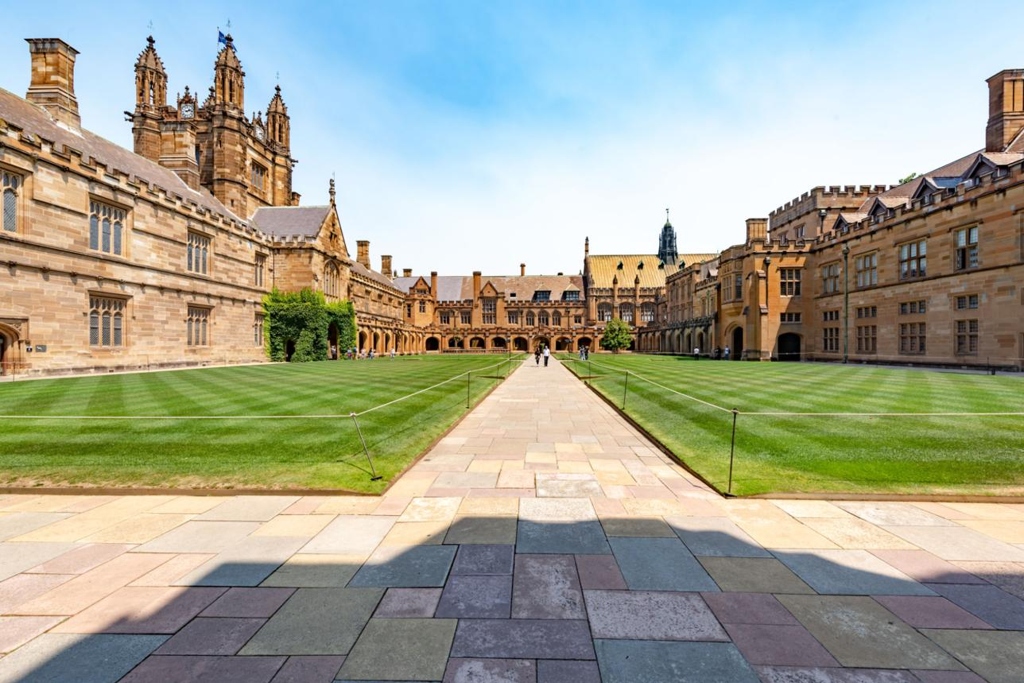
2. The Australian University Landscape: Group of Eight (Go8) vs. Australian Technology Network (ATN)
Understanding the structural ecosystem of Australian higher education is essential for calibrating academic expectations and career outcomes:
Fast-Track Your College & Career Strategy
Get immediate, personalized AI insights tailored to your grade, strengths, and dream universities — 100% free with instant reports.
Know Your Personality Type for Free
Take our 18-question AI psychometric test to uncover your cognitive archetype, hidden learning superpowers, and ideal university courses.
Personalized Career & University EduPath
Build a step-by-step Grade 8–12 admissions blueprint with AI-matched target universities, exam schedules, and extracurricular profiles.
| Dimension | The Group of Eight (Go8) | Australian Technology Network (ATN) & Industry Universities |
|---|---|---|
| Key Institutions | Melbourne, Sydney, UNSW, Monash, ANU, UQ, UWA, Adelaide. | UTS (Sydney), RMIT (Melbourne), QUT (Brisbane), Curtin (Perth), UniSA. |
| Curriculum Philosophy | Intensive foundational theory, elite research discovery, academic prestige, global alumni networks. | Work-integrated learning (WIL), practical industry software, vocational agility, corporate co-ops. |
| QS World Rankings | Dominate the global top 20–90 bracket across all major subject rankings. | Rank primarily in the global 120–250 bracket, with specific strengths in tech/design. |
| CBSE / ISC Cutoffs | Typically require 83% to 95%+ aggregate in top-4 academic subjects. | Typically require 72% to 85% aggregate, offering accessible entry points. |
| Post-Graduation Pathways | Ideal for students targeting elite multinational consulting, global tech hubs, or top-tier master's/PhDs. | Ideal for students seeking rapid direct employment in local Australian industry sectors. |
3. Best Australian Universities for Undergraduate Engineering: The Powerhouse Trio
Australian engineering programs are globally recognized through the Washington Accord, meaning a 4-year Bachelor of Engineering (Honours) accredited by Engineers Australia confers full professional practice rights across the United States, United Kingdom, Canada, Singapore, and India. Across the nation, three universities dominate undergraduate engineering education: UNSW Sydney, the University of Sydney, and the University of Queensland.
4. UNSW Sydney: Australia's Undisputed #1 Engineering Faculty
The University of New South Wales (UNSW Sydney) boasts the largest and highest-ranked Engineering faculty in the Southern Hemisphere, ranking #1 in Australia and #31 globally for Engineering and Technology (QS Subject Rankings). Situated in Kensington, Sydney, UNSW graduates are the most recruited engineering cohort by Australian corporate enterprises.
- Flagship Disciplines: Photovoltaics and Renewable Energy (pioneered by Professor Martin Green), Quantum Engineering, Civil & Environmental Engineering, Mechanical & Aerospace, and Mining Engineering.
- Mandatory Industrial Training: All UNSW Engineering students must complete a minimum of 60 days of approved professional engineering work before graduation.
- CBSE / ISC Entry Requirements: Bachelor of Engineering (Honours) typically requires an 88% to 90% aggregate in top-4 subjects, including Standard Mathematics (Methods equivalent) and Physics.
- Scholarship Pathways: Scientia Fellowship awards and industry-funded Co-op scholarships offering tax-free annual stipends.
5. University of Sydney & University of Queensland (UQ) in Engineering Excellence
While UNSW leads in overall faculty scale, the University of Sydney and UQ offer distinctive engineering specializations that outshine competitors in targeted domains:
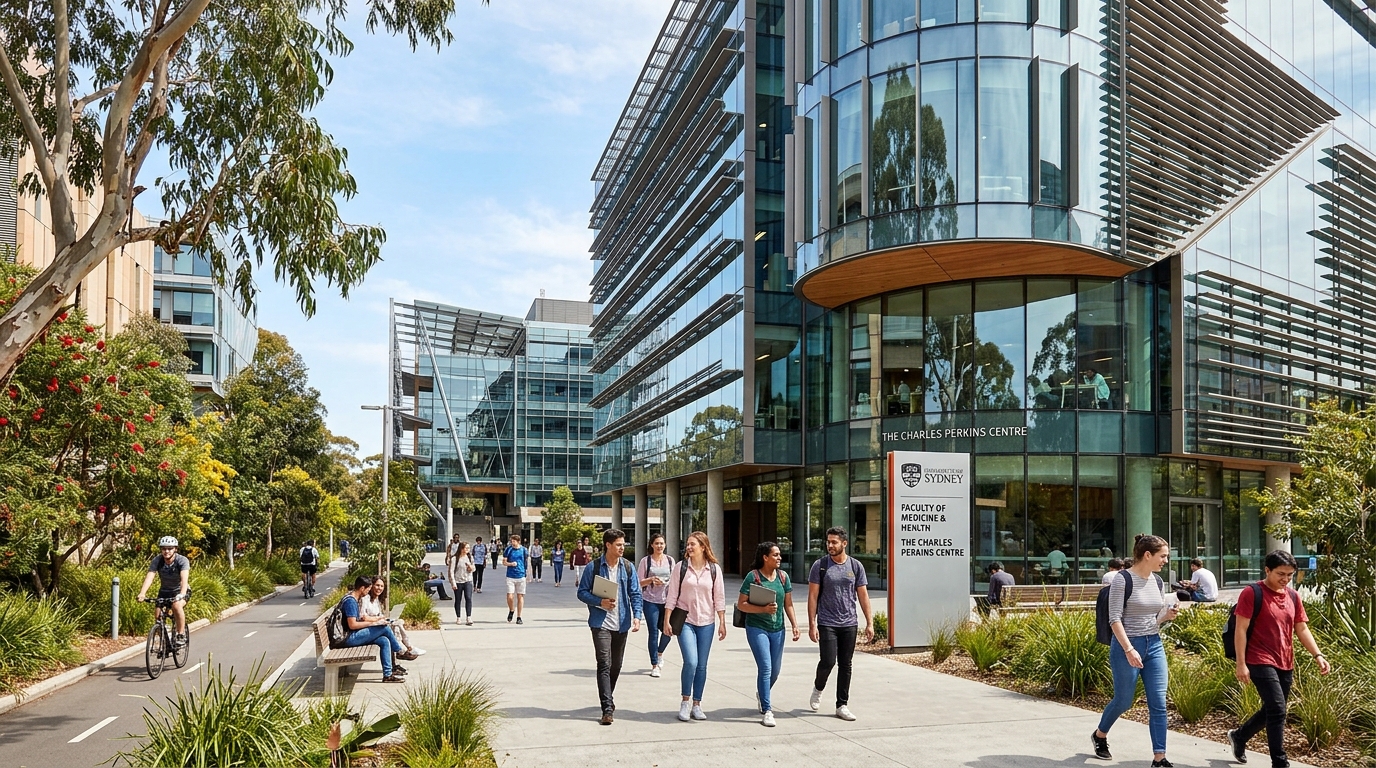
- University of Sydney (USYD): Renowned for Aeronautical, Mechatronic, Biomedical, and Civil Engineering. USYD's state-of-the-art Engineering and Technology Precinct features cutting-edge robotics labs and materials characterization facilities. Standard CBSE cutoff: 86%–90%.
- University of Queensland (UQ): World #2 for Mineral & Mining Engineering and globally renowned for Chemical & Environmental Engineering. UQ's St Lucia campus hosts the Advanced Engineering Building, combining sustainable timber design with advanced wind tunnel and materials testing suites. Standard CBSE cutoff: 84%–87%.
6. The Melbourne Model for Engineering: 3-Year Bachelor of Science + 2-Year Master of Engineering
Indian students must note a critical structural distinction: the University of Melbourne does NOT offer a direct 4-year Bachelor of Engineering. Instead, Melbourne uses the "Melbourne Model":
- Undergraduate Phase: Students complete a 3-year Bachelor of Science (or Bachelor of Design) majoring in an engineering systems discipline (e.g., Mechanical Systems, Civil Systems, Computing).
- Graduate Professional Phase: Students transition into a 2-year Master of Engineering accredited by Engineers Australia and EUR-ACE (European accreditation).
- Pros & Cons for Indian Students: Provides broader intellectual breadth and double-degree flexibility, but requires 5 years of tuition and living expenses rather than the traditional 4-year direct bachelor route.
7. Best Australian Universities for IT and Computer Science After Class 12
With Australia's booming tech sector anchored by global leaders like Atlassian, Canva, and SafetyCulture, computer science and information technology degrees are among the most sought-after programs by Indian Class 12 graduates. Selecting the best Australian universities for IT after 12th requires assessing algorithm theory, industry co-op placements, and AI specialization tracks.
8. Computer Science Triad: UNSW, University of Sydney, and ANU Compared
The battle for technological supremacy among Australia's top institutions reveals distinct institutional advantages:
| University | Flagship Program | CBSE Cutoff | Core Curricular Strength & Industry Ties |
|---|---|---|---|
| UNSW Sydney | Bachelor of Science (Computer Science) | 88% – 90% | Ranked #1 for Tech. Outstanding alumni network in Silicon Valley and Sydney fintech (Commonwealth Bank, Canva, Optiver). ACS accredited. |
| University of Sydney | Bachelor of Advanced Computing | 86% – 88% | Four-year honors degree integrating AI, cybersecurity, and data science. Unrivaled industry capstone projects with Google Sydney and Microsoft. |
| Australian National University (ANU) | Bachelor of Advanced Computing (R&D) | 90% – 92% | Elite research-focused computing degree. Direct access to Australia's national supercomputer (Gadi at the NCI). Direct pipeline into cyber intelligence. |
| Monash University | Bachelor of Computer Science (Advanced CS) | 85% – 88% | Strong industry-based learning (IBL) program offering 6-month paid corporate placements with leading Victorian tech firms. |
9. The ATN Dark Horse: University of Technology Sydney (UTS) for Software Engineering
For students seeking immediate, hands-on software development experience without the pure theoretical abstraction of the Go8, UTS is an exceptional option. Located in the heart of Sydney's Tech Central district (adjacent to Atlassian's global headquarters), UTS offers a 5-year Bachelor of Information Technology (including two full 6-month industry internships) backed by scholarship sponsorships.
10. Best Business and Commerce Degrees in Australia: Melbourne vs. Sydney vs. UNSW
The best business degrees in Australia prepare graduates for high-stakes careers in investment banking, management consulting (MBB: McKinsey, BCG, Bain), corporate finance, and private equity. Australia's commercial capital is anchored by three legendary business faculties, each offering distinct academic cultures and recruiting pipelines:
- University of Melbourne (Faculty of Business and Economics): Offers the globally celebrated 3-year Bachelor of Commerce. The program is renowned for mathematical and theoretical rigor, particularly across its Actuarial Studies and Finance specializations. Melbourne BCom graduates are heavily targeted by international investment banks in Hong Kong, Singapore, and London. CBSE Cutoff: 90%–93%.
- UNSW Business School (Sydney): Widely recognized as Australia's entrepreneurial powerhouse. Situated in Kensington, minutes from the Sydney financial district, UNSW produces more startup founders and corporate executives than any other Australian university. Its Bachelor of Commerce curriculum integrates mandatory digital agility and experiential micro-internships. CBSE Cutoff: 88%–90%.
- University of Sydney Business School: Triple-crown accredited (AACSB, AMBA, EQUIS). Famous for international business strategy, multinational corporate governance, and quantitative marketing analytics. The Business School's landmark building on Abercrombie Street features real-time financial trading rooms. CBSE Cutoff: 90%–92%.
Indian students aiming for elite financial consulting should note that Melbourne and UNSW offer dedicated Bloomberg Terminals, student-managed investment funds managing upwards of AUD $500,000, and annual networking summits with Goldman Sachs, Macquarie Capital, and Morgan Stanley.
11. Monash Business School: Australia's Largest Triple-Accredited Powerhouse
Monash Business School, based at the Caulfield and Clayton campuses in Melbourne, holds the coveted "Triple Crown" accreditation (AACSB, EQUIS, and AMBA), placing it in the elite top 1% of business faculties worldwide.
Where Monash outpaces all rivals is in its extraordinary double-degree versatility. An Indian student does not have to choose between quantitative computer science and high finance. Through Monash's 4-year integrated double degrees, you can combine a Bachelor of Commerce with a Bachelor of Computer Science, Engineering (Honours), Biomedical Science, or Laws (Honours), graduating with two full degrees that make you indispensable to multinational employers.
12. Undergraduate Biomedical Science in Australia: Research, Pre-Med & Biotechnology
Undergraduate biomedical science Australia programs attract ambitious Indian high school graduates who want to pursue postgraduate medicine, clinical pathology, immunology, cancer genomics, or pharmaceutical drug discovery. The country's medical research institutes are world-renowned, and two universities stand out as absolute titans.
13. Biomedical Giants: Melbourne Biomedicine vs. Monash Biomedical Science
Melbourne is the medical research hub of the Southern Hemisphere, home to the Parkville Biomedical Precinct and the Clayton Innovation Cluster:
| Dimension | University of Melbourne (BBiomed) | Monash University (BBiomedSci) |
|---|---|---|
| Degree Structure | 3-year Bachelor of Biomedicine (Melbourne Model). | 3-year Bachelor of Biomedical Science (Clayton campus). |
| CBSE Cutoff | 92% – 95% aggregate (high competitiveness). | 88% – 90% aggregate. |
| Prerequisites | English, Chemistry, and Advanced Mathematics. | English, Chemistry, and Higher Mathematics. |
| Research Vicinity | Parkville Precinct: Walter and Eliza Hall Institute (WEHI), Doherty Institute (infectious disease), Royal Melbourne Hospital. | Clayton Precinct: Australian Synchrotron, Monash Health, Hudson Institute of Medical Research, Monash Biomedicine Discovery Institute. |
| Graduate Medicine Pathway | Direct feeder into the competitive 4-year Melbourne Doctor of Medicine (MD) via GAMSAT/MCAT. | Dedicated quota reserved for Monash BBiomedSci graduates transitioning into the Monash graduate MD program. |
14. Monash University: World #2 in Pharmacy and Pharmacology
According to the QS World University Rankings by Subject, Monash University's Faculty of Pharmacy and Pharmaceutical Sciences ranks #2 in the world—surpassed only by Harvard and ranking ahead of Oxford, Cambridge, and Johns Hopkins. Located at the specialized Parkville campus in Melbourne, the Bachelor of Pharmacy (Honours) / Master of Pharmacy is a 5-year integrated program that produces globally sought-after pharmaceutical scientists, formulation experts, and clinical pharmacists.
The Monash Institute of Pharmaceutical Sciences (MIPS) is renowned for breakthroughs in inhalable mRNA delivery, therapeutic drug nanotechnology, and anti-infective formulations. Students complete hands-on clinical placements across Melbourne's major teaching hospitals and industrial internships with global biopharmaceutical enterprises such as CSL, GSK, and Pfizer.
15. Australian National University (ANU): Pure Research, Physics & Policy
For students who dream of a career in pure scientific inquiry, quantum physics, astronomy, public health epidemiology, or international relations, ANU in Canberra offers an intellectual ecosystem that cannot be matched elsewhere in Australia:
- John Curtin School of Medical Research (JCSMR): Founded by Nobel laureate Sir Howard Florey, JCSMR has yielded three Nobel Prizes in physiology and medicine. Undergraduate students have opportunities to undertake supervised research electives alongside world-leading immunologists.
- Bachelor of Philosophy (Honours) - PhB (Science): An elite, individualized research-focused degree for students with CBSE scores of 96%+. Students work directly with senior research professors from their very first semester, designing original laboratory investigations.
- Crawford School of Public Policy & Fenner School: Australia's premier public policy institution, directly informing federal government legislation, global trade, and strategic defense strategy. Perfect for careers in the diplomatic corps, World Bank, and United Nations.
16. University of Queensland (UQ): Global Powerhouse in Life Sciences & Biotechnology
The University of Queensland (UQ) in Brisbane is an international leader in biotechnology, molecular biosciences, and marine ecology:
- Institute for Molecular Bioscience (IMB): One of Asia-Pacific's top biological discovery engines, housing over 500 researchers investigating venom-derived drugs, infectious diseases, and genomics.
- Gardasil Legacy: The world's first cervical cancer vaccine (Gardasil) was discovered and co-invented at UQ by Professor Ian Frazer, cementing the university's global reputation in molecular therapeutics.
- Bachelor of Biotechnology & Bachelor of Biomedical Science: Programs feature intensive hands-on lab work in recombinant DNA technology, bioprocess engineering, and bioinformatics.
- Heron Island & Moreton Bay Marine Research Stations: UQ owns dedicated marine research stations on the Great Barrier Reef, offering marine biology students immersive fieldwork opportunities.
17. Direct-Entry Medicine (MBBS/MD) in Australia: Which Universities Offer It?
Direct-entry medicine allows high school graduates to enter a clinical medical program immediately after Class 12, bypassing the uncertain graduate-entry medical school admissions process (GAMSAT exam). Leading direct-entry programs open to Indian students include:
| University | Course Award & Duration | CBSE Minimum Cutoff | Admissions Testing & Interview |
|---|---|---|---|
| Monash University | BMedSci/MD (5 Years) | 95% – 96%+ | ACER ISAT (175–185+) + Multiple Mini Interview (MMI). Direct clinical hospital rotations. |
| UNSW Sydney | BMed/MD (6 Years) | 96%+ | UCAT ANZ / ISAT + Panel Interview + Written Application. Integrated biomedical and clinical study. |
| University of Queensland | Provisional Entry MD (3-year Bachelor + 4-year MD) | 96% – 97%+ | UCAT ANZ + Multiple Mini Interview. Requires maintaining 5.0 GPA in undergraduate bachelor. |
| Univ. of Western Australia | Assured Pathway DMD / MD (3-year Bachelor + 4-year MD) | 95%+ | ISAT + MMI interview. Perennial favorite for Indian families targeting Perth. |
18. Subject Prerequisites Across Go8 Faculties: Mathematics, Physics, Chemistry
Meeting the overall percentage cutoff is completely meaningless if you lack the mandatory secondary school prerequisites required by the faculty:
| Discipline | University of Melbourne | UNSW Sydney | University of Sydney | Monash University |
|---|---|---|---|---|
| Engineering | BSc: Standard Math (Methods). Master phase requires Physics/Calc. | Standard Math (Methods equivalent) + Physics recommended. | Advanced Math (Calculus) mandatory. Physics highly recommended. | Standard Math (Methods equivalent) + Chemistry or Physics. |
| Computer Science | BSc: Standard Math (Methods). | Standard Math (Methods equivalent). Advanced Math recommended. | Advanced Math (Calculus). | Standard Math (Methods equivalent). |
| Commerce / Business | Standard Math (Methods). CBSE Applied Math NOT accepted. | Standard Math (Methods equivalent). | Standard Math (Methods equivalent). | Standard Math (Methods equivalent). |
| Biomedical Science | Standard Math (Methods) + Chemistry mandatory. | Chemistry + Standard Math recommended. | Standard Math (Methods) + Chemistry/Biology. | Standard Math + Chemistry mandatory. |
19. Annual Tuition Fee Comparison Across Top Australian Universities (2027 Projections)
Tuition fees for international undergraduate students in Australia vary significantly based on discipline and institution. Below is an indicative annual fee schedule in Australian Dollars (AUD):
| University | Engineering (Annual AUD) | Computer Science (Annual AUD) | Business/Commerce (Annual AUD) | Biomedical Science (Annual AUD) |
|---|---|---|---|---|
| Univ. of Melbourne | $52,000 – $56,000 (via BSc) | $49,000 – $53,000 (via BSc) | $50,500 – $53,500 | $52,000 – $55,000 (BBiomed) |
| UNSW Sydney | $54,000 – $57,000 | $52,000 – $55,000 | $49,500 – $52,500 | $53,000 – $56,000 |
| Univ. of Sydney | $53,500 – $56,500 | $51,000 – $54,000 | $50,000 – $53,000 | $54,000 – $57,000 |
| Monash University | $51,000 – $54,000 | $48,500 – $51,500 | $49,000 – $52,000 | $49,500 – $52,500 (Pharmacy $53k) |
| Australian National Univ. | $51,000 – $54,000 | $50,000 – $53,000 | $48,000 – $51,000 | $51,000 – $54,000 |
| Univ. of Queensland | $49,500 – $53,000 | $48,000 – $51,000 | $47,000 – $50,000 | $49,000 – $52,000 |
20. Clarifying the Gap: Guaranteed Entry Cutoffs vs. Scholarship Selection Thresholds
Indian families often mistakenly assume that achieving the published guaranteed entry score makes a student eligible for scholarships. In reality, there is a substantial threshold gap:
- Guaranteed Admission Cutoff: The published minimum score (e.g., 85% for Monash Computer Science) that guarantees an academic offer, provided prerequisites and quotas are met.
- Partial Scholarship Threshold (20% to 25% Fee Reduction): Typically requires a Class 12 aggregate of 92% to 94% across top-4 subjects, often evaluated automatically.
- Major Scholarship Threshold (50% to 100% Tuition Waiver): Requires a Class 12 aggregate of 96% to 98%+, alongside holistic evaluation: leadership achievements, verified research output, or formal interview evaluations.
21. City & Lifestyle Ecosystem: Melbourne vs. Sydney vs. Brisbane vs. Canberra
The geographic location of your university profoundly shapes your student life, living expenses, and networking opportunities:
- Sydney (UNSW & USYD): Australia's bustling financial capital. Fast-paced, high corporate density, superb beaches, but higher living costs (rent averages AUD $380–$550/week).
- Melbourne (UniMelb & Monash): The cultural, sports, and biomedical capital. Incredible coffee culture, vibrant arts scene, slightly more affordable accommodation than Sydney.
- Brisbane (UQ): Subtropical climate, relaxed lifestyle, booming economy in the lead-up to the 2032 Brisbane Olympic Games, significantly lower living expenses.
- Canberra (ANU): Quiet, scholarly, master-planned federal capital. Ideal for focused academics and public policy networking, with cold winters and a tight-knit campus community.
22. English Language Requirements by Faculty: STEM vs. Commerce vs. Health Sciences
English requirements vary drastically depending on the clinical and communicative demands of the faculty:
- Engineering & Computer Science: IELTS 6.5 overall (no band below 6.0) or PTE Academic 58+ (no band below 50). CBSE English waivers frequently available for 75%+ scores.
- Business & Commerce: IELTS 6.5 to 7.0 overall (no band below 6.0–6.5) or PTE Academic 65+.
- Biomedical Science: IELTS 6.5 to 7.0 overall.
- Direct-Entry Medicine, Dentistry & Pharmacy: Strict IELTS 7.0 to 7.5 overall (minimum 7.0 in every sub-band) or PTE 73+. No CBSE English waivers permitted due to clinical registration boards.
23. The Australian Double-Degree Advantage: Combining STEM and Business
One of the unique strengths of the Australian higher education system is the structured Double Degree (or Combined Degree). Unlike US universities where a double major requires intensive course overloads, Australian double degrees add just one additional year (4 to 5 years total) to award two distinct bachelor's diplomas.
- Bachelor of Engineering (Honours) / Bachelor of Computer Science: Complete both in 5 years at UNSW or Monash.
- Bachelor of Commerce / Bachelor of Computer Science: The premier choice for quantitative finance, fintech, and management consulting careers.
- Bachelor of Biomedical Science / Bachelor of Laws (Honours): A powerful foundation for intellectual property law, bioethics, and pharmaceutical regulation.
24. Work-Integrated Learning (WIL) and Corporate Internships in Australia
Australian institutions place heavy emphasis on practical workplace immersion before graduation:
- UNSW Industrial Training: 60 mandatory days of supervised industrial engineering practice.
- Monash Industry-Based Learning (IBL): 22-week paid corporate placements with leading companies like Deloitte, Telstra, and IBM, earning academic credit.
- University of Sydney Industry and Community Project Units (ICPUs): Multi-disciplinary student teams work directly with corporate partners (Accenture, Westpac, NSW Health) on authentic business challenges.
25. Advanced Research Infrastructure: Supercomputing, Synchrotrons & Cleanrooms
Undergraduate students who wish to conduct serious research should evaluate each university's scientific equipment and research infrastructure:
- National Computational Infrastructure (NCI) at ANU: Home to Gadi, the Southern Hemisphere's most powerful research supercomputer.
- Australian Synchrotron (Adjacent to Monash Clayton): A massive particle accelerator that uses synchrotron light to examine molecular structures in physics, chemistry, and drug discovery.
- Sydney Nanoscience Hub at USYD: A purpose-built, electromagnetically shielded facility for quantum computing and atomic engineering.
26. Faculty Return on Investment (ROI): Comparing Starting Salaries Across Disciplines
Data from the Quality Indicators for Learning and Teaching (QILT) Graduate Outcomes Survey reveals strong median starting salaries for international graduates in Australia:
| Academic Faculty | Median Starting Salary (AUD) | 3-Year Employment Rate | Primary Employment Sectors |
|---|---|---|---|
| Engineering (All Disciplines) | $75,000 – $92,000 | 92.4% | Infrastructure, energy, civil consulting, mining, renewable tech. |
| Computer Science / IT | $76,000 – $95,000 | 89.1% | Software engineering, fintech, cloud architecture, cybersecurity. |
| Business / Commerce | $68,000 – $85,000 | 88.7% | Management consulting, banking, corporate accounting, analytics. |
| Medicine / Clinical Dentistry | $82,000 – $105,000 | 98.5% | Public health hospital internships, private clinical dentistry. |
| Biomedical Science (Pre-Med) | $62,000 – $74,000 | 82.3% | Pharmaceutical laboratories, clinical trials coordination, research assistantships. |
27. Post-Study Work Visa (Subclass 485) Rules for Bachelor's Graduates
Under Australia's current migration legislation, all international students who complete a CRICOS-registered bachelor's degree of at least 2 academic years (92 weeks) are eligible for the Subclass 485 Temporary Graduate Visa:
- Metropolitan Campuses (Sydney, Melbourne, Brisbane): Standard 2-year post-study work rights.
- Designated Regional Campuses (Canberra, Adelaide, Perth, Gold Coast): Standard 2-year post-study work visa + 1 to 2 additional years of regional extension.
- Unrestricted Work Rights: Subclass 485 holders enjoy full, unrestricted work rights across any employer and sector in Australia.
28. Campus Culture & Indian Student Support Networks Across Go8 Campuses
Thriving Indian cultural societies (e.g., USYD Indian Society, Melbourne University South Asian Club, UNSW South Asian Student Society) provide peer mentorship, festival celebrations (Diwali, Holi), career networking nights, and accommodation guidance.
29. The EduQuest Faculty Selection Decision Matrix for 2027 Applicants
Use this quick reference guide to identify your target Australian university based on your academic profile and career ambitions:
- Targeting Silicon Valley or Sydney Tech Startups: Choose UNSW Computer Science or University of Sydney Advanced Computing.
- Targeting Investment Banking & Strategy Consulting: Choose University of Melbourne Bachelor of Commerce or UNSW Business School.
- Targeting Medical Research, Drug Discovery & Pre-Med: Choose Monash Pharmacy/Biomedical Science or Melbourne Biomedicine.
- Targeting Pure Science, Physics, Space & Public Policy: Choose Australian National University (ANU).
- Targeting Biotechnology, Sustainable Engineering & Resources: Choose University of Queensland (UQ).
30. Frequently Asked Questions: Best Australian Universities for Undergraduate Study
Is UNSW better than Melbourne for Computer Science and Engineering?
Yes. For direct 4-year undergraduate Engineering and Computer Science, UNSW is widely considered Australia's best institution, boasting stronger corporate recruiting links in tech and higher subject rankings than Melbourne.
Can I do direct-entry MBBS/MD at the University of Melbourne after Class 12?
No. The University of Melbourne does not offer a direct-entry undergraduate medical degree. All aspiring doctors at Melbourne must first complete a 3-year bachelor's degree (such as the Bachelor of Biomedicine or Science) and then sit the graduate GAMSAT/MCAT examination to apply for the 4-year Doctor of Medicine.
How does Monash Pharmacy rank #2 in the world above Oxford and Cambridge?
Monash's Faculty of Pharmacy and Pharmaceutical Sciences in Parkville is an international research powerhouse, responsible for pioneering breakthrough drug delivery technologies, nanomedicines, and inhalable formulations, yielding massive academic citation impact.
Do Australian universities accept CBSE Applied Mathematics for Engineering?
Generally, no. Most Group of Eight Engineering faculties specifically require CBSE Mathematics (Subject Code 041) covering calculus, vectors, and algebra, and do not accept CBSE Applied Mathematics (Subject Code 241) as meeting the prerequisite.
Are there scholarships available for Indian students in Business and IT?
Yes! Scholarships such as the Sydney International Student Award (20% fee discount), Monash International Merit Scholarship ($10,000/year), and UNSW International Scientia Coursework Scholarships (up to 100% tuition) are open to students across Business and IT disciplines.
Download the Best Australian Universities & Undergraduate Courses Directory 2027
Get the complete faculty comparison guide, CBSE cutoff tables, prerequisite matrices, and graduate salary benchmarks in an easy-to-read printable PDF.
32. Strategic Next Steps: Map Your Ideal Australian University Course with EduQuest
Choosing the right faculty and university in Australia sets the trajectory for your entire international career. At EduQuest, our international education advisors calibrate your academic strengths, subject preferences, budget, and long-term residency goals to place you in the premier Australian degree program suited to your ambitions.
Secure Your Place at Australia's Leading Universities
Book a comprehensive admissions consultation with EduQuest's senior advisors to evaluate your eligibility, select your ideal faculty, and maximize scholarship opportunities.