
Profile Building & Scholarship Strategy Portals for Australia (2027 Entry)
Profile Evaluation
1-on-1 Profile Audit
Analyze your academic transcripts, leadership record, and research potential against Go8 scholarship selection rubrics and competitive entry criteria.
Book 1-on-1 Profile AuditClinical Entry Mentorship
ISAT & MMI Accelerator
Prepare for direct-entry MBBS/MD and BDS at Monash, UNSW, and Queensland with mock Multiple Mini Interviews and timed ISAT diagnostic coaching.
Explore ISAT / MMI PrepResearch Mentorship
Pre-College Research Lab
Design and publish peer-reviewed papers in STEM, data science, health policy, and environmental engineering to capture elite merit scholarships.
Explore Research Mentorship1. Introduction: The Strategic Reality of Profile Building for Australia
For decades, a pervasive myth has circulated among international education counselors: that Australian university admissions are purely mathematical transactions where only your Class 12 percentage matters. While it is true that baseline admission into generalist Australian bachelor's degrees (such as a standard Bachelor of Arts or Bachelor of Science) relies primarily on academic scores and subject prerequisites, this simple formula collapses the moment you aim for excellence.
If your ambitions include securing a 50% to 100% Vice-Chancellor's tuition scholarship, gaining entry into hyper-competitive direct-entry medical degrees (BMed/MD), capturing an industry-funded Engineering Co-op fellowship, or gaining admission into elite specialized research streams at Melbourne, Sydney, UNSW, Monash, ANU, or Queensland, an unvarnished 95% on your CBSE board examinations is merely the starting ante. To stand out among tens of thousands of top-tier applicants from India, China, Singapore, and Europe, you must understand how to engineer a competitive profile tailored specifically to Australian evaluators.
2. The Fundamental Distinction: Base Admission vs. Competitive Scholarship Criteria
To craft an effective admissions strategy, Indian applicants must first master the structural bifurcation between Australian admission requirements and scholarship selection criteria. Conflating these two mechanisms is the number one reason high-scoring students miss out on hundreds of thousands of dollars in funding.
Fast-Track Your College & Career Strategy
Get immediate, personalized AI insights tailored to your grade, strengths, and dream universities — 100% free with instant reports.
Know Your Personality Type for Free
Take our 18-question AI psychometric test to uncover your cognitive archetype, hidden learning superpowers, and ideal university courses.
Personalized Career & University EduPath
Build a step-by-step Grade 8–12 admissions blueprint with AI-matched target universities, exam schedules, and extracurricular profiles.
| Evaluation Dimension | Base University Admission | Major Scholarship & Elite Degree Selection |
|---|---|---|
| Primary Metric | Calculated Class 12 aggregate (best-4 subjects) + subject prerequisites. | Holistic index: academic rank + personal statement + leadership + research + impact. |
| Assessment Style | Formulaic and automated: meeting the minimum published ATAR/CBSE score yields an offer. | Comparative and highly competitive: ranked against a global pool of exceptional candidates. |
| Extracurricular Value | Virtually zero for standard Bachelor of Arts, Commerce, or Science. | Critical: forms 30% to 50% of the selection matrix for premier awards (e.g., Monash Leadership). |
| Personal Statement | Not required for standard direct-portal admission applications. | Mandatory: 500 to 1,000-word statement explaining vision, global leadership, and community impact. |
| Interview / Portfolio | Only required for architecture, music, fine arts, and direct-entry medicine. | Frequently required for Co-op scholarships, Liveris Academy, and Vice-Chancellor fellowships. |
| Acceptance Rate | 35% – 65% across Group of Eight generalist undergraduate streams. | 1% – 5% for full-fee scholarships; 3% – 8% for direct-entry MBBS/BMed programs. |
3. Deconstructing the Australian Mindset: What Go8 Evaluators Actually Value
Unlike American admissions committees that evaluate students through an introspective, storytelling-heavy lens (often asking for personal journeys of self-discovery), Australian selection panels operate with rigorous pragmatism. Australian academics and scholarship trustees respect concrete execution, civic responsibility, and demonstrable intellectual initiative.
- Tangible Problem Solving: Did your initiative solve an actual problem in your local school, neighborhood, or state, or was it merely a symbolic club position?
- Academic Rigor Beyond Syllabi: Have you engaged with mathematical modeling, computer coding, laboratory research, or policy synthesis beyond standard NCERT textbooks?
- Sustained Commitment: Evaluators heavily penalize "resume-padding" activities initiated six months before applying. They reward 2 to 3 years of escalating leadership in a single domain.
- Alignment with Global Goals: Australia's universities are deeply anchored in the United Nations Sustainable Development Goals (SDGs), climate technology, Indigenous reconciliation, and public health equity.
4. Extracurricular Activities That Actually Move the Needle for Australian Scholarships
Indian students often fill their CVs with dozens of participation certificates from school debates, inter-house dance competitions, and brief tree-planting drives. Australian scholarship reviewers review hundreds of such dossiers weekly. To make an indelible impression, your extracurricular footprint must exhibit vertical depth rather than horizontal dispersion.
Below are the four archetypes of extracurricular engagement that consistently secure top-tier scholarships across Melbourne, Sydney, UNSW, and Monash:
| Extracurricular Category | Weak / Common Profile (Low Impact) | Competitive / Standout Profile (High Impact) |
|---|---|---|
| Community & Social Impact | Member of school social service club; 20 hours volunteering at a local shelter. | Founded a grassroots literacy or electronic waste initiative reaching 1,500+ citizens with measurable metrics. |
| STEM & Coding | Attended school robotics camp; completed basic online Coursera python course. | Developed an open-source assistive app on GitHub, competed in national hackathons, or built a solar telemetry prototype. |
| Academic Competitions | Participated in school-level science quiz or Olympiad first round. | Qualified for Indian National Olympiad (INMO, INPhO, INChO) or ranked top 1% in national science talent searches. |
| Leadership & Governance | Class monitor or school house prefect for 6 months. | Head Boy/Girl, organized a regional Model UN for 500 delegates, or launched an active student advocacy committee. |
5. Pre-College Undergraduate Research Projects: The Ultimate Differentiator
In Australian academia, research output is the gold standard of institutional prestige. Universities such as the Australian National University (ANU), University of Melbourne, and University of Queensland (UQ) allocate substantial funding to undergraduate research discovery. When an applicant demonstrates scholarly writing capabilities prior to enrollment, they immediately capture the attention of faculty review boards.
How can an Indian Class 11 or 12 student conduct meaningful research? You do not need access to a multi-million-dollar molecular biology laboratory. Consider these high-impact pathways:
- Data Science & Secondary Analysis: Utilizing public datasets (WHO, World Bank, Kaggle, NASA Earth Data) to model epidemiological trends, urban heat islands, or financial inclusion indicators in developing markets.
- Computational Biology & Bioinformatics: Using open-source software (NCBI BLAST, PyMOL, AlphaFold tools) to investigate genomic variations or protein docking simulations.
- Public Policy & Socio-Economic Surveys: Conducting structured, survey-based empirical investigations into renewable energy adoption among small businesses in tier-2 Indian cities.
- Engineering & Hardware Prototypes: Building low-cost IoT sensor networks for agricultural soil moisture monitoring using Arduino or Raspberry Pi.
6. Publishing and Showcasing Your Research to Australian Admissions Committees
Completing a research paper is only the first step; validating its intellectual rigor through recognized scholarly channels transforms it into an unassailable asset on your scholarship application.
- Peer-Reviewed High School Journals: Target indexed journals specializing in secondary school scholarly work, such as the Journal of High School Science, Curieux Academic Journal, or the International Journal of High School Research.
- Preprint Servers: Upload working papers to platforms such as arXiv (for computer science and mathematics) or SSRN (for economics and social sciences) to establish open-access provenance.
- Science Fairs & Symposiums: Submit your findings to the IRIS National Science Fair, Google Science Fair, or regional IEEE student symposiums.
- Inclusion in Scholarship Statements: In your scholarship personal statement, dedicate a substantive paragraph to summarizing your hypothesis, methodology, analytical findings, and how this relates to your intended Australian major.
7. University Profile: University of Melbourne (Research, Breadth & Melbourne Model)
The University of Melbourne operates under the distinctive "Melbourne Model"—a North American-inspired undergraduate curriculum where students complete a broad-based initial degree (Bachelor of Science, Commerce, Arts, Biomedicine, or Design) before pursuing specialized professional master's degrees (e.g., Master of Engineering, Juris Doctor, Doctor of Medicine).
Strategic considerations for prospective Melbourne scholars:
- Melbourne Chancellor's Scholarship: Reserved for the absolute academic elite (CBSE 98%+ or ATAR 99.90 equivalent). Requires no separate application, but recipients represent the pinnacle of intellectual excellence.
- Melbourne International Undergraduate Scholarship: Tiered awards providing AUD $10,000 fee remission in Year 1, 50% tuition remission, or 100% full-tuition remission for the duration of the degree. Selection is purely competitive based on academic performance.
- Breadth Track Demonstration: Melbourne evaluators love candidates who exhibit multi-disciplinary curiosity. An engineering applicant who has studied music, or a commerce applicant with a published philosophy essay, exemplifies the ideal Melbourne Model mindset.
8. University Profile: Sydney and UNSW (Engineering, Computing, Business & Co-op)
Sydney is Australia's financial and technological capital. Both the University of Sydney (USYD) and the University of New South Wales (UNSW Sydney) are international titans in Engineering, Artificial Intelligence, Quantum Computing, and Actuarial Commerce.
To maximize your profile for Sydney and UNSW:
- Sydney International Student Award (SISA): Offers 20% fee reduction for the entire degree. Requires a compelling 3-part personal statement addressing your motivation, contribution to the USYD community, and how you will serve as a global ambassador.
- UNSW Co-op Program: One of the most prestigious industry scholarship programs in the Southern Hemisphere. Provides industry placements, professional mentoring, and tax-free stipends (~AUD $21,600/year). Requires a comprehensive application, video responses, and an intensive panel interview.
- UNSW FEIT Portfolio Entry: For students whose Class 12 scores are marginally below the guaranteed entry cutoffs for Engineering or Computer Science, UNSW allows submission of a portfolio demonstrating STEM passion, projects, and personal achievements.
9. University Profile: Monash University (Pharmacy #2 Global, Biomedical Science & Leadership)
Monash University ranks #2 in the world for Pharmacy and Pharmacology (QS World University Rankings by Subject), rivaling Oxford and Harvard. It is also renowned for its Clayton biomedical precinct, world-leading Australian Synchrotron facility, and flexible double-degree programs.
Profile requirements for Monash's flagship awards:
- Monash International Leadership Scholarship: A 100% tuition fee waiver awarded to exceptional international students. Unlike automated awards, this requires a rigorous separate application including a 1,000-word statement of purpose and evidence of leadership.
- Monash International Merit Scholarship: AUD $10,000 annually (up to $40,000 total). Evaluates both academic excellence and your potential to serve as an active ambassador on campus.
- Pharmacy and Pharmaceutical Sciences Showcase: For Parkville-campus pharmacy programs, demonstrate deep curiosity in drug discovery, clinical chemistry, or biomanufacturing in your application essays.
10. University Profile: Australian National University (Research, Public Policy & Sciences)
Situated in the national capital of Canberra, ANU was created by the Federal Parliament of Australia with a specific mandate to lead national research and international affairs. ANU boasts the highest concentration of Nobel laureates and Academy fellows in the nation.
How to tailor your profile for ANU:
- ANU Chancellor's International Scholarship: Provides 25% to 50% tuition reduction across all major faculties. Automatically assessed during admissions rounds.
- Crawford School of Public Policy & Fenner School Connections: ANU values applicants with demonstrated engagement in international relations, public health governance, climate policy, and economics.
- Tuckwell-Caliber Alignment: Even though the famous Tuckwell Scholarship is primarily domestic, ANU's admissions culture rewards students who reflect the Tuckwell ethos: high intellect, moral character, and a dedication to uplifting others.
11. University Profile: University of Queensland (Life Sciences, Biotech & Engineering)
The University of Queensland (UQ) in Brisbane is an international powerhouse in vaccine development (home of the cervical cancer vaccine Gardasil), agricultural biotechnology, marine biology (Heron Island Research Station), and mining engineering.
Standing out at UQ:
- Liveris Academy Merit Scholarship: Established by former Dow Chemical Chairman Andrew Liveris, this prestigious award supports leaders in sustainability, clean technology, and engineering with up to AUD $10,000–$30,000 annually plus executive mentoring.
- UQ International Excellence Scholarship: Provides 25% tuition fee reduction per year for high achievers in engineering, science, health, and business.
- Biotechnology & Life Sciences Profiles: Highlight high school biology/chemistry projects, laboratory certifications, environmental restoration initiatives, or bioinformatics work.
12. Direct-Entry Medicine and Dentistry: The Ultimate Profile Challenge
Securing direct entry into a Bachelor of Medical Science/Doctor of Medicine (BMed/MD) or Bachelor of Dental Science (BDSc) straight after Class 12 is arguably the most competitive undergraduate admissions process in the British Commonwealth. Acceptance rates for international applicants frequently hover between 2% and 5%.
Leading direct-entry institutions for international Indian students include:
- Monash University: Direct 5-year BMedSci/MD program at the Clayton campus.
- UNSW Sydney: Direct 6-year BMed/MD integrated program with clinical hospital rotations.
- University of Queensland: Direct provisional entry to the Doctor of Medicine (MD) via a 3-year Bachelor of Science or Biomedical Science followed by the 4-year MD.
- University of Western Australia (UWA): Assured pathway to the Doctor of Dental Medicine (DMD) and Doctor of Medicine (MD).
13. The Clinical Triumvirate: Academics, Admissions Test, and Clinical Interview
Unlike standard bachelor's degrees, Australian direct-entry medicine evaluates candidates across three equally weighted pillars (the 33/33/33 formula):
| Selection Pillar | Standard Requirement | Evaluation Focus |
|---|---|---|
| 1. Academic Metric | CBSE / ISC: 95%–97%+ aggregate in English, Chemistry, Mathematics/Biology. | Ensures candidate can handle the rigorous didactic workload of preclinical medical sciences. |
| 2. Aptitude Examination | ACER ISAT (overall 175–185+) or UCAT ANZ (2900–3100+). | Measures critical reasoning, quantitative deduction, and non-verbal spatial analysis. |
| 3. Medical Interview | Multiple Mini Interview (MMI) or structured panel interview. | Assesses empathy, ethical agility, communication skills, resilience, and clinical motivation. |
14. Demystifying the Aptitude Exams: ACER ISAT vs. UCAT ANZ
Indian students aspiring to study clinical medicine in Australia must determine which aptitude test is required by their chosen institutions well before Grade 12 board examinations.
- ACER ISAT (International Student Admissions Test): A 3-hour computer-based test administered worldwide via Prometric. It consists of 100 multiple-choice questions split between Critical Reasoning (humanities/social sciences) and Quantitative Reasoning (mathematics/sciences). Required by Monash, UWA, Flinders, and UNSW (optional pathway).
- UCAT ANZ (University Clinical Aptitude Test for Australia and New Zealand): A 2-hour computer-based test covering Verbal Reasoning, Decision Making, Quantitative Reasoning, Abstract Reasoning, and Situational Judgement. Required by UNSW, Newcastle/New England, and Adelaide.
15. Mastering the Multiple Mini Interview (MMI) for Australian Medical Schools
The Multiple Mini Interview (MMI) is designed to evaluate non-cognitive personal qualities that cannot be measured by written examinations. Candidates rotate through 6 to 8 timed "stations" (typically 8 minutes each), interacting with a different interviewer or actor at each station.
Core MMI station themes evaluated by Monash and UNSW panels:
- Ethical Dilemmas: Navigating patient autonomy, confidentiality breaches, organ allocation scenarios, and end-of-life decision-making.
- Empathy & Active Listening: Console a simulated actor portraying an anxious patient or a peer who failed a high-stakes exam.
- Teamwork & Conflict De-escalation: Describe a situation where a group member failed to contribute and demonstrate diplomatic resolution skills.
- Awareness of Australian Healthcare: Demonstrating informed perspectives on Medicare, rural and remote health disparities, and Indigenous healthcare initiatives.
16. Architecture, Design, and Fine Arts: Crafting a Competitive Creative Portfolio
For programs such as the Bachelor of Design at Melbourne, Architecture at Sydney, or Built Environment at UNSW, admissions committees review creative portfolios in conjunction with academic grades.
- Process Over Polish: Australian design professors prefer seeing sketches, iterative ideation, and concept development over pristine digital renderings.
- Diverse Mediums: Include freehand perspective drawing, digital rendering (AutoCAD, Blender, Rhino), 3D physical modeling, and photography.
- Contextual Rationale: Accompany every major piece with a 100-word design statement explaining the conceptual inspiration, material choices, and intended human interaction.
17. Anatomy of a Winning Scholarship Statement of Purpose (SOP)
Unlike US Common App essays that allow expansive poetic reflections, an Australian scholarship statement must be precise, professional, and impact-oriented. Evaluators typically skim applications in under 4 minutes, searching for clarity of purpose and leadership viability.
| Paragraph | Strategic Focus | Key Content to Deliver |
|---|---|---|
| Paragraph 1: The Thesis | Academic Passion & Core Motivation | Specify the exact major, the intellectual catalyst that sparked your interest, and your long-term career mission. |
| Paragraph 2: Academic & Research Rigor | Demonstrable Mastery Beyond Syllabus | Detail pre-college research projects, national Olympiads, advanced coursework, and analytical capabilities. |
| Paragraph 3: Leadership & Social Impact | Measurable Community Transformation | Describe your flagship extracurricular initiative, quantifying outcomes (people helped, funds raised, policy changes). |
| Paragraph 4: Why Australia & This University? | Institutional & Faculty Alignment | Cite specific university research labs, professors, industry accelerators, and academic modules. |
| Paragraph 5: Ambassadorship & Future Vision | ROI for the Scholarship Committee | Explain how you will contribute to campus life, mentor future scholars, and champion the university globally. |
18. Deadly Pitfalls in Australian Scholarship Personal Statements
Every admissions cycle, EduQuest's senior advisors review hundreds of drafted statements that undermine otherwise stellar candidates. Ensure you avoid these fatal errors:
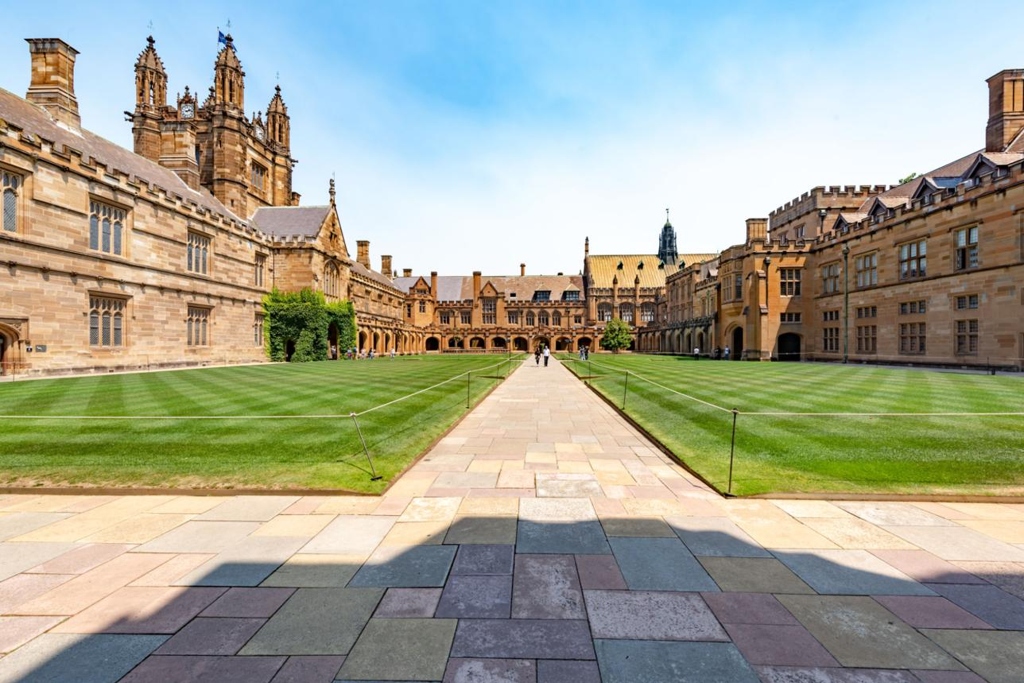
- Generic Flattery: Writing "The University of Sydney is world-renowned for its heritage sandstone campus" tells the committee nothing about you and wastes valuable word count.
- Financial Desperation: Framing your application around financial hardship rather than merit-based excellence. Most Go8 undergraduate scholarships are purely merit-based.
- Overuse of Artificial Intelligence: Submitting generic ChatGPT-generated text lacking authentic voice, personal metrics, and specific details. Go8 committees deploy aggressive AI detection tools.
- Failure to Answer the Specific Prompt: If the Sydney International Student Award asks three distinct questions, answering in a free-flowing essay without answering each sub-prompt guarantees disqualification.
19. Securing High-Impact Letters of Recommendation (LORs) in India
While base Australian admissions do not require teacher recommendations, elite scholarship panels (such as the Monash International Leadership Scholarship) and clinical interviews place high weight on confidential referee assessments.
Guidelines for Indian high schoolers requesting LORs:
- Select Subject Teachers Closely Tied to Your Degree: An aspiring computer science student must request letters from Mathematics and Physics/Computer Science educators, not general advisors.
- Equip Your Teachers with a Brag Sheet: Provide your teachers with a bulleted document detailing your specific classroom projects, Olympiad achievements, and instances where you helped peers.
- Demand Specificity Over Adjectives: A letter stating "Aarav is an exceptionally hardworking student" is useless. A letter stating "Aarav developed an algorithmic simulation for our school's renewable power grid, ranking #1 among 140 students" is memorable.
20. The 4-Year Strategic Profile Building Roadmap (Grade 9 to 12)
Transforming an average applicant into a Group of Eight scholarship recipient is a multi-year developmental journey. Here is the exact phased framework executed by EduQuest mentors:
| Grade / Year | Academic Priorities | Profile & Scholarship Milestones |
|---|---|---|
| Grade 9 (Exploration) | Build flawless foundations in Math, English, and Sciences. Maintain 90%+ school averages. | Explore 4 to 5 diverse clubs. Participate in initial science quizzes and regional sports. Read foundational literature. |
| Grade 10 (Consolidation) | Excel in CBSE Class 10 Board Examinations (aim for 92%+). Select Grade 11 subject streams strategically. | Narrow focus to 2 primary areas of passion. Take on your first student council or committee role. Attend introductory hackathons. |
| Grade 11 (Execution & Depth) | Tackle rigorous Grade 11 curriculum (Standard Math + Sciences). Sit diagnostic SAT/ISAT exams. | Launch your flagship community or research project. Target national Olympiads (NSEP, NSEC, KVPY/RMO). Draft preprint papers. |
| Grade 12 (Harvest & Applications) | Maintain CBSE predicted scores at 95%+. Polish English proficiency (IELTS 7.5+). | Finalize scholarship statements, submit early admissions portals (Semester 1/Semester 2), and undergo rigorous MMI interview training. |
21. The Power of Quantifiable Impact: Transforming Good Deeds into Data
Scholarship reviewers are analytical professionals. When evaluating social initiatives or technical projects, numbers create credibility.
- Before: "I organized a campaign to teach underprivileged children coding in my neighborhood."
- After: "Founded CodeBharat, authoring a 12-week Python curriculum delivered to 142 students across 3 community schools, raising INR 1,80,000 for refurbished laptops."
- Before: "I was interested in water conservation and worked on local solutions."
- After: "Engineered an IoT-enabled greywater filtration prototype using Arduino sensors, reducing residential water consumption by 28% across 45 residential test units."
22. National Olympiads and Academic Competitions That Australian Evaluators Recognize
Australian admissions deans hold deep respect for rigorous national and international olympiads. Achievements in these competitions serve as definitive proof of academic brilliance:
- Homi Bhabha Centre for Science Education (HBCSE) Olympiads: NSEP, NSEC, NSEB, and NSEA leading to the Indian National Olympiad (INO) camps.
- Mathematics Competitions: Regional Mathematical Olympiad (RMO), INMO, and the Australian Mathematics Competition (AMC) organized by the Australian Maths Trust.
- Informatics: Indian Computing Olympiad (ICO) and Zonal Computing Olympiad (ZCO).
- Debating & Public Discourse: World Individual Debating and Public Speaking Championship (WIDPSC) and prestigious international MUNs.
23. Building a Professional Digital Footprint: GitHub, Substack, and LinkedIn
In the modern era of global admissions, a professional online presence validates your scholarship application and demonstrates initiative.
- GitHub Repository: Essential for computer science, software engineering, and data science applicants. Ensure your repositories feature clean README markdown files, functional code, and live demo links.
- Academic Substack or Medium Publication: Writing structured, well-researched essays on topics like artificial intelligence ethics, monetary economics, or public health policy demonstrates sustained intellectual curiosity.
- LinkedIn Profile: Connect with Australian professors, research fellows, and alumni. A polished profile showcasing your achievements signals maturity beyond your years.
24. Case Study 1: How Rahul Secured the Monash 100% Leadership Scholarship
Profile Snapshot:
- Academics: CBSE Class 12 (96.4% aggregate, Delhi Public School R.K. Puram).
- Target Major: Bachelor of Computer Science (Advanced Computer Science).
- Extracurricular Highlight: Created an AI-powered sign language translation desktop tool for hearing-impaired school children, utilized across 4 inclusive schools.
- Research: Co-authored a paper on convolutional neural networks for accessibility in the International Journal of High School Research.
- The Winning Edge: In his 1,000-word Monash statement, Rahul connected his software project directly to research conducted at the Monash Data Futures Institute, articulating how he would launch a student-led accessibility incubator at the Clayton campus. Award: 100% full tuition remission (value ~AUD $180,000).
25. Case Study 2: Ananya's Direct Entry to Monash Medicine (BMedSci/MD)
Profile Snapshot:
- Academics: ISC Class 12 (97.2% with 98 in Chemistry and 96 in Biology).
- Admissions Exam: ACER ISAT score of 182 (98th percentile).
- Clinical Volunteering: 120 hours of palliative care volunteering and clinical observer-ship at a regional dialysis clinic in Lucknow.
- Interview Preparation: Completed 30 hours of intensive MMI station training with EduQuest medical mentors, mastering ethical dilemmas, active listening, and Australian rural healthcare dynamics.
- Outcome: Direct unconditional offer for Monash's 5-year BMedSci/MD program in Clayton, commencing in Year 1 straight after high school.
26. Strategic Tactics for State Board & Non-IB/CBSE Candidates
While CBSE and ISC curricula are universally recognized across Australia, students from Indian State Boards (Maharashtra HSC, Karnataka PU, Tamil Nadu State Board) frequently face stricter conversion tables or skepticism regarding laboratory rigor.
How state board applicants can neutralize perceived disadvantages:
- Supplementary Standardized Testing: Submitting a 1450+ SAT or high AP scores (e.g., AP Calculus BC, AP Chemistry) provides undeniable standardized proof of academic rigor.
- Elevated English Test Scores: Achieve an IELTS Academic score of 8.0 overall with no band under 7.5 or PTE Academic 78+ to demonstrate elite communicative agility.
- Detailed Syllabus Mappings: Provide official, certified copies of your state board syllabus translated and notarized, proving that mathematics includes differential calculus and statistics.
27. Profile Building as Insurance Against Australian Student Visa (Subclass 500) Scrutiny
Following the Australian Department of Home Affairs migration reforms, the Genuine Student (GS) assessment requires candidates to prove that their primary purpose in Australia is authentic education and that their course of study aligns logically with their past academic trajectory and future career.
A meticulously documented profile—featuring published research, verified hackathon records, and structured leadership—serves as bulletproof evidence during visa lodgement. Visa case officers look favorably upon applicants whose pre-existing intellectual pedigree aligns seamlessly with their proposed Australian degree.
28. Executive Presence: Interview Etiquette for Australian Scholarship Panels
If your scholarship or program mandates a virtual panel interview (e.g., UNSW Co-op, Liveris Academy, Monash MMI), prepare with executive rigor:
- Camera Angle & Lighting: Frame yourself from the mid-torso up, maintain direct eye contact with the camera lens (not the monitor screen), and ensure diffuse natural lighting.
- Pacing & Articulation: Speak at a measured tempo. Indian students frequently speak too quickly under pressure. Pause thoughtfully for 2 to 3 seconds before answering complex scenario questions.
- The STAR-L Framework: Structure every experiential answer using Situation, Task, Action, Result, and Learning. The "Learning" phase is what distinguishes exceptional candidates from merely competent ones.
29. The EduQuest 12-Point Profile Audit Checklist for Australia
Evaluate your readiness before submitting your Australian admissions and scholarship applications:
- Class 12 academic trajectory consistently tracking at or above 93% (top-4 subjects).
- Completed required subject prerequisites (Advanced Mathematics, Chemistry, or Physics).
- One flagship leadership initiative demonstrating measurable, verifiable civic impact.
- One substantive intellectual artifact (research working paper, GitHub code repo, or creative portfolio).
- Documented participation or distinction in at least one state/national academic competition.
- IELTS Academic overall 7.5 (no band below 7.0) or PTE Academic 72+ secured.
- For medical applicants: comprehensive ACER ISAT preparation targeting 175+.
- Tailored 500–1,000 word scholarship personal statement customized to institutional research priorities.
- Two academic recommendation letters highlighting specific intellectual achievements.
- Professional digital footprint (LinkedIn profile and digital portfolio link verified).
- Certified financial documentation proving genuine capacity to fund tuition and living expenses.
- Comprehensive Genuine Student (GS) statement drafted and calibrated by a senior counselor.
30. Frequently Asked Questions: Australian Profile Building & Scholarships
Can I get into Melbourne or Sydney without any extracurricular activities?
Yes! For standard, non-quota undergraduate degrees (such as a general Bachelor of Commerce, Science, or Arts), base admission is purely formulaic. If you meet the published Class 12 CBSE cutoff and subject prerequisites, you will receive an offer regardless of your extracurricular record. However, you will not be competitive for major 50%–100% scholarships or specialized honors cohorts.
Are Australian scholarships primarily need-based or merit-based?
The vast majority of undergraduate scholarships for international students in Australia are strictly merit-based. Financial need is generally not an assessment factor for international awards at the Group of Eight universities.
How many hours per week should I dedicate to extracurriculars during Class 12?
During Class 12, academics remain paramount because a drop below 90% eliminates scholarship eligibility. We recommend dedicating 4 to 6 focused hours per week to your flagship project or research during Grade 12, shifting 90% of your energy to board exam mastery.
Does Australia accept the US SAT for profile strengthening?
Yes. Most Australian universities, including Sydney, Melbourne, and UNSW, recognize the SAT as an alternate or supplementary qualification. A score of 1420+ can bolster applications from students whose state board examinations have strict grade moderation.
What is the cutoff score for the ACER ISAT exam for Monash Medicine?
While Monash does not publish a rigid cutoff, competitive international applicants typically achieve an overall ISAT score of 175 to 185+ (roughly 90th percentile and above) to secure an MMI interview invitation.
Download the Australian University Profile Building & Scholarships Blueprint 2027
Get the complete Go8 scholarship rubric matrix, winning SOP templates, research paper publishing guides, and MMI medical interview questions in a printable PDF.
32. Strategic Next Steps: Partner with EduQuest to Elevate Your Global Profile
Building a world-class profile requires strategic foresight, intellectual discipline, and elite mentoring. At EduQuest, our international admissions advisors—comprising former Go8 scholarship evaluators and Ivy League mentors—guide ambitious Indian students from initial project conception to final scholarship selection.
Transform Your Potential into an Australian Scholarship Offer
Book a personalized profile evaluation with EduQuest's senior admissions strategists and unlock opportunities across Melbourne, Sydney, UNSW, Monash, ANU, and UQ.