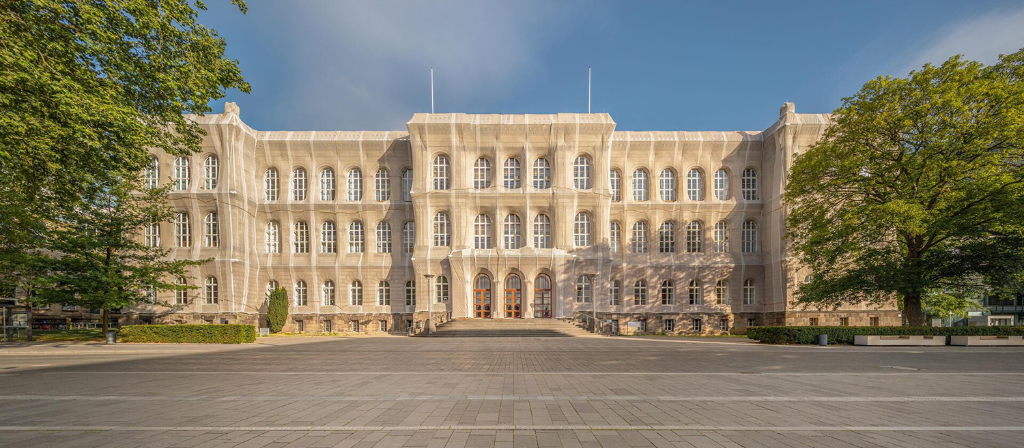
German University Excellence Hub (2027 Entry)
Institutional Matching
1-on-1 University Strategy
Evaluate your academic strengths and match with TUM, RWTH Aachen, KIT, Heidelberg, or LMU based on faculty rankings and language tracks.
Match Your UniversityAI University Profiler
EduPath Diagnostic
Calculate admission probabilities across Germany's TU9 alliance and Excellence clusters using your Grade 12 marks.
Check Admission OddsGerman Universities Directory
Download Free PDF Directory
Get our 45-page master institutional directory featuring course matrices, research budgets, and faculty cutoffs.
1. Executive Comparison: The Elite Landscape of German Higher Education
Germany is home to some of the world's most scientifically rigorous and historically prestigious higher education institutions. Unlike Anglo-Saxon countries where higher education is heavily stratified by private endowment wealth, the German university ecosystem is publicly funded to an exceptional standard. The German federal government and state ministries invest billions of euros annually to maintain global leadership in advanced manufacturing, computing, quantum technology, and molecular medicine.
For Indian students graduating from Class 12, selecting the ideal German university requires looking beyond generic global ranking lists. You must understand institutional specializations: While the Technical University of Munich (TUM), RWTH Aachen University, and Karlsruhe Institute of Technology (KIT) represent the pinnacle of engineering and technology, Heidelberg University and Ludwig Maximilian University of Munich (LMU) stand as global titans in natural sciences, medicine, law, and classical research disciplines.
This guide provides an exhaustive institutional directory of the best universities in Germany for undergraduate courses, analyzing program offerings, faculty strengths, industrial partnerships, tuition costs, and admissions criteria for 2027 entry.
2. The TU9 Alliance vs Universities of Excellence (Exzellenzuniversitäten)
Fast-Track Your College & Career Strategy
Get immediate, personalized AI insights tailored to your grade, strengths, and dream universities — 100% free with instant reports.
Know Your Personality Type for Free
Take our 18-question AI psychometric test to uncover your cognitive archetype, hidden learning superpowers, and ideal university courses.
Personalized Career & University EduPath
Build a step-by-step Grade 8–12 admissions blueprint with AI-matched target universities, exam schedules, and extracurricular profiles.
To navigate German universities, international applicants must understand two elite institutional designations:
The TU9 Alliance: An association of Germany's nine leading technical universities (Technische Universitäten)—including TUM, RWTH Aachen, KIT, TU Berlin, TU Dresden, Leibniz University Hannover, University of Stuttgart, TU Darmstadt, and TU Braunschweig. TU9 institutions produce over 50% of all engineering doctorates in Germany and hold unrivaled links with German industrial heavyweights like Siemens, BMW, Bosch, and BASF.
The Excellence Strategy (Exzellenzstrategie): A prestigious federal competition that awards the title of 'University of Excellence' (Exzellenzuniversität) to institutions demonstrating world-leading cutting-edge research. Both TUM, RWTH Aachen, KIT, Heidelberg University, and LMU Munich hold official University of Excellence status, granting them hundreds of millions in dedicated research funding.
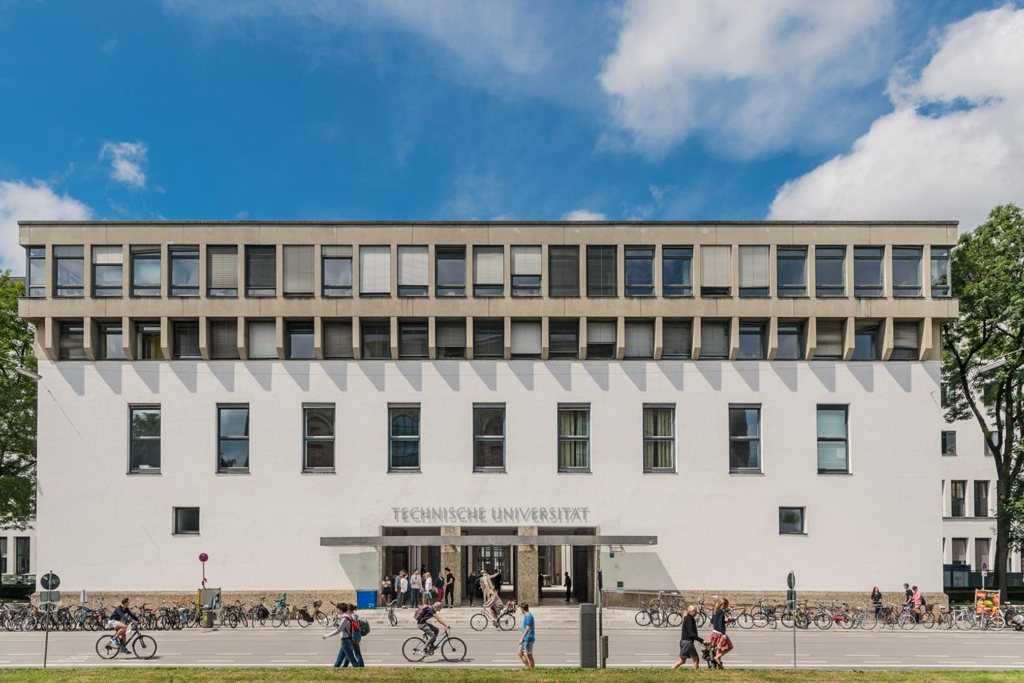
3. Technical University of Munich (TUM): Europe's Premier Deep-Tech Institution
Consistently ranked as Germany's #1 university (ranked #28 globally in the QS World University Rankings), the Technical University of Munich (TUM) is widely regarded as Europe's MIT. Situated in the economic powerhouse of Bavaria, TUM combines world-class theoretical engineering with an unparalleled startup ecosystem (UnternehmerTUM, Europe's largest university tech incubator).
Flagship Undergraduate Disciplines: Informatics (Computer Science), Mechanical Engineering, Electrical and Computer Engineering, Information Engineering (Campus Heilbronn), and Management & Technology (BSc TUM-BWL). Undergraduate education at TUM is characterized by intense mathematical rigor and direct access to state-of-the-art research centers in Garching, Munich, and Heilbronn.
4. RWTH Aachen University: The Global Benchmark for Mechanical and Industrial Engineering
Located in the border triangle of Germany, the Netherlands, and Belgium, RWTH Aachen University is Europe's largest technological university and the undisputed global benchmark for mechanical and industrial engineering. Its sprawling RWTH Aachen Campus hosts over 400 multinational industrial enterprise partners collaborating directly on university grounds.
Flagship Undergraduate Disciplines: Mechanical Engineering (Maschinenbau), Electrical Engineering and Information Technology (Elektrotechnik), Computer Science (Informatik), and Materials Engineering. RWTH graduates are the most sought-after engineers by German automotive and manufacturing corporations, with alumni dominating technical leadership across the DAX stock index.
5. Karlsruhe Institute of Technology (KIT): Powerhouse of Energy, Computing & Helmholtz Research
Karlsruhe Institute of Technology (KIT) occupies a unique status in German higher education: It is both a state technical university and a National Research Center within the Helmholtz Association of German Research Centres. This dual identity gives undergraduate students direct access to national supercomputing facilities, synchrotron radiation laboratories, and fusion energy institutes.
Flagship Undergraduate Disciplines: Informatics, Mechanical Engineering, Electrical Engineering, Chemical and Process Engineering, and Physics. In addition to its German-taught public faculties, KIT hosts the renowned Carl Benz School of Engineering, which offers a full English-taught Bachelor of Science in Mechanical Engineering.
6. Heidelberg University: Historic Eminence, Molecular Biosciences & Natural Sciences
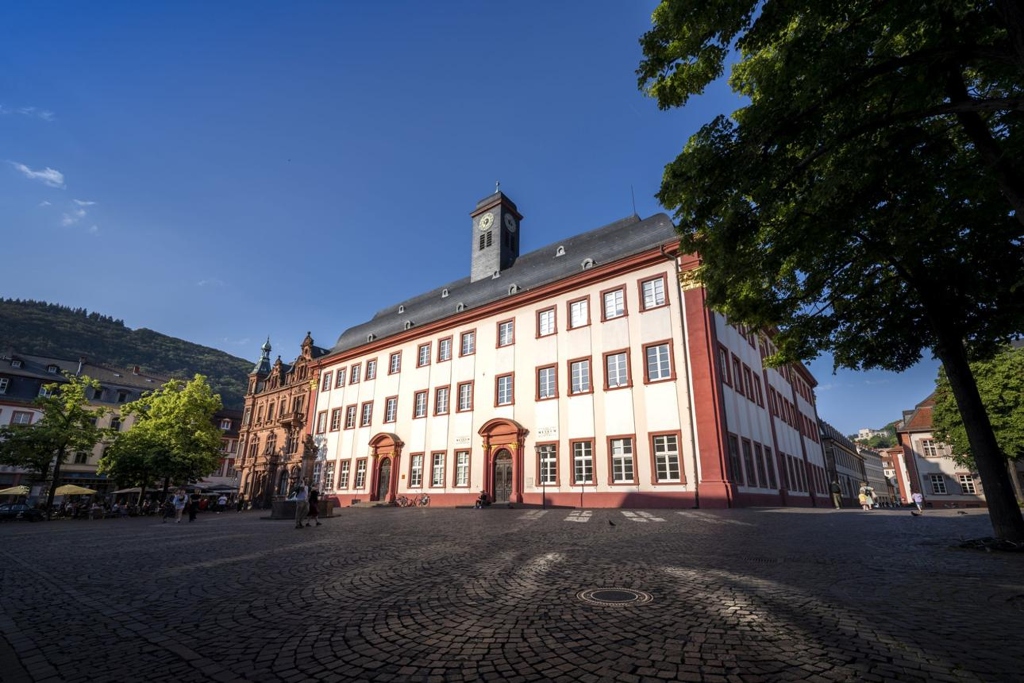
Founded in 1386, Heidelberg University (Ruprecht-Karls-Universität Heidelberg) is Germany's oldest university and an intellectual beacon of Europe. Boasting 56 Nobel Laureates associated with its history, Heidelberg is celebrated worldwide for breakthrough research in medicine, molecular biology, and astrophysics.
Flagship Undergraduate Disciplines: Molecular Biotechnology, Human Medicine, Physics and Astronomy, Biochemistry, and Mathematics. Heidelberg collaborates directly with world-class non-university research institutes located on its campus, including the German Cancer Research Center (DKFZ), the European Molecular Biology Laboratory (EMBL), and four Max Planck Institutes.
7. LMU Munich: Quantitative Economics, Business Administration, Data Science & Physics
Ludwig Maximilian University of Munich (LMU) is ranked #59 in the world and represents the quintessential European comprehensive research university. Situated in central Munich along the grand Ludwigstraße, LMU is an academic powerhouse in social sciences, humanities, business, and fundamental sciences.
Flagship Undergraduate Disciplines: Economics (VWL), Business Administration (BWL), Data Science, Physics, and Law. LMU's Department of Economics is ranked among the top in mainland Europe, maintaining close research relationships with the ifo Institute for Economic Research and Munich's vibrant financial community.
8. Best German Universities for Computer Science, Cybersecurity & Software Systems
Computer Science (Informatik) in Germany emphasizes algorithmic foundations, discrete mathematics, software engineering architectures, and theoretical computer science. The top 5 German universities for undergraduate computing are:
| University | National CS Rank | Curriculum Highlights | Industry Ecosystem |
|---|---|---|---|
| Technical University of Munich (TUM) | #1 in Germany | Theoretical foundations, systems engineering, cloud architectures | Google Munich, Microsoft, Celonis, Amazon AWS, SAP |
| Karlsruhe Institute of Technology (KIT) | #2 in Germany | Home to Germany's first CS faculty; cybersecurity & cryptography | FZI Research Center, SAP headquarters, CyberForum |
| RWTH Aachen University | #3 in Germany | Compiler construction, formal methods, distributed software systems | Industrial software labs, Ericsson, Philips Research |
| TU Berlin | #4 in Germany | Data engineering, machine learning infrastructure, open systems | Berlin high-growth tech startup hub, Delivery Hero |
| LMU Munich | #5 in Germany | Data science, computational linguistics, human-computer interaction | Munich technology cluster, Allianz digital labs |
9. Best German Universities for Artificial Intelligence, Machine Learning & Robotics
Germany is leading Europe's sovereign AI strategy through dedicated competence centers and research clusters:
TUM Munich Data Science Institute (MDSI) & Munich Center for Machine Learning (MCML): Offers unparalleled undergraduate exposure to reinforcement learning, computer vision, and autonomous systems.
University of Tübingen: Internationally acclaimed as the home of the Cyber Valley cluster (Europe's largest AI research consortium with Amazon, Bosch, and Max Planck Institute for Intelligent Systems).
RWTH Aachen Center for Artificial Intelligence: Specializes in industrial AI, robotics manipulation, and machine learning applied to automated manufacturing.
10. Best German Universities for Mechanical, Automotive & Aerospace Engineering
Mechanical engineering (Maschinenbau) is the historical foundation of Germany's industrial wealth. The premier institutions for undergraduate mechanical engineering are:
1. RWTH Aachen: Recognized globally for production technology, internal combustion & electric drive systems, turbomachinery, and manufacturing automation.
2. TUM School of Engineering and Design: World leader in aerospace systems, rocket propulsion, additive manufacturing, and vehicle dynamics.
3. University of Stuttgart: Located in the global heartland of the automotive industry (headquarters of Mercedes-Benz and Porsche), excelling in automotive engineering and factory design.
4. KIT: Exceptional strengths in product development, micro-mechanics, and sustainable mobility systems.
11. Best German Universities for Electrical Engineering, Microelectronics & Semiconductors
With the European Chips Act driving massive investments into Dresden ('Silicon Saxony') and Munich, electrical engineering and microelectronics programs offer supreme career prospects:
• TU Dresden: Anchor university of Silicon Saxony, collaborating directly with Infineon, GlobalFoundries, Bosch, and TSMC.
• TUM: Elite research in embedded systems, power electronics, and quantum semiconductor hardware.
• RWTH Aachen: Pioneer in high-frequency engineering, micro-sensors, and power grid automation.
12. Best German Universities for Biotechnology, Molecular Life Sciences & Medicine
In life sciences and medicine, Germany's ancient comprehensive research universities lead the continent:
• Heidelberg University: Uncontested national leader in medical research, oncology, molecular genetics, and pharmacology.
• LMU Munich & TUM (joint medical faculty): Associated with the renowned Klinikum der Universität München, excelling in immunology, neuroscience, and medical robotics.
• Charité – Universitätsmedizin Berlin: The joint medical school of Freie Universität and Humboldt University, celebrated as one of the world's most renowned university hospitals.
13. Best German Universities for Business Administration (BWL), Economics (VWL) & Industrial Eng
For Indian students aiming for corporate management, quantitative economics, and tech consulting:
• University of Mannheim: Widely acclaimed as the 'Harvard of Germany' for business administration and accounting.
• LMU Munich: Premier faculty for theoretical and quantitative economics (VWL) and corporate strategy.
• TUM School of Management: Famous for its Bachelor in Management & Technology (TUM-BWL), combining 70% business with 30% engineering or computing.
• RWTH Aachen & KIT: World benchmarks for Industrial Engineering (Wirtschaftsingenieurwesen), the ultimate hybrid technical-business qualification.
14. English-Taught Bachelor's Opportunities at Top German Universities: Detailed Directory
While most undergraduate degrees in Germany are German-taught, select high-caliber English-taught options exist for international high school leavers:
| University & College | Degree Program | Language & Format | Tuition Structure |
|---|---|---|---|
| KIT - Carl Benz School of Engineering | BSc in Mechanical Engineering | 100% English (International College) | ~€18,000 / year (private college tuition + mentoring) |
| TUM - Campus Heilbronn | BSc in Information Engineering | 100% English (Public Technical University) | Tuition-free / standard non-EU fee structure |
| TUM - Campus Heilbronn | BSc in Management & Technology | 100% English | Tuition-free / standard non-EU fee structure |
| Saarland University | BSc in Computer Science (International) | 100% English | Tuition-free public university (€300 sem fee) |
| Constructor University Bremen | BSc Computer Science / Software / Robotics | 100% English (Private Research University) | ~€20,000 / year (merit scholarships available) |
15. Carl Benz School of Engineering at KIT: Curriculum, Fees, and Admissions
The Carl Benz School of Engineering is the Mechanical Engineering College of KIT, established specifically to offer international students an elite English-language undergraduate gateway. The curriculum covers foundational engineering mathematics, mechanics, thermodynamics, and machine design, followed by specializations in Automotive Engineering, Energy Engineering, or Global Production Management.
Students benefit from small classroom cohorts, dedicated academic tutoring, German language training alongside their degree, and guaranteed industry internships with companies like Mercedes-Benz, Porsche, and Bosch.
16. TUM Campus Heilbronn: Management & Technology Undergraduate Experience
Located in the thriving industrial region of Baden-Württemberg, TUM Campus Heilbronn was established with a historic endowment from the Dieter Schwarz Foundation to pioneer digital transformation, enterprise software, and international business management.
Its BSc in Information Engineering and BSc in Management & Technology are taught 100% in English, creating a global campus environment where Indian students study artificial intelligence, cyber-physical systems, and digital economics alongside international peers.
17. Comparing TU9 Heavyweights: TUM vs RWTH Aachen vs KIT
| Comparison Metric | TUM (Munich) | RWTH Aachen | KIT (Karlsruhe) |
|---|---|---|---|
| QS World Rank 2025 | #28 globally | #99 globally | #102 globally |
| Flagship Engineering Strength | Computer Science, AI, Aerospace, Robotics | Mechanical, Automotive, Production, Mining | Informatics, Energy Tech, Chemical Engineering |
| Language of Instruction | Predominantly German (select English tracks) | 100% German for public bachelor's | German public; English at Carl Benz School |
| Location & Cost of Living | Munich (High: €1,200 – €1,500/mo) | Aachen (Moderate: €850 – €1,000/mo) | Karlsruhe (Moderate: €900 – €1,100/mo) |
| Non-EU Tuition Fee Status | Tuition fees for select international entrants | Zero tuition (€320/sem contribution) | €1,500 / semester (Baden-Württemberg fee) |
18. Comparing Comprehensive Giants: Heidelberg University vs LMU Munich
When choosing between Germany's two most prestigious classical research universities:
Heidelberg University: Ideal for students dedicated to pure scientific research, laboratory medicine, molecular biotechnology, and academic physics. The city of Heidelberg is a romantic, historic student town where 25% of the population consists of university students.
LMU Munich: Ideal for students targeting economics, business, data science, law, and corporate finance. Situated in Bavaria's capital, LMU provides immediate access to multinational corporate headquarters, international banks, and global media houses.
19. Research Ecosystem Synergy: Max Planck, Fraunhofer, Leibniz & Helmholtz
A defining structural advantage of studying at top German universities is their seamless integration with Germany's 'Big Four' independent research societies:
• Max Planck Society: Dedicated to pure fundamental research in physical, chemical, and biological sciences (associated with 38 Nobel Laureates).
• Fraunhofer-Gesellschaft: Europe's largest organization for applied research and industrial technology transfer, inventing MP3 compression and white LEDs.
• Helmholtz Association: Operates Germany's massive scientific infrastructures, supercomputers, and particle accelerators.
• Leibniz Association: Conducts interdisciplinary research across economic modeling, public health, and environmental sustainability.
20. Corporate Partnerships & Industry Clusters: Siemens, BMW, Bosch, SAP, BASF
German universities do not exist in academic isolation; they are deeply anchored in regional industrial clusters (Verbundsysteme):
• Bavaria (Munich): Anchored by TUM and LMU, home to BMW Group, Siemens AG, Allianz, Munich Re, Airbus Defence, and Microsoft Germany.
• North Rhine-Westphalia (Aachen & Rhine-Ruhr): Anchored by RWTH Aachen, home to automotive research clusters, ThyssenKrupp, Bayer, Henkel, and Ford Europe.
• Baden-Württemberg (Karlsruhe & Stuttgart): Anchored by KIT and Heidelberg, home to Mercedes-Benz, Porsche, Bosch, SAP, and Carl Zeiss.
21. Tuition Fee Realities: Tuition-Free Universities vs Baden-Württemberg (€1,500/sem) & TUM
A clear understanding of tuition structures is essential for financial planning:
1. Tuition-Free Public Universities (14 States): In states like North Rhine-Westphalia (RWTH Aachen), Berlin (TU Berlin), Lower Saxony, and Hesse, public universities charge **€0 tuition fees** for all international students. You pay only the statutory semester contribution (€200 – €350).
2. Baden-Württemberg State Tuition: Universities located in the state of Baden-Württemberg (KIT, Heidelberg University, University of Stuttgart) charge non-EU international students a statutory tuition fee of **€1,500 per semester (€3,000 per year)**.
3. TUM Tuition Structure: Starting recently, TUM introduced differentiated tuition fees for select incoming non-EU international students (typically €2,000 to €3,000 per semester for bachelor's degrees, with exemptions available for demonstrated academic need and merit).
22. Cost of Living Across University Cities: Munich vs Aachen vs Karlsruhe vs Heidelberg
| University City | Average Monthly Rent (Room / WG) | Total Monthly Living Cost | Annual Budget Required (EUR) |
|---|---|---|---|
| Munich (TUM / LMU) | €650 – €950 | €1,200 – €1,500 | €14,400 – €18,000 |
| Heidelberg (Heidelberg Univ) | €500 – €750 | €1,000 – €1,250 | €12,000 – €15,000 |
| Karlsruhe (KIT) | €420 – €650 | €900 – €1,150 | €10,800 – €13,800 |
| Aachen (RWTH Aachen) | €380 – €580 | €850 – €1,050 | €10,200 – €12,600 |
| Berlin (TU Berlin / HU / FU) | €550 – €800 | €1,050 – €1,300 | €12,600 – €15,600 |
23. Campus Life, Student Culture & Student Unions (AStA) in Germany
Campus life in Germany differs fundamentally from US gated campuses. German universities are integrated directly into the fabric of the host cities. Student representation is governed by the **AStA (Allgemeiner Studierendenausschuss - General Students' Committee)** and departmental student councils (Fachschaften).
Your student identification card (Semesterticket) doubles as an unlimited public transit pass across your regional transport network (e.g., MVV in Munich, AVV/VRS across North Rhine-Westphalia, or KVV in Karlsruhe), enabling effortless travel to research parks, libraries, and surrounding cultural hubs.
24. International Student Support, Mentorship & Career Services
Every major German university maintains a dedicated International Office (Akademisches Auslandsamt - AAA) providing comprehensive orientation for international arrivals. Services include buddy mentorship programs (pairing incoming freshers with senior German students), subsidized German language classes, visa extension assistance, and specialized career fairs (e.g., IKOM at TUM, Bonding at RWTH Aachen).
25. Post-Study Employment Rates & Industry Hiring Preferences by University
According to the annual *WirtschaftsWoche* university ranking, which surveys over 500 human resources directors from major German corporations regarding preferred recruitment sources:
• Mechanical & Electrical Engineering: RWTH Aachen and TUM consistently rank #1 and #2 nationwide, with HR directors citing the unmatched technical independence of their graduates.
• Computer Science: TUM and KIT lead employer preference tables, followed closely by RWTH Aachen and TU Berlin.
• Economics & Business: University of Mannheim, LMU Munich, and Frankfurt School lead corporate consulting and banking recruitment.
26. University-Specific Admission Benchmarks for Indian Board Graduates
To gauge realistic admission chances, Indian applicants should target these academic profiles:
• TUM: CBSE/ISC aggregate of 92% – 96%+, with 95%+ in Mathematics and Physics. C1 German or IELTS 7.0 for English tracks. Excellent EFV score.
• RWTH Aachen: CBSE/ISC aggregate of 88% – 94%+. Strong performance in Core Math and Chemistry/Physics. C1 German strictly mandatory.
• KIT: CBSE/ISC aggregate of 85% – 92%+. JEE Advanced or Studienkolleg T-Kurs. Carl Benz School considers 85%+ with strong SAT/IELTS.
• Heidelberg University: CBSE/ISC aggregate of 90% – 95%+ for molecular sciences; 98%+ for medicine. C1 German required.
• LMU Munich: CBSE/ISC aggregate of 88% – 93%+ for Economics and Data Science. C1 German required.
27. Academic Rigor, ECTS Workload & Exam Failure Rules (Klausuren & Drittversuch)
German university undergraduate degrees operate under the European Credit Transfer and Accumulation System (ECTS), where a standard 3-year bachelor's degree requires **180 ECTS credits** (equivalent to 30 ECTS per semester, or approximately 900 hours of student workload).
Crucial Academic Warning: German universities strictly enforce the **Drittversuch (Third Attempt Rule)**. If a student fails a mandatory course examination three consecutive times, they are permanently disqualified from that degree program across *all* universities in Germany (Zwangsexmatrikulation mit Sperre). Academic discipline, weekly tutorial problem sets (Übungen), and early exam preparation are essential for survival.
28. Selecting the Right University for Your Long-Term European Career Objectives
When making your final decision, align your choice with your career vision:
• Aiming for Tech Entrepreneurship & Venture Capital? Choose Technical University of Munich (TUM).
• Aiming for Automotive, Heavy Engineering & DAX Industrial Leadership? Choose RWTH Aachen University.
• Aiming for Semiconductor Tech, Energy Research & Helmholtz Science? Choose Karlsruhe Institute of Technology (KIT).
• Aiming for Biotech, Oncology Research & Global Academic Medicine? Choose Heidelberg University.
• Aiming for Quantitative Economics, Financial Markets & Corporate Strategy? Choose LMU Munich.
29. Key Institutional Comparison Matrix: Rankings, English Programs & Fees
| University | Global QS Rank | Excellence Status | English Bachelor's Available | Undergraduate Tuition Status |
|---|---|---|---|---|
| Technical University of Munich (TUM) | #28 | University of Excellence | Yes (Campus Heilbronn tracks) | Differentiated non-EU fees for new entrants |
| RWTH Aachen University | #99 | University of Excellence | No (German-taught exclusively) | €0 Tuition (€320/sem contribution) |
| Karlsruhe Inst of Technology (KIT) | #102 | University of Excellence | Yes (Carl Benz School of Eng) | €1,500/sem (public) / Private (Carl Benz) |
| Heidelberg University | #84 | University of Excellence | No (German-taught undergraduate) | €1,500/semester (Baden-Württemberg) |
| LMU Munich | #59 | University of Excellence | No (German-taught undergraduate) | €0 Tuition (€150/sem contribution) |
30. Practical Decision Tree for Indian Students After Class 12
Follow this strategic logic tree to pinpoint your optimal university path:
1. Do you possess C1 German proficiency (TestDaF 4x4 or DSH-2)? If YES: Apply directly to TUM, RWTH Aachen, KIT, Heidelberg, or LMU (via JEE Advanced or 1-year Indian degree transfer). If NO: Proceed to step 2.
2. Do you have B1/B2 German and plan to take the Studienkolleg route? If YES: Target Studienkolleg München (for TUM/LMU), Studienkolleg Karlsruhe (for KIT), or Studienkolleg Aachen (for RWTH).
3. Do you speak only English and require an English-taught engineering degree? If YES: Apply immediately to the Carl Benz School of Engineering at KIT, or TUM Campus Heilbronn's BSc in Information Engineering.
31. Frequently Asked Questions (FAQ): Best German Universities
Which German university is considered the best for engineering?
The Technical University of Munich (TUM) and RWTH Aachen University are universally regarded as Germany's top engineering universities. TUM is world-renowned for computer science, robotics, and aerospace, while RWTH Aachen is the undisputed leader in mechanical, automotive, and industrial engineering.
Are bachelor's degree programs in Germany taught in English?
Over 90% of undergraduate bachelor's degree programs at public German universities are taught strictly in German. However, select English-taught programs are available, including the Carl Benz School of Engineering at KIT (Mechanical Engineering BSc) and TUM Campus Heilbronn (Information Engineering and Management & Technology).
Is RWTH Aachen free for international Indian students?
Yes! RWTH Aachen is located in the state of North Rhine-Westphalia, which does not charge tuition fees for international students. Students pay only a nominal semester contribution of approximately €320 per semester, which includes a regional public transport pass.
What is the difference between TUM and LMU in Munich?
TUM is a specialized technical university excelling in engineering, computing, technology, and applied sciences. LMU is a comprehensive classical research university excelling in economics, business administration, law, medicine, humanities, and fundamental sciences.
Why is Heidelberg University famous worldwide?
Founded in 1386, Heidelberg is Germany's oldest university and has produced 56 Nobel Prize laureates. It is celebrated globally for groundbreaking research in medicine, molecular biology, cancer research, astrophysics, and pharmacy.
How do German employers view degrees from TU9 universities versus Universities of Applied Sciences (Fachhochschulen)?
Both university types are respected, but they serve different corporate roles. TU9 universities are preferred for advanced research and development (R&D), algorithms, and complex systems architecture. Universities of Applied Sciences (Fachhochschulen) are preferred for immediate operational and production roles.
Download the Best German Universities Directory (PDF)
Get our complete 45-page directory featuring detailed program matrices, faculty rankings, English-taught course catalogs, and admission cutoffs for TUM, RWTH Aachen, KIT, Heidelberg & LMU.