
Germany Undergraduate Admissions Strategic Cluster Hub (2027)
TU9 Engineering Advisory
1-on-1 Profile Diagnostic
Evaluate your CBSE/ISC transcripts, JEE Advanced standing, APS timeline, and direct vs Studienkolleg entry routes.
Audit Germany ProfileCareer Cluster AI
Industrie 4.0 Matcher
Align your academic interests with German engineering, automotive, AI, and renewable technology industry clusters.
Explore Career ClustersFree Master Dossier
Download Master PDF
Get our comprehensive 50-page Germany Undergraduate Admissions Guide covering uni-assist, APS procedures, and living expense budgeting.
Germany stands as Europe’s technological engine, industrial superpower, and premier destination for tuition-free or low-cost higher education. For ambitious Indian students finishing Class 12, Germany offers an unrivaled proposition: globally ranked TU9 technical universities, cutting-edge engineering laboratories, zero tuition fees at public institutions across most federal states, an 18-month post-study job-seeker visa, and the fastest pathway to European Permanent Residency via the EU Blue Card.
However, navigating the German higher education system requires meticulous planning and an understanding of strict institutional frameworks. Because the standard Indian 10+2 secondary school system is generally recognized as equivalent to 12 years of schooling—whereas the German Abitur requires 13 years of preparatory education—Indian applicants must navigate Hochschulzugangsberechtigung (HZB) qualification rules. Whether through a 1-year preparatory foundation course (Studienkolleg + Feststellungsprüfung) or direct entry via JEE Advanced qualification, Indian students must also secure mandatory Academic Evaluation Centre (APS) certification before submitting visa applications.
This comprehensive pillar guide synthesizes EduQuest's complete 5-part German admissions cluster. Explore admission eligibility criteria, application calendars, technical profile building, TU9 university evaluations, and long-term career ROI across German industrial giants like BMW, Siemens, Bosch, and SAP. Follow the internal links below to read our dedicated technical breakdowns for each milestone.
Germany Undergraduate Admissions Ecosystem: The 5 Strategic Pillars
Admission Criteria & HZB Qualification Routes
Master German university entrance qualification rules (HZB), mandatory APS India verification, Studienkolleg (T/W/M-Kurs) vs direct JEE Advanced qualification, and language prerequisites (German C1 vs English-taught bachelors).
Application Deadlines & Intake Timelines (Winter 2027)
Understand the central July 15 deadline for the primary Winter Semester, uni-assist Vorprüfungsdokumentation (VPD) processing times, and blocked account (Sperrkonto) funding.
Strategic Profile Building, TestAS & Motivationsschreiben
Build technical GitHub projects, prepare for the TestAS standardized cognitive exam, craft German-standard tabular CVs, and ace institutional aptitude assessments (EFV).
Top Universities & Course Comparisons (TU9 vs Applied Sciences)
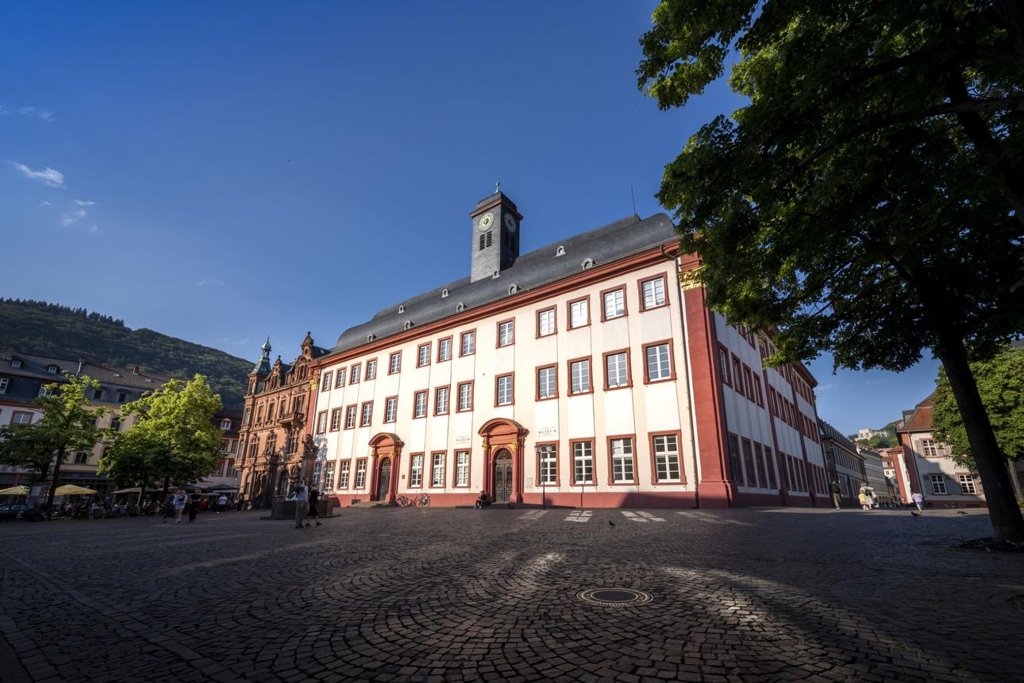
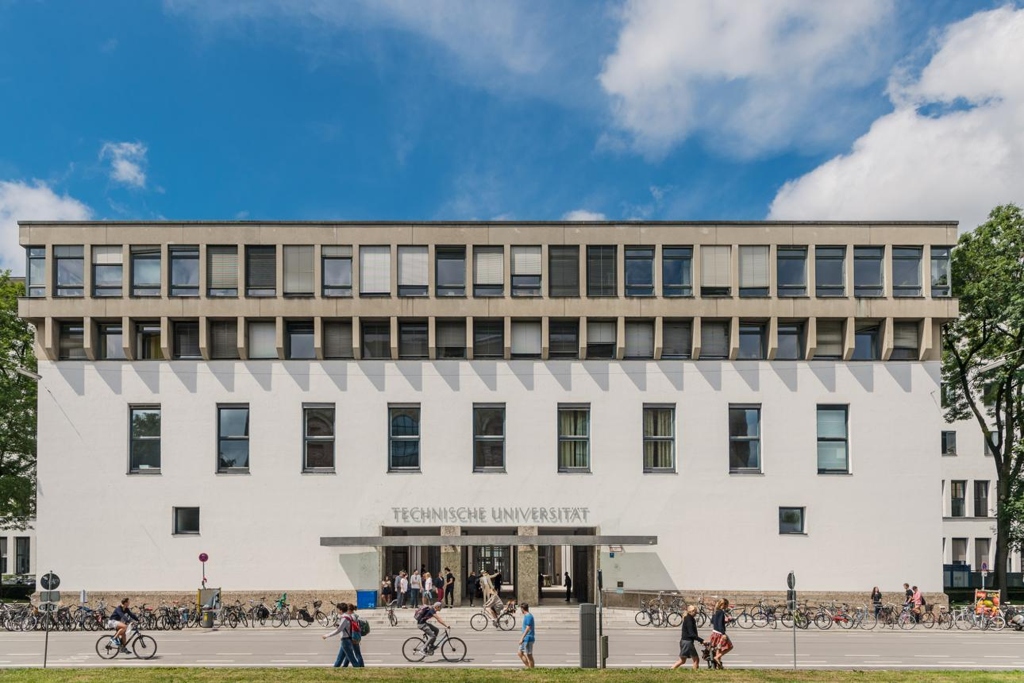
Compare Technical University of Munich (TUM), RWTH Aachen, Karlsruhe Institute of Technology (KIT), Heidelberg, and LMU Munich across engineering, CS, and natural sciences.
Industrial Careers, Graduate Salaries & EU Blue Card Pathways
Explore starting salaries (€54,000–€68,000), Werkstudent corporate internships, the 18-month job-seeker visa, and fast-track 21-month Permanent Residency.
Fast-Track Your College & Career Strategy
Get immediate, personalized AI insights tailored to your grade, strengths, and dream universities — 100% free with instant reports.
Know Your Personality Type for Free
Take our 18-question AI psychometric test to uncover your cognitive archetype, hidden learning superpowers, and ideal university courses.
Personalized Career & University EduPath
Build a step-by-step Grade 8–12 admissions blueprint with AI-matched target universities, exam schedules, and extracurricular profiles.
1. Admission Criteria: HZB Recognition, APS & The Two Pathways
Under the Central Office for Foreign Education (anabin) framework administered by the Standing Conference of the Ministers of Education and Cultural Affairs (KMK), Indian 10+2 qualifications are evaluated according to specific pathways:
- **Pathway A: Studienkolleg + FSP (Standard Route):** Indian students completing Class 12 CBSE/ISC with 50%+ in core subjects enroll in a 1-year foundation course (Studienkolleg) followed by the assessment exam (Feststellungsprüfung). Specialized tracks include T-Kurs (technical/engineering), W-Kurs (economics/business), M-Kurs (medicine/life sciences), and G-Kurs (humanities).
- **Pathway B: Direct Bachelor Entry via JEE Advanced:** Indian students who qualify in the Joint Entrance Examination (JEE) Advanced are granted direct general university entrance qualification (HZB) to German technical and science bachelor's programs, entirely bypassing the Studienkolleg year.
- **Mandatory APS Certificate:** Every Indian student applying to German universities or for a German national student visa must obtain verification from the Academic Evaluation Centre (APS India) in New Delhi. APS verification takes 6 to 12 weeks and validates all academic marksheets directly with Indian educational boards.
- **Language Prerequisites:** While an increasing number of English-taught bachelor programs exist (requiring IELTS 6.5–7.0), the vast majority of public undergraduate engineering courses are taught in German, requiring TestDaF (minimum 4x4) or Goethe-Zertifikat C1.
2. Application Timelines: Winter Semester 2027, uni-assist & Blocked Accounts
In Germany, the primary intake for undergraduate bachelor's degrees is the **Winter Semester** (commencing in October). While select universities offer a Summer Semester (commencing in April), almost all English-taught and competitive engineering bachelor programs only admit new cohorts in the Winter:
| Milestone Window | Application Process Stage | Applicant Focus | Key Deliverables |
|---|---|---|---|
| November 2026 – January 2027 | APS Application & Document Dispatch | Class 12 Indian Applicants | APS fee payment, notarized transcripts submission to New Delhi |
| March – May 2027 | uni-assist VPD Registration | Direct & Studienkolleg Applicants | Course selection, transcript translations, preliminary review (VPD) |
| May 1, 2027 | University Application Portals Open | TUM, RWTH Aachen, KIT | Direct portal account setup, essay & CV uploads |
| July 15, 2027 | Strict Application Deadline (Ausschlussfrist) | All German Public Universities | Final submission cutoff; applications closed unconditionally at midnight |
| August 2027 | Admission Offers & Studienkolleg Exams | Admitted Candidates | Aufnahmeprüfung entrance tests, offer acceptances |
| August – September 2027 | German Student Visa (VFS Appointment) | All International Students | Blocked Account (€11,904 confirmation), statutory health insurance (TK/AOK) |
3. Strategic Profile Building: TestAS, Technical Portfolios & Aptitude Assessments
Because German public universities charge negligible tuition, competition for English-taught bachelor programs and top engineering faculties has surged exponentially. Universities like TUM employ multi-stage Aptitude Assessment Procedures (Eignungsfeststellungsverfahren - EFV) that evaluate quantitative mastery, motivation, and practical engagement:
- **TestAS (Test for Academic Studies):** A standardized cognitive aptitude exam measuring general reasoning and subject-specific modules (Engineering, Economics, or Mathematics/Computer Science). Scoring in the 90th percentile significantly enhances admission and scholarship probabilities.
- **Technical Engineering Repositories:** Hands-on hardware prototyping (Arduino/Raspberry Pi), competitive coding repositories, robotics club leadership, or CAD mechanical design portfolios.
- **Tabellarischer Lebenslauf:** German-standard chronological CV detailing academic credentials, software proficiencies, laboratory competencies, and voluntary commitments with absolute factual precision.
- **Motivationsschreiben (Statement of Purpose):** A concise, analytical essay detailing why the specific curriculum, departmental research institutes, and regional industrial partnerships match your career aspirations.
4. Top Universities: TU9 Alliance vs Universities of Applied Sciences (UAS)
German higher education is structured into two primary institutional types: **Research Universities (Universitäten / TU9)** focused on theoretical depth and fundamental scientific discovery, and **Universities of Applied Sciences (Fachhochschulen / HAW)** focused on practical industry application, hands-on laboratory training, and mandatory corporate internships:
| Institution | Institutional Type | Flagship Disciplines | Language Tracks | Annual Tuition Fees |
|---|---|---|---|---|
| Technical Univ of Munich (TUM) | TU9 Excellence Univ | Mechanical Eng, Computer Science, AI, Aerospace | German C1 / Select English BSc | €4,000 – €6,000 (Non-EU fee introduced) |
| RWTH Aachen University | TU9 Excellence Univ | Automotive, Electrical Eng, Chemical, Materials | German C1 / English Foundation | Zero tuition (€320/sem semester fee) |
| Karlsruhe Institute of Tech (KIT) | TU9 Excellence Univ | Robotics, Energy Science, Informatics, Physics | Carl Benz School (English) / German | €1,500/sem (Baden-Württemberg fee) |
| Heidelberg University | Excellence Univ (Comprehensive) | Molecular Biology, Physics, Medicine, Economics | German C1 / Select English tracks | €1,500/sem (Baden-Württemberg fee) |
| Munich Univ of Applied Sciences | Fachhochschule (HAW) | Automotive Eng, Mechatronics, Business Info | Applied Praxis (Bilingual/German) | Zero tuition (€150/sem semester fee) |
5. Industrial Careers, Salaries, Werkstudent Contracts & EU Blue Card
Germany faces a structural demographic shortfall of skilled STEM professionals, known locally as the **Fachkräftemangel**. This deficit translates into exceptional graduate employment opportunities and one of the world's most welcoming immigration frameworks for international STEM graduates:
- **Werkstudent (Working Student) Culture:** German university students work 20 hours per week in corporate engineering and tech roles at firms like Siemens, BMW, and SAP, earning €15 to €22 per hour while building corporate relationships prior to graduation.
- **Starting Graduate Salaries:** Engineering and computer science bachelor's graduates command starting salaries between €54,000 and €68,000 annually, with senior engineers exceeding €95,000.
- **18-Month Job-Seeker Visa:** Following graduation, international alumni receive an 18-month residence permit allowing full-time, unrestricted employment while seeking a qualifying role.
- **EU Blue Card & Fast-Track PR:** Graduates who secure a qualifying role earning above the statutory threshold transition immediately to an EU Blue Card, becoming eligible for German Permanent Residency (Niederlassungserlaubnis) after just 21 months of employment (with B1 German).
Cost of Attendance and Living Expenses for Indian Students
The greatest financial advantage of studying in Germany is the virtual absence of tuition fees at public universities in most federal states (with the exception of Baden-Württemberg, which charges €1,500 per semester, and TUM, which introduced modest non-EU fees). Students pay only a nominal semester contribution (Semesterbeitrag) of €150 to €350 every six months, which typically includes a regional public transit pass (Semesterticket). Living expenses—comprising accommodation (Studentenwerk dormitories or private WGs), statutory health insurance (TK/AOK), food, and personal expenses—average €850 to €1,100 per month, satisfying the official blocked account requirement of €11,904 per year.
Strategic Student Profile Building with EduQuest
EduQuest’s European Admissions Directorate provides comprehensive, specialized mentorship for Indian students aiming for top German technical institutions and scholarships:
APS Document Audit & Submission Management
We review Class 10/11/12 marksheets and manage end-to-end APS verification filing to guarantee certificate issuance well before application deadlines.
HZB Pathway Strategic Selection
We analyze student strengths to recommend whether the Studienkolleg T-Kurs, direct JEE Advanced route, or English-taught bachelor pathway optimizes admission chances.
TestAS Preparation & Quantitative Training
We provide targeted training modules for the TestAS core cognitive exam and Engineering/Informatics subject tests to secure top percentile scores.
German-Standard CV & Motivationsschreiben Engineering
We structure European Tabellarischer Lebenslauf resumes and intellectually rigorous motivation essays tailored to TU9 faculty expectations.
Blocked Account & VFS Visa Guidance
Our team assists with blocked account setup, statutory health insurance selection, and mock German consulate visa interview preparation.
Core Long-Tail Keyword Framework for Germany Undergraduate Admissions
For Indian students researching German undergraduate pathways, search queries revolve around entrance qualifications, APS logistics, and TU9 engineering opportunities. EduQuest has structured these long-tail queries to help applicants plan effectively:
| Keyword Category | Strategic Long-Tail Keyword Query | Admissions Solution & Benchmark (Germany) |
|---|---|---|
| Eligibility | Germany university eligibility for Indian students after Class 12 | Completion of Class 12 CBSE/ISC plus either a 1-year Studienkolleg foundation or direct qualification via JEE Advanced. |
| Academic Grades | minimum percentage required for undergraduate admission in Germany | Minimum 50% in Class 12 for Studienkolleg; 80%–90%+ in CBSE/ISC PCM for competitive English and German-taught TU9 faculties. |
| English Proficiency | IELTS requirements for undergraduate admission in Germany | IELTS 6.5 (minimum 6.0 in each section) or TOEFL 88+ for English-taught bachelors; German C1 (TestDaF 4x4) for German tracks. |
| Testing | SAT requirements for universities in Germany | SAT is not used for German public universities; TestAS (Test for Academic Studies) is the preferred standardized aptitude benchmark. |
| Profile Building | how to build a strong student profile for Germany university admissions | Practical engineering hardware projects (Arduino/Robotics), GitHub software repositories, high TestAS percentiles, and German language certificates. |
| Activities | best extracurricular activities for undergraduate admission in Germany | Robotics competitions, science fair exhibitions, coding hackathons, and technical apprenticeships. |
| Academic Enrichment | research projects and supercurricular activities for Mechanical Engineering applicants | CAD mechanical modeling, 3D printing prototyping, and mathematical physics research endorsed by mentors. |
| Application Calendar | Germany university application opening dates and deadlines 2027 | Winter Semester applications open May 1, 2027; strict national cutoff July 15, 2027; APS verification must begin by November 2026. |
| University Selection | best universities in Germany for Mechanical Engineering after 12th | Technical University of Munich (TUM), RWTH Aachen, and Karlsruhe Institute of Technology (KIT). |
| Careers | career opportunities after Mechanical Engineering degree in Germany | Automotive, robotics, and industrial automation engineering roles at BMW, Siemens, and Bosch with starting packages of €58k–€68k. |
| Scholarships | undergraduate scholarships in Germany for Indian students 2027 | Tuition is already zero at public universities; living expense grants available via DAAD, Deutschlandstipendium (€300/month), and Heinrich Böll Foundation. |
| Consulting | undergraduate admission consultants for Germany universities | EduQuest guides Indian students through end-to-end APS filing, uni-assist VPD applications, TestAS coaching, and blocked account setup. |
Can Indian CBSE and ISC students go to German universities directly without Studienkolleg?
Direct entry without Studienkolleg is possible if an Indian student has qualified in the JEE Advanced (IIT entrance exam), or if they complete one full year of an accredited bachelor's degree at a recognized Indian university with strong marks.
What is the mandatory APS certificate and why is it required?
The APS (Akademische Prüfstelle) certificate is an official verification document issued by the German Embassy in New Delhi. It verifies the authenticity of Indian school and university transcripts and is mandatory for applying to German universities via uni-assist and securing a German student visa.
Are there English-taught undergraduate bachelor's degrees in Germany?
Yes. While the majority of public university bachelor's programs are in German, there are dozens of world-class English-taught bachelor programs in fields like Management & Technology (TUM), Mechanical Engineering (Carl Benz School / KIT), and Applied Computer Science across leading institutions.
How much money is required in the German blocked account (Sperrkonto)?
For 2026/2027 admissions, international students must deposit approximately €11,904 into an approved blocked account (e.g., Expatrio, Coracle, Fintiba). This money is released to the student in equal monthly installments (€992/month) to cover living expenses in Germany.
Can international graduates get permanent residency in Germany after graduation?
Yes. Under Germany's revised Skilled Immigration Act, international graduates who work in a qualified STEM or skilled role and hold an EU Blue Card can apply for German Permanent Residency (Niederlassungserlaubnis) after just 21 months of employment (if they demonstrate B1 German) or 27 months (with A1 German).
Download the Complete Study in Germany Master Guide (PDF)
Get our 50-page master guide detailing HZB eligibility tables, APS certificate step-by-step checklists, TestAS sample modules, and EU Blue Card PR regulations.