

Germany Undergraduate Admissions Intelligence Hub (2027 Entry)
Eligibility Evaluation
1-on-1 HZB Assessment
Evaluate your Class 10/11/12 marksheets, predict your Anabin recognition status, and determine whether you qualify for direct admission, JEE Advanced route, or Studienkolleg.
Check Admission OddsAI Strategy Diagnostic
EduPath Profiler
Calculate your competitive admission index for TUM, RWTH Aachen, KIT, Heidelberg, and LMU based on German grade conversions (Bavarian Formula).
Launch EduPath ProfilerOfficial Admissions Dossier
Download Free PDF Guide
Get the official 48-page master guide containing Anabin conversion tables, APS checklist, Studienkolleg entrance syllabus, and blocked account protocols.
1. Executive Summary: The German Higher Education Paradigm for Indian High School Leavers
Germany has cemented its status as the world's premier destination for engineering, technology, and applied scientific research. With virtually zero tuition fees at most public universities, state-of-the-art laboratory infrastructure, and Europe's most powerful export-driven economy, it attracts thousands of ambitious Indian high school graduates every year. However, navigating the admissions maze into elite institutions such as the Technical University of Munich (TUM), RWTH Aachen University, Karlsruhe Institute of Technology (KIT), Heidelberg University, and Ludwig Maximilian University of Munich (LMU) requires uncompromising precision and strategic foresight.
Unlike Anglo-Saxon study destinations like the US, UK, Canada, or Australia, German university admissions are rooted strictly in statutory qualification equivalence, academic merit, and formal prerequisite compliance. The German higher education system does not practice holistic admissions where extracurricular activities can compensate for an academic deficiency. Either you meet the rigorous statutory entrance qualification, known as the Hochschulzugangsberechtigung (HZB), or your application is rejected before ever reaching a professor's desk.
This exhaustive guide breaks down every nuance of Germany undergraduate admission requirements for Indian students completing Class 12 in CBSE, CISCE (ISC), and recognized State Boards. It demystifies the fundamental 13-year Abitur gap, explains the mandatory APS India certificate, analyzes the three distinct pathway routes (Studienkolleg, JEE Advanced, and 1-Year Indian Degree transfer), clarifies German vs English language prerequisites, and provides exact departmental cutoffs across top German universities for 2027 entry.
2. The Abitur vs Indian 10+2: Understanding the Fundamental 13-Year Schooling Gap
Fast-Track Your College & Career Strategy
Get immediate, personalized AI insights tailored to your grade, strengths, and dream universities — 100% free with instant reports.
Know Your Personality Type for Free
Take our 18-question AI psychometric test to uncover your cognitive archetype, hidden learning superpowers, and ideal university courses.
Personalized Career & University EduPath
Build a step-by-step Grade 8–12 admissions blueprint with AI-matched target universities, exam schedules, and extracurricular profiles.
To understand why Indian students face unique entrance requirements in Germany, one must first understand the German secondary school diploma, the Abitur. In Germany, university-bound students attend Gymnasium for 12 or 13 years (traditionally 13 years under G9, and 12 years under accelerated G8 curricula). The Abitur is not merely a high school completion certificate; it is a rigorous, specialized academic qualification encompassing university-preparatory mathematics, natural sciences, foreign languages, and humanities.
In India, the standard schooling structure consists of 12 years (10+2 system under CBSE, ISC, or State Education Boards). Under the evaluation framework established by the Standing Conference of the Ministers of Education and Cultural Affairs of the Länder in the Federal Republic of Germany (Kultusministerkonferenz or KMK), an Indian 12-year secondary school leaving certificate is generally evaluated as equivalent to 12 years of German schooling, but lacking the 13th year of specialized Gymnasium preparation required for direct general university admission (Allgemeine Hochschulreife).
Consequently, an Indian student graduating from Class 12 cannot simply submit their CBSE marksheet and register for a standard bachelor's program at a public German research university. The student must bridge this one-year academic gap through recognized preparatory pathways approved by the German government.
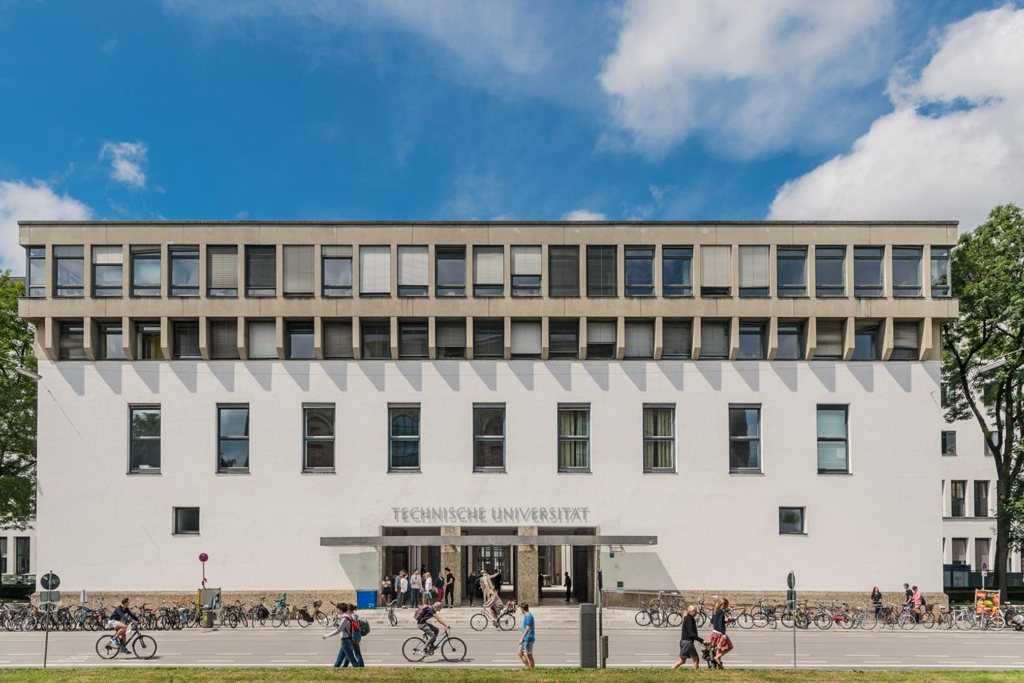
3. Hochschulzugangsberechtigung (HZB): Direct vs Subject-Restricted Eligibility
The foundational term in German admissions is Hochschulzugangsberechtigung (HZB), which translates directly to 'Higher Education Entrance Qualification'. It represents the legal right to enroll in a German university. The KMK classifies HZB into distinct categories that dictate what and where an applicant can study:
1. Allgemeine HZB (General Higher Education Entrance Qualification): Grants unconditional eligibility to study any academic discipline at any German university (Universitäten and Fachhochschulen). Domestic Abitur holders and international students with full 13-year equivalent diplomas receive this status.
2. Fachgebundene HZB (Subject-Restricted Entrance Qualification): Grants the legal right to study only specific disciplines related to the applicant's prior secondary school coursework or preparatory foundation. Indian students entering through Studienkolleg or JEE Advanced receive a Fachgebundene HZB. For example, completing a technical foundation (T-Kurs) grants eligibility for STEM, mathematics, and engineering degrees, but does not allow enrollment in medicine, law, or humanities.
3. Direct HZB (Direkter Hochschulzugang) vs Indirect HZB (Indirekter Hochschulzugang): Direct HZB allows immediate matriculation into the first semester of a German bachelor's degree. Indirect HZB requires the completion of a one-year preparatory course (Studienkolleg) and passing the university entrance assessment exam (Feststellungsprüfung) before bachelor's enrollment.
4. Central Office for Foreign Education (ZAB) & The Anabin Database Demystified
How do German university admissions officers evaluate an Indian Class 12 certificate? They consult the Anabin database, administered by the Zentralstelle für ausländisches Bildungswesen (ZAB - Central Office for Foreign Education). Anabin is the official federal documentation repository that catalogs international education systems, school leaving certificates, and higher education institutions worldwide.
On Anabin, Indian secondary school boards (such as CBSE - Central Board of Secondary Education, CISCE - Council for the Indian School Certificate Examinations, and various State Boards of Intermediate / Higher Secondary Education) are categorized under specific evaluation agreements. To qualify as an eligible basis for higher education in Germany, an Indian Class 12 certificate must satisfy strict criteria: the student must have pursued a 5-subject academic stream, completed standard internal and external examinations, and secured passing grades without non-academic vocational padding.
Furthermore, Anabin categorizes Indian universities into three institutional statuses: H+ (the institution is recognized as a full university in Germany), H- (the institution is not recognized), and H+/- (the institution's status is ambiguous or specific programs require individual verification). This institutional status becomes critical if an Indian student attempts the 1-year university transfer route.
5. Mandatory APS Certificate (Akademische Prüfstelle India): The Embassy Verification Gateway
Since November 1, 2022, the Embassy of the Federal Republic of Germany in New Delhi has mandated that all Indian applicants seeking higher education in Germany must obtain an APS Certificate (issued by the Akademische Prüfstelle India) before submitting applications to German universities or applying for a German student visa.
The APS certificate is a forensic authenticity verification of an applicant's Indian educational credentials. The APS verification team directly verifies Class 10 and Class 12 marksheets with the issuing school boards (CBSE, ICSE/ISC, State Boards), confirms school accreditation, and validates transcript integrity. Without a valid digital APS certificate, uni-assist will not process your application dossier, German universities cannot legally issue matriculation documents, and the VFS German Visa Application Centre will immediately refuse to accept your student visa application.
The APS application fee is ₹18,000 (standard verification category). Because processing takes between 4 to 8 weeks—and can extend to 12 weeks during peak seasonal surges in May, June, and July—Indian students must initiate their APS verification as early as October or November of their Class 12 academic year, utilizing predicted transcripts or final marksheets as soon as available.
6. Route A: The Studienkolleg Preparatory Route (1-Year Foundation + FSP)
For over 80% of Indian high school leavers from CBSE, ISC, and State Boards who do not qualify for direct entrance routes, the primary, time-tested gateway into German universities is the Studienkolleg (Preparatory College). A Studienkolleg is a specialized one-year public or state-recognized foundation institute affiliated with German universities.
The Studienkolleg curriculum bridges the 13th-year gap by teaching university-level mathematics, physics, chemistry, economics, and academic German. It spans two academic semesters (10 months) and concludes with the Feststellungsprüfung (FSP - Assessment Test). Passing the FSP formally confers the Fachgebundene Hochschulzugangsberechtigung, qualifying the student to enter bachelor's degree programs across Germany in the field corresponding to their course track.
Crucially, public Studienkollegs in Germany charge zero tuition fees (students pay only the nominal semester administrative fee of €150 – €350, which includes public transit tickets). However, admission to public Studienkollegs is fiercely competitive and requires passing an entrance exam known as the Aufnahmeprüfung.
7. Studienkolleg Course Specializations: T-Kurs, W-Kurs, M-Kurs, and G-Kurs
Studienkolleg programs are divided into five specialized academic tracks (Kurse) designed to prepare students for specific university degree disciplines:
| Course Track | Specialization Field | Core Subjects Studied | Qualifying Bachelor's Degrees |
|---|---|---|---|
| T-Kurs | Technik / STEM | Mathematics, Physics, Chemistry, German, Informatics | Mechanical Engineering, Computer Science, Electrical Engineering, Civil, Physics, Mathematics |
| W-Kurs | Wirtschaft / Business | Economics, Business Admin, Mathematics, English, German, Social Studies | Business Administration (BWL), Economics (VWL), Business Informatics, Finance, Management |
| M-Kurs | Medizin / Life Sciences | Biology, Chemistry, Physics, Mathematics, German | Human Medicine, Dentistry, Pharmacy, Veterinary Medicine, Molecular Biotechnology, Biochemistry |
| G-Kurs | Geisteswissenschaften / Humanities | German Literature, History, Philosophy, Social Science, Latin/English | History, Philosophy, German Studies, Political Science, Cultural Studies, International Relations |
| S-Kurs | Sprachen / Languages | German, Second Foreign Language, Literature, History | Linguistics, Translation, Modern Languages, Cultural Area Studies |
An Indian student with a Class 12 Science (PCM) background aiming for Computer Science or Mechanical Engineering at TUM or RWTH Aachen must enroll in a T-Kurs. Once you graduate from a T-Kurs and pass the FSP, your qualification is legally restricted to technical and mathematical disciplines; you cannot switch to a medical or humanities degree.
8. The Aufnahmeprüfung: Clearing the Highly Competitive Studienkolleg Entrance Exam
Securing a seat in a tuition-free public Studienkolleg in Germany requires passing the Aufnahmeprüfung (Entrance Examination). Because public Studienkollegs receive 5 to 10 applications for every available seat, admission is strictly merit-ranked based on this exam.
The Aufnahmeprüfung consists of two core components: German Language (Deutsche Sprachprüfung) and Mathematics (Mathematikprüfung for T-Kurs and W-Kurs). The German section evaluates grammar, text comprehension, and C-Test cloze deletion passages at the solid B1 to B2 level. The mathematics section tests algebra, functions, trigonometry, and basic differential calculus, administered entirely in German.
The Aufnahmeprüfung is administered in-person on campus in Germany (usually in January/February for Summer semester and July/August for Winter semester). Indian applicants must secure an Aufnahmeprüfung invitation letter from the university, apply for a Student Applicant Visa (Visum zur Studienbewerbung), travel to Germany, and sit for the exam alongside international peers.
9. Route B: Direct Admission via JEE Advanced (The Elite STEM Shortcut)
For Indian students who qualify in India's most demanding engineering entrance examination, the Joint Entrance Examination (JEE) Advanced, the KMK provides a direct, highly coveted shortcut that completely bypasses the need for Studienkolleg!
Under the KMK recognition resolution, an Indian student who has completed 12 years of formal schooling (CBSE, ISC, or State Board) AND has secured a verifiable qualifying score/rank in the JEE Advanced is granted **Direct Subject-Restricted Admission (Direkter Fachgebundener Hochschulzugang)** into German universities for undergraduate courses in mathematical, natural science, and engineering disciplines.
Critical caveats apply to this route: First, JEE Main alone does NOT qualify; the student must possess a valid JEE Advanced rank card. Second, the qualification must correspond to STEM disciplines (you cannot use JEE Advanced to enter medicine or economics). Third, while JEE Advanced satisfies the academic eligibility (HZB) requirement, it does NOT waive language requirements. If the chosen degree program at RWTH Aachen or KIT is taught in German, the student must still present C1 German language proficiency (TestDaF 4x4 or DSH-2).
10. Route C: The 1-Year Indian Higher Education Route (60 ECTS Transfer)
The third recognized pathway to direct undergraduate admission in Germany is completing one full academic year of higher education at an accredited Indian university. Under the Anabin guidelines, if an Indian student successfully completes the first year (two full semesters or a minimum of 60 ECTS equivalent credits) of a recognized bachelor's degree in India, they gain direct subject-restricted admission to the first year of a German bachelor's degree in the same discipline.
To qualify under this route: The Indian university where you completed your first year must hold an **H+ status** on the Anabin database (e.g., IITs, NITs, Central Universities, top state universities, and premier private universities like BITS Pilani). The coursework must be full-time, campus-based (distance education is not accepted), and your official marksheets must be verified through the APS India process.
This pathway is highly effective for students who missed the JEE Advanced cutoff or wish to achieve German language proficiency (B1 to C1) while studying their first year of B.Tech or B.Sc in India, enabling a seamless direct transfer into German public universities without spending a year at a Studienkolleg.
11. State Board vs CBSE / ISC Qualifications: Grade Conversion & Recognition Discrepancies
While CBSE (Central Board) and CISCE (ISC) are universally recognized across all German federal states, students graduating from Indian State Boards (such as Maharashtra State Board, Karnataka Pre-University Board, Tamil Nadu State Board, Telangana State Board, and Andhra Pradesh Board of Intermediate Education) must exercise caution regarding subject selection and transcript structure.
German evaluation bodies require that the Class 12 certificate reflects five distinct, independent academic subjects. Vocational subjects, environmental studies, physical education, and work experience are strictly eliminated from evaluation calculations. For State Board applicants, admissions offices recalculate GPA based only on qualifying core subjects (e.g., Physics, Chemistry, Mathematics, English, and a second science/humanities elective).
German universities convert Indian percentage marks to the German 1-to-5 grading scale (where 1.0 is 'Very Good / Outstanding' and 4.0 is the minimum pass mark) using the **Modified Bavarian Formula (Modifizierte Bayerische Formel)**:
German Grade = 1 + 3 * [(Nmax - Nd) / (Nmax - Nmin)], where Nmax is the maximum attainable score (typically 100%), Nmin is the minimum passing score (typically 33% or 40%), and Nd is the applicant's achieved score. An Indian score of 95% converts to a stellar German grade of ~1.2, unlocking admission to highly selective Numerus Clausus programs.
12. Minimum Board Percentages vs Competitive Selection Cutoffs
A fundamental source of confusion for Indian parents and applicants is the sharp divide between statutory minimum eligibility and competitive selection cutoffs:
Statutory Minimum: German state regulations dictate that an Indian student must pass Class 12 with at least 50% overall to be legally eligible to sit for the Studienkolleg Aufnahmeprüfung. However, holding a 55% or 60% merely ensures that your application is not summarily discarded by uni-assist.
Competitive Reality: At prestigious technical universities such as TUM, RWTH Aachen, and KIT, the pool of international applicants is exceptionally talented. Admitted Indian students across core engineering and computer science programs consistently possess Class 12 marks ranging between **85% and 95%+ in CBSE/ISC**, with individual scores in Mathematics and Physics exceeding 90%.
13. Mathematics Prerequisites: Core Math vs Applied Math & Calculus Rigor
In German technical higher education, Mathematics is the universal foundation. German university engineering faculties assume that matriculating students possess mastery over differential and integral calculus, complex numbers, linear algebra, vector spaces, and probability modeling.
For CBSE students, **Standard / Core Mathematics (Subject Code 041)** is strictly mandatory for any STEM, Computer Science, or Quantitative Economics program. The CBSE 'Applied Mathematics' curriculum is scrutinized with skepticism by German faculty evaluation committees and may be deemed deficient for Level 8 equivalent engineering degrees at TU9 institutions. Basic Mathematics from Class 10 is completely invalid as a prerequisite for higher secondary science tracks.
14. Natural Science Gatekeepers: Physics, Chemistry & Biology Benchmarks
Course-specific prerequisites extend beyond general mathematics to individual laboratory science subjects:
Physics: Mandatory for all engineering tracks (Mechanical, Electrical, Aerospace, Civil) and Physical Sciences. Applicants must demonstrate high performance in theoretical mechanics, thermodynamics, and electrodynamics.
Chemistry: Required for Chemical Engineering, Materials Science, Molecular Biotechnology, and Environmental Engineering. For Medicine and Pharmacy, high scores in organic chemistry are non-negotiable.
Biology: Essential for M-Kurs (Medicine, Dentistry, Veterinary Medicine) and Biochemistry. Without formal Class 11 and Class 12 Biology transcripts, admission to medical preparatory tracks is legally impossible.
15. German vs English-Taught Bachelor's Degrees: A High-Stakes Reality Check
Herein lies the single most critical differentiator in German undergraduate admissions: While Germany offers over 1,500 master's degree programs taught entirely in English, **the vast majority (over 90%) of public university bachelor's degree programs are taught exclusively in German**.
At premier public institutions like TUM, RWTH Aachen, Heidelberg, and LMU, standard undergraduate programs in Mechanical Engineering, Electrical Engineering, Computer Science, and Medicine require full fluency in academic German. While select English-taught bachelor's programs do exist (such as TUM Campus Heilbronn's BSc in Management & Technology, KIT's Carl Benz School of Engineering, and private universities like Constructor University Bremen), their numbers are strictly limited and competition is global.
16. Why IELTS Alone Does NOT Make an Indian Student Eligible for a German Degree
A pervasive misconception promoted by misinformed educational consultants in India is that an outstanding IELTS or TOEFL score qualifies an Indian student for undergraduate study in Germany. This is factually incorrect and leads to devastating rejections.
Critical SEO & Admissions Truth: **Do not imply that IELTS alone makes an Indian student eligible for a German bachelor's degree. Academic recognition (HZB) and the language of instruction are completely separate and equally decisive.** Profile-building activities can strengthen relevant applications, but they do not replace formal statutory eligibility requirements.
Even if you score a perfect 9.0 in IELTS Academic, that score satisfies ONLY the English language proficiency requirement for programs where English is the official medium of instruction. It does not confer academic qualification equivalence (HZB), it does not replace the Studienkolleg or JEE Advanced prerequisite, and it does not grant entry to German-taught programs where formal German language certification is legally required.
17. Recognized German Language Certifications: Goethe-Zertifikat, TestDaF, DSH, and telc
For admission into German-taught bachelor's programs, German universities require verifiable proof of German proficiency at the C1 level of the Common European Framework of Reference for Languages (CEFR). The only recognized certifications include:
| Test Name | Full Title | Administering Body | Minimum Score Required for University Entry |
|---|---|---|---|
| TestDaF | Test Deutsch als Fremdsprache | TestDaF Institute (worldwide) | TDN 4 in all 4 examination sections (TDN 4x4) or total score of 16+ |
| DSH | Deutsche Sprachprüfung für den Hochschulzugang | German Universities directly | DSH-2 (minimum 67% overall) or DSH-3 (outstanding) |
| Goethe-Zertifikat | Goethe-Institut Examinations | Goethe-Institut / Max Mueller Bhavan | Goethe-Zertifikat C1 or C2 (B2 accepted for Studienkolleg entrance) |
| telc Deutsch C1 Hochschule | The European Language Certificates | telc GmbH | Passing grade at C1 Hochschule level (specifically designed for university study) |
| DSD II | Deutsches Sprachdiplom der KMK | KMK / German schools abroad | Level C1 in all sub-competencies |
For Indian students aiming to enter a public Studienkolleg, a **Goethe-Zertifikat B1 or B2** is the prerequisite simply to receive an invitation to the Aufnahmeprüfung entrance exam.
18. English Language Testing for English-Taught Programs: IELTS & TOEFL Benchmarks
When applying to the select English-taught undergraduate degree tracks available in Germany (such as Information Engineering at TUM Campus Heilbronn, or International Management), applicants must present standardized English test scores. German universities generally do not waive English test requirements for Indian CBSE/ISC students unless English is officially recognized as the sole native language of the country of origin.
IELTS Academic: A minimum overall band score of **6.5, with no individual sub-band score (Listening, Reading, Writing, Speaking) below 6.0**. Elite programs at TUM recommend an overall score of 7.0 or higher.
TOEFL iBT: A minimum total score of **88 to 100 points**, with minimum subscores of 20+ in each section. Home Edition tests are accepted by some faculties but rejected by others; taking the in-center exam is strongly advised.
19. TestAS (Test for Academic Studies): Structure, Scoring & University Weightage
The TestAS (Test für Ausländische Studierende) is a standardized cognitive aptitude assessment developed specifically for international applicants from non-EU countries seeking undergraduate admission to German universities. Administered by ITB Consulting and the TestDaF Institute, it evaluates intellectual capabilities essential for academic success.
TestAS can be taken in either English or German and is available in paper-based and digital formats. It consists of two mandatory parts: 1) The **Core Test (Kerntest)**, evaluating quantitative problem solving, relationship recognition, and numerical patterns; and 2) A **Subject-Specific Module**, chosen from Engineering Sciences, Mathematics/Computer Science/Natural Sciences, Economics, or Humanities/Social Sciences.
Scoring is normalized on a standard scale where 100 represents the average and values between 110 and 130 represent the top percentiles. Several elite universities (including RWTH Aachen, Cologne, and Frankfurt) use TestAS scores as a formal weighting criterion in their selection algorithms, and an exceptional TestAS score can dramatically boost admission odds for borderline GPA applicants.
20. Technical University of Munich (TUM): Undergraduate Eligibility & Aptitude Assessment (EFV)
The Technical University of Munich (TUM) ranks #28 in the QS World University Rankings and is widely considered Germany's top university. Admission to TUM undergraduate programs is governed by a merit-based selection process called the **Eignungsfeststellungsverfahren (EFV - Aptitude Assessment Scheme)**.
The EFV operates across two rigorous stages: In Stage 1, TUM's admissions committee evaluates the applicant's school leaving grade (converted via the Bavarian Formula), specific high school marks in Mathematics, Physics/Chemistry, and English/German, alongside a structured Statement of Purpose and CV. Points are calculated on a scale of 0 to 100. If an applicant scores above the upper threshold (typically 78+ points), they receive an immediate direct offer of admission.
If the score falls in the middle range (typically 55 to 77 points), the applicant is invited to Stage 2: a proctored 20-to-30 minute academic interview or written aptitude test conducted by TUM faculty members to evaluate subject mastery and intellectual maturity.
21. RWTH Aachen University: Core Engineering Benchmarks & Language Prerequisites
RWTH Aachen University is the undisputed industrial powerhouse of German engineering. Its faculties of Mechanical Engineering (Maschinenbau), Electrical Engineering (Elektrotechnik), and Computer Science (Informatik) are deeply integrated with global titans like BMW, Siemens, Bosch, and Porsche.
Admission Requirements: All bachelor's degrees at RWTH Aachen are taught strictly in German. Applicants must submit a recognized C1 certificate (TestDaF with at least 4x4 or DSH-2). While some undergraduate programs are non-restricted (Zulassungsfrei), highly sought-after degrees like Computer Science and Mechanical Engineering operate under Local NC (Örtliche Zulassungsbeschränkung) quotas, where international applicant pools face intense GPA ranking.
22. Karlsruhe Institute of Technology (KIT): Carl Benz School vs Public Engineering Faculties
Karlsruhe Institute of Technology (KIT), located in the high-tech Baden-Württemberg region, is both a TU9 technical university and a National Research Center of the Helmholtz Association. KIT offers two distinct undergraduate avenues for international engineering aspirants:
1. Public Engineering Faculties: Programs taught in German (Informatik, Maschinenbau, Elektrotechnik). Standard tuition-free public structure (with the Baden-Württemberg state fee of €1,500/semester for non-EU students). Requires C1 German proficiency and FSP or JEE Advanced qualification.
2. The Carl Benz School of Engineering: KIT's international engineering college offering a Bachelor of Science (BSc) in Mechanical Engineering taught entirely in English. The Carl Benz School charges private college fees (~€18,000/year inclusive of college mentoring and industry coaching) and conducts its own direct admissions evaluation based on high school Math and Physics, SAT/ACT (optional), and English proficiency.
23. Heidelberg University: Molecular Biosciences & Medicine Entry Hurdles
Founded in 1386, Heidelberg University is Germany's oldest university and a world leader in medicine, life sciences, and physics. Gaining undergraduate admission to Heidelberg is exceptionally challenging due to strict state-level quotas.
Medicine, Dentistry, and Pharmacy at Heidelberg are governed by the **National Numerus Clausus (Bundesweiter NC)** via the central Hochschulstart portal. A maximum of 5% of medical seats are reserved for non-EU international applicants, requiring a flawless converted German GPA of 1.0 (equivalent to 98%+ in Indian boards), C1/C2 German proficiency, and exceptional performance on the Test für Medizinische Studiengänge (TMS).
Undergraduate programs in Molecular Biotechnology and Physics are taught in German and enforce local NC selection procedures evaluating high school science trajectory and laboratory aptitude.
24. LMU Munich: Economics, Mathematics & Humanities Academic Criteria
Ludwig Maximilian University of Munich (LMU) is ranked among Europe's foremost comprehensive research universities. Located in central Munich, LMU boasts world-renowned faculties in Economics (Volkswirtschaftslehre - VWL), Business Administration (Betriebswirtschaftslehre - BWL), Law, and Physics.
Undergraduate programs at LMU are predominantly German-taught. Admission to Economics and Business Administration requires high mathematical aptitude, a converted German GPA of 1.5 or better, and clearance through LMU's institutional admissions portal following uni-assist preliminary documentation verification.
25. Uni-Assist vs Direct University Portals: When You Need a VPD
Applying to German universities involves navigating two distinct administrative pathways depending on institutional affiliation with **uni-assist e.V.** (the University Application Service for International Students):
1. Direct Application via Uni-Assist: You register on the MyAssist online portal, select your university and degree course, upload certified documents and APS certificate, and pay the evaluation fee (€75 for the first university, €30 for each additional university). Uni-assist evaluates your HZB eligibility and forwards your complete dossier to the university.
2. Vorprüfungsdokumentation (VPD - Preliminary Review Documentation): Premier institutions like TUM and LMU require applicants to submit their credentials to uni-assist *only* to obtain a VPD certificate. Uni-assist reviews your Indian transcripts and issues a formal VPD stating your converted German GPA and HZB status. You then take this VPD certificate and submit your actual application directly through the university's internal portal (e.g., TUMonline) before the institutional deadline.
26. Certified Document Dossier: Notarization, Translation & Verification Requirements
German admissions authorities demand uncompromising document precision. All uploaded and couriered documents must be officially certified copies (Amtlich beglaubigte Kopien) bearing the original seal and signature of a recognized authority (such as a Notary Public, the issuing school principal, or the German diplomatic mission).
Mandatory dossier components include: Class 10 Board Marksheet & Certificate, Class 12 Board Marksheet & Passing Certificate, Class 11 internal transcript, Digital APS Certificate, Language Proficiency Certificate (TestDaF/Goethe/IELTS), Tabellarischer Lebenslauf (Academic CV), Statement of Motivation (Motivationsschreiben), Passport copy, and passport biometric photographs.
27. Blocked Bank Account (Sperrkonto) & Proof of Financial Resources (€11,904)
To secure a German National Student Visa (Category D), international students must prove that they possess adequate financial resources to support their living expenses for the first academic year without relying on public funds (Finanzierungsnachweis).
The standard legal mechanism is opening a **German Blocked Bank Account (Sperrkonto)**. For 2026/2027 entry, the statutory blocked amount set by the Federal Foreign Office is **€11,904 per year** (equivalent to €992 per month). Upon arrival in Germany and opening a local checking account (Girokonto), the blocked account releases exactly €992 each month for living expenses, accommodation, and food. Approved digital providers include Fintiba, Expatrio, and Coracle.
28. Statutory Public Health Insurance (Gesetzliche Krankenversicherung): TK vs AOK
In Germany, health insurance is legally mandatory for all university students. Without proof of valid health insurance, a student cannot be matriculated into any German university. International students under the age of 30 are entitled to register with Germany's statutory public health insurance funds (Gesetzliche Krankenversicherung - GKV) at a discounted student rate of approximately **€120 to €130 per month**.
Leading public providers such as **Techniker Krankenkasse (TK)** and **AOK** provide comprehensive medical, dental, and hospitalization coverage across Germany. The health insurance provider electronically transmits an insurance confirmation (Meldegrund 10 - M10 report) directly to your university's registration office prior to enrollment.
29. German Student Visa (National Visa Category D): Processing Times & VFS Checklist
Once you receive an official admission letter (Zulassungsbescheid) or conditional Studienkolleg invitation, you must apply for a **National Visa Category D (Student Visa nach § 16b AufenthG)** through VFS Global centres in New Delhi, Mumbai, Bengaluru, Chennai, or Kolkata.
Visa processing takes between 4 to 8 weeks following biometric submission and document verification. Because student visa appointment slots fill up rapidly between June and August, applicants must register on the VFS German Embassy appointment waitlist as soon as their APS certificate is issued.
30. Common Disqualification Traps for Indian Class 12 Applicants
Over our years of admissions mentorship, EduQuest has identified seven critical traps that cause immediate rejection for Indian applicants:
1. Late APS Submission: Initiating APS verification in June after Class 12 board results, resulting in missing the July 15 university application deadline.
2. Incomplete Academic Subject Combinations: Substituting Core Mathematics with Applied Mathematics or physical education for technical degree applications.
3. Confusing IELTS with German Proficiency: Assuming an 8.0 in IELTS qualifies for German-taught programs at RWTH Aachen or TUM.
4. Missing the Uni-Assist 6-Week Lead Time: Requesting a VPD from uni-assist in early July, when processing requires a full 4 to 6 weeks.
5. Ineligible Indian University for Route C: Spending a year at an unaccredited Indian private university with H- or H+/- Anabin status.
6. Uncertified Photocopies: Submitting plain notarized photocopies without formal apostille or official school verification stamps.
7. Neglecting the Aufnahmeprüfung Prep: Arriving in Germany for the Studienkolleg entrance exam without rigorous preparation in academic German and calculus.
31. The 18-Month Strategic Preparation Timeline (Class 11 to Enrollment)
Achieving admission to an elite German university requires an 18-month structured execution roadmap:
| Timeline Window | Strategic Focus | Concrete Action Items & Deliverables |
|---|---|---|
| Grade 11: October – March | Language & Academic Stream | Enroll in Goethe-Institut German classes targeting B1 proficiency. Secure 85%+ in Class 11 core sciences and standard math. |
| Grade 12: April – September | Advanced Language & TestAS | Complete Goethe B1/B2 level. Prepare for TestAS examination. Choose target pathway (Studienkolleg vs JEE Advanced). |
| Grade 12: October – December | APS India Application | Register on APS India portal, pay fees, courier verified transcripts. Finalize target university and degree shortlists. |
| Grade 12: January – March | Receive APS & Sit for Boards | Receive digital APS certificate. Complete Class 12 Board examinations with 90%+ target in core subjects. Take TestAS. |
| Post-Boards: April – May | Uni-Assist VPD Lodgement | Submit predicted or final transcripts, APS certificate, and language tests to uni-assist. Request VPD certificates. |
| Deadline Window: June – July 15 | University Portal Applications | Submit direct applications via TUMonline, RWTH portal, and KIT portal before July 15 strictly. |
| Visa Phase: July – August | Blocked Account & Visa | Open Sperrkonto depositing €11,904. Submit National Student Visa application at VFS. Secure health insurance (TK). |
| Arrival: September – October | Relocation & Matriculation | Arrive in Germany, complete in-person enrollment, register address (Anmeldung) at Bürgeramt, begin orientation! |
32. Frequently Asked Questions (FAQ): German Undergraduate Admissions
Can an Indian student apply directly for a bachelor's degree in Germany right after Class 12?
Generally, no. Because the German Abitur requires 13 years of schooling while Indian high schools operate on a 12-year system, Indian students must first bridge the gap. You must either complete a 1-year Studienkolleg preparatory course and pass the Feststellungsprüfung (FSP), qualify in the JEE Advanced exam (for STEM subjects), or complete 1 full year of a recognized bachelor's degree at an H+ accredited university in India.
Does having a high IELTS score make me eligible for a German bachelor's degree?
No. IELTS proves English language proficiency only. It does not confer academic qualification recognition (HZB), and it does not make you eligible for programs taught in German (which represent over 90% of public university undergraduate courses). For German-taught degrees, recognized certifications like TestDaF (4x4), DSH-2, or Goethe C1 are mandatory.
What is the APS Certificate, and is it really mandatory for all Indian students?
Yes, the APS Certificate (issued by the Akademische Prüfstelle of the German Embassy in New Delhi) is strictly mandatory for every Indian applicant. German universities and the German Embassy will not process your application or student visa without a verified digital APS certificate.
How much does it cost to study an undergraduate degree at a German public university?
Tuition at public universities in 15 of Germany's 16 federal states is 100% free for international students. Students pay only a nominal semester contribution (Semesterbeitrag) of €150 to €350 per semester, which includes public transit access. In Baden-Württemberg (e.g., KIT, Heidelberg, Stuttgart), non-EU students pay €1,500 per semester. TUM also introduced international fees for select new students, while living expenses require a blocked account of €11,904 per year.
What are the major Studienkolleg tracks and which one should I choose?
The main tracks are: T-Kurs for engineering, mathematics, computer science, and technical sciences; W-Kurs for business administration, economics, and social sciences; M-Kurs for medicine, dentistry, biology, and pharmacy; and G-Kurs for humanities, arts, history, and German studies.
Can I work in Germany while studying my bachelor's degree?
Yes. International students from non-EU countries are legally permitted to work up to 140 full days or 280 half days per calendar year. Common student employment options include working as a student research assistant (HiWi) on campus or taking a working student (Werkstudent) position in industry earning €14 to €20+ per hour.
Download the Germany Undergraduate Admissions Master Guide (PDF)
Get our complete 48-page admissions handbook featuring Anabin conversion charts, APS application blueprints, Studienkolleg entrance exam syllabi, and Sperrkonto protocols.