
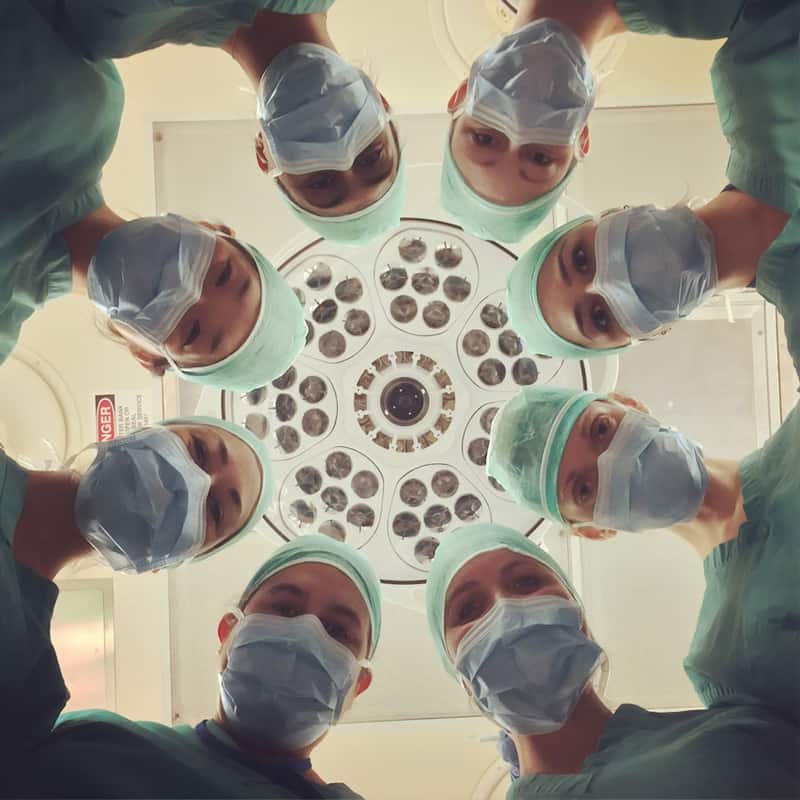
One of the most intimidating hurdles for early pre-medical students is breaking into a scientific research laboratory. Students often believe that professors only hire upperclassmen with extensive laboratory coursework or previous publications. In reality, principal investigators (PIs) look for curiosity, reliability, meticulous attention to detail, and a willingness to commit 10 to 15 hours per week over multiple semesters.
1. The 4-Stage Laboratory Acquisition Pipeline
| Pipeline Stage | Primary Objective | Tactical Actions | Timeline |
|---|---|---|---|
| Stage 1: Faculty Scouting | Identify 10–15 prospective laboratories | Search university department faculty pages; read recent PubMed papers (2024–2026) | Weeks 1–2 of semester |
| Stage 2: Targeted Outreach | Send concise, customized cold emails | Cite a specific paper; propose clear 10–12 weekly hours; attach CV and transcript | Weeks 3–4 |
| Stage 3: The Faculty Interview | Demonstrate preparation and coachability | Ask two thoughtful methodology questions; express willingness to start with dishwashing/media prep | Weeks 5–6 |
| Stage 4: Lab Onboarding | Become an indispensable team member | Complete institutional biosafety training; master pipetting; maintain pristine lab notebooks | Weeks 7–8 |
2. Anatomy of a High-Converting Cold Email
Faculty members receive dozens of generic copy-pasted emails every week stating: "Dear Professor, I love your research, please let me work in your lab." These go straight to the trash. A winning email is under 175 words, directly references the PI’s recent experimental paper, and clearly states your weekly availability.
The Hook & Specific Paper Citation
Mention the exact title and key finding of their latest publication. Explain why their specific approach to immunology, neuroscience, or oncology excites your scientific interest.
Concrete Time Commitment
Professors hate training students who disappear during midterms. Explicitly state: "I am available to commit 10–12 hours per week during the semester and full-time over the summer."
Professional Attachments
Always attach a one-page PDF CV highlighting any biology/chemistry coursework, GPA, and relevant laboratory skills (even basic micropipetting or sterile technique from introductory classes).
Fast-Track Your College & Career Strategy
Get immediate, personalized AI insights tailored to your grade, strengths, and dream universities — 100% free with instant reports.
Know Your Personality Type for Free
Take our 18-question AI psychometric test to uncover your cognitive archetype, hidden learning superpowers, and ideal university courses.
Personalized Career & University EduPath
Build a step-by-step Grade 8–12 admissions blueprint with AI-matched target universities, exam schedules, and extracurricular profiles.
Download Pre-Med Student Research Acquisition Toolkit & Cold-Email Vault
Get our battle-tested cold-email scripts, faculty interview checklists, and national summer fellowship databases (SURF, REU, NIH SIP).
Frequently Asked Questions (FAQ)
Can high school students do wet-lab research in university laboratories?
Yes. While certain universities impose age restrictions (usually 16+) due to hazardous chemicals or biosafety levels, many faculty welcome high school students for observational projects, bioinformatics, or structured summer youth research programs.
Should undergraduate pre-med research always be paid?
Most initial lab positions begin as volunteer roles or for academic course credit (e.g., Independent Study Bio 490). Once you prove your reliability over a semester or two, many PIs transition dedicated undergraduates to paid student hourly wages or sponsor them for university summer research grants.