
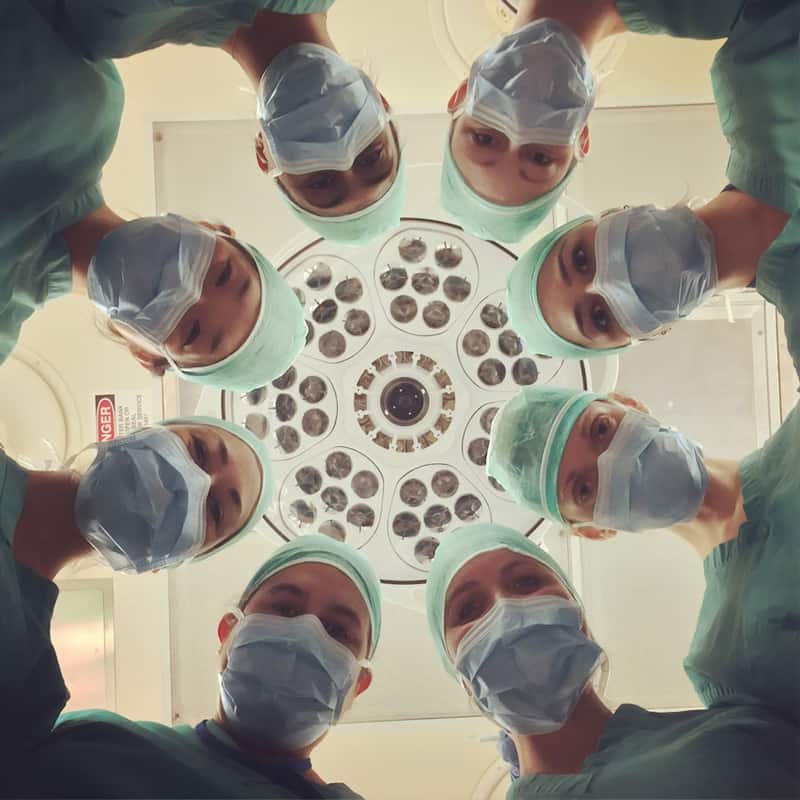
Unlike the traditional Indian medical education system—where students take NEET-UG immediately after Class 12 to enroll directly in a 5.5-year MBBS program—the American medical education system operates on a graduate-entry model. To become a licensed physician in the United States, you must first complete a 4-year undergraduate bachelor's degree (Pre-Med), sit for the MCAT, attend a 4-year allopathic (MD) or osteopathic (DO) medical school, and complete a 3-to-7-year residency.
For Indian high school students currently in Class 11 or Class 12 (CBSE, ISC, IB, or Cambridge A-Levels), starting your profile building early is the single most decisive factor. It positions you to secure admissions into elite US undergraduate pre-med institutions with merit scholarships, or even into ultra-selective direct BS/MD programs that guarantee a medical seat straight out of high school.
1. Curricular Strategy: CBSE, ISC, IB & AP Course Selection
US university admissions officers evaluate your academic rigor within the context of your school curriculum. Indian students aiming for top pre-med programs should optimize their high school profile as follows:
| Board / Curriculum | Recommended Subject Combinations | Strategic Add-on AP Exams | US Admissions Competitive Edge |
|---|---|---|---|
| CBSE / ISC Board | Physics, Chemistry, Biology, Mathematics (PCMB) + English | AP Biology, AP Chemistry, AP Calculus BC | Validates board grades against international US standard (scores of 5 earn university credits) |
| International Baccalaureate (IB) | HL Biology, HL Chemistry, HL/SL Math: Analysis & Approaches, SL Physics/Language | Optional (IB HLs already count for college credit) | Demonstrates exceptional critical writing depth via Extended Essay (EE) in Biology/Biochemistry |
| Cambridge A-Levels | Biology, Chemistry, Mathematics + Physics (3 to 4 A-Levels) | AP Psychology or AP Statistics (optional self-study) | Rigorous subject depth accepted by all premier US pre-med universities |
Fast-Track Your College & Career Strategy
Get immediate, personalized AI insights tailored to your grade, strengths, and dream universities — 100% free with instant reports.
Know Your Personality Type for Free
Take our 18-question AI psychometric test to uncover your cognitive archetype, hidden learning superpowers, and ideal university courses.
Personalized Career & University EduPath
Build a step-by-step Grade 8–12 admissions blueprint with AI-matched target universities, exam schedules, and extracurricular profiles.
2. Clinical & Hospital Exposure for High Schoolers in India
A common misconception is that Indian students cannot obtain meaningful clinical exposure before college. In reality, Indian multispecialty hospitals (such as Max Healthcare, Fortis, Apollo Hospitals, Medanta, and Tata Memorial) and non-profit diagnostic dispensaries offer remarkable opportunities for high school interns.
Hospital Observerships & Clinical Shadowing
Reach out to department heads in cardiology, pediatrics, or oncology for 2 to 3-week observational internships during summer and winter breaks.
Community Health Camps & Rural Volunteering
Participate actively in blood donation drives, pulse polio immunizations, or rural health screening camps organized by NGOs like the Red Cross or Rotary.
High School Scientific Research & Review Papers
Under the guidance of an Indian university professor or EduQuest research mentor, conduct a literature review on an emerging biomedical issue (e.g., antimicrobial resistance, CRISPR therapeutics, AI diagnostics).
Standardized Testing: Digital SAT Excellence
Aim for a Digital SAT score of 1520+ (with 780+ in Math). A top SAT score secures substantial undergraduate merit scholarships that dramatically offset the cost of pre-med studies.
3. Understanding the F-1 International Student Reality in US Med Schools
As an Indian citizen studying on an F-1 student visa, US medical school admissions is highly competitive. While over 150 MD schools operate in the US, approximately 48 to 50 accept international applicants (including Harvard, Johns Hopkins, Yale, Columbia, Case Western, Dartmouth, and Northwestern). Because state-funded public medical schools favor in-state taxpayers, international students must demonstrate extraordinary academic metrics and clinical distinction.
- Dropping Math to "Focus on NEET" If you want the option of US Pre-Med, dropping Math after Class 10 makes completing prerequisite College Physics and Biostatistics in the US significantly harder.
- Ignoring the 650-Word Common App Narrative Treating US college applications like Indian entrance forms. US admissions officers demand personal storytelling, intellectual curiosity, and community leadership.
- Applying Only to Top-10 Pre-Med Universities Pre-med weed-out curves at hyper-competitive universities can damage your GPA. Often, attending an honors college or prestigious liberal arts college yields higher GPAs and closer faculty relationships.
- Failing to Account for Financial Escrow Requirements Many US medical schools require international students to place 1 to 4 years of tuition and living expenses ($80,000 to $250,000+) in an escrow bank account upon acceptance.
Download US Medical School High School (Class 11 & 12) Prep Blueprint
Get our comprehensive guide for Indian students: subject combinations, AP course planning, hospital internship frameworks in India, and F-1 friendly medical school lists.
Frequently Asked Questions (FAQ)
Can Indian students get into direct BS/MD programs in the USA?
Yes, but options are limited. Most BS/MD programs are restricted to US citizens or permanent residents (green card holders). However, several prestigious programs—such as Case Western Reserve University (PPSP), Penn State / Jefferson, and Boston University—consider exceptional international applicants with SAT 1550+ and extensive clinical research.
Is it necessary to major in Biology during US pre-med?
No. US medical schools do not require any specific undergraduate major. You can major in Neuroscience, Chemistry, Computer Science, Economics, or even Philosophy, provided you complete the prerequisite pre-med courses (Biology, General Chemistry, Organic Chemistry, Biochemistry, Physics, Math/Stats, English).
Do clinical hours completed in India count on the AMCAS application?
Yes. AMCAS accepts verified clinical hours completed in India, and admissions committees value international clinical perspectives. However, it is strongly advised to supplement them with clinical hours inside the US healthcare system during your undergraduate degree.
Can Indian students get financial aid or scholarships for US medical schools?
Merit-based scholarships are available at the undergraduate pre-med stage. At the medical school level, most federal loans (FAFSA) are restricted to US citizens, but several top private medical schools (e.g., Columbia, NYU, Johns Hopkins, Harvard) offer need-based institutional aid or tuition-free programs regardless of citizenship.