
Australia Undergraduate Admissions Strategic Cluster Hub (2027)
ATAR & Board Audit
1-on-1 Cutoff Calculation
Convert your CBSE/ISC best 4 subjects into Australian ATAR equivalents for guaranteed entry into Melbourne, UNSW, and Sydney.
Calculate ATAR EquivalentDual Intake Tool
Feb vs July Planner
Synchronize your Class 12 board results release with Australian university offer issuance and Subclass 500 visa lodgment.
Build Intake TimelineFree Master Dossier
Download Master PDF
Get our 50-page Australia Undergraduate Admissions Master Guide featuring Go8 cutoffs, scholarship matrices, and work visa rules.
1. Executive Overview: The Australian Higher Education Powerhouse
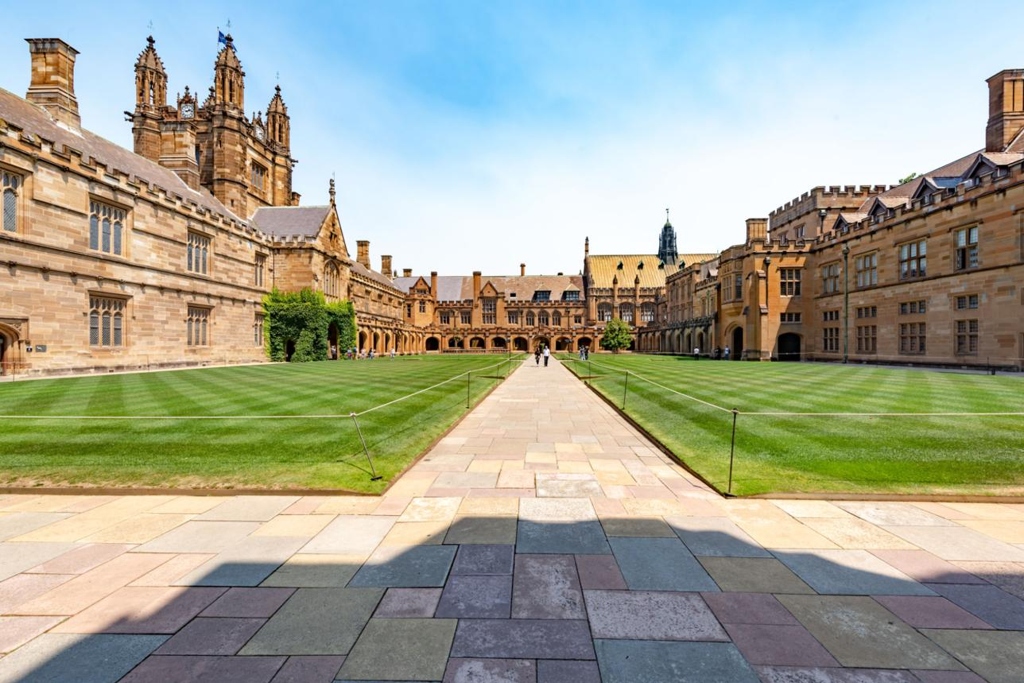
Australia has cemented its position as one of the world's most sought-after higher education destinations for Indian students. Home to the elite **Group of Eight (Go8)** research universities—with six institutions ranked among the **Global Top 50 of the QS World University Rankings** (University of Melbourne at #13, University of Sydney at #18, and UNSW Sydney at #19)—Australia provides an unmatched combination of academic pedigree, modern research infrastructure, and high quality of life.
What distinguishes the Australian admissions model is its **uncompromising academic transparency**. Unlike the subjective, holistic essay-driven admissions systems of the US, Australian universities evaluate international applicants on clear, publicly stated **Class 12 percentage benchmarks across the best four academic subjects**. If an Indian applicant secures the published percentage in CBSE or ISC boards and satisfies subject prerequisites (such as Core Mathematics or Physics), admission is virtually guaranteed, removing the anxiety of opaque rejection committees.
Furthermore, Australia's **Subclass 485 Temporary Graduate Visa** provides generous post-study work authorization, allowing international bachelor's degree alumni to live, work, and gain vital corporate experience in Australia, with extended post-study work incentives in regional growth centers like Adelaide, Perth, and Brisbane. This comprehensive master guide outlines the core pillars connecting Indian students to our dedicated child guides across every stage of the Australian admissions journey.
2. Admission Criteria: CBSE & ISC Cutoffs, Best 4 Subjects & Subject Prerequisites
Fast-Track Your College & Career Strategy
Get immediate, personalized AI insights tailored to your grade, strengths, and dream universities — 100% free with instant reports.
Know Your Personality Type for Free
Take our 18-question AI psychometric test to uncover your cognitive archetype, hidden learning superpowers, and ideal university courses.
Personalized Career & University EduPath
Build a step-by-step Grade 8–12 admissions blueprint with AI-matched target universities, exam schedules, and extracurricular profiles.
Australian universities calculate admission eligibility using a transparent formula based on the aggregate percentage of your **best four academic subjects** in Class 12 CBSE or ISC (excluding physical education, painting, and general studies). Benchmark requirements across the Group of Eight include:
| Group of Eight (Go8) Institution | QS Global Rank | Minimum CBSE / ISC Benchmark (Best 4) | Competitive Benchmark (Engineering / CS / Comm) | Key Prerequisite Requirements |
|---|---|---|---|---|
| **University of Melbourne** | **#13 Worldwide** | 82% – 85% aggregate | **90% – 95% aggregate** | The Melbourne Model: Bachelor of Science requires Class 12 Core Math; Commerce requires 85%+ in Math |
| **University of New South Wales (UNSW Sydney)** | **#19 Worldwide** | 83% – 86% aggregate | **88% – 94% aggregate** | Australia's top engineering faculty; Class 12 Mathematics and Physics compulsory for BEng |
| **University of Sydney** | **#18 Worldwide** | 80% – 84% aggregate | **88% – 93% aggregate** | Mathematics prerequisites apply to Economics, Business, Computing, and Engineering degrees |
| **Australian National University (ANU Canberra)** | **#30 Worldwide** | 80% – 83% aggregate | **86% – 92% aggregate** | Co-curricular and service involvement evaluated alongside academic grades |
| **Monash University (Melbourne)** | **#37 Worldwide** | 78% – 82% aggregate | **85% – 92% aggregate** | Direct entry to Double Degrees (e.g. Engineering + Commerce, Law + Arts) |
| **University of Queensland (UQ Brisbane)** | **#40 Worldwide** | 78% – 82% aggregate | **84% – 90% aggregate** | World leader in Biotechnology, Environmental Sciences, and Mining Engineering |
For complete subject conversion formulas, state board equivalencies, and English language waivers (CBSE English 75%+), consult our child guide: [Australia Undergraduate Admission Requirements for Indian Students (2027)](/blog/australia-undergraduate-admission-requirements-after-12th-indian-students/).
3. Dual Intake Timetable: February (Semester 1) vs July (Semester 2)
Because Australia is located in the Southern Hemisphere, its academic year runs from February to November. This creates a flexible dual intake structure perfectly synchronized with the Indian academic calendar:
Semester 2 (July Intake) – The Seamless Transition for Indian Students
Starts in late July. Applications open in August of the previous year and close in April/May. Indian students submit predicted Class 12 grades in January/February, receive conditional offers, and immediately upload final board marksheets in May for visa processing, matriculating with zero gap year.
Semester 1 (February Intake) – The Primary Australian Academic Year
Starts in late February. This is Australia's largest intake with the widest selection of scholarship quotas and student club orientations. Applications close in November/December of the preceding year.
Offer Acceptance & Confirmation of Enrolment (CoE)
Upon meeting offer conditions, students pay the initial tuition deposit (~A$10,000 to A$15,000) and purchase Overseas Student Health Cover (OSHC). The university issues the electronic Confirmation of Enrolment (eCoE).
Subclass 500 Student Visa Lodgment – 6 to 12 Weeks Prior
Lodge your visa application via the Department of Home Affairs ImmiAccount, providing the eCoE, Genuine Student (GS) statement, OSHC policy, and verified financial funds.
For full intake schedules, deposit deadlines, and visa processing checkpoints, see: [Australia University Intakes 2027: Opening Dates, Deadlines & Scholarships](/blog/australia-university-intakes-2027-opening-dates-deadlines-scholarships/).
4. Scholarships & Profile Building: Vice-Chancellor's 50% to 100% Awards
Australian universities offer some of the most generous merit scholarships in the English-speaking world. High-achieving Indian students are automatically assessed for substantial fee waivers based on their board examination percentages:
| Merit Scholarship Scheme | Awarding University | Financial Value | Target Academic Criteria |
|---|---|---|---|
| **Melbourne International Undergraduate Scholarship** | University of Melbourne | **50% to 100% Full Tuition Waiver** for 3–4 years (Up to A$170,000+ total) | Awarded automatically to top 1% international applicants (typically 96%–98%+ in CBSE/ISC) |
| **UNSW International Scientia Coursework Scholarship** | UNSW Sydney | **Full Tuition Waiver (100%)** or A$20,000 per year | High academic achievement + demonstrated leadership and extracurricular contribution; separate application required |
| **Sydney International Student Award** | University of Sydney | **20% Tuition Fee Contribution** across entire degree duration | Available to citizens of India upon submitting a short personal statement on global impact |
| **ANU Chancellor's International Scholarship** | Australian National University | **25% to 50% Tuition Fee Reduction** across 3–4 years | Merit-based selection based on Class 12 board marks (typically 92%+) |
| **UQ High Achievers International Scholarship** | University of Queensland | **A$10,000 per year** tuition reduction | Awarded automatically to students securing 90%+ in Class 12 |
To master the exact methodology for winning Vice-Chancellor scholarships and building competitive profiles, explore: [How to Build a Competitive Profile for Australian University Admissions & Scholarships](/blog/how-to-build-competitive-profile-australian-university-admissions-scholarships/).
5. Top Australian Universities: Group of Eight (Go8) Subject Dominance
The Group of Eight universities receive 73% of all competitive Australian research funding and educate over 400,000 students. Understanding their disciplinary superpowers ensures optimal alignment with your career vision:
| Academic Field | Leading Australian Universities | Key Curricular Structure | Prominent Corporate Employers |
|---|---|---|---|
| **Engineering & Artificial Intelligence** | UNSW Sydney, Melbourne, Monash, UQ | Accredited by Engineers Australia (Washington Accord); includes mandatory 60 days of industrial training | Atlassian, Canva, Rio Tinto, BHP, Google Sydney, Amazon Web Services, Cochlear |
| **Business, Finance & Actuarial Studies** | Melbourne (BCom), Sydney, UNSW, ANU, Monash | Accredited by AACSB and EQUIS; specialized Actuarial Science exemptions (Actuaries Institute Australia) | Macquarie Group, Commonwealth Bank (CBA), ANZ, Westpac, PwC Australia, Boston Consulting Group |
| **Biomedical Sciences & Medicine** | Melbourne, Sydney, Monash, UQ | Direct-entry provisional medicine (Monash) or graduate-entry pathways (Melbourne/Sydney); massive biotech park links | CSL Limited, Walter and Eliza Hall Institute (WEHI), Royal Melbourne Hospital |
| **Data Science & Cyber Security** | UNSW Sydney, Melbourne, ANU, UTS | Integrates machine learning, cryptology, and big data architecture with cloud industry internships | Commonwealth Bank, Telstra, Optus, Cyber Security Cooperative Research Centre (CRC) |
For faculty-by-faculty rankings and subject comparisons across Go8 institutions, visit: [Best Australian Universities for Engineering, IT, Business & Medicine](/blog/best-australian-universities-for-engineering-it-business-medicine/).
6. Graduate ROI: Starting Salaries & Subclass 485 Temporary Graduate Visa
Australia boasts one of the highest minimum wage rates and starting salary structures in the OECD. Following graduation from a recognized Australian university, international students qualify for the **Subclass 485 Temporary Graduate Visa (Post-Higher Education Work stream)**:
| Degree Discipline / Field | Average Starting Salary (AUD) | INR Equivalent (Annual) | Subclass 485 Visa Duration |
|---|---|---|---|
| Mining, Petroleum & Chemical Engineering | A$85,000 – A$120,000 / year | **~₹48 Lakhs – ₹68 Lakhs** | 2 Years (Plus 1–2 extra years in regional Australia) |
| Computer Science, AI & Software Engineering | A$80,000 – A$115,000 / year | **~₹45 Lakhs – ₹65 Lakhs** | 2 Years (Extendable in regional tech hubs) |
| Investment Banking, FinTech & Accounting | A$75,000 – A$105,000 / year | **~₹42 Lakhs – ₹59 Lakhs** | 2 Years full open work rights |
| Civil, Structural & Renewable Energy Eng | A$72,000 – A$98,000 / year | **~₹40 Lakhs – ₹55 Lakhs** | 2 Years (High demand on Skilled Occupation Lists) |
| Nursing, Physiotherapy & Allied Health | A$70,000 – A$92,000 / year | **~₹39 Lakhs – ₹52 Lakhs** | 2 Years (Direct fast-track PR sponsorship pathway) |
For comprehensive analysis of post-study employment, skilled migration occupation lists, and Permanent Residency (PR) points calculator, see: [Best Undergraduate Courses in Australia for Future Careers & Jobs](/blog/best-undergraduate-courses-in-australia-for-future-careers/).
7. Tuition Fees, Living Budgets & Genuine Student (GS) Proof
Under Australian Department of Home Affairs guidelines, international applicants must satisfy the **Genuine Student (GS)** requirement and show evidence of financial capacity to cover travel, living, and tuition costs:
| Budget Component (Annual) | Cost in Australian Dollars (AUD) | Cost in Indian Rupees (INR) | Official Visa Requirement |
|---|---|---|---|
| Undergraduate Tuition Fees (Go8) | A$38,000 – A$52,000 / year | ~₹21 Lakhs – ₹29 Lakhs / year | First semester deposit (~A$10,000 to A$15,000) paid to secure Confirmation of Enrolment (CoE) |
| Mandatory Annual Living Cost Proof | **A$29,710 per year** | **~₹16.8 Lakhs** | Statutory living expense requirement mandated by Department of Home Affairs |
| Student Dormitory / Shared Apartment | A$12,000 – A$20,000 / year | ~₹6.8 Lakhs – ₹11.3 Lakhs / year | Shared rentals in Melbourne/Sydney average A$250 to A$400 per week |
| Overseas Student Health Cover (OSHC) | A$600 – A$750 / year | ~₹34,000 – ₹42,000 / year | Compulsory medical insurance for entire duration of student visa |
| Part-Time Work Offsetting Potential | **Up to A$24,000 / year earned** | **~₹13.5 Lakhs offset** | Students work legally up to 48 hours per fortnight during semesters (min wage A$24.10/hr) |
8. Strategic Planning Questions for Indian Families
The Melbourne Model vs Direct Specialized Degrees: Which is right?
The University of Melbourne uses the American-style 'Melbourne Model' where students take broad 3-year foundational bachelor's degrees (BSc, BCom, BA) before entering specialized master's programs. In contrast, UNSW, Sydney, and Monash offer direct 4-year specialized professional degrees (e.g., Bachelor of Engineering Honours) that lead immediately to professional licensing.
Sydney/Melbourne vs Regional Australia: What are the migration advantages?
Studying at regional campuses (Adelaide, Perth, Newcastle, Wollongong, Gold Coast) grants an additional 1 to 2 years of Subclass 485 post-study work rights, plus 5 additional points toward Australian General Skilled Migration Permanent Residency.
What is the new Genuine Student (GS) assessment for student visas?
The GS criterion replaced the old GTE requirement. It requires applicants to articulate why they chose their university and course, how the qualification connects to their future career in India or globally, and demonstrates that their primary purpose in Australia is authentic academic study.
9. Frequently Asked Questions (FAQs)
Can Indian CBSE and ISC students get direct admission to Go8 universities without foundation courses?
Yes! Indian Class 12 Senior School Certificates from CBSE and ISC are recognized as equivalent to Australian Year 12 (ATAR). Students who meet the direct cutoff scores enter Year 1 of their bachelor's degree directly without any foundation year.
Are SAT or ACT scores required for Australian universities?
No. Australian universities do not require SAT or ACT scores. Admissions decisions are based strictly on your Class 12 board examination percentage across your best four academic subjects.
How many hours per week can international students work in Australia?
International students holding a Subclass 500 Student Visa are permitted to work up to 48 hours per fortnight during university terms, and unlimited full-time hours during official semester vacations.
How long is the Subclass 485 Post-Higher Education Work visa?
Graduates of an Australian bachelor's degree receive a 2-year post-study work visa. Students who study in designated regional areas can qualify for an additional 1 to 2-year visa extension.
How does EduQuest assist Indian students targeting Go8 universities?
EduQuest provides end-to-end Australian admissions mentorship: ATAR cutoff matching, course credit evaluation, Vice-Chancellor scholarship applications, Genuine Student (GS) statement drafting, and Subclass 500 visa filing.
Power Your Australian Admissions Strategy with EduQuest AI
Convert board percentages to ATAR, forecast Vice-Chancellor scholarships, and map your Subclass 485 visa pathway with our integrated intelligent tools.
Go8 ATAR & Cutoff Matchmaker
Calculates your best-4 CBSE/ISC percentage and maps your direct admission odds across Melbourne, UNSW, Sydney, and Monash faculties.
- ✓ Curriculum-Specific Best-4 Calculator
- ✓ Direct Offer Cutoff Predictor
- ✓ Prerequisite Mathematics Check
Vice-Chancellor's Scholarship Evaluator
Evaluates your academic profile against historical 50% to 100% full-tuition merit scholarship cohorts across Australian universities.
- ✓ 100% Tuition Waiver Assessment
- ✓ Automatic Merit Award Rubric
- ✓ Faculty Merit Nomination Tracker
Dual Intake (Feb vs July) Navigator
Coordinates your Class 12 board results release with Australian conditional offer deadlines, deposit cutoffs, and eCoE issuance.
- ✓ Semester 1 vs Semester 2 Scheduling
- ✓ Subclass 500 Visa Lodgment Countdown
- ✓ Genuine Student (GS) Checklist
Subclass 485 & PR Points Simulator
Calculates starting graduate salaries across Australian engineering, tech, and banking sectors, modeling post-study PR points.
- ✓ Graduate Starting Salary Projections
- ✓ Skilled Migration 189/190 Points Calculation
- ✓ Regional Work Extension Roadmap
“Australian university admissions values clarity, transparency, and merit. When an applicant meets the published cutoff for the Group of Eight, world-class education and generous post-study work rights follow naturally.”
Download the Complete Study in Australia Master Guide (PDF)
Get our 50-page master guide detailing Go8 best-4 cutoff tables, Vice-Chancellor's scholarship rubrics, February and July intake timelines, and Subclass 485 visa rules.