
NHS Hot Topics & Healthcare Policy Interview Command Center
Interview Coaching
1-on-1 MMI Doctor Mentorship
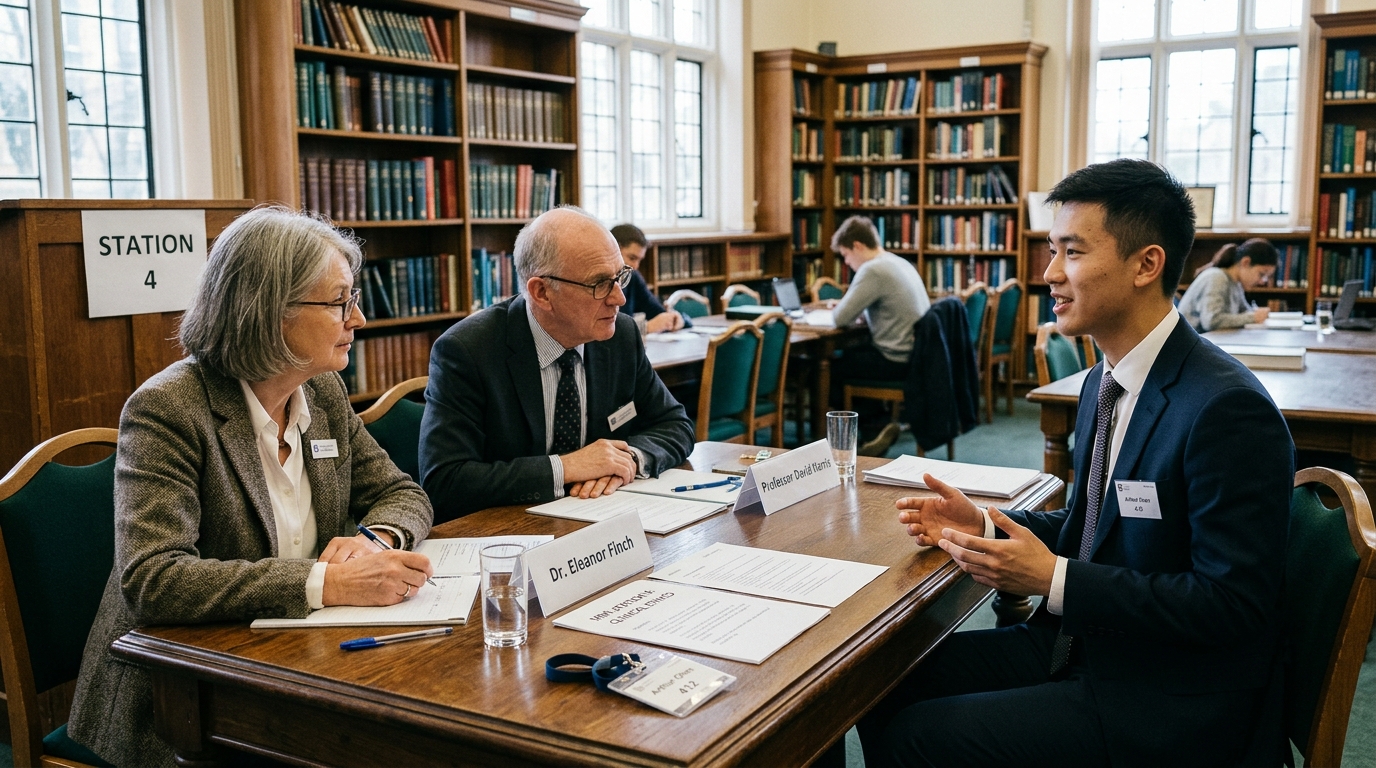
Practice discussing complex NHS policy debates, waiting list dynamics, and clinical ethics with practicing NHS consultants.
Book MMI CoachingAI MMI Simulator
AI Interview Coach
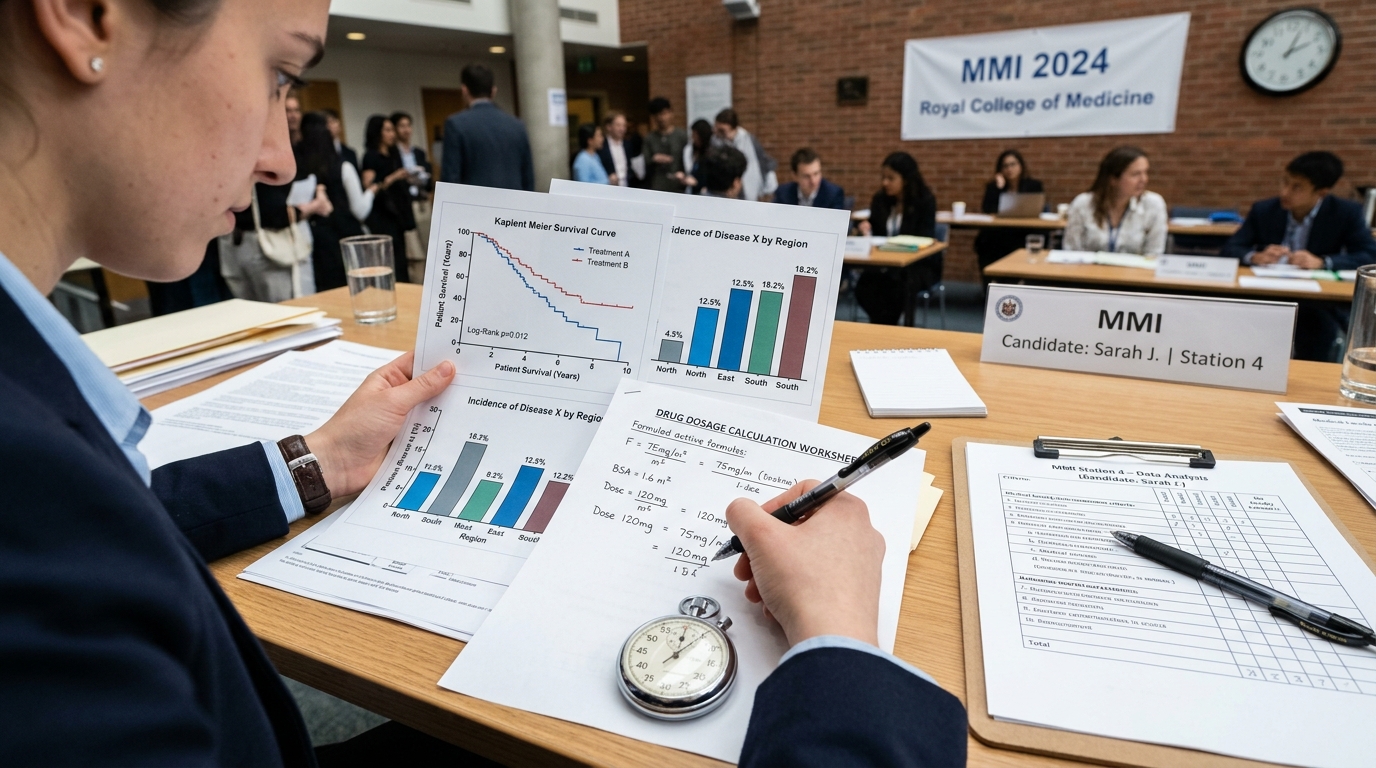
Simulate live NHS hot topic stations with real-time speech analysis, CAMP framework scoring, and immediate feedback.
Launch AI MMI SimulatorMaster Policy Dossier
Download Free PDF Guide
Get our full 40-page dossier covering 15 NHS debates, official Darzi Report benchmarks, and model interview transcripts.
1. Executive Overview: Why Medical Schools Test NHS Hot Topics in 2027
In virtually every UK medical school interview—whether conducted as a Multiple Mini Interview (MMI) or a traditional panel—assessors include at least one station dedicated to current affairs, healthcare policy, and NHS hot topics. Admissions committees at institutions like Imperial College London, King's College London, UCL, Edinburgh, Birmingham, and Manchester are not testing whether you can recite bureaucratic statistics from memory. Instead, they are evaluating whether you possess genuine intellectual curiosity about the healthcare system you aspire to join.
Medicine is not practiced in a sterile laboratory vacuum; it is delivered within an intricate, politically scrutinized, and resource-constrained public healthcare ecosystem. An outstanding medical applicant understands how macro-level government health policies, socioeconomic factors, and demographic pressures directly influence the bedside patient experience.
Furthermore, interviewers use NHS hot topics to evaluate your ability to construct balanced, multi-perspective arguments. Medical professionals must constantly navigate competing priorities, ethical trade-offs, and multidisciplinary viewpoints. This master guide delivers an exhaustive, data-backed analysis of the 15 most critical NHS hot topics for 2027 medical school entry, equipped with structured answer frameworks and model MMI questions.
2. The Foundational Principles of the NHS: Beveridge Model and NHS Constitution
Fast-Track Your College & Career Strategy
Get immediate, personalized AI insights tailored to your grade, strengths, and dream universities — 100% free with instant reports.
Know Your Personality Type for Free
Take our 18-question AI psychometric test to uncover your cognitive archetype, hidden learning superpowers, and ideal university courses.
Personalized Career & University EduPath
Build a step-by-step Grade 8–12 admissions blueprint with AI-matched target universities, exam schedules, and extracurricular profiles.
Before diving into specific controversies, every candidate must understand the foundational architecture of the National Health Service:
Founded on July 5, 1948, by Minister of Health Aneurin Bevan under Clement Attlee's post-war Labour government, the NHS was established on three core principles: 1) It meets the needs of everyone; 2) It is free at the point of delivery; 3) It is based on clinical need, not ability to pay.
The Beveridge Model: The NHS is funded primarily through general taxation (rather than private insurance premiums or social security funds). This structure creates single-payer purchasing power but makes funding directly vulnerable to national economic performance and Treasury fiscal decisions.
The NHS Constitution: Established in 2009 and periodically updated, the Constitution defines the statutory rights, pledges, and responsibilities of patients and staff, emphasizing dignity, respect, and patient-centered decision-making.
| NHS Hot Topic | Primary Driver / Cause | Key Dilemma / Trade-off | Ethical Dimension | Strategic Answering Advice |
|---|---|---|---|---|
| Elective Waiting Lists | Surgical bottlenecks & post-COVID backlog | Outsourcing to private clinics vs public investment | Justice & Resource Allocation | Propose surgical hubs & community diagnostic centers |
| Junior Doctor Strikes | 26%+ real-terms pay decline & burnout | Patient safety during walkouts vs fair doctor compensation | Non-maleficence vs Beneficence | Synthesize: unaddressed burnout threatens long-term patient safety |
| Health Inequalities | Social determinants: housing, poverty, diet | Funding acute hospital treatment vs preventive social policy | Distributive Justice | Cite Marmot Review & Core20PLUS5 initiative |
| Social Care & Bed-Blocking | Lack of community care homes & low care pay | Hospital exit block causes A&E gridlock | Beneficence & Efficiency | Advocate for integrated health & social care funding |
| AI in Diagnostics | Rapid advancements in deep learning imaging | Diagnostic accuracy vs algorithmic bias & accountability | Autonomy & Non-maleficence | Emphasize AI as diagnostic co-pilot, not doctor replacement |
| Physician Associates (PAs) | Efforts to alleviate doctor administrative loads | Task delegation vs patient confusion & supervision limits | Patient Safety & Truth | Acknowledge team support but demand clear supervisory scope |
| Obesity & GLP-1 Injections | Ultra-processed food & sedentary lifestyles | Costly pharmaceutical drugs vs structural food taxes | Justice & Autonomy | Argue GLP-1s must be paired with public health prevention |
| Assisted Dying | Terminally ill patients seeking dignity in death | Patient autonomy vs vulnerability of disabled/elderly | Autonomy vs Sanctity of Life | Present balanced arguments; cite need for elite palliative care |
3. How to Answer NHS Policy Questions: The CAMP Answering Framework
When faced with an open-ended NHS question (e.g., 'What are the biggest challenges facing the NHS?'), unorganized candidates ramble. High-scoring candidates use the CAMP Framework:
C - Clinical: What are the direct consequences for patient health outcomes, diagnostic timelines, morbidity, and clinical safety?
A - Academic & Training: How does this issue impact medical research, clinical trials, junior doctor training, and medical education?
M - Management & Financial: What are the operational, staffing, bed-occupancy, and budgetary implications for NHS Trusts and Integrated Care Boards (ICBs)?
P - Patient & Public: What does this mean for patient autonomy, emotional dignity, public trust, and health equity across diverse socioeconomic communities?
Applying CAMP ensures your response is holistic, structured, and displays the strategic maturity of a future clinical leader.
4. Hot Topic 1: The Elective Care Waiting List Backlog (7.6 Million Patients)
The elective care waiting list remains the single most prominent operational crisis facing the NHS:
The Scale of the Challenge: As of recent NHS England data, the waiting list for consultant-led elective treatment stands at approximately 7.6 million cases, with thousands waiting over 52 or 65 weeks for hip replacements, cataract surgeries, and routine interventions.
Underlying Drivers: The backlog was exacerbated by the COVID-19 pandemic, but structural causes predate it: chronic shortages of operating theatre staff, lack of physical bed capacity, and bottlenecks in diagnostic imaging.
Potential Solutions & Ethical Nuance: Expanding surgical capacity via dedicated Elective Surgical Hubs, utilizing Community Diagnostic Centres (CDCs), and commissioning private sector capacity through the NHS tariff system. Candidates must weigh the benefits of rapid private sector utilization against the ethical risk of two-tier healthcare and draining surgical staff from public NHS rotas.
5. Hot Topic 2: Industrial Action, Junior Doctor Pay Disputes, and Consultant Strikes
The unprecedented strike action across the NHS represents a critical debate on workforce valuation and patient safety:
The Core Dispute: The British Medical Association (BMA) called for 'Full Pay Restoration' (FPR), arguing that junior doctors' real-terms earnings had fallen by over 26% since 2008 due to sub-inflationary pay awards, long hours, and escalating student debt.
Impact on the Service: Over 1.4 million appointments and procedures have been rescheduled due to industrial action, exacerbating the waiting list crisis and straining public goodwill.
Interview Balancing Act: As an applicant, avoid taking an aggressive partisan political stance. Acknowledge the ethical tension: on one hand, doctors have a professional duty of care to their patients (Beneficence and Non-maleficence); on the other hand, unaddressed doctor burnout, moral injury, and emigration to Australia/Canada directly undermine long-term patient safety and NHS sustainability.
6. Hot Topic 3: Health Inequalities, the Marmot Review, and the Core20PLUS5 Framework
Health inequality is a cornerstone theme for university admissions panels:
The Longevity Gap: According to Professor Sir Michael Marmot's landmark reviews ('Fair Society, Healthy Lives'), people living in the most deprived communities in England spend nearly 20 fewer years in good health and die nearly a decade earlier than those in affluent areas.
Social Determinants of Health: Clinical healthcare accounts for only 20% of health outcomes; the remaining 80% is driven by housing quality, air pollution, educational attainment, employment security, and food security.
The Core20PLUS5 Initiative: NHS England's strategic framework targeting the 20% most deprived national population, alongside minority ethnic groups and five clinical focus areas: maternity, severe mental illness, chronic respiratory disease, early cancer diagnosis, and hypertension case-finding.
7. Hot Topic 4: The Crisis in Adult Social Care and 'Bed-Blocking' (Delayed Discharge)
Hospitals cannot function without an effective community social care infrastructure:
Delayed Transfers of Care: On any given day, between 12,000 and 14,000 acute hospital beds in England are occupied by medically fit patients who cannot be safely discharged because community social care, nursing home places, or home rehabilitation packages are unavailable.
The Domino Effect: When acute ward beds are blocked, Emergency Departments (A&E) cannot admit patients, causing ambulance queues outside hospitals and dangerous delays in 999 response times for acute cardiac and stroke emergencies.
Systemic Reform: Discuss the need for integrated health and social care funding, professionalizing the adult care workforce with better wages, and empowering Integrated Care Systems (ICSs) to commission community step-down facilities.
8. Hot Topic 5: Artificial Intelligence and Digital Health in Modern Diagnostics
The rapid integration of AI is reshaping clinical medicine and patient triage:
Clinical Applications: Deep-learning algorithms interpreting chest X-rays, mammograms, and retinal scans with human-matching or superior diagnostic accuracy; ambient AI scribes capturing clinical consultations to reduce administrative burnout.
Advantages: Exponential reduction in diagnostic turnaround times, early cancer detection, predictive modeling for intensive care deterioration, and personalized genomic therapeutics.
Risks and Ethical Concerns: Algorithmic bias (training models on homogeneous demographic datasets leading to diagnostic disparities in ethnic minorities), automation bias (junior doctors deferring to algorithm over clinical judgment), and unresolved medico-legal liability when an AI system misdiagnoses a patient.
9. Hot Topic 6: The NHS Long Term Workforce Plan (Expanding Medical School Places)
Published in 2023, the NHS Long Term Workforce Plan outlines a 15-year blueprint to address severe staffing shortages:
Key Targets: Doubling medical school places from 7,500 to 15,000 per year by 2031; expanding nursing training places by 92%; introducing medical doctor apprenticeships.
Implementation Bottlenecks: Candidates should recognize that doubling student numbers requires a commensurate expansion in senior consultant supervisors, clinical placement capacity, and physical simulation suites in hospitals.
Retention vs Recruitment: A crucial insight in interviews is noting that training a new doctor takes 10 to 15 years; therefore, retaining existing experienced NHS clinicians through better working conditions, flexible rotas, and mental health support is far more urgent.
10. Hot Topic 7: The Independent Darzi Investigation into the State of the NHS (2024)
The landmark review commissioned by the UK Department of Health and Social Care, conducted by Lord Ara Darzi:
Core Findings: The report concluded that the NHS is in 'critical condition' due to a decade of underinvestment, disastrous 2012 Lansley structural reorganizations, deteriorating public health, and declining productivity.
Key Diagnoses: Crumbling hospital capital estates (leaking roofs, outdated MRI scanners), ballooning waiting lists for children and adolescent mental health services (CAMHS), and an overburdened primary care sector.
Strategic Pivot: The report calls for shifting care from hospitals to community clinics, pivoting from analogue to digital systems, and moving from treatment of acute sickness to aggressive public health prevention.
11. Hot Topic 8: Primary Care & GP Access Crises (The 8:00 AM Telephone Rush)
General Practice is the front door of the NHS, handling 90% of patient contacts for under 10% of the NHS budget:
The Access Bottleneck: Patients frequently struggle to secure timely GP appointments, leading to the infamous '8:00 AM telephone scramble' and forcing frustrated patients to attend Emergency Departments for non-urgent primary care issues.
Workforce Depletion: The number of fully qualified full-time equivalent GPs has declined despite rising patient numbers, driven by early retirements, burnout, and complex bureaucratic burdens.
Modern Reforms: Primary Care Networks (PCNs), multidisciplinary teams (incorporating clinical pharmacists, physiotherapists, and social prescribers), and digital telephone routing systems designed to triage patients based on clinical urgency.
12. Hot Topic 9: The Role of Physician Associates (PAs) and Scope of Practice Debates
One of the most fiercely debated workforce topics in UK medicine today:
What are Physician Associates?: Healthcare professionals with a 2-year postgraduate medical diploma working under the supervision of a named doctor, designed to support diagnostic and procedural workloads.
The Controversy: Tensions around patient safety, diagnostic error risk, role confusion among patients, and the statutory regulation of PAs by the General Medical Council (GMC).
Balanced Interview Approach: Acknowledge that in well-supervised, specific clinical roles, PAs can alleviate routine administrative pressure on clinical teams. However, emphasize that PAs are NOT doctor substitutes; maintaining clear supervisory boundaries, transparent role identification to patients, and protecting training opportunities for junior doctors is clinically essential.
13. Hot Topic 10: Mental Health Services and the CAMHS Capacity Shortfall
Mental health parity of esteem remains one of the NHS's greatest unfulfilled promises:
The CAMHS Crisis: Child and Adolescent Mental Health Services (CAMHS) face catastrophic backlogs, with thousands of young people suffering from eating disorders, severe depression, and anxiety waiting over six months to a year for initial psychiatric assessment.
The Consequences: Vulnerable adolescents frequently present in acute medical crisis to general A&E departments, where pediatric wards are unequipped to handle complex psychiatric emergencies.
Strategic Solutions: Integrating mental health practitioners directly into schools, expanding community crisis hubs, and ensuring mental health Trusts receive equitable capital funding alongside acute physical hospitals.
14. Hot Topic 11: The Obesity Epidemic, Ultra-Processed Foods, and GLP-1 Agonists
Preventive health vs pharmaceutical innovation in chronic disease management:
The Burden: Two-thirds of UK adults are overweight or obese, contributing to escalating rates of Type 2 diabetes, cardiovascular disease, joint failure, and certain cancers, costing the NHS over £6.5 Billion annually.
The GLP-1 Revolution (Wegovy / Mounjaro): Semaglutide and tirzepatide have demonstrated remarkable clinical weight reduction. The debate centers on whether the NHS should fund widespread prescription of costly weight-loss injections.
Ethical & Public Health Nuance: While GLP-1s provide acute clinical benefits for high-risk patients, medical interviewers look for candidates who argue that pharmacological treatments must not replace structural public health interventions (sugar taxes, advertising bans on junk food, urban green space design, and affordable fresh food access).
15. Hot Topic 12: Organ Donation, Presumed Consent, and the Max and Keira Law
Legal reform and ethical trade-offs in clinical transplantation:
The Opt-Out System (Max and Keira's Law): Introduced in England in 2020, adults are deemed to have agreed to be organ donors when they die unless they have recorded a decision to opt out or belong to an excluded group.
Ethical Rationale: Grounded in Utilitarianism and Beneficence—maximizing the number of life-saving donor organs available for transplantation to relieve organ failure queues.
Autonomy and Family Veto: Even under an opt-out law, specialist organ donation nurses (SNODs) always consult the deceased's immediate family. If the family objects, organs are virtually never retrieved, highlighting the delicate balance between state policy and family bereavement.
16. Hot Topic 13: Assisted Dying and Palliative Care Funding Debates
One of the most profound ethical controversies debated in the UK Parliament and medical community:
The Legislative Push: Proposals to legalize physician-assisted dying for terminally ill, mentally competent adults with less than six months to live.
Arguments in Favor: Grounded in Patient Autonomy and the prevention of prolonged, agonizing suffering. Patients should have the dignity to choose the timing and manner of their death.
Arguments Against: Grounded in Non-maleficence, the sanctity of life, the risk of a slippery slope (subtle family or societal pressure on elderly/disabled individuals feeling like a burden), and the chilling effect on palliative care funding. The official position of the BMA is currently neutral.
17. Hot Topic 14: Climate Change, Sustainable Healthcare, and NHS Net Zero
The NHS was the first national health system in the world to commit to legally binding Net Zero targets:
The Carbon Footprint: The NHS contributes approximately 4% of the UK's total greenhouse gas emissions, generated through hospital heating, pharmaceutical supply chains, transport, and anesthetic gases.
Clinical Interventions: Phasing out high-carbon desflurane anesthetic gas in favor of sevoflurane or total intravenous anesthesia (TIVA); switching from greenhouse-gas propellant metered-dose inhalers (MDIs) to dry powder inhalers (DPIs).
Public Health Nexus: Candidates should articulate that climate change is a profound health emergency causing increased respiratory illness, heatwave mortalities, and vector-borne infection spread.
18. Hot Topic 15: Two-Tier Healthcare and the Growth of Private Medical Insurance
The creeping marketization and socioeconomic divide in UK healthcare access:
The Surge in Private Care: With NHS elective waiting lists exceeding 7 million, millions of Britons who can afford it are paying out-of-pocket for private consultations, MRIs, and surgeries, or purchasing private medical insurance (PMI).
The Equity Crisis: This creates a two-tier healthcare system where wealthy individuals bypass delays, while low-income patients suffer prolonged disability and lost earnings on public waiting lists.
Ethical Implications: Violates the core founding principle of the NHS that healthcare must be distributed based on clinical need rather than wealth (Distributive Justice).
19. Comparative Analysis Table: 15 NHS Hot Topics & Interview Strategic Angles
Here is the definitive comparative summary of all 15 NHS hot topics, their core ethical dimensions, and the strategic angle to adopt during your MMI station:
20. Sample MMI Stations & Model Responses: The 7-Minute Station Breakdown
Let us examine how an actual MMI interview station tests these issues:
Station Prompt: 'You are an admissions assessor. A candidate tells you: 'The NHS should ban strikes by all healthcare workers, because doctors took an oath to never harm patients.' How would you respond to this viewpoint?'
Candidate Analysis: Do not simply agree or disagree. Structure your 7-minute station into three distinct movements: 1) Acknowledge the core ethical principle of non-maleficence and patient vulnerability; 2) Analyze the counter-perspective of workforce burnout, real-terms pay degradation, moral injury, and retention failure; 3) Conclude with a synthesized, constructive compromise (e.g., minimum service level guarantees during walkouts, independent arbitration panels).
21. Common Traps to Avoid When Discussing the NHS in Medical Interviews
Avoid these critical pitfalls that instantly lower interview scores:
1. Pure Party Politics: Avoid ranting against specific political parties or politicians. Assessors want objective clinical and policy analysis, not partisan talking points.
2. Monologue Without Nuance: Stating black-and-white opinions without acknowledging the legitimate arguments of the opposing side.
3. Lack of Personal Insight: Quoting news headlines without connecting them to what you observed during your own clinical work experience or hospital volunteering.
4. Over-Promising Unrealistic Solutions: Saying 'The government should just give the NHS unlimited money' reveals a complete lack of economic understanding.
22. How to Stay Updated on NHS Current Affairs: Curated Media Diet for 2027
Build a daily 15-minute healthcare media habit from Grade 12 onwards:
Essential Reading: BBC Health News, The Guardian Healthcare Network, and BMJ (British Medical Journal) Student edition.
Think Tanks & Policy Audits: Read executive summaries from The King's Fund, The Health Foundation, and the Nuffield Trust. Their policy briefings provide the exact vocabulary and data used by medical school interview panels.
Podcasts: Listen to 'The King's Fund Podcast' and 'Inside Health' on BBC Radio 4 during your daily commute.
23. Linking NHS Hot Topics to Your Personal Work Experience and Volunteering
The golden secret to scoring in the top 5% of MMI candidates is grounding macro-policy in micro-personal observation:
Formula: Concept -> Policy -> Personal Clinical Observation -> Future Doctor Impact.
Example: If discussing bed-blocking and delayed discharge, connect it directly to a patient you spoke with during your care home volunteering who spent three weeks stuck on an orthopedic ward waiting for a home stairlift installation.
24. The International Student Perspective: Comparing the NHS with Home Healthcare Systems
For Indian and international applicants, cross-cultural comparative analysis is a massive competitive superpower:
Comparing Single-Payer vs Out-of-Pocket Models: Compare the NHS's universal access and financial protection with the predominantly out-of-pocket, private insurance landscape in India (such as Ayushman Bharat and private hospital networks).
Demonstrating Respect for the Host System: Express genuine admiration for the egalitarian ethics of the NHS while offering constructive insights into how telemedicine and digital primary care in India can inspire NHS efficiency.
25. Key Organizations in the NHS You Must Know: GMC, NICE, CQC, and ICBs
Familiarity with institutional healthcare regulatory bodies:
GMC (General Medical Council): The independent regulator of UK doctors, maintaining the medical register, setting standards for medical education, and publishing 'Good Medical Practice'.
NICE (National Institute for Health and Care Excellence): Evaluates clinical evidence and cost-effectiveness (QALYs - Quality-Adjusted Life Years) to decide which new drugs and medical treatments the NHS should fund.
CQC (Care Quality Commission): The independent inspector of health and adult social care in England, rating hospitals and GP surgeries as Outstanding, Good, Requires Improvement, or Inadequate.
ICBs (Integrated Care Boards): Statutory NHS bodies responsible for planning and funding local healthcare services across distinct geographic regions.
26. Ethical Frameworks for Resource Allocation: Utilitarianism, QALYs, and NICE
When resources are scarce, how does the NHS decide who receives funding?:
Quality-Adjusted Life Years (QALYs): A metric measuring both the quantity and quality of life generated by a medical treatment. One QALY equates to one year of life in perfect health.
The NICE Cost-Effectiveness Threshold: NICE generally approves treatments that cost between £20,000 and £30,000 per QALY gained. If an innovative cancer drug costs £90,000 per QALY, NICE may reject it unless a confidential patient access discount is agreed with the manufacturer.
Utilitarianism vs Deontology: Allocating limited funds to maximize total population health (Utilitarianism) versus the moral duty to treat the desperate individual patient before you (Deontology).
27. Communication Nuances: Structuring Your Verbal Delivery in MMIs
How you deliver your answer is just as important as the facts you cite:
Signposting: Always signpost your thoughts clearly: 'I would like to address this question through two primary dimensions: first, the clinical impact on patient safety, and second, the broader workforce retention challenge.'
Pacing and Non-Verbal Poise: Avoid speaking at breakneck speed. Take a 5-second thoughtful pause after hearing the question. Maintain steady eye contact, relaxed open posture, and a warm, empathetic tone.
28. Case Study: An Applicant's 10/10 Response on Doctor Strikes Analyzed
An EduQuest mentee admitted to Imperial College School of Medicine was asked:
Prompt: 'Should junior doctors be permitted to strike?'
What Made the Answer Score 10/10: The candidate began by expressing deep empathy for patients whose cancer surgeries were delayed during walkouts, demonstrating non-maleficence. She then transitioned into the structural reality of moral injury, understaffing, and doctor attrition, pointing out that an exhausted, underpaid doctor is a hazard to patient safety 365 days a year. She concluded by proposing binding independent pay arbitration models similar to those used in the judiciary.
29. Case Study: Breaking Down an A&E Waiting Time Question at King's MMI
A candidate at King's College London MMI was asked:
Prompt: 'How can the NHS fix the crisis in emergency departments?'
What Scored Full Marks: Rather than suggesting 'hire more A&E doctors,' the candidate diagnosed the systemic cause: delayed discharge in acute wards causing hospital exit block, which in turn causes emergency department overcrowding. He proposed integrating community step-down nursing care and expanding 111 digital triage to divert minor ailments away from acute hospitals.
30. Checklist: What to Review the Night Before Your Medical School Interview
Final checklist before stepping into your MMI circuit:
1. Check the top 3 health headlines on BBC News and The Guardian this morning.
2. Review the 4 Pillars of Medical Ethics (Autonomy, Beneficence, Non-maleficence, Justice).
3. Memorize the core findings of the Darzi Investigation (Lord Darzi Review 2024).
4. Prepare one personal work experience example for bed-blocking, waiting lists, and multidisciplinary teamwork.
5. Remind yourself to use the CAMP framework whenever an open-ended NHS policy question appears.
31. EduQuest 1-on-1 MMI Mentorship: Preparing with NHS Consultant Physicians
Navigating MMI stations with confidence requires structured, real-time simulation:
At EduQuest, our medical interview coaches are practicing NHS consultant doctors, clinical academics, and former medical school admissions assessors.
We guide candidates through realistic timed MMI circuits, deconstruct difficult NHS current affairs topics, and provide granular feedback on voice modulation, argument balance, and ethical precision.
Our AI MMI Simulator enables students to practice unlimited hot topic stations with instant scoring against official medical school rubrics.
32. Strategic Conclusion & Next Steps: Turning Healthcare Insight into an Offer
Demonstrating mature, balanced insight into NHS hot topics is your ultimate competitive weapon in UK medical school interviews.
By viewing healthcare challenges through the twin lenses of compassionate patient advocacy and systemic policy realism, you prove to admissions assessors that you are ready to wear the stethoscope.
Connect with EduQuest today to book your personalized MMI interview coaching and master the 2027 admissions cycle.
33. Frequently Asked Questions: NHS Hot Topics in Medical School Interviews
Detailed answers to the most common questions regarding NHS current affairs, waiting lists, and interview answering strategies.
Master Your Medical School Interview with EduQuest AI Intelligence Suite
Simulate realistic MMI stations, evaluate your NHS policy arguments, and test your interview readiness using our specialized clinical AI engines.
AI MMI & Interview Coach
Practice realistic 7-minute timed MMI stations on NHS hot topics, doctor strikes, medical ethics, and clinical empathy.
- ✓ CAMP Framework Analysis
- ✓ Speech Logic & Coherence Feedback
- ✓ Real-Time Confidence Scoring
Narrative Intelligence Engine
Scans your UCAS personal statement and medical reflective essays against successful UK medical school applications.
- ✓ Work Experience Reflection Check
- ✓ Scientific Rigor Scoring
- ✓ GMC Values Alignment
EduPath Admissions Profiler
Calculates your interview invitation probability across all 42 UK medical schools based on your UCAT, BMAT/ESAT, and GCSE/A-Level grades.
- ✓ UCAT Cutoff Prediction
- ✓ Strategic Medical School Shortlisting
- ✓ International Quota Modeling
Career Cluster Assessment
Aligns your clinical interests with medical and surgical specialties across the NHS and international healthcare markets.
- ✓ Clinical Specialty Diagnostic
- ✓ Surgical vs Medical Personality Mapping
- ✓ NHS Training Pathway Index
What are the most important NHS hot topics to know for 2027 medical interviews?
The most vital topics include: the 7.6 million elective waiting list backlog, junior doctor and consultant pay disputes, the Lord Darzi Review (2024) into the state of the NHS, health inequalities and the Marmot Review, adult social care bed-blocking, and the role of AI in clinical diagnostics.
How should I structure my answer to an NHS policy question?
Use the CAMP framework: C (Clinical impact on patients), A (Academic research and junior doctor training), M (Management, hospital beds, and NHS finances), and P (Patient experience, autonomy, and public trust). This guarantees a balanced, comprehensive response.
Should I take a side on controversial topics like doctor strikes or assisted dying?
No. Assessors are evaluating your ability to balance competing ethical perspectives. Acknowledge both sides with clinical empathy: recognize the distress to patients caused by strike disruptions, while articulating the severe consequences of chronic doctor burnout and retention failure.
What is the Lord Darzi Investigation (2024)?
Commissioned by the UK Government, Lord Darzi's independent investigation concluded that the NHS is in 'critical condition' due to a decade of underinvestment, deteriorating public health, and declining productivity. It outlines the strategic necessity of shifting care from hospitals to communities and from analogue to digital.
Do international and Indian applicants need to know about the NHS?
Absolutely yes. UK medical schools train doctors primarily for the NHS. Demonstrating insight into the NHS Constitution, waiting list challenges, and healthcare funding models proves to admissions panels that you are genuinely prepared to train and work in the UK.
Download the NHS Hot Topics for Medical School Interviews Master Guide (PDF)
Get our complete 40-page dossier featuring 15 detailed NHS policy debates, Darzi Review insights, CAMP answering formulas, and official sample MMI model answers.