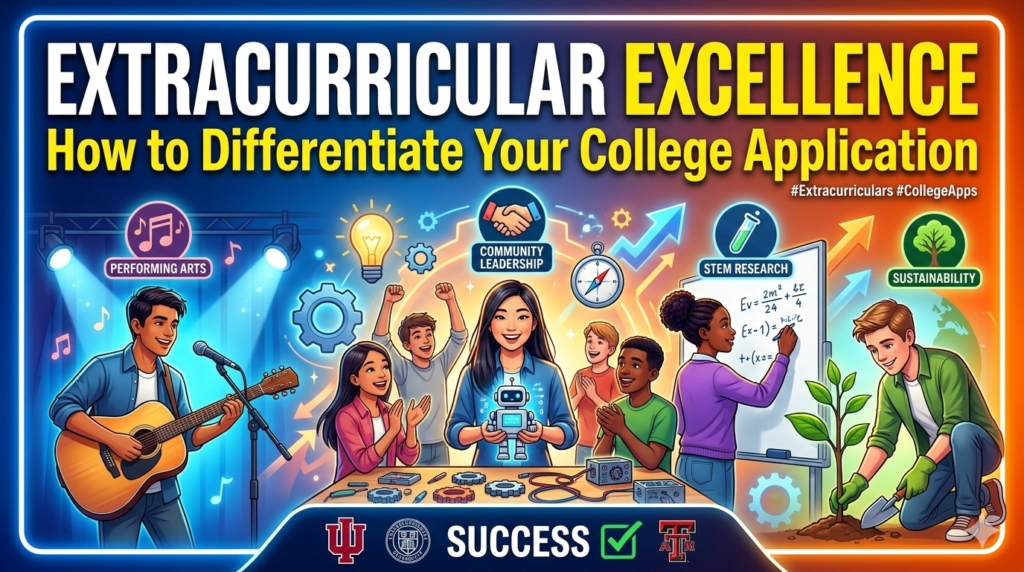
When students think about college admissions, most focus only on grades and test scores. Good grades matter. Strong scores matter. But they are only part of the story. Today, colleges want more than numbers. They want to see who you are beyond the classroom.
This is where extracurricular excellence becomes important.
If you want to differentiate your college application, you need to build meaningful extracurricular activities that show growth, leadership, and real interest. In this guide, I will explain how you can do that in a clear and practical way.
Why Extracurricular Excellence Matters in College Admissions
Many top universities, including Harvard University and Stanford University, follow a holistic admissions process. Holistic admissions means they review your full profile, not just your GPA.
They look at:
- Academic strength
- Personal essays
- Recommendation letters
- Extracurricular activities
- Leadership and character
Your extracurricular activities for college help admissions officers understand what you care about and how you use your time. They want students who will contribute to campus life, not just attend classes.
What Is Extracurricular Excellence?
Extracurricular excellence does not mean doing many activities. It means doing a few activities with depth and purpose.
For example:
- Joining a club is good.
- Leading that club and improving it is better.
Excellence usually includes:
- Long-term commitment
- Growth in responsibility
- Measurable impact
- Alignment with your interests
Strong student profile building focuses on quality, not quantity.
Depth Over Quantity in Your College Application
Many students believe they must join every club available. This can weaken your college application.
Admissions officers prefer depth. They want to see:
- 3 to 5 strong activities
- Clear leadership roles
- Real achievements
- Personal growth
For example, if you are interested in engineering, you might join robotics, coding competitions, and science fairs. Instead of joining unrelated clubs, focus on activities that support your goals.
Schools like Yale University and Princeton University look for focused students who show passion in specific areas.
Align Activities with Career Goals
Your extracurricular activities should match your academic interests.
Here are simple examples:
- Future doctor: volunteer at a clinic, join biology research projects.
- Future lawyer: participate in debate or Model United Nations.
- Future business leader: start a small business or manage school events.
- Future computer scientist: build apps, enter coding contests.
Programs related to United Nations, such as Model UN, help students interested in global studies and policy.
When your activities connect with your goals, your college admissions strategy becomes stronger.
Leadership Activities for Students Make a Difference
Leadership is one of the strongest factors in extracurricular excellence.
Leadership does not always mean being president. It means taking initiative and guiding others.
Strong leadership activities for students include:
- Organizing a fundraiser
- Leading a team project
- Mentoring younger students
- Starting a new club
- Running a community campaign
Colleges respect students who solve problems instead of waiting for instructions.
Create Something Unique
One powerful way to differentiate your college application is to create something of your own.
You can:
- Start a blog about a topic you love
- Launch a YouTube channel teaching math or coding
- Build a small mobile app
- Publish research
- Start a community tutoring group
If you are interested in technology, you might draw inspiration from companies like Google or Microsoft and experiment with simple projects.
Creating something original shows creativity and independence. Admissions officers value that.
Show Measurable Impact
Effort is important, but impact is stronger.
Instead of writing:
“I volunteered at a local shelter.”
You can write:
“I organized a food drive that collected 500 meals for local families.”
Numbers and results make your achievements clear. Impact can include:
- Funds raised
- People helped
- Events organized
- Projects completed
Clear results improve your college application significantly.
Competitions and Academic Engagement
Competitions can strengthen your extracurricular excellence if they match your interests.
You might consider:
- Science fairs
- Math Olympiads
- Coding contests
- Essay competitions
Preparing for exams like the SAT or ACT shows academic dedication. But pairing that with subject competitions shows deeper passion.
Winning is great, but commitment and growth matter just as much.
Start Early and Build Gradually
If you are in middle school or early high school, this is a good time to explore different interests.
Try new activities. Notice what excites you. Then focus deeply on a few areas as you move into higher grades.
Strong student profile building happens over time. Colleges can tell when activities are rushed in the final year.
Avoid Common Mistakes
To build real extracurricular excellence, avoid these mistakes:
- Joining too many clubs without commitment
- Choosing activities only because they look impressive
- Ignoring academics
- Copying what friends are doing
Your activities should reflect your genuine interests, not trends.
Telling Your Story Clearly
Activities alone are not enough. You must explain them well in your essays.
When writing about your extracurricular activities:
- Describe challenges you faced
- Explain what you learned
- Share how you grew
Admissions officers at schools like Columbia University and Brown University want to understand your mindset, not just your awards.
Be honest. Be specific. Be clear.
Balance Is Important
While building extracurricular excellence, do not forget balance.
Maintain:
- Good grades
- Healthy sleep
- Time with family
- Personal well-being
Colleges want students who manage responsibilities wisely. A balanced profile looks more sustainable and mature.
Final Thoughts on Extracurricular Excellence
Extracurricular excellence is about focus, purpose, and growth. It is not about collecting certificates. It is about building experiences that reflect who you are.
If you want to differentiate your college application:
- Choose meaningful activities
- Stay committed for years
- Take leadership roles
- Show measurable impact
- Align activities with your goals
With thoughtful planning and steady effort, you can build a strong and authentic profile.