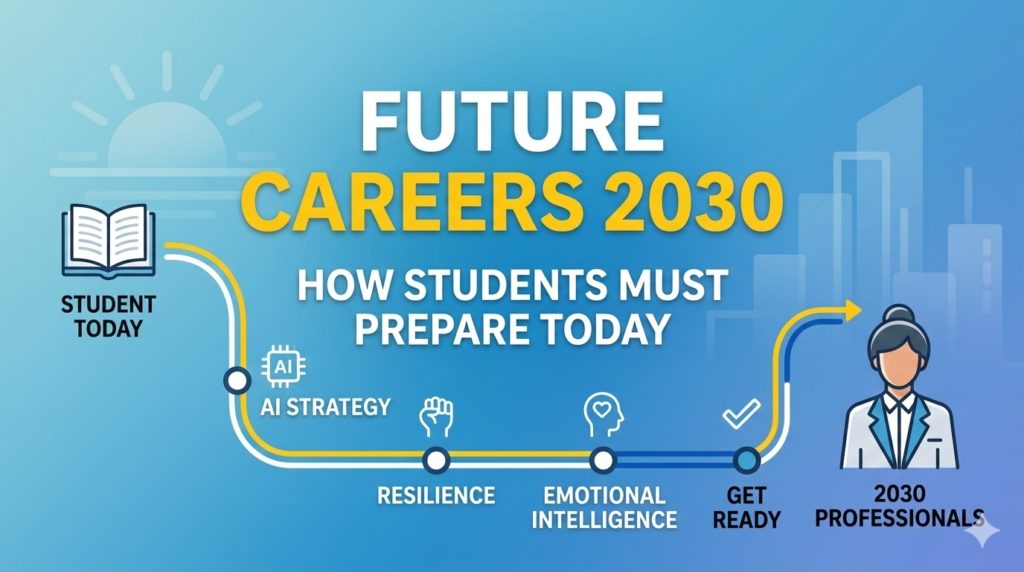
The world of work is changing faster than ever. By 2030, automation, artificial intelligence, sustainability mandates, digital economies, and global mobility will redefine traditional career paths. For students in Grades 8–12, the question is no longer “What do I want to become?” — it is “What problems will the world need solved in 2030 and beyond?”
This comprehensive guide explores Future Careers in 2030, emerging industries, high-demand skills, and how students can strategically prepare today.
Why Career Planning for 2030 Is Different
Unlike previous generations, today’s students will:
-
Work in careers that do not yet fully exist
-
Change industries multiple times
-
Collaborate with AI systems
-
Compete in a global job market
-
Need interdisciplinary skill sets
According to global workforce studies, over 65% of students entering school today will work in roles that currently don’t exist. That makes early exposure, skill-building, and strategic profile development essential for students preparing for Future Careers in 2030.
Top Future Careers in 2030
Below are the most promising and high-growth career fields expected to dominate the next decade.
Artificial Intelligence & Machine Learning Careers
AI is transforming healthcare, finance, law, education, marketing, and manufacturing.
High-Demand Roles
-
AI Engineer
-
Machine Learning Specialist
-
Robotics Programmer
-
AI Ethics Consultant
-
Automation Architect
Skills Students Must Develop
-
Python programming
-
Data structures
-
Statistics & probability
-
Logical reasoning
-
Problem-solving
Best Degree Pathways
-
Computer Science
-
Data Science
-
AI & Robotics
-
Mathematics
Data Science & Analytics Careers
Data is the new oil. Companies rely on data-driven decisions.
Future Job Titles
-
Data Scientist
-
Business Intelligence Analyst
-
Quantitative Analyst
-
Predictive Modeling Specialist
-
Financial Data Strategist
Skills Required
-
Excel & Advanced Analytics
-
SQL & Python
-
Statistical modeling
-
Data visualization
-
Critical thinking
Students interested in finance, economics, business, or technology must build strong analytical foundations early.
Sustainable & Green Careers
Climate change and sustainability policies will drive major hiring in the green economy.
Emerging Roles
-
Renewable Energy Engineer
-
Climate Policy Analyst
-
ESG Consultant
-
Environmental Data Analyst
-
Sustainable Supply Chain Manager
Recommended Subjects
-
Environmental Science
-
Engineering
-
Public Policy
-
Economics
-
Sustainability Studies
Sustainability will integrate into every industry — from fashion to finance.
Digital Marketing & Personal Branding Careers
The digital economy is expanding rapidly. Businesses need online visibility and brand strategy.
High-Growth Roles
-
Growth Hacker
-
Performance Marketing Specialist
-
Brand Strategist
-
Digital Media Analyst
-
Influencer Marketing Consultant
Key Skills
-
SEO (Search Engine Optimization)
-
Social media analytics
-
Content strategy
-
Consumer psychology
-
Data interpretation
Students inclined toward business, media, or creativity can build portfolios early through internships and projects.
FinTech & Future Finance Careers
Traditional banking is evolving into digital finance.
Future Roles
-
Blockchain Developer
-
Crypto Compliance Officer
-
Investment Data Analyst
-
FinTech Product Manager
-
Algorithmic Trading Specialist
Skills to Develop
-
Financial modeling
-
Coding basics
-
Risk analysis
-
Economic theory
-
Quantitative aptitude
Students planning business or economics degrees must integrate tech skills.
Healthcare & BioTech Innovation
Technology is revolutionizing healthcare diagnostics and treatment.
Careers to Watch
-
Bioinformatics Scientist
-
Medical Technology Developer
-
Genetic Data Analyst
-
AI Radiology Specialist
-
HealthTech Entrepreneur
Academic Preparation
-
Biology + Mathematics
-
Research projects
-
Lab internships
-
STEM competitions
Healthcare will merge with AI, robotics, and data science.
Cybersecurity & Digital Law
As cyber threats increase, digital protection becomes critical.
Growing Roles
-
Cybersecurity Analyst
-
Ethical Hacker
-
Digital Forensics Specialist
-
Data Privacy Consultant
-
Tech Law Advisor
Students must develop:
-
Networking fundamentals
-
Programming basics
-
Cyber ethics awareness
-
Legal frameworks
Skills That Will Define Success in 2030
Regardless of the industry, students must build:
-
Analytical Thinking
-
Digital Literacy
-
Adaptability
-
Emotional Intelligence
-
Communication Skills
-
Interdisciplinary Knowledge
-
Entrepreneurial Mindset
Universities globally are prioritizing applicants who demonstrate real-world application, not just grades.
How Students in Grades 8–12 Should Prepare Today
Early preparation creates a strong academic and extracurricular spike for students targeting Future Careers in 2030.
Step 1: Identify Interest Areas Early
Expose students to coding, economics, AI, robotics, research, entrepreneurship, or sustainability programs.
Step 2: Build a Career Spike
Instead of random activities, develop a focused profile — for example:
-
AI projects + hackathons
-
Finance internships + investment clubs
-
Sustainability campaigns + research
Step 3: Develop Technical Skills
Short-term certification courses in:
-
AI & Machine Learning
-
Data Science
-
Advanced Digital Marketing
-
Financial Analysis
-
Game Development
Step 4: Participate in Global Competitions
Olympiads, research conferences, Model UN, hackathons, and startup incubators enhance university applications.
Step 5: Internships & Research
Real-world exposure builds clarity and credibility.
Future Careers 2030 & Study Abroad Opportunities
Top global universities in the US, UK, Canada, Singapore, and Europe are expanding programs in:
-
Artificial Intelligence
-
Sustainable Engineering
-
FinTech
-
Data Science
-
Digital Business
Admissions are becoming more competitive. Students need:
-
Strong academics
-
Strategic extracurriculars
-
Leadership experience
-
Demonstrated passion
Profile-building must start early to align with future-ready degrees and Future Careers in 2030.
Final Thoughts: Preparing for 2030 Starts Today
The future job market will reward skill, adaptability, and innovation. Students who build technical knowledge, combine it with creativity, and align their academic pathways strategically will thrive.
Future Careers in 2030 are not about predicting one job title — they are about preparing students to evolve with the world.
The earlier students begin structured profile building, skill acquisition, and career alignment, the stronger their university applications and long-term success will be