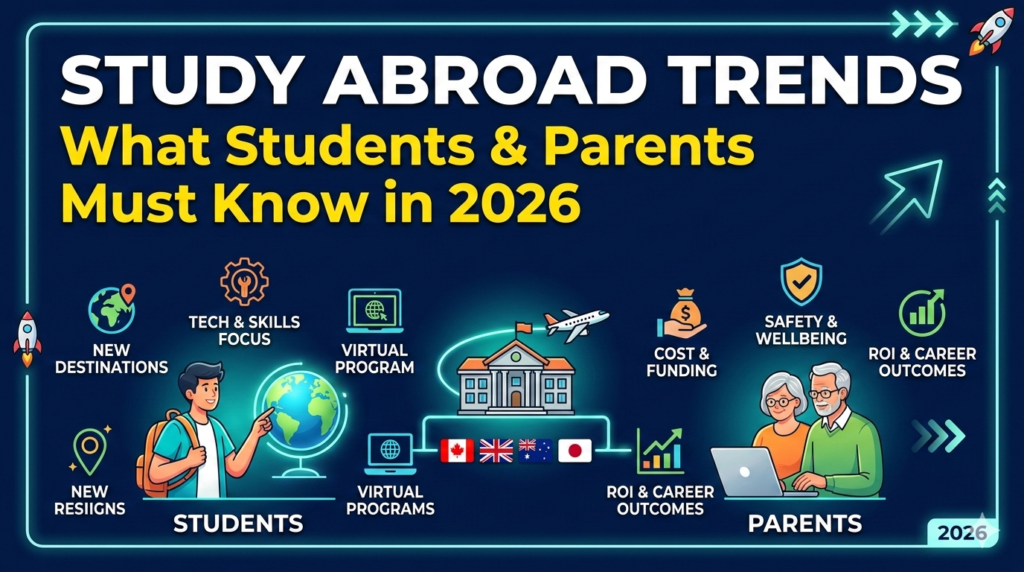
Studying abroad has become one of the most powerful ways for students to gain global exposure, access world-class education, and build international career opportunities. Over the past decade, the number of students pursuing higher education overseas has increased dramatically.
However, the study abroad landscape is evolving rapidly. Universities, governments, and employers are changing their expectations, making it important for students and parents to understand the latest study abroad trends.
In this guide, we explore the most important study abroad trends shaping global education in 2026 and beyond and how students can strategically prepare for international university admissions.
The Growing Popularity of Global Education
More students today are considering international education than ever before. According to global education reports, millions of students travel abroad each year to pursue undergraduate and postgraduate programs.
There are several reasons behind this growth:
-
Access to world-class universities
-
Better research opportunities
-
Global career prospects
-
Exposure to international cultures
-
Higher employability
Students now see international education as an investment in their future careers, rather than just an academic decision.
This rising demand is one of the biggest study abroad trends transforming global higher education.
Top Study Abroad Trends in 2026
Understanding these trends helps students make smarter decisions when planning their international education journey.
Holistic Admissions Are Becoming the Norm
One of the biggest changes in global admissions is the shift toward holistic evaluation.
Top universities in the USA, UK, Canada, and Europe now evaluate students based on multiple factors beyond academic scores.
Admissions teams consider:
-
Academic performance
-
Extracurricular achievements
-
Leadership experience
-
Community impact
-
Research and internships
-
Personal essays and recommendations
Students must focus on profile building and skill development rather than just exam results.
Early Profile Building Is Gaining Importance
Another major study abroad trend is early preparation.
Universities increasingly expect students to demonstrate consistent achievements over several years.
Students in Grades 8–10 are now starting to build their profiles through:
-
Research projects
-
Internships
-
Global competitions
-
Leadership initiatives
-
Entrepreneurship programs
Early preparation helps students develop stronger university applications and stand out in competitive admissions.
Emerging Study Destinations Are Growing
While the USA and UK remain popular destinations, many students are exploring new and emerging education hubs.
Countries gaining popularity include:
-
Canada
-
Germany
-
Singapore
-
Netherlands
-
Australia
-
Ireland
These destinations offer:
-
High-quality education
-
Affordable tuition options
-
Post-study work opportunities
-
Strong job markets
Diversifying destinations is one of the most noticeable study abroad trends in recent years.
Demand for Future-Focused Degrees
The global job market is changing rapidly, and universities are adapting their programs accordingly.
Students are increasingly choosing degrees aligned with future industries.
Popular fields include:
-
Artificial Intelligence
-
Data Science
-
Cybersecurity
-
Sustainable Engineering
-
Biotechnology
-
FinTech
-
Digital Business
These programs prepare students for high-demand careers in the global economy.
Rise of Interdisciplinary Programs
Another important study abroad trend is the growth of interdisciplinary degrees.
Instead of studying a single subject, students now combine multiple fields such as:
-
Computer Science + Business
-
Economics + Data Science
-
Psychology + Artificial Intelligence
-
Engineering + Sustainability
These programs allow students to develop versatile skill sets, making them more attractive to employers.
Increased Focus on Skills Over Degrees
Employers worldwide are shifting their focus from traditional qualifications to practical skills.
Universities are responding by offering:
-
Experiential learning
-
Industry projects
-
Internship opportunities
-
Research collaborations
Students who gain hands-on experience during their studies have better career prospects after graduation.
This skill-focused approach is shaping modern study abroad trends.
Technology Is Transforming International Education
Technology is playing a major role in shaping the future of global education.
Students now have access to:
-
Virtual university tours
-
Online admission interviews
-
Digital learning platforms
-
Global research collaborations
Hybrid learning models that combine online and on-campus education are becoming increasingly common.
Technology is making international education more accessible than ever before.
Stronger Post-Study Work Opportunities
Many countries are expanding their post-study work policies to attract international students.
These opportunities allow graduates to gain work experience after completing their degrees.
Popular countries offering strong work options include:
-
Canada
-
Australia
-
United Kingdom
-
Germany
-
Ireland
Post-study work rights help students gain international experience and improve long-term career prospects.
This is a major factor influencing current study abroad trends.
How Students Should Prepare for Studying Abroad
Understanding trends is important, but students must also take strategic steps to prepare for global admissions.
Start Planning Early
Students should ideally begin preparing in Grades 8–10.
Early preparation allows time to build a strong academic and extracurricular profile.
Focus on Academic Excellence
Strong grades remain a crucial component of university applications.
Students should prioritize:
-
Subject mastery
-
Advanced coursework
-
Academic competitions
Academic consistency demonstrates commitment and intellectual capability.
Build a Strong Student Profile
A strong profile includes:
-
Leadership activities
-
Research projects
-
Community service
-
Internships
-
Entrepreneurship initiatives
Universities prefer students who show initiative and impact beyond the classroom.
Develop Future-Ready Skills
Students must build skills that align with global industries.
Key skills include:
-
Critical thinking
-
Digital literacy
-
Problem solving
-
Communication
-
Collaboration
These competencies are essential for success in modern careers.
Seek Expert Guidance
Navigating global university admissions can be complex.
Professional guidance helps students:
-
Identify suitable universities
-
Build strong academic profiles
-
Prepare competitive applications
-
Plan long-term career strategies
Structured mentorship improves the chances of admission to top institutions.
The Future of Global Education
International education will continue evolving as technology, industry demands, and global mobility reshape career pathways.
Students who stay informed about study abroad trends will be better positioned to make strategic decisions about their education and careers.
Universities are no longer looking for students with perfect grades alone. They seek individuals who demonstrate curiosity, leadership, creativity, and the ability to make a meaningful impact.
Final Thoughts
The world of higher education is becoming increasingly global and competitive. Understanding the latest study abroad trends helps students and parents navigate this complex landscape more effectively.
By starting early, building strong academic profiles, and focusing on skill development, students can unlock opportunities at leading universities worldwide.
International education is not just about studying in another country — it is about gaining global perspectives, developing future-ready skills, and preparing for a dynamic career in an interconnected world.
Students who plan strategically today will be better prepared to succeed in tomorrow’s global economy.